PDP vs NC War of Words Intensifies: Mehboob Beg Accuses NC of ‘Compromising on All Issues’
By: Javid Amin | 01 April 2026
A Familiar Rivalry Rekindled
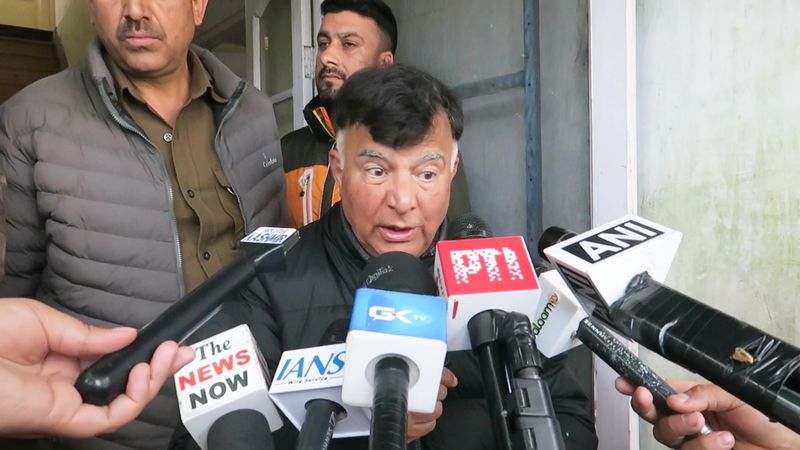
In Jammu & Kashmir’s ever-evolving political landscape, sharp rhetoric often signals deeper strategic shifts. The latest salvo comes from Mehboob Beg, a senior leader of the People’s Democratic Party (PDP), who has accused the leadership of the Jammu and Kashmir National Conference (NC) of having “compromised on all issues.”
Delivered via a public statement aired on regional media, the remark is more than routine criticism—it reflects intensifying राजनीतिक positioning as parties prepare for the next phase of electoral politics in the Union Territory.
The Statement: Direct, Sharp, and Politically Loaded
What Mehboob Beg Said
Dr. Mehboob Beg’s core allegation is unambiguous:
- NC leadership has compromised on all major issues concerning Jammu & Kashmir
- The party has allegedly failed to stand firm on its political commitments
While he did not enumerate each issue in detail, the phrasing suggests a broad critique—targeting the party’s ideological consistency, negotiating stance, and governance record.
Decoding the Political Context
A Long-Standing Rivalry
The PDP and NC have historically been:
- Primary regional competitors
- Representing overlapping but distinct voter bases
Their rivalry is rooted in:
- Leadership personalities
- Governance models
- Political narratives around autonomy, identity, and development
NC’s Counter-Narrative
Leaders from the NC have consistently pushed back against PDP criticism by invoking past political decisions—particularly:
- PDP’s coalition with the Bharatiya Janata Party
- Allegations that PDP’s governance choices contributed to political disempowerment in J&K
This counterattack reframes the debate:
From “NC compromise” to “PDP responsibility”
What Does ‘Compromise’ Mean in This Context?
The term “compromise” in Kashmir’s political discourse is layered and strategic.
Possible Interpretations
1. Constitutional & Political Positioning
- Softening stance on autonomy/statehood demands
- Adjusting positions in response to central policies
2. Governance Trade-Offs
- Prioritizing administrative stability over political confrontation
3. Electoral Strategy
- Moderating rhetoric to appeal to broader constituencies
In essence, what one party calls “compromise,” another may frame as pragmatism.
PDP’s Strategy: Reclaiming Political Space
Positioning as the ‘Uncompromising Voice’
By accusing NC of concessions, PDP aims to:
- Project ideological firmness
- Appeal to voters seeking assertive representation
- Rebuild credibility after past political setbacks
Target Audience
- Disillusioned NC supporters
- Youth and politically aware voters
- Sections sensitive to identity and autonomy issues
NC’s Challenge: Defending Legacy While Managing Perception
For the National Conference, the immediate challenge is twofold:
1. Protect Political Credibility
- Reinforce its historical role in J&K politics
- Counter narratives of inconsistency
2. Avoid Escalation Trap
- Respond without amplifying PDP’s messaging
- Maintain focus on governance and policy
Public Perception: Between Skepticism and Strategy
Voter Sentiment Dynamics
Such exchanges often lead to:
- Increased skepticism toward political promises
- Perception of opportunistic politics across parties
The Credibility Question
For voters, the key question becomes:
Who has been more consistent—and who has delivered?
Electoral Implications: Early Signals of a Heated Contest
Narrative Battle Underway
The current rhetoric indicates:
- Early-stage campaign positioning
- Testing of political messaging
Possible Outcomes
1. Polarized Electoral Field
- Clear NC vs PDP divide
- Reduced space for smaller players
2. Issue-Based Campaigning
- Focus on governance, employment, and rights
3. Alliance Speculation
- Though unlikely between NC and PDP, broader alliances may emerge
Media’s Role: Amplifying Political Messaging
The circulation of Beg’s remarks through regional platforms like Greater Kashmir TV highlights:
- Media’s role in agenda-setting
- Rapid amplification of political narratives
This creates:
- Immediate public reaction
- Pressure on opposing parties to respond
Historical Patterns: Cycles of आरोप (Accusation) and Counter-Accusation
J&K politics has long been characterized by:
- Cyclical blame narratives
- Reinterpretation of past alliances
- Strategic memory in political discourse
The current episode fits squarely within this pattern.
Broader Implications: What This Means for J&K Politics
1. Intensifying Competition
The rivalry between PDP and NC is entering a sharper phase.
2. Narrative Over Policy (For Now)
Political discourse is currently:
- More rhetorical than policy-driven
3. Fragmented Political Landscape
Multiple narratives competing for legitimacy:
- Regional identity
- Governance performance
- Historical accountability
Key Takeaways
- Mehboob Beg has accused the NC of compromising on all major issues.
- The People’s Democratic Party is positioning itself as a firm alternative.
- The Jammu and Kashmir National Conference counters by highlighting PDP’s past alliances and decisions.
- The exchange reflects a broader narrative battle ahead of elections.
- Voters are likely to face competing claims of credibility, consistency, and governance.
Conclusion: Politics of Perception Takes Center Stage
Dr. Mehboob Beg’s remarks are not just criticism—they are a calculated political signal.
A signal that:
- चुनावी (electoral) narratives are taking shape
- Rivalries are sharpening
- Public perception is becoming the निर्णायक battleground
As Jammu & Kashmir moves closer to its next political test, the real contest may not just be about policies—but about who controls the narrative of trust, credibility, and representation.
Final Word
In a region where politics is deeply intertwined with identity and history, every statement carries weight. The PDP-NC exchange is a reminder that in J&K, words are not just rhetoric—they are strategy.


