Sonam Wangchuk Urges Centre for Ladakh Talks | Statehood & Sixth Schedule Debate Intensifies
By: Javid Amin | 12 April 2026
A Region in Limbo: Ladakh’s Growing Anxiety Over Silence
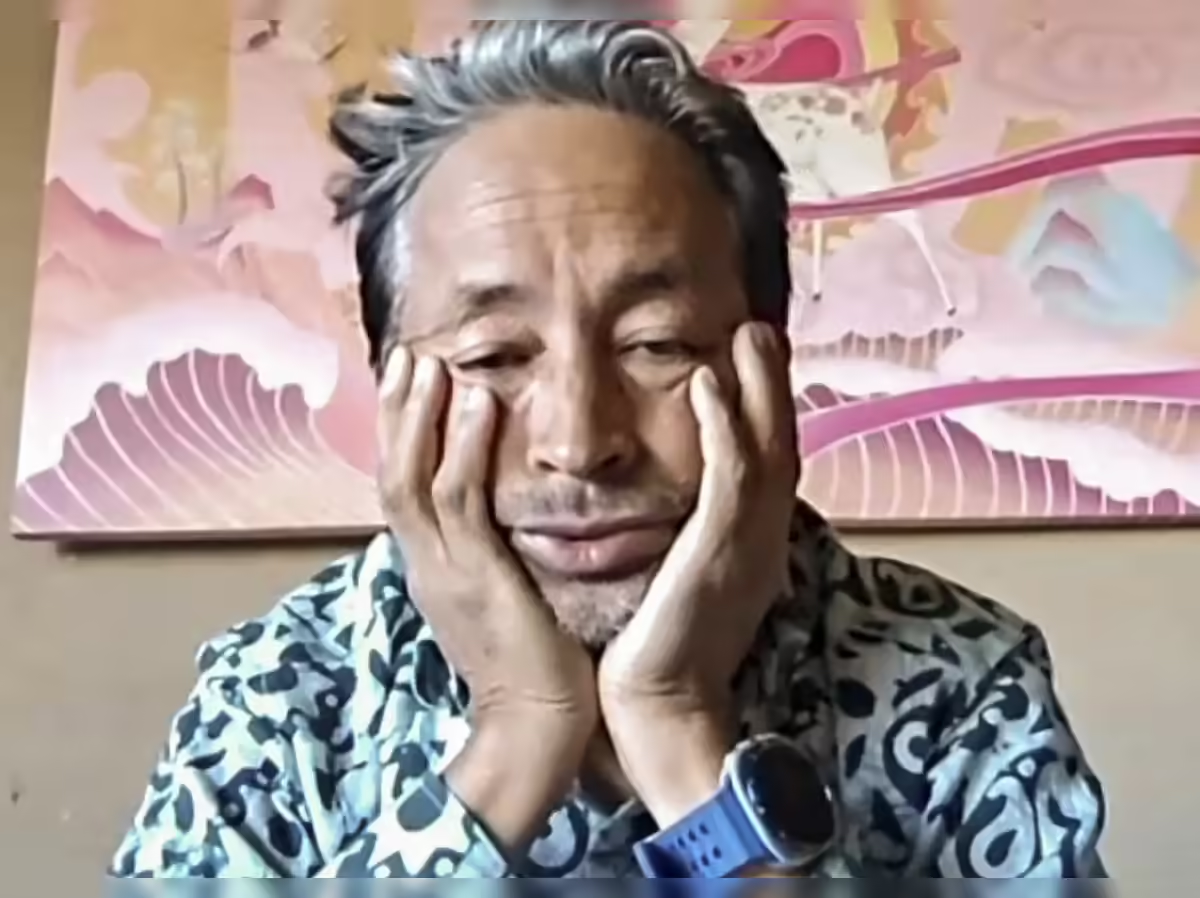
Standing in Leh on April 13, 2026, education reformer and climate activist Sonam Wangchuk delivered a message that was as much a warning as it was an appeal.
Ladakh, he said, is now “hanging between trust and mistrust.”
The phrase captures a fragile psychological state—one where hope in democratic engagement coexists uneasily with rising skepticism. At the heart of this unease lies a simple but critical issue: the prolonged delay in dialogue between Ladakhi representatives and the central government.
For a region that has historically balanced strategic importance with cultural sensitivity, this pause is beginning to feel less like administrative delay and more like political drift.
The Core Appeal: Resume Dialogue Before Trust Erodes Further
Wangchuk’s intervention is not an isolated statement. It reflects a broader sentiment across Ladakh—cutting across civil society, political groups, and community leaders.
What He Is Asking For
- Immediate resumption of talks with the Centre
- A sincere and open-minded negotiation process
- Time-bound resolution of key demands
His warning is clear: delayed dialogue risks deepening mistrust, and mistrust in a sensitive border region can have consequences far beyond local politics.
Key Concerns: What’s Fueling Ladakh’s Unease
1. Prolonged Silence from the Centre
Talks between Ladakhi leaders and the Union government have reportedly been stalled for over two months. In political terms, silence often creates:
- Speculation
- Anxiety
- Narrative vacuum
In Ladakh, this vacuum is increasingly being filled with concern rather than confidence.
2. Fear of Social Polarization
One of Wangchuk’s most serious warnings relates to the potential for a Buddhist–Muslim divide.
Ladakh’s social fabric—particularly between Leh (largely Buddhist) and Kargil (largely Muslim)—has historically been delicate but cooperative.
However, unresolved political demands risk:
- Hardening identities
- Politicizing community differences
- Undermining decades of coexistence
This concern elevates the issue from governance to social stability.
3. Demand for Sincere Negotiations
Wangchuk emphasized that dialogue must not be symbolic. For Ladakhis, meaningful engagement means:
- Listening to local voices
- Recognizing regional diversity
- Offering concrete commitments
Anything less risks being perceived as procedural engagement without substantive intent.
The Core Issues: What Ladakh Wants
1. Statehood: A Call for Political Empowerment
After the abrogation of Article 370 in 2019, Ladakh was carved out as a separate Union Territory—without a legislature.
Why Statehood Matters
- Greater political representation
- Legislative control over local matters
- Enhanced accountability
For many Ladakhis, statehood is not just administrative—it is about dignity and democratic voice.
2. Sixth Schedule: Safeguarding Identity and Resources
The demand for inclusion under the Sixth Schedule is central to Ladakh’s movement.
What It Would Provide
- Protection of land rights
- Safeguards for local employment
- Autonomous district councils with legislative powers
Given Ladakh’s fragile ecology and sparse population, these protections are seen as essential to prevent:
- External land acquisition
- Demographic imbalance
- Economic marginalization
3. Environmental and Cultural Protection
Ladakh is one of the most ecologically sensitive regions in India.
Key Concerns
- Unchecked infrastructure expansion
- Tourism pressure
- Climate vulnerability
Wangchuk, known globally for his environmental advocacy, has consistently warned that development without safeguards could irreversibly damage Ladakh’s ecosystem.
Strategic Significance: Why Ladakh Matters Nationally
Ladakh is not just another administrative unit—it is a strategic frontier.
Geopolitical Context
- Borders with China and Pakistan
- Proximity to sensitive areas like Eastern Ladakh
- Military and logistical importance
In such a region, public trust is a security asset. Alienation, even if limited, can complicate governance and strategic stability.
Current Status: A Stalemate with Growing Stakes
| Issue | Ladakhi Demand | Status |
|---|---|---|
| Statehood | Full-fledged state | Pending |
| Sixth Schedule | Tribal protections | Under consideration |
| Representation | Elected legislature | No clarity |
| Dialogue | Regular engagement | Stalled |
The longer this stalemate continues, the higher the political and social costs.
Public Sentiment: Between Hope and Frustration
Initial Optimism (Post-2019)
When Ladakh became a Union Territory, many residents:
- Celebrated separation from Jammu & Kashmir
- Expected faster development
- Anticipated stronger central support
Emerging Discontent (2024–2026)
Over time, expectations have evolved into demands:
- Greater autonomy
- Stronger safeguards
- Institutional representation
The shift reflects a transition from gratitude to assertion.
The Risk of Delay: What Experts Are Warning
Policy analysts point to three major risks if dialogue remains stalled:
1. Erosion of Democratic Trust
Repeated delays can weaken faith in institutional processes.
2. Identity-Based Polarization
Unresolved grievances may be reframed along religious or regional lines.
3. Strategic Vulnerability
Discontent in border regions can have broader national security implications.
A Window of Opportunity: Why Dialogue Still Matters
Despite the concerns, Wangchuk’s appeal is not confrontational—it is constructive.
What Immediate Dialogue Could Achieve
- Reassure local populations
- Clarify government intent
- Prevent escalation of tensions
Even incremental progress can restore confidence in the process.
Balancing Act: Governance vs Security vs Identity
The Centre faces a complex policy challenge:
- Security: Maintaining control in a sensitive border region
- Governance: Ensuring administrative efficiency
- Identity: Respecting local aspirations and cultural uniqueness
Ignoring any one of these dimensions risks destabilizing the others.
Conclusion: A Defining Moment for Ladakh’s Future
Sonam Wangchuk’s words capture more than a political demand—they reflect a collective state of mind.
Ladakh today stands at a crossroads:
- Between trust and mistrust
- Between expectation and uncertainty
- Between integration and autonomy
The next steps taken by the Centre will determine not just policy outcomes, but the long-term relationship between Ladakh and the Indian state.
Bottom Line
Wangchuk’s appeal is both a warning and an opportunity. Swift, sincere dialogue can rebuild trust and address legitimate concerns. Continued delay, however, risks turning uncertainty into alienation.
In a region as sensitive and strategic as Ladakh, trust is not a given—it must be actively maintained.

