Zombie Drug (Xylazine) Explained: Effects, Spread, India Cases & Health Risks
By: Javid Amin | 09 April 2026
Beyond the Viral Fear — Understanding the Reality of the “Zombie Drug”

In recent months, disturbing videos circulating on social media — showing individuals standing motionless, slumped over, or appearing detached from reality — have triggered panic across cities like Bengaluru and Chandigarh. These visuals have been widely linked to the so-called “zombie drug,” a term that evokes fear, curiosity, and misunderstanding in equal measure.
But behind the viral headlines lies a more complex and urgent public health issue. The substance being referred to is Xylazine, a veterinary tranquilizer that is increasingly contaminating illicit drug supplies, often without users’ knowledge. It is not a new drug — nor is it designed for human use — yet its growing presence in street drugs is transforming addiction patterns and healthcare challenges globally.
Experts caution that the term “zombie drug,” while visually descriptive, is deeply problematic. It risks dehumanizing individuals struggling with substance use disorders and may deter them from seeking life-saving medical care.
This feature unpacks the science, the spread, the socio-health implications, and the emerging concerns in India — with a focus on facts, human impact, and policy urgency.
What Is Xylazine? The Science Behind the So-Called “Zombie Drug”
A Veterinary Drug Turned Public Health Threat
Xylazine is a powerful sedative primarily used in veterinary medicine to calm large animals such as horses, cattle, and deer during surgical or diagnostic procedures. It belongs to a class of drugs known as alpha-2 adrenergic agonists, which depress the central nervous system.
Importantly, xylazine is not an opioid. This distinction has critical implications for treatment and overdose response.
Key Characteristics:
- Designed for animal sedation, not human consumption
- Causes deep muscle relaxation and reduced pain perception
- Slows heart rate and breathing
- Not approved for human medical use
From Clinics to Streets: How Xylazine Entered Illicit Drug Markets
Xylazine began appearing in illicit drug supplies in the United States around the mid-2000s. Over time, it became increasingly mixed with opioids such as Fentanyl, heroin, and even stimulants like cocaine.
Why Is It Added?
Drug suppliers use xylazine for several reasons:
- Cost efficiency: It is cheaper than opioids
- Prolonged high: Extends the sedative effect of fentanyl
- Potency illusion: Makes weaker drugs feel stronger
However, this adulteration comes with severe and often unpredictable consequences.
Why the Name “Zombie Drug” Is Misleading — And Harmful
The nickname “zombie drug” originates from the visible effects of xylazine intoxication: users may appear frozen, slouched, or disconnected from their surroundings.
But public health experts strongly discourage this terminology.
The Problem with Sensational Labels
- Stigma amplification: Dehumanizes individuals struggling with addiction
- Healthcare avoidance: People may avoid hospitals due to fear of judgment
- Policy distortion: Focus shifts to shock value rather than solutions
Addiction specialists emphasize that substance use disorders are medical conditions — not moral failures — and language plays a critical role in shaping public response.
Effects on the Human Body: A Silent and Severe Threat
1. Extreme Sedation and Immobility
Xylazine depresses the central nervous system, leading to:
- Profound drowsiness
- Slowed reflexes
- Trance-like states
Users may remain standing or sitting in unnatural positions, appearing “frozen” — one of the reasons behind viral imagery.
2. Skin Ulcers: The Most Disturbing Symptom
One of the most alarming effects is the development of severe skin ulcers, often unrelated to injection sites.
How It Happens:
- Xylazine reduces blood circulation
- Tissue begins to die due to oxygen deprivation
- Open wounds develop, prone to infection
These ulcers:
- Can become necrotic (dead tissue)
- Often require surgical intervention
- May lead to amputation in extreme cases
Healthcare providers report that these wounds are more aggressive and harder to treat than typical injection-related injuries.
3. Respiratory Depression and Overdose Risk
While xylazine itself is not an opioid, it significantly enhances the خطر of overdose when combined with opioids like fentanyl.
Critical Concern:
- Standard overdose reversal drugs like Naloxone only work on opioids
- Naloxone does not reverse xylazine effects
This means:
- A person may regain consciousness partially
- But still suffer from respiratory depression
This dual-drug dynamic complicates emergency response protocols.
4. Dependency and Addiction Cycles
Although xylazine is not classified as addictive in the same way as opioids, it:
- Intensifies withdrawal symptoms
- Deepens dependency cycles when mixed with opioids
- Makes detoxification more complex
The Global Spread: From Local Threat to International Crisis
United States: Ground Zero of the Crisis
The U.S. has seen the most documented rise in xylazine presence.
According to the Drug Enforcement Administration (DEA):
Surge in Detection (2020–2021):
- Northeast: +103%
- South: +1,000%
- Midwest: +516%
- West: +750%
Cities like Philadelphia have reported xylazine in a majority of tested opioid samples.
Beyond the U.S.: A Growing Global Footprint
Xylazine has now been detected in:
- Mexico
- Scotland
- Canada
- Parts of South America
- Emerging reports in Asia, including India
The pattern suggests a globalization of synthetic drug markets, where substances rapidly cross borders through illicit supply chains.
India Context: Viral Panic vs Ground Reality
What Triggered Concern in India?
Recent viral videos from Bengaluru and Chandigarh showed individuals:
- Standing motionless in public spaces
- Appearing disoriented or unresponsive
Social media quickly labeled these incidents as evidence of “zombie drug” use.
Official Position: No Confirmed Evidence Yet
Authorities and health experts in India have urged caution:
- No confirmed forensic reports linking these cases to xylazine
- Investigations are ongoing
- Possibility of other substances or medical conditions cannot be ruled out
The Real Risk for India
Even without confirmed cases, India is not immune to the threat.
Key Vulnerabilities:
- Expanding synthetic drug networks
- Limited drug-checking infrastructure
- Lack of awareness among users and healthcare providers
- High stigma around addiction
Experts warn that early preparedness is critical to prevent escalation.
Healthcare System Challenges: A Complex Burden
1. Diagnostic Difficulties
- Xylazine is not always included in routine toxicology screens
- Patients may not know they were exposed
- Symptoms overlap with opioid overdose
2. Treatment Complexity
- No specific antidote for xylazine
- Requires supportive care (oxygen, wound treatment, monitoring)
- Long-term rehabilitation needs
3. Resource Strain
- Chronic wound care is expensive and time-intensive
- Overdose management becomes more complicated
- Public hospitals may face capacity challenges
The Hidden Danger: Users Often Don’t Know
One of the most concerning aspects of xylazine is unintentional exposure.
Users may believe they are consuming:
- Heroin
- Fentanyl
- Cocaine
But instead receive a contaminated mixture, increasing risk unpredictably.
Stigma vs Science: The Language We Use Matters
Public discourse plays a powerful role in shaping outcomes.
Why Experts Push Back Against “Zombie Drug”
- Reduces empathy
- Fuels fear-based narratives
- Distracts from harm-reduction strategies
What Should Replace It?
- “Xylazine-adulterated drugs”
- “Sedative contamination crisis”
These terms focus on health risk, not spectacle.
Policy and Prevention: What Needs to Be Done
1. Strengthen Drug Surveillance
- Expand toxicology testing
- Monitor emerging substances
2. Public Awareness Campaigns
- Educate about hidden drug contamination
- Promote non-judgmental healthcare access
3. Harm Reduction Strategies
- Drug-checking services
- Safe consumption spaces (where legally feasible)
4. Healthcare Training
- Equip doctors to पहचान xylazine symptoms
- Improve wound care protocols
Quick Reference Table
| Aspect | Details |
|---|---|
| Drug Name | Xylazine |
| Street Names | “Zombie drug,” “Tranq” |
| Medical Use | Veterinary sedative |
| Street Use | Mixed with opioids/stimulants |
| Effects | Sedation, ulcers, overdose risk |
| Antidote | None specific |
| Spread | U.S. → Global (incl. emerging India concern) |
| Key Concern | Hidden exposure + stigma |
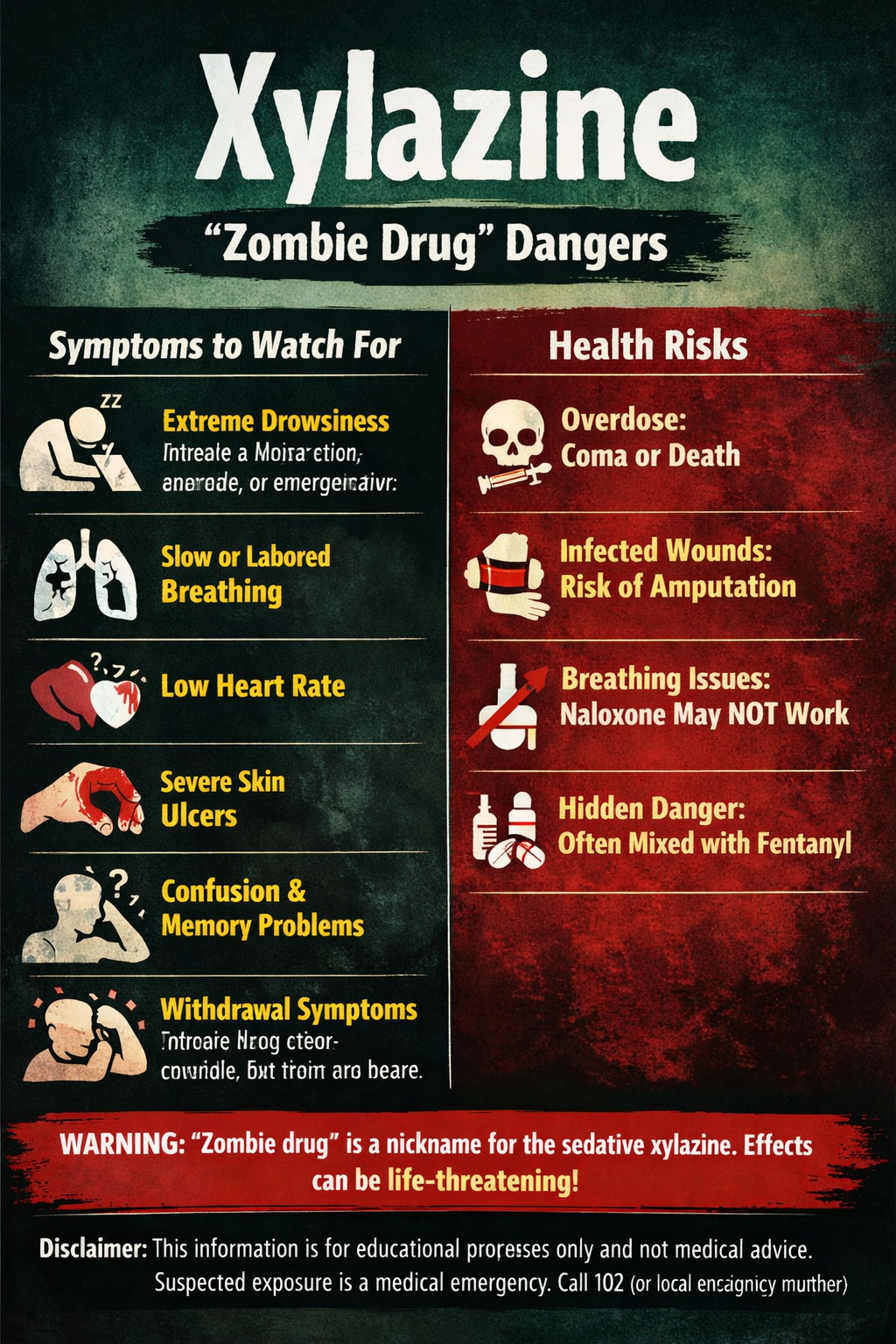
Xylazine (“Zombie Drug”) exposure can cause sedation, dangerously slow breathing, low blood pressure, slowed heart rate, and severe skin ulcers. These symptoms can be life‑threatening, especially when xylazine is mixed with opioids like fentanyl.
Symptoms to Watch For
- Sedation / Drowsiness: Appearing trance‑like, immobile, or unresponsive.
- Respiratory Depression: Slow or difficult breathing.
- Cardiovascular Effects: Dangerously low blood pressure, slowed heart rate (bradycardia).
- Skin Ulcers & Wounds: Painful, infected sores that can worsen quickly and may lead to amputation if untreated.
- Neurological Signs: Memory problems, confusion, anxiety, irritability.
- Withdrawal Symptoms: Anxiety, body aches, cravings, fast heart rate, high blood pressure, irritability.
- Overdose Risks: Coma, severe respiratory failure, or death when combined with opioids or alcohol.
Key Risks
- Naloxone Limitation: Naloxone reverses opioid effects but does not reverse xylazine’s impact on breathing or sedation.
- Hidden Exposure: Users often don’t know their drugs are adulterated with xylazine.
- Rapid Wound Progression: Skin ulcers can worsen quickly without medical care.
Quick Reference Table
| Symptom | Risk |
|---|---|
| Sedation / trance‑like state | Loss of mobility, unresponsiveness |
| Slow breathing | Respiratory failure, overdose risk |
| Low blood pressure | Shock, collapse |
| Slow heart rate | Cardiac arrest risk |
| Skin ulcers | Infection, amputation |
| Withdrawal signs | Anxiety, cravings, high BP |
Key Takeaway: A Crisis That Demands Clarity, Not Panic
The so-called “zombie drug” is not a mysterious new substance — it is xylazine, a known veterinary sedative now infiltrating illicit drug markets worldwide.
Its dangers are real:
- Severe sedation
- Disfiguring wounds
- Increased overdose risk
But equally real is the danger of misinformation and stigma.
India stands at a critical juncture. While confirmed cases remain limited or unverified, the global trajectory suggests that proactive awareness, healthcare readiness, and evidence-based policy are essential.
The challenge is not just chemical — it is social, medical, and systemic.
Final Word
Fear-driven narratives may capture attention, but they rarely solve problems. Understanding xylazine through a socio-health lens — grounded in science, compassion, and policy — is the only way to address what could become the next major public health challenge.
Disclaimer Note
This information is provided for general educational purposes only. It is not medical advice and should not be used to diagnose or treat any condition. Xylazine exposure is a medical emergency. If you suspect someone has been affected, call emergency services immediately. Only trained healthcare professionals can provide appropriate diagnosis, treatment, and care.