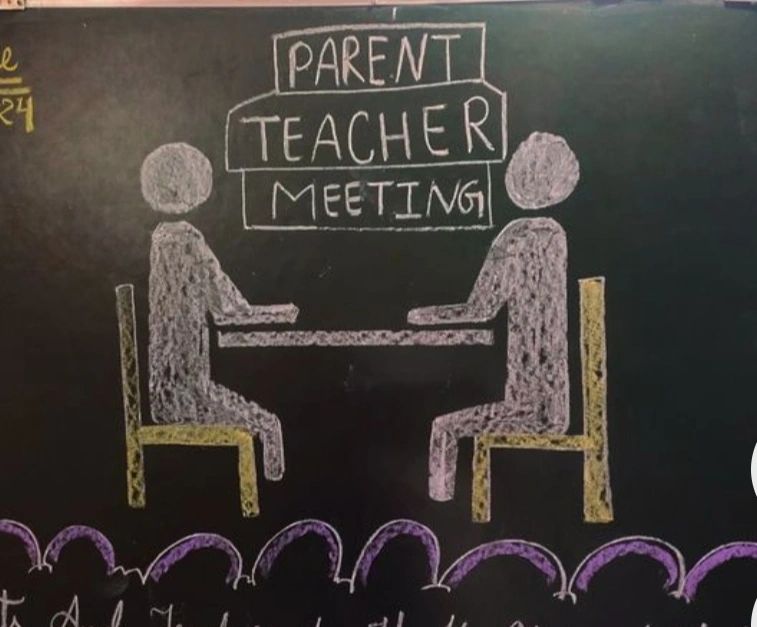
PTM or ‘Payment Time’? A Deep Dive Into J&K’s School Fee Crisis, LEAD Curriculum Push & the Growing Anguish of Parents
Dear Parents(Nursery to SKG)
Greetings!
You are invited to attend the Parent – Teacher Meeting on the 2nd of December to evaluate and discuss the progress of your child. We also take this initiative to provide you with the much needed assistance for understanding and implementing the blend of technology into our students’ learning process. As many of our parents are struggling with the working of the student app, our teachers will provide you with all the assistance and help to operate the same on the day of PTM.
Timing: 10 AM to 2:30 PMNote: since the school office shall remain closed during the winter break and the salaries are to be paid to the school staff on time, you are requested to pay the tuition fee for the months of December and January including the annual charges for the current session.
Regards!
By: Javid Amin | 03 December 2025
When Meetings Stop Being About Children
Across Jammu and Kashmir, an unsettling trend has emerged in private schools: Parent-Teacher Meetings (PTMs), once meant to foster communication about a child’s progress, have increasingly turned into fee-collection counters.
Parents say the focus of PTMs has shifted from:
✔ Academic reviews
✘ to advance fees,
✘ app subscriptions,
✘ annual charges,
✘ LEAD curriculum payments,
✘ and mandatory purchases.
This is not an isolated frustration expressed by a handful of parents — it is a systemic issue now echoed across districts.
“It’s no longer Parent-Teacher Meeting. It’s Payment Time.”
— A parent from Jammu.
This article investigates:
-
why PTMs are being misused,
-
how schools are bypassing the uniform curriculum order,
-
why LEAD curriculum has become controversial,
-
the economic and emotional pressure on parents,
-
government inaction,
-
and what needs to change.
Let’s break down the full picture.
The Birth of the Crisis — When PTMs Became Payment Counters
PTMs Were Meant for Academics — Not Billing
A Parent-Teacher Meeting should ideally:
-
Assess student performance
-
Identify learning challenges
-
Build teacher–parent cooperation
-
Support the child’s emotional and academic well-being
Instead, today many parents in J&K report that PTMs begin with greetings but end with invoices.
From the moment they enter school premises, parents are met with:
-
“Please deposit advance fee for December and January.”
-
“Annual charges are overdue, kindly clear them first.”
-
“Fee booklet must be bought today.”
-
“Download the app and pay the digital module fee.”
One Srinagar parent described:
“Teachers hardly spoke about my child. They were only reminding me to clear advance fees because the school needs to pay salaries during winter break.”
This shift is not only frustrating — it is an abuse of the PTM system, which should nurture learning, not financial extraction.
The LEAD Curriculum Controversy — Expensive, Unapproved & Forced
01. What Is LEAD Curriculum?
LEAD is a private digital learning program used in some private schools.
While it claims to offer “modern pedagogy,” parents say it brings:
❌ unnecessary digital dependency
❌ increased screen time
❌ expensive supplementary books
❌ content not aligned with JKBOSE
The J&K government clearly ordered all schools to follow a uniform NCERT-based curriculum, but many private schools continue to enforce LEAD.
02. Parents Say LEAD Curriculum Has “Neither Head Nor Tail”
Common parent concerns include:
-
Books costing 400–600% more than NCERT
-
Every year new editions, forcing fresh purchases
-
No alignment with JKBOSE syllabus
-
Mandatory use of tablets and apps, even in KG and primary levels
-
Teachers trained in NCERT asked to teach a private system
-
Students confused during Board exams
A parent from Baramulla shared:
“My son studies LEAD books in class but faces JKBOSE exams. How is he supposed to cope with this mismatch?”
03. Schools Justify LEAD as “Mandatory” — Even When Government Did Not Approve It
Many private schools claim they are upgrading to “international standards,” but:
-
the curriculum is not approved by JKBOSE,
-
violates uniform curriculum order,
-
and violates Fee Fixation Committee guidelines.
Parents allege the move is motivated by profit, not pedagogy.
Arbitrary Charges — The Hidden Side of the Financial Burden
01. Fee Booklet: ₹260 for 12 Pages
Multiple parents report paying:
-
₹260 for a 12-leaf fee booklet
-
₹30–₹40 per app QR code
-
₹150–₹300 “digital maintenance charges”
One parent asked:
“Why does a 12-page fee book cost ₹260? What is so special about it?”
02. Tuition Fee Hikes of 400–500 Rupees Without Approval
Despite the Fee Fixation Committee’s guidelines, schools are exploring loopholes by calling it:
-
“Improvement charges”
-
“Activity fees”
-
“Winter maintenance charges”
-
“Digital learning support”
These rebranded fees have no receipts or justifications.
03. Advance Fee Demands During PTMs
Examples include:
-
December + January fee in November
-
Full winter fee in advance
-
Annual charges demanded in mid-year
-
Late fee penalties within 3–4 days
The issue is not fee collection — it is the timing, pressure, and lack of transparency.
NCHS Circular: The Flashpoint That Triggered Fresh Outrage
01. What the Circular Said
The New Convent High School (NCHS) circular invited parents to a PTM on December 2, but the emphasis was entirely on fee collection:
-
“Parents are requested to deposit December–January fees.”
-
“Annual charges should be cleared.”
-
“Payment required for staff salaries during winter break.”
02. What Parents Understood
The message was clear:
❌ It’s not a PTM.
❌ It’s a collection drive.
❌ Fees matter — academics can wait.
One mother said:
“We were excited to discuss our kids’ performance. Instead, they told us: ‘Pay the fees first.’ This is humiliating.”
The school has not yet issued a clarification.
Where Are the Authorities? The Silence of the Regulatory System
Parents across J&K say they have filed dozens of complaints with:
-
Directorate of School Education
-
Fee Fixation Committee
-
JKBOSE
-
District officials
But the response is often:
-
Acknowledgement
-
No follow-up
-
No penalty
-
No inspection
-
No accountability
Parents believe authorities are “hand-in-glove” with schools.
Why?
-
Schools are financially powerful
-
Some officials have personal connections
-
Lack of strong enforcement
-
Absence of transparent audits
-
Rising commercialization of education
This has created a dangerous imbalance — schools dictate rules, parents have no safety net.
The Emotional & Economic Impact on Families
01. Middle-Class Families Hit the Hardest
The issues affect everyone, but especially:
-
Teachers with low income
-
Taxi drivers
-
Shopkeepers
-
Daily-wage workers
-
Government employees with fixed salaries
A father of three said:
“Fee hike, books, apps, uniforms — everything keeps changing. It’s hard to survive.”
02. Mental Stress on Parents
Constant pressure has led to:
-
Anxiety
-
Stress
-
Repeated arguments at home
-
Feelings of helplessness
-
Financial insecurity
03. Impact on Students
Children sense parental stress, which affects:
-
concentration
-
emotional stability
-
academic performance
-
confidence
Uniform Curriculum Order — The Forgotten Directive
The J&K Government issued a clear directive:
All schools must follow a uniform NCERT-based curriculum in Classes 1–12.
But private schools continue:
-
LEAD curriculum
-
Oxford/S Chand bundles
-
Combo packs
-
Private worksheets
-
In-house booklets
Government intent is strong — but enforcement is weak.
Why Schools Are Doing This (Hard Truths)
Schools push private curriculum and fees because:
-
High profit margins
-
Exclusive deals with publishers
-
Kickbacks from book distributors (as alleged by parents)
-
Digital app tie-ups
-
Branding advantages
-
Reduced dependency on JKBOSE
-
Commercialization of education
Without strict regulation, the system naturally drifts toward exploitation.
What Parents Are Demanding — A Rights-Based Approach
Parents across J&K are calling for:
01. Transparent Fee Structure
-
No hidden fees
-
Official receipts for everything
-
No advance fee coercion
02. Strict Enforcement of Uniform Curriculum
-
Removal of unapproved LEAD curriculum
-
Only NCERT & JKBOSE-approved books
03. Strong Action on Complaints
-
Surprise inspections
-
Audit of private schools
-
Accountability for non-compliance
04. A Parent-Government Committee
To allow families to participate in decision-making.
What the Government Must Do (Expert Recommendations)
Education experts suggest:
-
Fee Fixation Committee must be empowered
-
Penalties should be severe enough to deter violations
-
Schools must publish annual fee structure online
-
LEAD curriculum must be formally reviewed for approval
-
Schools should be barred from introducing private books mid-year
-
Grievance redressal system should be public
-
Surprise inspections must become routine
This shift is essential to restore balance.
A Wider Look — Is This Only a J&K Issue?
This issue is not confined to J&K. Across India:
-
Delhi has repeatedly penalized private schools
-
Maharashtra has capped annual fee hikes
-
Karnataka outlawed forced digital learning tools
-
Kerala banned mandatory purchase of school-branded books
-
Tamil Nadu cracked down on proprietary curriculum
J&K must follow suit.
Bottom-Line: A Crisis That Needs Urgent Attention
Parents across Jammu & Kashmir are asking one simple question:
“If the government ordered a uniform curriculum, why are schools allowed to defy it?”
With recurring LEAD curriculum imposition, PTM fee coercion, and unchecked financial demands, the issue is no longer just about education — it is about justice, transparency, and dignity.
Families want quality education, not exploitation.
They want PTMs, not payment drives.
They want learning, not draining.
Unless the administration intervenes now, the gap between parents and private schools will only widen, and the trust essential to education will continue to erode.