Re-Registration Tax Crisis in J&K: High Court Orders, Rules & Burden on Vehicle Owners
By: Javid Amin | 25 December 2025
For years, owners of vehicles registered outside Jammu & Kashmir (J&K) have faced recurring financial burdens and legal uncertainty due to the regional transport administration’s insistence on re-registration and additional taxation. What began as a procedural rule morphed into a larger controversy — with vehicle owners claiming unfair taxation, disrupted livelihoods, and legal challenges reaching the J&K & Ladakh High Court. Despite repeated judgments clarifying that Indian laws do not mandate re-registration with additional fees, administrative measures and tax demands continue to burden ordinary Kashmiris.
This feature provides an authoritative, fact-checked, and comprehensive narrative on the issue — how it evolved, what the law actually says, ground realities, court decisions, socio-economic impacts, and what happens next in 2025.
Background: How Vehicle Re-Registration Works Across India
01. Basic Legal Framework — The Motor Vehicles Act, 1988
In India, vehicle registration and taxation are governed primarily by the Motor Vehicles Act, 1988 (MVA) and associated rules. The Act stipulates that:
-
Every motor vehicle must be registered with the relevant authority where it is first used.
-
Registration provides a unique number plate and makes the vehicle legally fit to operate on Indian roads.
-
Registration is generally valid throughout India once completed, though local requirements can apply if a vehicle stays in a different state/UT for an extended period.
The standard condition under Section 47 of the Act is that a vehicle originally registered in one state should be assigned a new registration mark if kept in another state/UT for more than 12 months. However, this provision does not include any requirement to pay a fresh registration fee or additional tax as a condition for using the vehicle.
02. Re-Registration Rules in Most Indian States
Across most Indian states, vehicle owners with out-of-state registration usually:
-
Apply for assignment of a local registration mark after 12 months.
-
Pay a proportionate road tax based on the remaining validity of the vehicle’s life.
-
Are not charged a separate “re-registration fee” in addition to this road tax.
This practice is consistent with the goal of harmonized vehicle movement across India, minimizing administrative burden on citizens who move between states for work, residence, or personal reasons.
Delhi, Karnataka, Maharashtra, Tamil Nadu and other states follow this model, though specific tax rates and procedures vary. Authorities generally allow a vehicle to remain with its original registration for up to 12 months before local procedures take effect.
The J&K Policy Shift — Mandatory Re-Registration & Extra Tax Demands
01. Administrative Push and Notices for Re-Registration
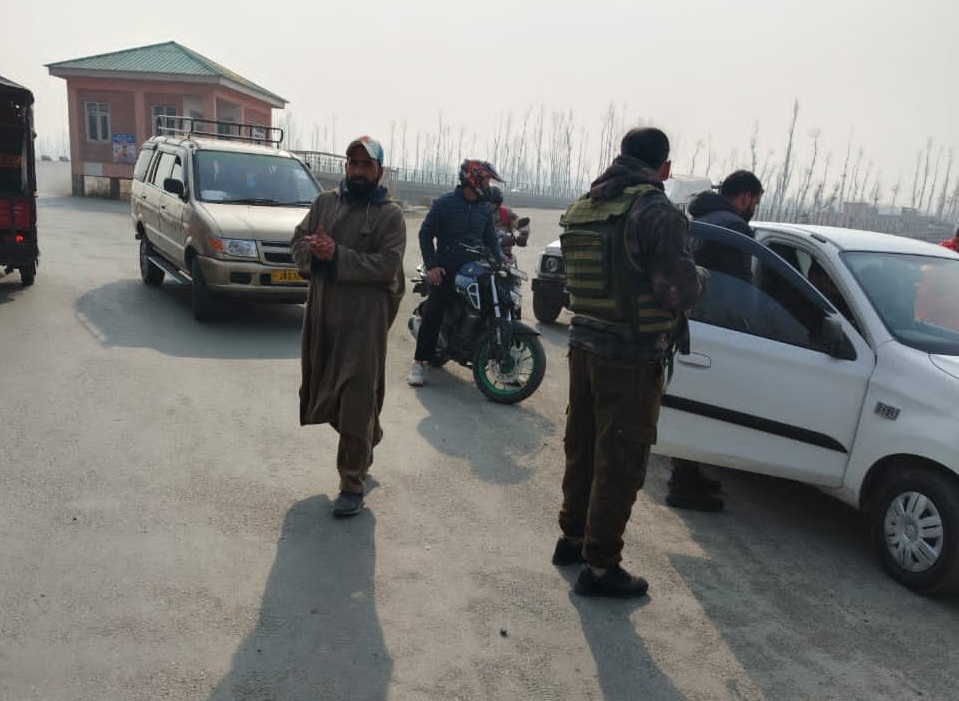
In 2024 and into 2025, the Regional Transport Office (RTO) in Jammu and Kashmir issued notices directing owners of out-of-J&K vehicles to:
-
Re-register their vehicles under J&K rules if they have been present in the Union Territory for over 12 months.
-
Provide necessary documentation within a set deadline (e.g., 15 days, per Dec 24, 2025 RTO notice).
The RTO warned that non-compliance would attract penalties, fines, and possible seizure of vehicles.
02. Tax Burden: 9% Token Tax & Beyond
What escalated the controversy was the imposition of a token tax, proportionate to the vehicle’s remaining usable life — commonly around 9% of value — as demanded by the transport department.
On social platforms and ground reports, owners have reported paying anywhere from 9% to 12% of their vehicle’s value as a tax when re-registering in J&K — significantly higher than typical road tax or transfer charges in other states.
This levy was frequently termed by citizens as a “forced payment” or “extra tax,” reported to generate significant revenue for the transport authorities — but at a cost to ordinary vehicle owners.
Legal Challenge and High Court Rulings
01. 2024 High Court Verdict: No Legal Basis for Extra Tax
In August 2024, the High Court of Jammu & Kashmir and Ladakh delivered a landmark ruling in Ishfaq Ahmad Tramboo v. UT of J&K:
-
The court clarified that under the Motor Vehicles Act, 1988, a vehicle’s registration once completed and valid under central regulation remains valid throughout India.
-
There is no provision mandating payment of a re-registration fee or additional token tax simply because a vehicle moves from one state to another.
-
The court struck down the transport authorities’ demand for a 9% token tax on vehicles brought into J&K from other states.
02. High Court’s Interpretation of the Law
The High Court examined:
-
Section 31 of the Motor Vehicles Act — which specifies fee for initial registration.
-
Sections 46–47 — which discuss assignment of new registration mark when a vehicle stays in another state beyond 12 months.
The court concluded that:
-
Registration fee under the central law suffices for national validity.
-
Assigning a new registration mark is an administrative process, not a new registration with associated fresh fees.
-
Local taxation authority cannot impose additional taxation beyond legally permitted road tax at the time of registration.
The ruling explicitly stated: “The Motor Vehicles Act nowhere provides for re-registration of a vehicle and payment of fee upon such re-registration.”
03. Subsequent Legal Confusion & Administrative Pushback
Despite the High Court’s rulings, several circulars and administrative efforts continued to mandate tax collection or re-registration requirements. In late 2025, the High Court admonished government officials, stating there should be no demand of 9% tax from vehicle owners who have already paid applicable tax outside J&K.
A contempt petition highlighting continued enforcement was actively heard in court, emphasizing that:
-
Authorities were demanding token tax in violation of the court’s judgment.
-
The court instructed adherence to its earlier decision.
This indicates persistent administrative and legal friction even after landmark judgments.
Ground Reports — What Vehicle Owners Are Facing
To understand the issue beyond courtroom language, we surveyed ground discussions, owner testimonies, and community reporting across platforms.
01. Real-Life Impact
Vehicle owners report:
-
Being asked to pay 9%–12% of the vehicle’s current invoice value as part of re-registration.
-
Lack of clarity on whether the tax applies based on dealer location, showroom presence in J&K, or other criteria.
-
Confusion over how to calculate the tax — at invoice value, present value, or remaining life value.
A common sentiment is the lack of standardized guidelines at ground level, leaving owners at the mercy of individual RTO officials’ interpretation.
02. Consumer Rights Violations
Several vehicle owners faced issues including:
-
Fake temporary registrations issued by dealerships leading to incorrect long-term charges later, resulting in consumer commission actions against dealers.
-
Excessive demands for fees not backed by formal written rules.
-
Long delays, arbitrary application of charges, and lack of transparency.
Socio-Economic Consequences
The dispute is more than a legal battle. It has broad socio-economic impacts on citizens, local markets, and the region’s perception of administrative fairness.
01. Financial Strain on Common Citizens
For many Kashmiris:
-
Vehicles are not luxury items but essential means of livelihood — for daily transport, delivery services, small business owners, and professionals.
-
Extra taxation adds significant financial burden, especially on second-hand vehicle buyers and families with limited budgets.
02. Chilling Effect on Used Vehicle Market
Reports indicate the second-hand car market in Srinagar and other parts of J&K suffered:
-
Dealers stopped bringing vehicles from other states.
-
Buyers hesitated to purchase out-of-state vehicles fearing re-registration costs.
-
Local used car prices stagnated or declined due to reduced demand.
This market slowdown hinders local business activity and reduces transaction volumes that would otherwise support related sectors (financing, insurance, logistics).
03. Perceived Administrative Overreach
Public perception of the tax and re-registration issue increasingly centers on:
-
Lack of clarity in transport administration.
-
Discrepancies between law and enforcement.
-
Perceived revenue-driven motives at the expense of citizens’ rights.
Expert commentators argue that when citizens feel “skin-deep” extraction from routine legal rights, it contributes to broader distrust in governance.
What the Law Says — Clarified
01. Registration Validity
The central legal foundation remains:
A vehicle registered by paying the fee prescribed under the Motor Vehicles Act, 1988 is valid throughout India.
This means even if one’s vehicle is registered in Delhi, Haryana, Punjab, or any other state, it continues to be legally valid in all other states, including Jammu & Kashmir — so long as the owner complies with standard provisions.
02. Assignment of New Registration Mark
Section 47 of the Motor Vehicles Act allows:
-
When a vehicle registered in one state stays in another for over 12 months, the owner must apply for a local registration mark.
-
This is an administrative requirement, not a fresh registration with extra tax.
03. Road Tax vs Token Tax
The law distinguishes between:
-
Road tax: Levied at the time of initial registration, based on vehicle type, age and usage.
-
Token tax: A charge that local authorities tried to impose on out-of-state vehicles — which courts have largely rejected as unlawful if it demands a fresh tax on top of central registration fees.
What J&K Vehicle Owners Need to Know Now (2025 Update)
01. If You Have an Out-of-State Registered Vehicle
-
Your original registration is valid nationally.
-
If your vehicle has stayed in J&K for over 12 months, you should apply to the local RTO for assignment of a J&K registration mark — without paying a separate re-registration fee.
02. Tax to Pay
-
You may be required to pay proportionate road tax based on the remaining life of the vehicle.
-
However, there should not be a separate token tax demand if you have already paid a tax elsewhere. High Court orders have directed no demand of 9% token tax for owners who have already paid the applicable tax.
03. If Authorities Demand Extra Tax
-
Refer to the High Court judgment rejecting extra tax on re-registration.
-
Seek legal advice or file a complaint citing the specific case of Ishfaq Ahmad Tramboo v. Union Territory of J&K & Ors.
Broader Implications for Indian Vehicle Policy
The J&K saga underscores larger policy gaps:
01. Harmonization Needed:
India’s transport code aims for harmonized inter-state movement. Cases like J&K highlight confusion when local policies diverge without legal basis.
02. Clear Guidelines Required:
Transport departments across all states and UTs need uniform guidance on:
-
Taxation on out-of-state vehicles;
-
Administrative procedures for local registration assignment;
-
Transparency in fees and charges.
03. Need for Citizen Awareness:
Many vehicle owners are unaware of their rights under the Motor Vehicles Act, leading to unnecessary payments.
Bottom-Line
The controversy over vehicle re-registration and extra taxation in Jammu & Kashmir represents a critical intersection of law, governance, and citizens’ everyday economic rights. While administrative concerns about traceability and local regulation are legitimate, they must align with statutory law and judicial directives.
High Court rulings provide clear legal relief — vehicles registered in one state remain valid nationwide without additional tax for re-registration. Yet, enforcement inconsistencies continue to affect ordinary Kashmiris, causing financial stress and economic dislocation.
For vehicle owners, the path forward requires a combination of legal awareness, documentation readiness, and engagement with transport authorities — backed by clear judicial precedent.


