Kashmiri Shawl Trader Assaulted in Uttarakhand: Bajrang Dal Attack, Police Action & Ground Reality
By: Javid Amin | December 25, 2025
When Livelihood Becomes a Liability
For decades, Kashmiri shawl sellers have travelled across India every winter, carrying with them not just merchandise, but an entire cultural and economic ecosystem. From handcrafted pashmina shawls to woollen blankets, this seasonal trade sustains thousands of families in Kashmir.
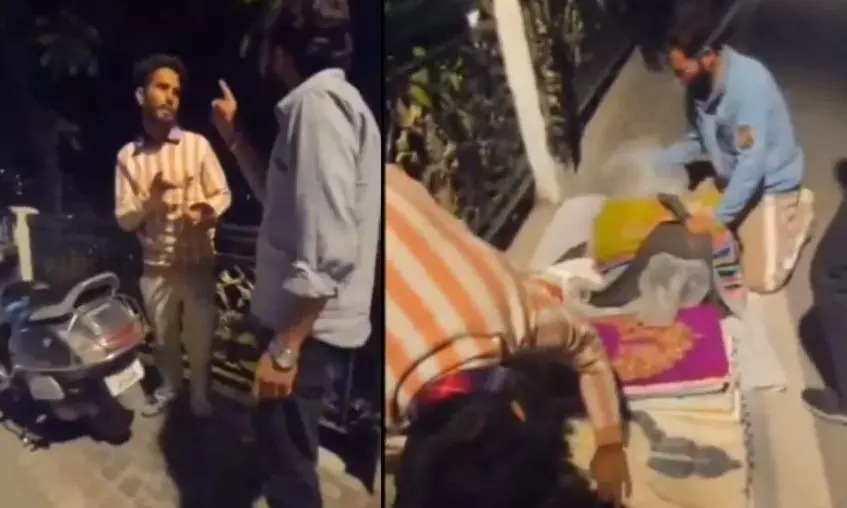
That fragile livelihood was violently shaken in Uttarakhand’s Udham Singh Nagar district, where 28-year-old Bilal Ahmed Ganie, a Kashmiri shawl trader, was assaulted, robbed, humiliated, and threatened with death, allegedly by members of the Bajrang Dal.
The incident has sparked outrage not merely because of the violence involved—but because it reflects a pattern of vulnerability faced by Kashmiri traders operating far from home, often at the mercy of local hostility and delayed justice.
Who Is the Victim: A Decade of Honest Trade
Bilal Ahmed Ganie is not a newcomer or an outsider unfamiliar with the region.
-
Age: 28 years
-
Occupation: Shawl and winter wear trader
-
Location of work: Kashipur area, Udham Singh Nagar
-
Years in Uttarakhand: Nearly a decade
According to people familiar with his work, Ganie had:
-
Established long-term customer relationships
-
Paid local rents and municipal charges
-
Operated peacefully without prior disputes
Like many Kashmiri traders, his yearly income depends heavily on the winter season outside Jammu & Kashmir.
The Assault: Violence, Humiliation, and Intimidation
What Allegedly Happened
According to the complaint and eyewitness accounts:
-
Ganie was physically assaulted by a group identifying themselves as Bajrang Dal workers
-
He was robbed of cash and belongings
-
He was forced to chant “Bharat Mata Ki Jai”
-
He was threatened with death if he continued to operate in the area
The attack was reportedly led by Ankur Singh, identified as a local Bajrang Dal functionary.
Filming the Humiliation
One of the most disturbing aspects of the incident was the alleged:
-
Video recording of the assault
-
Temporary upload of the footage on Instagram
-
Subsequent deletion after public outrage
Rights groups argue that filming such acts is not incidental—it is meant to terrorise not just the victim, but the entire community.
A Climate of Fear: “Leave or Die”
The threat issued to Ganie—to leave the area or face death—has sent shockwaves across Kashmiri trader networks.
Several traders operating in Uttarakhand, Uttar Pradesh, and Himachal Pradesh report:
-
Increased fear after the incident
-
Reluctance to move freely
-
Consideration of returning home early, despite financial loss
“This is not just about one boy. It’s a message to all of us,”
— Kashmiri shawl trader, speaking anonymously
Police Response: Delayed Justice Raises Questions
Initial Hesitation
Despite the seriousness of the allegations:
-
No FIR was registered initially
-
The matter was reportedly treated as a “local dispute”
-
The victim was left without immediate legal protection
This delay triggered sharp criticism from civil society groups and rights organisations.
FIR After Pressure
Only after sustained pressure from:
-
Jammu & Kashmir Students Association (JKSA)
-
Civil rights activists
-
Media attention
did the police finally book the accused Bajrang Dal members.
This sequence has raised troubling questions:
-
Why was the FIR delayed?
-
Would action have been taken without external pressure?
-
Are migrant traders adequately protected by local law enforcement?
JKSA Steps In: Advocacy from Afar
The Jammu & Kashmir Students Association (JKSA) played a critical role in ensuring accountability.
Actions Taken
-
Wrote formally to the Uttarakhand Director General of Police
-
Demanded:
-
Immediate arrests
-
Protection for Kashmiri traders
-
Strict action under relevant criminal laws
-
JKSA described the incident as:
“Targeted harassment based on identity and livelihood.”
Their intervention underscores how community organisations increasingly fill gaps left by the system.
Political and Civil Society Reactions
Condemnation Across the Board
Kashmiri leaders, rights activists, and community representatives strongly condemned the assault.
Common themes in their statements:
-
Violation of constitutional rights
-
Failure of law and order
-
Growing normalisation of vigilante violence
Not an Isolated Incident
Several leaders pointed out that:
-
Similar incidents have occurred in the past
-
Many go unreported due to fear of retaliation
-
Victims often accept “apologies” to avoid escalation
Seasonal Kashmiri Traders: An Invisible Workforce
Who They Are
Every winter:
-
Thousands of Kashmiri traders travel across India
-
Sell shawls, carpets, dry fruits, and handicrafts
-
Operate in temporary markets and rented spaces
Economic Reality
For many families:
-
Seasonal trade contributes 60–80% of annual income
-
Loss of one season can push households into debt
-
Alternatives are limited due to regional economic constraints
Violence against traders is therefore not just personal—it is economically devastating.
Ground Reality: What Kashmiri Traders Are Saying
Fear Replacing Trust
On the ground, traders describe:
-
Increased police checks—but without assurance
-
Suspicion from local vigilante groups
-
Fear of being labelled “outsiders” or “security risks”
“We come here to sell shawls, not to fight politics,”
— Trader operating in western UP
Silent Exodus
Some traders have already:
-
Packed up early
-
Shifted to less profitable areas
-
Decided not to return next season
This silent withdrawal rarely makes headlines—but it permanently damages livelihoods.
Law Enforcement Gaps: A Structural Problem
Delayed FIRs
Legal experts note that:
-
FIR delays weaken cases
-
Evidence gets compromised
-
Victims lose confidence in the system
Vigilante Apologies
In many similar cases:
-
Accused offer public apologies
-
Police treat matters as “settled”
-
Structural accountability is avoided
Such practices, experts warn, embolden future offenders.
Constitutional Angle: Rights vs Reality
Under the Indian Constitution:
-
Every citizen has the right to move freely
-
Practice any profession or trade
-
Live with dignity and security
When a trader is assaulted and told to leave:
-
These rights are effectively suspended
-
Citizenship becomes conditional
-
Identity overrides legality
This contradiction lies at the heart of the outrage.
Is This Targeted Violence? Experts Weigh In
Socio-political analysts argue that:
-
Forced slogans
-
Identity-based threats
-
Public humiliation
are markers of targeted intimidation, not random crime.
Even if prosecuted under standard criminal law, the social impact extends far beyond the courtroom.
Economic Fallout: Beyond One Trader
For Kashmir’s Economy
-
Reduced inflow of seasonal income
-
Increased dependence on loans
-
Shrinking artisanal trade networks
For Host States
-
Loss of affordable, skilled traders
-
Reduced market diversity
-
Long-term damage to inter-regional trust
Economic integration weakens when fear replaces commerce.
What Needs to Change: Policy and Practice
Immediate Measures
-
Zero-tolerance for vigilante violence
-
Time-bound FIR registration
-
Visible police protection in trader zones
Medium-Term Steps
-
Trader registration and safety helplines
-
Inter-state coordination mechanisms
-
Sensitisation of local law enforcement
Long-Term Vision
-
Protect internal migrants as economic contributors
-
Decouple identity from suspicion
-
Reinforce rule of law over street justice
FAQs
Q1: Was the assault officially recorded?
Yes, an FIR was eventually registered after public and civil society pressure.
Q2: Are Kashmiri traders leaving Uttarakhand?
Some have already left early; others are reconsidering future seasons.
Q3: Is this the first such incident?
No. Similar cases have been reported in different states over the years.
Q4: What protection exists for migrant traders?
In theory, full constitutional protection. In practice, enforcement remains inconsistent.
Bottom-Line: A Test Case for India’s Rule of Law
The assault on Bilal Ahmed Ganie is not merely a criminal episode—it is a test of institutional integrity.
How the state responds will determine:
-
Whether migrant livelihoods are protected
-
Whether vigilante violence is deterred
-
Whether citizenship remains unconditional
For Kashmiri traders, the question is no longer just about business—it is about safety, dignity, and the right to exist without fear.
Until accountability is swift and visible, incidents like this will continue to cast a long shadow over India’s internal migration story.


