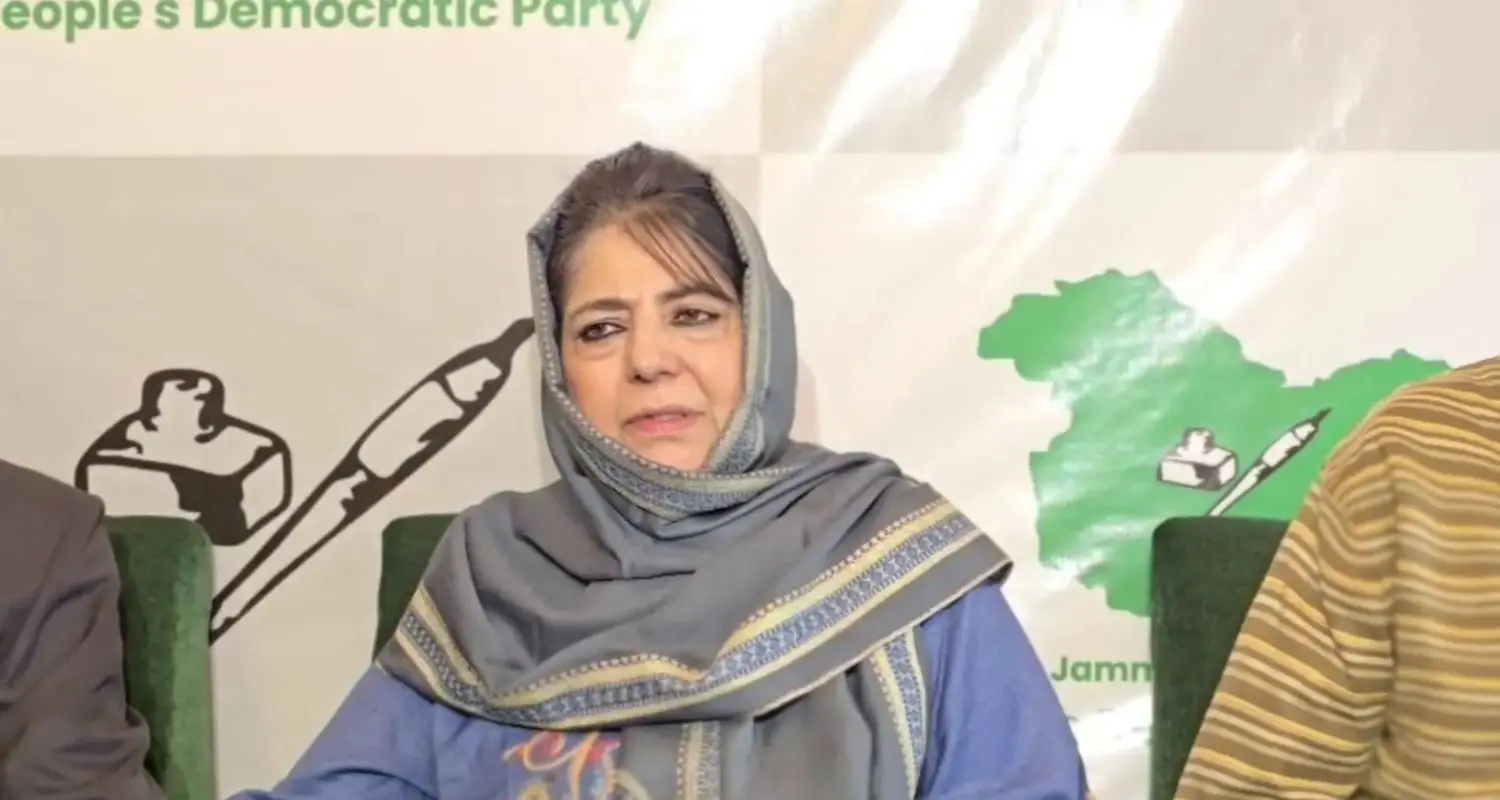
Mehbooba Mufti Rejects HC Setback, Vows to Continue Fight for Kashmiri Inmate Transfers
By: Javid Amin | 26 December 2025
Mehbooba Mufti Refuses to Back Down
People’s Democratic Party (PDP) president Mehbooba Mufti has vowed to continue pressing for the transfer of Kashmiri inmates lodged in jails outside the Union Territory, despite a major legal setback from the Jammu & Kashmir High Court.
Reacting sharply to the court’s dismissal of her Public Interest Litigation (PIL), Mehbooba described the ruling as “unfortunate and surprising”, asserting that she would “not let the issue die.”
Her statement signals a determination to keep the politically and emotionally charged issue alive in public discourse, even as the judicial route has, for now, closed.
What the High Court Said
The J&K High Court dismissed Mehbooba Mufti’s petition seeking the transfer of Kashmiri undertrial prisoners from jails across India back to local prisons within the Union Territory.
Key Observations by the Court
-
The PIL lacked specific factual details, such as names of inmates and individual circumstances
-
The petition appeared politically motivated, rather than grounded in verifiable legal grievances
-
Broad, generalized claims could not substitute for case-specific legal arguments
The ruling reinforced the judiciary’s increasingly strict scrutiny of PILs, particularly on matters intersecting with security and political sensitivity.
Mehbooba’s Response: ‘Families Are Paying the Price’
Mehbooba Mufti countered the court’s reasoning by shifting focus to the human cost of incarceration policies.
She highlighted:
-
Families forced to travel hundreds or thousands of kilometers for prison visits
-
Financial hardship due to travel, accommodation, and legal expenses
-
Emotional distress caused by prolonged separation and limited access
According to her, the issue is not political optics, but the everyday suffering of families whose relatives are lodged far from home.
Why Kashmiri Inmates Are Housed Outside J&K
A significant number of Kashmiri detainees and undertrials are held in prisons outside the Union Territory, a practice authorities justify on security and administrative grounds.
Official Rationale
-
Preventing coordinated unrest or jailbreak risks
-
Avoiding overcrowding in local prisons
-
Ensuring tighter surveillance of high-risk inmates
However, critics argue that this approach effectively punishes families, not just prisoners, by making visits and legal coordination extremely difficult.
Stakeholders and Their Positions
| Stakeholder | Position | Implication |
|---|---|---|
| Mehbooba Mufti (PDP) | Calls ruling “unfortunate,” vows to persist | Reinforces her role as a rights-focused opposition voice |
| J&K High Court | Rejected plea as vague and political | Signals intolerance for broad, non-specific PILs |
| Families of inmates | Demand transfers closer to home | Face emotional, financial, and logistical hardship |
| Authorities | Defend out-of-UT incarceration | Prioritise security and administrative control |
A Politically Sensitive Human Rights Issue
The inmate transfer debate sits at the intersection of:
-
Human rights advocacy
-
National security considerations
-
Post-2019 political restructuring of J&K
Any discussion on prisoners from Kashmir inevitably draws scrutiny, with authorities wary of narratives that could be perceived as undermining security policy, while opposition leaders frame the issue in humanitarian terms.
Legal Hurdles Ahead
The court’s dismissal underscores a critical reality:
-
Future legal challenges must be individualized, not generalized
-
Petitions must include specific names, charges, and circumstances
-
Emotional and political arguments alone are insufficient in court
This raises the bar for any renewed judicial effort on inmate transfers.
Political Strategy: Keeping the Issue Alive
By declaring she will not let the issue fade, Mehbooba Mufti appears to be recalibrating her approach:
-
Shifting from courtrooms to public advocacy
-
Framing the issue around families rather than detainees
-
Positioning herself as a consistent voice on civil liberties
This strategy allows her to maintain political relevance while tapping into a deeply emotive concern within Kashmiri society.
What This Means Going Forward
While the High Court ruling weakens Mehbooba’s immediate legal path, it does not end the debate.
Possible Next Developments
-
Individual petitions filed on behalf of specific inmates
-
Political pressure through legislatures and public forums
-
Renewed discussion on prison reforms and family access
The tension between security imperatives and humanitarian considerations is unlikely to dissipate soon.
Conclusion: A Legal Loss, a Political Continuation
The dismissal of Mehbooba Mufti’s plea marks a clear judicial setback, but her insistence that she will “not let the issue die” suggests the battle is far from over.
As courts demand precision and authorities stress security, the families of Kashmiri inmates remain caught in between—making this an issue that continues to resonate well beyond legal verdicts, in the political and emotional landscape of Jammu & Kashmir.

