Protest Over Reservation Called Off as Leaders, Students Placed Under House Arrest in Kashmir
By: Javid Amin | 28 December 2025
A long-anticipated protest against the controversial reservation policy in Jammu & Kashmir (J&K) was abruptly called off on Sunday after authorities placed several senior political leaders and student activists under house arrest and preventive detention. The demonstration, scheduled to take place outside the Chief Minister’s residence in central Srinagar, was intended to amplify demands for rationalisation of quotas and withdrawal of Rule 17. However, the pre-emptive detentions effectively paralysed the mobilisation and prompted the organisers to cancel the sit-in protest citing “circumstances beyond our control.” The episode underscores rising political tensions in the Union Territory, deepening public frustration over affirmative action policy and democratic space, and widening scrutiny of governance methods used to manage dissent.
What Happened: Leaders, Students Restricted Ahead of Protest
House Arrests to Foil Demonstration
On Sunday morning, multiple senior figures were confined to their homes by security personnel to prevent them from joining a planned peaceful sit-in protest against the reservation policy:
-
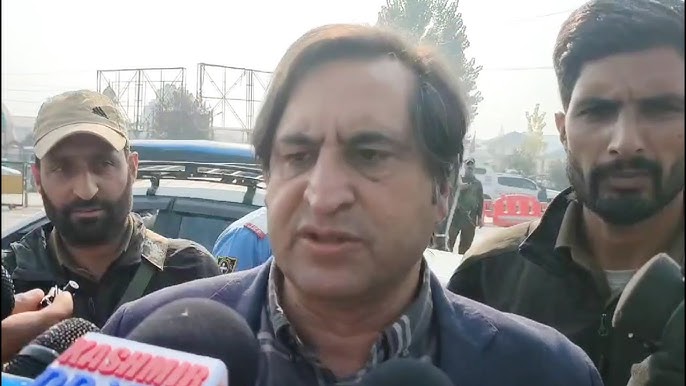
Aga Syed Ruhullah Mehdi, National Conference (NC) MP from Srinagar, was placed under house arrest with a police cordon outside his residence.
-
Waheed ur Rehman Para, Peoples Democratic Party (PDP) MLA from Pulwama, was also reportedly detained at his home.
-
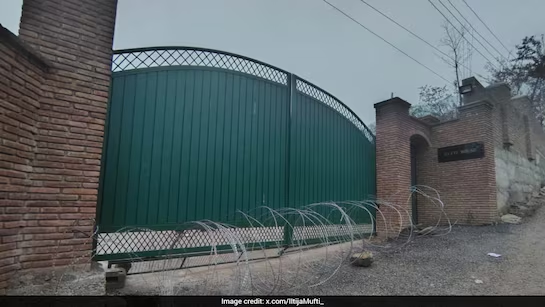
Iltija Mufti, PDP leader and daughter of Mehbooba Mufti, was among those confined.
-
Former Srinagar Mayor Junaid Azim Mattu faced similar restrictions with heavy deployment of Jammu & Kashmir Police and paramilitary forces around his gate.
-
Several student activists were detained in early morning actions, according to party offices and social media posts.
The Open Merit Students Association, the main organiser of the protest, announced the cancellation of the sit-in in central Srinagar after the clampdown, stating that the protest stood “cancelled due to circumstances beyond our control” and urging peaceful conduct.
Why the Protest Was Planned
Students were planning the sit-in to highlight:
-
The need for a fair and rational reservation framework
-
The withdrawal or review of Rule 17 of the J&K reservation rules
-
Equal opportunities for open merit aspirants, whose share in jobs and educational seats has significantly declined
-
A halt to further reservations until comprehensive policy review and transparent consultation take place
Under the current policy implemented after 2019, less than 40 per cent of seats in government recruitments and educational admissions are open to open-merit candidates — despite the general category forming the majority of the population. Over 60 per cent is allocated to various reserved categories.
Roots of the Reservation Controversy
Reservation Policy Background
The J&K reservation debate is longstanding, but it intensified after the 2019 abrogation of Article 370 and reorganisation of the state that brought the region under direct federal governance and eventually reinstated electoral politics under a Union Territory structure. Subsequent changes to reservation rules, including a 2024 expansion to include a 10 per cent quota for the Pahari community, boosted the total reserved quota across categories, effectively reducing the proportion of open-merit seats.
Government sources confirm that open merit seats in jobs and professional education had fallen below 40 per cent under the old regime, leading to protests by students who argued that this disproportionately affects general category aspirants.
Cabinet Sub-Committee and Pending Decisions
In response to earlier demonstrations — including a major protest in December 2024 led by Ruhullah Mehdi and students outside the Chief Minister’s residence — the NC-led government formed a Cabinet Sub-Committee (CSC) to review student grievances and recommend changes. After months of deliberations, the committee’s recommendations were approved by the cabinet and forwarded to Lieutenant Governor (LG) Manoj Sinha for final clearance. Critics argue that the file has been stagnating with the LG’s office, creating administrative delay and political opacity.
According to reports, the sub-committee proposed a rebalancing of the quota structure — including slashing portions of backwards and EWS quotas to push the open merit share to around 50 per cent — but the LG is yet to clear these changes.
Political Leaders’ Reactions and Statements
Aga Ruhullah Mehdi: Vocal Critic of Administrative Delay
Aga Syed Ruhullah Mehdi, who had publicly warned of joining student protests if the government failed to act, denounced his house arrest in strong terms. In a video message shared on social media, he alleged:
“I have been put under house arrest. Policemen have been deployed around my residence … We have also received reports that students have been arrested and their families intimidated. All this is because they are asking for a fair chance through a rational reservation policy.”
Mehdi directly questioned both the elected government and the LG, demanding a clear timeline for the clearance of the reservation file and urging administrative accountability:
“If this file is with the LG’s office, when will it be cleared? Why is the elected government not leading the protest? … Is this a convenient escape route?” he said.
Mehdi has become a central critic of his own party-led government for perceived compromise on core policy commitments, amplifying dissent from within.
Waheed Para: ‘Existential Issue’ for Young Generations
PDP MLA Waheed ur Rehman Para echoed student frustrations, saying the reservation policy has become “an existential issue that strikes at the very foundation of the future of younger generations,” criticising what he described as “zero intent” by the government to resolve the matter.
Para also demanded that the CSC report be placed in the public domain, arguing that transparency is essential even if approvals are pending.
Iltija Mufti and Junaid Mattu: ‘Policy of Apartheid’ Claims
PDP leader Iltija Mufti lamented her house arrest on social media, blaming what she described as “insecurity and paranoia of security agencies” and calling the situation part of the “normalcy in Naya Kashmir.”
Former Srinagar mayor Junaid Azim Mattu similarly condemned his confinement, alleging a “policy of apartheid against students” and asserting solidarity with peaceful dissent.
Government and NC Leadership Statements
Officials have characterised the house detentions as preventive actions to maintain law and order and avert large gatherings that could turn disruptive. However, there has been limited formal explanation of legal basis or explicit justification beyond routine public safety assertions.
Notably, National Conference president Farooq Abdullah defended the detentions, accusing protest supporters of seeking “turmoil” rather than progress, and framing the action as necessary for stability.
In a contrast within the party, NC spokesperson Tanvir Sadiq said students had a legitimate democratic right to protest, even as he reiterated that the reservation report has been finalised and sent to the LG’s office.
Students’ Perspective: Cancellation and Frustration
Open Merit Students Association Response
The Open Merit Students Association, which spearheaded the mobilisation, called off the sit-in protest after the detention of political patrons and the sealing of the protest venue near Polo View Market in central Srinagar. The students’ statement underscored their commitment to discipline and unity, stressing that no sloganeering or indiscipline was expected of participants.
Beyond cancelling the immediate protest, student leaders reiterated demands for:
-
Fair and balanced reservation policy
-
Withdrawal of Rule 17
-
Transparency and public disclosure of government proposals
-
Restoration of open merit share in jobs and admissions commensurate with demographic realities
Why “Rule 17” Matters
Although not widely understood outside policy circles, Rule 17 of the J&K reservation rules has become emblematic of the dispute: critics label it “draconian” because it can allow reserved category candidates to occupy multiple seats (one in their reserved category and another in open merit), effectively shrinking the pool of seats genuinely available to open merit aspirants.
Student groups argue the overarching reservation policy has diluted merit opportunities and lacks a transparent mechanism for measurement, review, and public engagement — ultimately undermining confidence in governance. Secondary references to slow or opaque bureaucracy exacerbating these tensions are echoed across community forums.
Broader Social and Political Implications
The cancellation of the protest and house arrest of political leaders and student activists carries weighty implications across multiple vectors:
1. Democratic Expression and Public Space
The use of preventive detentions to manage a peaceful mobilisation — particularly one openly declared and disciplined — raises questions about the breadth of democratic space available in J&K in managing contentious socio-economic issues. Critics argue that curbing such demonstrations, and detaining both students and political leaders, risks normalising suppression over dialogue.
Observers note that while law and order measures are often used to pre-empt violence, their application in this context — where organisers emphasised non-violence and decorum — signals growing schisms in governance approach and public trust.
2. Political Credit and Intra-Party Dynamics
The episode further exposes tension within J&K’s political class, particularly within the National Conference. Ruhullah’s open criticism of his own party’s leadership for not advancing the reservation issue — juxtaposed with party president Farooq Abdullah’s defence of detentions — underscores ideological and tactical divisions about how to balance protest, governance, and organisational discipline.
This event may reinforce political narratives among opposition allies who perceive mainstream parties as inconsistent or insufficiently responsive.
3. Youth Alienation and Future Mobilisation
For students and youth activists, the cancellation after heavy-handed preventive action is likely to breed frustration and a sense of political exclusion. Many view the reservation issue not merely as policy but as a matter of future opportunity, merit, and equity. If peaceful expressions are contingent on political approval or controlled environments, the longer-term consequence may be young people disengaging from electoral politics in favour of alternative forms of expression — a dynamic that can have unpredictable socio-political outcomes.
4. Administrative Opacity and Trust Deficit
The dispute around the pending reservation file and its approval status with the LG’s office, juxtaposed with public complaints about lack of transparency, has fuelled a trust deficit. Whether real or perceived, the idea that substantial policy decisions can remain pending without clear timelines or public communication fosters cynicism about both administrative processes and political accountability.
What Comes Next: Scenarios and Possible Trajectories
Looking ahead, several scenarios may evolve from this moment:
A. Renewed Protests and Escalation
Should administrative opacity persist and student demands remain unmet, protests may regroup with alternative strategies, potentially reaching outside mainstream political patronage or forming broader civil coalitions.
B. Policy Clarification and Dialogue
One route to resolution would be public disclosure of the Cabinet Sub-Committee report, detailed timelines for LG approval, and inclusive dialogue with student representatives and political stakeholders. This could de-escalate tensions and restore some faith in governance processes.
C. Legal and Institutional Recourse
Students and civil rights groups may seek judicial review of reservation policy interpretations or preventive detention practices, especially if patterns of suppression are seen as systemic rather than situational.
D. Political Realignments
Internal divisions within parties, especially the NC, may prompt realignments or leadership debates ahead of future electoral cycles, as political actors navigate how to position themselves on youth and merit issues.
Conclusion: A Moment of Stress in Kashmir’s Policy and Politics
The cancellation of the reservation protest following house arrests — including of well-known political leaders and student activists — speaks to the complexity of democratic practice, administrative authority, and public trust in Jammu & Kashmir today.
The reservation question at its root touches on expectations of fairness, opportunity, and transparent governance. The manner in which dissent is addressed — whether through dialogue, public engagement, or containment — will shape political attitudes and civic culture in the Valley in the immediate future.
As political leaders, student groups, parents, and neutral observers grapple with the implications of this moment, the challenge remains: to reconcile the legitimate social demands of youth with institutional processes, and to ensure that debates over policy do not erode the fundamental confidence of citizens in their democratic rights and governance systems.