Deadly clashes triggered by inflation and currency collapse intensify political unrest in Iran, drawing international condemnation and raising fears of wider regional instability.
By: Javid Amin | 11 January 2026
Iran is engulfed in one of the most violent waves of unrest in recent memory as mass demonstrations — initially sparked by deep economic hardship — have rapidly escalated into a profound challenge to the country’s clerical leadership. According to the US-based rights group Human Rights Activists News Agency (HRANA), more than 500 people have been killed in less than two weeks of nationwide protests, with over 10,600 arrests reported.
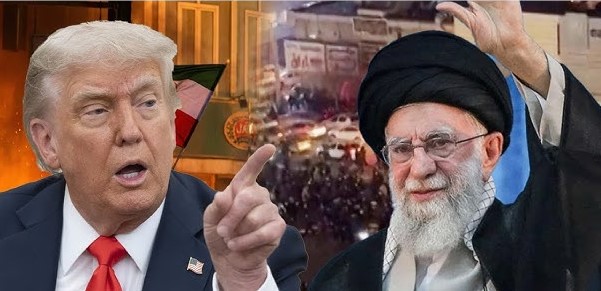
At the same time, the crisis has acquired an international dimension, as United States President Donald Trump publicly weighs a range of responses — including possible military options — while Tehran accuses Washington and Israel of fomenting the unrest.
The Spark: From Economic Grievances to Nationwide Uprising
What began in late December 2025 as protests against soaring inflation and the plummeting value of the Iranian rial has quickly transformed into widespread anti-government unrest across the country.
Economic Roots
Iran’s economy has been under intense pressure for years, driven by prolonged sanctions, declining oil revenues, and a collapsing currency. According to analysts, inflation has soared — with food prices and basic necessities climbing sharply — eroding purchasing power and daily living conditions for ordinary Iranians.
Evolution of Demonstrations
Beginning with strikes by merchants and shopkeepers, protests spread organically to major cities including Tehran, Mashhad, Isfahan and Shiraz. What began as economic grievance has increasingly expressed broader calls for political accountability and social reform.
Casualties and Crackdown: Numbers and Controversies
Verified Numbers
According to HRANA data:
-
At least 490 protestors killed
-
48 members of security forces killed
-
More than 10,600 people arrested in just two weeks of unrest
-
Unconfirmed reports suggest totals could be higher due to internet blackout and restricted reporting conditions.
Communication Blackout
Iranian authorities have imposed a near-nationwide internet blockade, severely limiting independent verification and reporting. Rights groups warn that this blackout not only complicates casualty estimates but also conceals the true scale of the crackdown.
Government Response
State media continues to label the demonstrations as acts of terrorism and foreign-inspired destabilisation, portraying security force actions as necessary to preserve order. Meanwhile, Iran’s parliament has issued warnings against foreign intervention, underscoring the administration’s framing of the unrest as externally instigated.
International Dimension: Trump Signals Potential US Options
In a stark escalation of rhetoric, US President Donald Trump has indicated that Washington is considering “strong options” — including potential military measures — in response to the violence. These comments reflect intense pressure within U.S. political circles to support Iranian protesters and respond to what many Western governments see as serious human rights abuses.
Range of Options Being Considered
According to reporting from multiple outlets, the range of possible US actions under discussion includes:
-
Military strikes targeting key Iranian installations
-
Cyber operations to disrupt Iranian command and control systems
-
Broadening sanctions and financial pressure
-
Support for dissident communications and pro-democracy groups
Trump’s statements stop short of confirming any specific course of action, and US officials emphasize that no final decision has been taken.
Iranian Reaction
Iranian leadership, including Parliament Speaker Mohammad Baqer Qalibaf, has warned the United States and Israel against intervention, stating that military bases and assets could be considered legitimate targets in the event of external strikes. Tehran’s rhetoric has deepened concerns of a possible wider confrontation should tensions escalate further.
International Solidarity and Global Protests
As the crisis has unfolded, solidarity demonstrations have erupted worldwide, from Berlin to Washington, D.C., drawing attention to the harsh suppression of dissent inside Iran. Advocates and diaspora communities have rallied outside Iranian embassies, calling for international accountability and an end to state violence.
Notably, figures in exile, including former Iranian Crown Prince Reza Pahlavi, have urged Iranian security forces to side with the people and resist orders to use lethal force against demonstrators.
These global shows of support highlight not only the breadth of the discontent but also the way the struggles inside Iran resonate with broader conversations about human rights and government accountability worldwide.
Human Rights Concerns and Independent Reports
International organizations, including the United Nations, have expressed grave concern over the scale of violence and the apparent use of live ammunition against civilians. U.N. Secretary-General António Guterres called for restraint and urged Iranian authorities to respect the rights to peaceful assembly and free expression.
Human rights monitors have documented widespread detentions, reports of excessive force, and, in some cases, alleged extrajudicial killings. Independent reporting has also confirmed that government forces have used tear gas, live rounds, and other crowd-control weapons in ways that have resulted in significant civilian fatalities.
Why This Matters: Broader Implications
1. Political Legitimacy and Public Trust
The protests have swiftly transcended purely economic grievances, evolving into a broader rejection of political leadership and calls for systemic change. The magnitude of public outrage reflects a deep crisis of legitimacy within Iran’s theocratic system — one that could have lasting impacts on national governance.
2. Regional Stability Risks
Iran occupies a central role in Middle Eastern geopolitics. Escalation — whether through internal fragmentation or direct foreign intervention — could have cascading effects across the region, potentially affecting energy markets, security alliances, and ongoing conflicts.
3. International Human Rights Norms
The violent crackdown and mass detentions raise serious questions about accountability under international human rights law. The global response will likely influence how future large-scale protest movements are treated by both state actors and the international community.
Conclusion: A Nation at a Crossroads
Iran’s current protests are among the deadliest and most widespread since the tumultuous 2022 unrest. What began as economic frustration — rooted in spiralling inflation and a collapsing currency — has rapidly morphed into a nationwide confrontation with deep political repercussions.
With death tolls surpassing 500, tens of thousands detained, and the United States publicly signalling potential military responses, the crisis is no longer confined inside Iran’s borders. Instead, it poses pressing questions about government accountability, the role of foreign powers, and the resilience of civil liberties in times of crisis.
As both domestic and international actors weigh next steps, Tehran stands at a precarious juncture — with economic desperation, political anger, and global diplomatic pressures converging in a highly combustible moment.