Separate Jammu State Demand Back Amid Renewed Discontent in J&K
By: Javid Amin | 12 January 2026
An Old Demand Returns at a Tense Moment
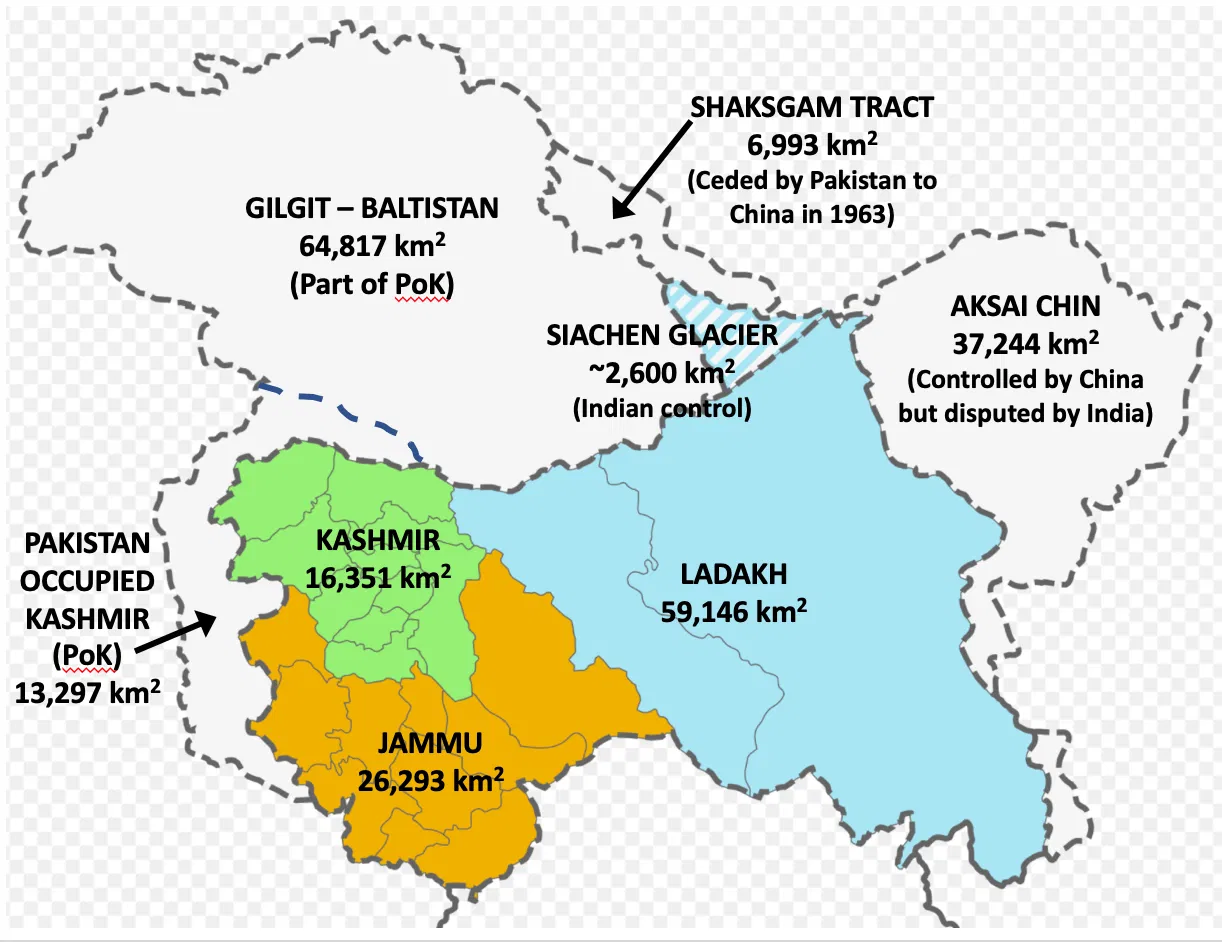
The demand for a separate Jammu state—long considered politically dormant—has once again surfaced in early 2026, tapping into simmering regional grievances and reigniting an emotionally charged debate in Jammu & Kashmir. This resurgence comes amid a confluence of factors: anger over the Shri Mata Vaishno Devi Medical College admission controversy, persistent allegations of regional discrimination, perceived neglect of Jammu’s tourism and development priorities, and the broader uncertainty surrounding statehood restoration after the abrogation of Article 370.
While the demand has been revived most visibly by BJP MLA Sham Lal Sharma, it has been firmly rejected by mainstream political parties, particularly the National Conference (NC), whose leadership has reiterated that “Jammu and Kashmir are inseparable.” The episode underscores how regional discontent—when combined with communal undertones and institutional crises—can quickly morph into existential political questions about identity, governance, and unity.
This feature examines why the demand has re-emerged, how different political actors are responding, what it means for Jammu–Kashmir relations, and whether this renewed agitation represents a serious political shift or yet another cyclical expression of frustration.
Why the Separate Jammu State Demand Is Back
1. The Vaishno Devi Medical College Row: A Catalyst for Anger
At the heart of the current unrest lies the controversy surrounding the Shri Mata Vaishno Devi Institute of Medical Excellence (SMVDIME) in Reasi. The cancellation of MBBS admissions at the newly established medical college triggered widespread protests in Jammu, with demonstrators alleging bias and injustice against students from the region.
For many in Jammu, the episode became symbolic rather than merely administrative. Protesters argued that:
-
The institution was meant to serve the Jammu region, which has historically lagged behind Kashmir in access to advanced medical education.
-
The cancellation of admissions reinforced perceptions that Jammu’s aspirations are routinely sidelined.
-
Regulatory decisions, though officially technical, appeared politically influenced to local observers.
The controversy rapidly transcended education policy, feeding into long-standing narratives of regional marginalisation. Student bodies, parents, and civil society groups framed the issue as another instance where Jammu’s interests were sacrificed amid political maneuvering.
2. Tourism Neglect and Economic Frustration
Beyond education, Jammu’s tourism sector has become another flashpoint. While Kashmir continues to receive national and international attention as a tourist destination—benefiting from sustained investment and promotion—many in Jammu argue that their region’s religious, heritage, and eco-tourism potential remains underdeveloped.
Local stakeholders point to:
-
Insufficient infrastructure investment in pilgrimage circuits beyond Vaishno Devi.
-
Limited marketing of destinations such as Patnitop, Bhaderwah, and Basohli.
-
A perception that policy focus remains Kashmir-centric, reinforcing economic disparities.
These grievances, though not new, have gained renewed resonance in an environment already charged by institutional controversies.
3. Political Imbalance and Representation
Another recurring argument underpinning the separate Jammu state demand is political underrepresentation. Critics argue that decision-making in J&K has historically been dominated by leaders from the Kashmir Valley, leaving Jammu’s concerns under-articulated in policy formulation.
This perception has been amplified in the post-2019 period, as:
-
Governance structures shifted under Union Territory status.
-
Regional parties recalibrated their strategies.
-
Development promises were unevenly interpreted across regions.
For some voices in Jammu, the demand for statehood is framed not as secession but as a quest for equitable governance and dignity.
The Political Spark — Sham Lal Sharma’s Revival of the Demand
A Familiar Voice, a Familiar Demand
The renewed call for a separate Jammu state gained national attention after BJP MLA Sham Lal Sharma publicly revived the demand, asserting that Jammu deserves equitable treatment and political autonomy. His remarks included references to perceived discrimination and, controversially, suggestions that the region needs leadership that reflects its demographic and cultural identity.
Though Sharma’s comments resonated with certain protestors, they also sparked immediate backlash—both within and outside his party.
BJP’s Damage Control
The BJP’s central and J&K leadership moved swiftly to distance the party from Sharma’s remarks. Senior leaders clarified that:
-
The demand for a separate Jammu state is not official BJP policy.
-
Sharma’s statements reflected personal views, not organisational intent.
-
The party remains committed to development and integration rather than bifurcation.
This distancing highlights the BJP’s delicate balancing act in J&K: addressing regional grievances without endorsing fragmentation that could destabilise the already sensitive political landscape.
National Conference’s Firm Rejection — “Inseparable Regions”
Farooq Abdullah’s Strong Words
The strongest rebuttal came from NC chief Farooq Abdullah, who categorically rejected the idea of bifurcation. In a widely quoted statement, he declared:
“Jammu is an inseparable part of Jammu and Kashmir. Separating them would be like separating the head from the body.”
For the NC, the issue is existential. The party’s political identity is rooted in the idea of J&K as a plural, composite entity, where Jammu, Kashmir, and Ladakh (historically) are bound by shared history and constitutional evolution.
NC’s Broader Argument
The NC argues that:
-
Fragmentation would weaken the region’s bargaining power with New Delhi.
-
Divisive demands distract from the core issue of restoring full statehood to J&K.
-
Regional grievances should be addressed through governance reforms, not territorial reorganisation.
Party leaders also warn that reopening debates on bifurcation risks legitimising identity-based politics, which could deepen communal and regional divides.
Opposition Voices and Political Calculations
PDP’s Cautious Critique
While the People’s Democratic Party (PDP) has criticised the BJP for what it describes as polarising politics, it has also been careful not to endorse the separate Jammu state demand. PDP leaders argue that:
-
Regional discontent is being politically instrumentalised.
-
Jammu–Kashmir unity is essential to preserve the secular and democratic character of the region.
-
The focus should remain on restoring constitutional guarantees and statehood.
Civil Society and Public Opinion
On the ground, public opinion in Jammu is far from uniform. While some groups openly support the idea of a separate state, others view it as:
-
Politically impractical.
-
Potentially destabilising.
-
A diversion from pressing issues such as employment, education, and infrastructure.
Many residents express frustration but stop short of endorsing bifurcation, preferring meaningful decentralisation within a united J&K framework.
A Historical Pattern — Why This Demand Keeps Returning
A Cyclical Phenomenon
The demand for a separate Jammu state is not new. It has resurfaced periodically:
-
During moments of political transition.
-
After episodes of perceived injustice or neglect.
-
When regional disparities become politically salient.
Yet, despite decades of agitation, the demand has never gained official traction at the national level.
Why It Fades Away
Historically, the demand has struggled because:
-
There is no broad political consensus supporting bifurcation.
-
National parties fear setting a precedent for further fragmentation.
-
Regional parties successfully mobilise the narrative of unity and shared destiny.
The current resurgence fits this pattern—intense but uncertain in longevity.
Risks and Challenges Ahead
1. Regional Polarisation
The renewed demand risks deepening mistrust between Jammu and Kashmir, especially if political rhetoric frames grievances in communal or identity-based terms.
2. Communal Undertones
Calls for leadership defined by religious identity, even when voiced by individuals rather than parties, risk inflaming tensions and shifting debates away from governance toward symbolism.
3. Impact on Statehood Restoration
NC leaders argue that fragmentation debates weaken the collective demand for restoring J&K’s full statehood. A divided political discourse, they warn, benefits those who prefer prolonged uncertainty.
4. Political Instability
Repeated cycles of agitation without resolution can erode public faith in institutions, creating fertile ground for radical or populist narratives.
What Lies Ahead — Fragmentation or Reconciliation?
The resurfacing of the separate Jammu state demand in 2026 reflects genuine frustrations—but also the dangers of unresolved governance challenges in a politically sensitive region. Whether this episode becomes a turning point or fades like previous iterations depends on:
-
How transparently controversies like the medical college row are resolved.
-
Whether regional development disparities are addressed meaningfully.
-
How responsibly political leaders choose their language and priorities.
For now, mainstream parties remain united in rejecting bifurcation, insisting that Jammu and Kashmir must move forward together, even as they acknowledge the need to address regional grievances with urgency and sincerity.
Conclusion: A Test of Political Maturity
The renewed demand for a separate Jammu state is less about redrawing maps and more about unaddressed anxieties—about fairness, representation, and dignity. While it resonates with some sections of society, it also exposes the fragility of regional trust in Jammu & Kashmir.
As history has shown, unity in J&K has survived repeated stresses, but it requires political maturity, inclusive governance, and a willingness to confront uncomfortable truths. Whether leaders rise to that challenge will shape the region’s future far more than any slogan or demand.