Never Threw Stones, Sat With Five Prime Ministers: Shabir Shah Tells Supreme Court as NIA Faces Tough Questions
By: Javid Amin | 13 January 2026
When a Courtroom Becomes a Mirror to History
Few courtrooms in India carry the symbolic weight of the Supreme Court when it comes to questions of liberty, state power, and constitutional balance. When Kashmiri separatist leader Shabir Ahmed Shah stood represented before the apex court, the hearing was not merely about bail or procedural delay. It became a moment where decades of Kashmir’s turbulent political history intersected with the present-day legal architecture of national security laws.
Shah’s assertion before the court was stark and personal: “I never threw stones. Nor did I instigate anyone. I sat with five prime ministers of India to solve the issue of Kashmir.” The statement was at once a defence, a political reminder, and a challenge to the narrative that has framed his incarceration since June 2019.
The Supreme Court bench of Justices Vikram Nath and Sandeep Mehta responded not with rhetoric, but with pointed legal scrutiny. Asking the National Investigation Agency (NIA) to justify Shah’s prolonged detention in a terror funding case, the bench underscored a principle fundamental to constitutional democracy: incarceration must rest on evidence, not assumption.
This article examines the case in depth—its legal trajectory, political implications, historical context, and the broader debate it reignites about security laws, due process, and the legacy of dialogue in Kashmir.
Who Is Shabir Ahmed Shah: From Street Politics to High-Level Dialogue
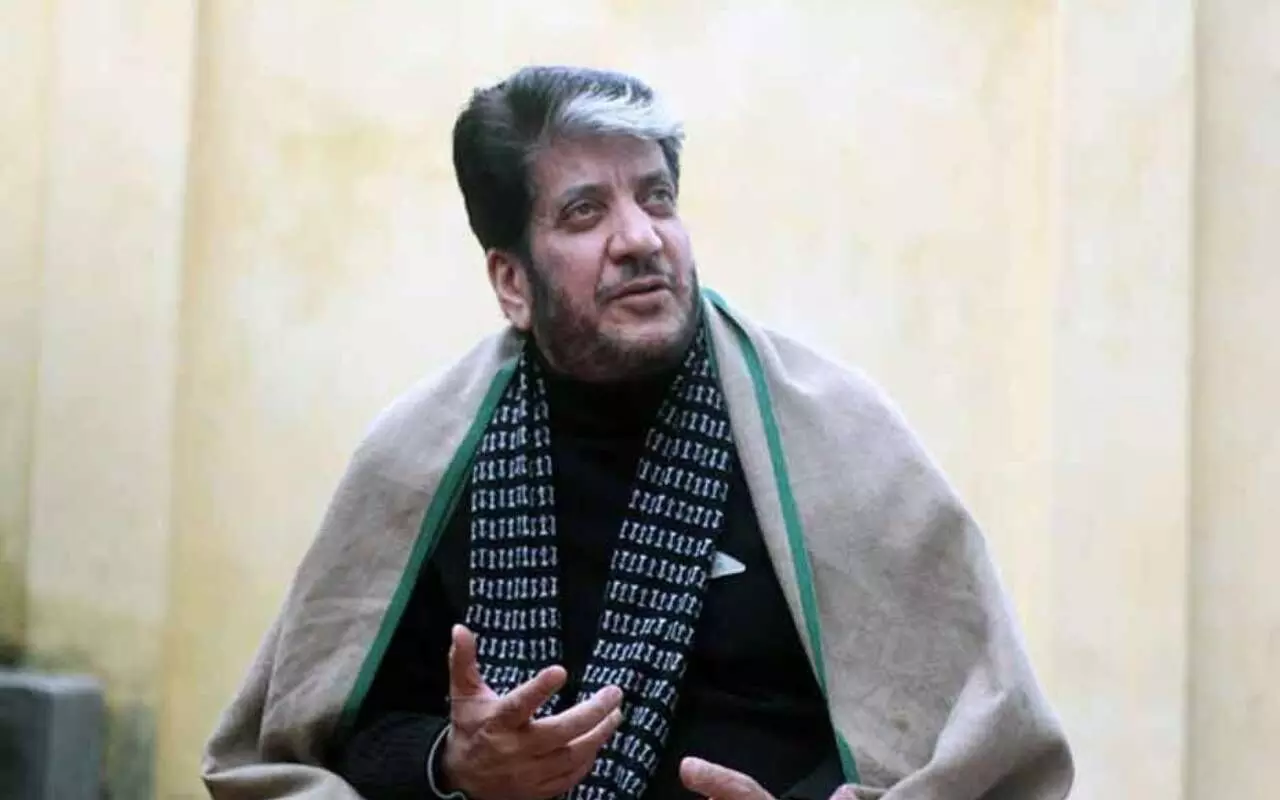
Shabir Ahmed Shah is not an obscure name in Kashmir’s political lexicon. Often referred to as the “Nelson Mandela of Kashmir” by supporters and human rights activists, Shah has spent decades in and out of prison since the late 1960s.
Early Political Life
- Born in 1953 in South Kashmir
- Entered politics at a young age
- Associated with separatist ideology advocating self-determination
- Founder of the Jammu and Kashmir Democratic Freedom Party (JKDFP)
Over the years, Shah emerged as a figure who combined mass mobilisation with political articulation. His influence did not stem from armed struggle, he argues, but from his ability to give voice to popular discontent.
Engagement With the Indian State
A central plank of Shah’s defence before the Supreme Court is his claim that he engaged in dialogue with five Indian prime ministers, from Rajiv Gandhi to Manmohan Singh. This engagement, according to his counsel, positions him not as a militant actor but as a political interlocutor who was, at various times, considered relevant by the Indian establishment itself.
The Supreme Court Hearing: What Transpired
The Bench and Its Observations
The matter came up before a bench comprising Justice Vikram Nath and Justice Sandeep Mehta. While the court made it clear that it was not expressing sympathy for separatist ideology, it was equally firm that the rule of law cannot be suspended indefinitely.
The judges questioned the NIA on two critical points:
- Why has Shabir Shah remained in custody for over six years without trial conclusion?
- What concrete evidence exists to justify continued detention under UAPA?
The bench asked the agency to place on record:
- Shah’s alleged speeches
- Documentary or material evidence linking him to terror funding
- Justification for prolonged incarceration
Shah’s Statement Through Counsel
Represented by senior advocate Colin Gonsalves, Shah’s defence rested on three pillars:
- He never engaged in or incited violence
- His speeches reflected political aspirations, not calls to arms
- The Indian state itself treated him as a negotiator by engaging him in dialogue
Gonsalves argued that Shah’s popularity came from words, not weapons—a distinction critical under criminal law.
The NIA’s Case: Terror Funding Allegations
The National Investigation Agency has accused Shah under the Unlawful Activities (Prevention) Act (UAPA), alleging his involvement in terror funding activities. The agency maintains that Shah used his political influence to channel funds that sustained separatist networks.
During the hearing, the NIA sought additional time to present documents and evidence supporting its claims. The court granted time but made it clear that delay cannot become a substitute for proof.
Six Years in Custody: The Question of Prolonged Detention
Shabir Shah has been in custody since June 2019—a period that now exceeds six years. This fact alone has placed the case under sharper judicial and public scrutiny.
Why Prolonged Detention Matters
Under Indian constitutional jurisprudence:
- Personal liberty is a fundamental right under Article 21
- Detention without trial must meet strict standards
- Even under UAPA, incarceration must be periodically justified
The Supreme Court has, in recent years, expressed concern over long pre-trial detentions, especially when trials move slowly.
UAPA Under the Lens: Law, Power, and Liberty
The Unlawful Activities (Prevention) Act is among India’s most stringent security laws. Designed to combat terrorism, it allows:
- Extended detention
- Stringent bail conditions
- Broad definitions of unlawful activity
Critics argue that these provisions, while intended for national security, risk eroding due process if not applied with care. Shah’s case now becomes part of a growing judicial conversation on how UAPA should be balanced against constitutional freedoms.
The Political Resonance: Dialogue vs Delegitimisation
Shah’s assertion that he sat with five prime ministers carries political weight. It highlights a paradox in Kashmir policy:
- Figures once engaged as interlocutors
- Later prosecuted as security threats
This shift reflects changing state strategies—from engagement to securitisation—particularly after 2019.
Comparison Snapshot
| Aspect | Details |
|---|---|
| Shah’s claim | Never engaged in violence; met five PMs |
| Court’s concern | Justification for six-year detention |
| Legal framework | UAPA terror funding case |
| Defence argument | Political speech, not militancy |
| NIA stance | Time sought to present evidence |
Why This Case Matters Beyond One Man
1. Legal Precedent
The Supreme Court’s scrutiny could influence how lower courts handle prolonged UAPA detentions.
2. Human Rights Debate
The case reopens discussion on balancing national security with civil liberties.
3. Kashmir’s Political Memory
Shah’s invocation of dialogue reminds India of a period when political engagement, however fraught, remained an option.
A Judiciary at the Crossroads
The Supreme Court has increasingly positioned itself as a guardian against executive excess. By demanding evidence rather than narrative, the bench reinforced judicial accountability without undermining security concerns.
Conclusion: Due Process as the Ultimate Test
Shabir Shah’s statement before the Supreme Court is less about personal vindication and more about a systemic question: Can the state justify indefinite detention without conclusively proving guilt?
As the NIA prepares to place its material on record, the case stands at a critical juncture. Whatever the outcome, it will shape not only Shah’s future but also the evolving jurisprudence on security laws, political dissent, and constitutional liberty in India.
In a democracy, the strength of the state is ultimately measured not by how long it can detain, but by how fairly it can judge.