As Police Data Collection on Mosques Triggers Political Backlash, Questions of Secularism, Religious Freedom, and State Overreach Return to the Centre of Kashmir’s Governance Debate
By: Javid Amin | 14 January 2025
When Administration Enters Sacred Space
In Jammu and Kashmir, governance decisions rarely remain administrative. They intersect with history, identity, and faith — often igniting debates far beyond their stated intent. The latest controversy surrounding the profiling of mosques, madrassas, and clerics by the Jammu and Kashmir Police has done exactly that.
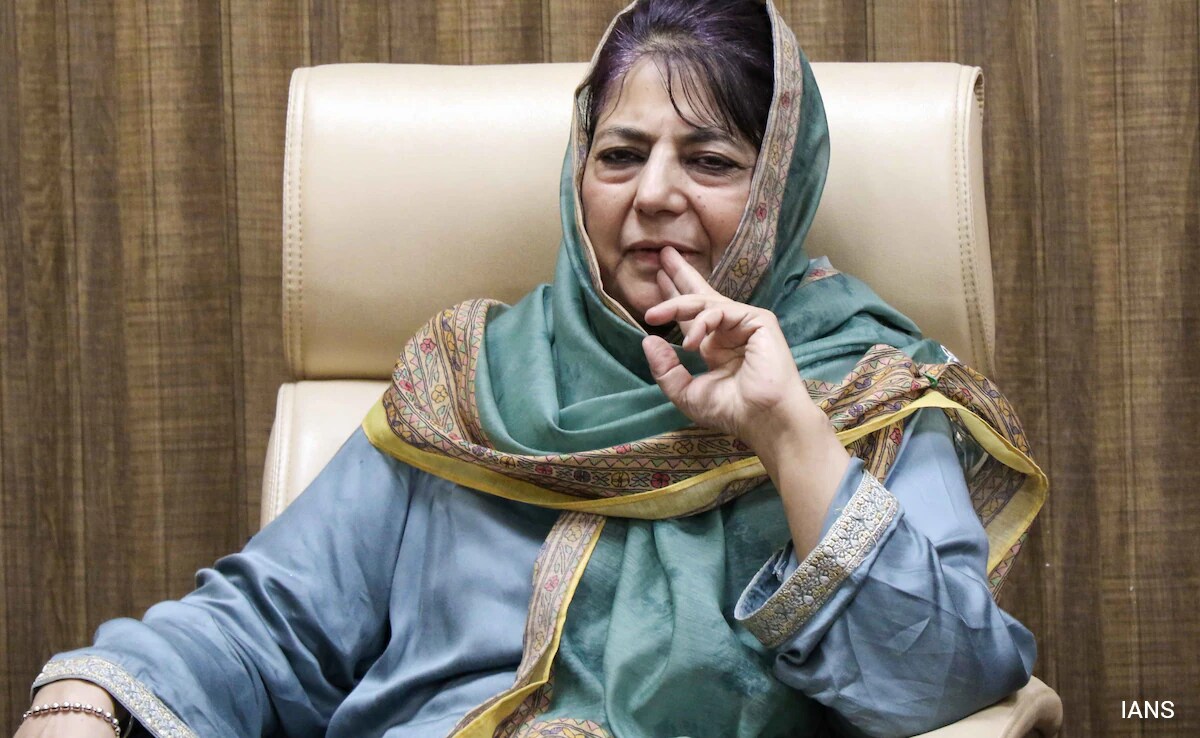
Former Chief Minister and People’s Democratic Party (PDP) president Mehbooba Mufti has emerged as the most forceful critic of the exercise, calling it “interference in our religious affairs” and warning that it risks instilling fear among Muslims and eroding India’s secular foundations.
Her intervention has not occurred in isolation. The move has triggered cross-party criticism, with the Congress and the National Conference (NC) also demanding explanations from the administration, transforming what was presented as a data-collection exercise into a major political and constitutional flashpoint.
What Is the Mosque Profiling Exercise?
The Police Initiative
The Jammu and Kashmir Police initiated a large-scale information-gathering exercise across parts of the Kashmir Valley, asking village-level officials and mosque committees to provide detailed data on:
-
Mosques and madrassas
-
Management committees
-
Imams, muezzins, and clerics
-
Sources of funding and donations
-
Organisational structures
In several cases, clerics and caretakers were reportedly summoned to police stations to clarify details or submit forms.
Administration’s Stated Rationale
Police sources have described the exercise as:
-
A routine administrative measure
-
An effort to maintain updated institutional records
-
Part of broader monitoring to prevent misuse of religious spaces
However, the absence of a publicly notified order, legal framework, or detailed explanation has raised serious concerns.
Mehbooba Mufti’s Response: ‘This Is Religious Interference’
A Strong and Unambiguous Condemnation
Reacting sharply, Mehbooba Mufti accused the administration of overstepping constitutional boundaries.
She described the profiling as:
-
“Interference in our religious affairs”
-
A move designed to create fear psychosis
-
An act that singles out Muslims
Her criticism was framed not just as a political disagreement but as a defence of religious autonomy.
The Question of Equal Treatment
One of Mehbooba’s central arguments was about selective targeting.
“If profiling is necessary, why not begin with temples, gurdwaras, and churches as well?”
By raising this point, she challenged the administration to explain why only Islamic institutions were subjected to such scrutiny.
For Mehbooba, this selectivity strikes at the heart of India’s constitutional secularism, which mandates equal treatment of all religions.
Fear and Intimidation: Voices From the Ground
Imams and Committees Under Pressure
Reports from various parts of the Valley suggest that:
-
Imams feel uneasy about sharing personal details
-
Mosque committees fear unintended consequences
-
Summons to police stations have caused anxiety
For many clerics, the issue is not merely paperwork but the implicit power imbalance involved when religious functionaries are questioned by law enforcement.
Mosques as Community Institutions
In Kashmir, mosques are:
-
Centres of worship
-
Social support hubs
-
Places of education and dispute resolution
Any perception of surveillance within these spaces is therefore experienced as intrusion into daily community life, not just religious practice.
Political Reactions: Rare Opposition Convergence
Congress and NC Join the Criticism
Mehbooba Mufti is not alone in her opposition.
-
Congress leaders have criticised the profiling as undermining India’s secular fabric
-
The National Conference (NC) has demanded clarification from the Lieutenant Governor
This convergence is significant. In a deeply polarised political environment, multiple opposition parties speaking in one voice signals the depth of concern over the issue.
Demand for Accountability
Opposition leaders have called for:
-
Clear explanation of the legal basis
-
Withdrawal or suspension of the exercise
-
Assurance that religious freedoms will not be compromised
The issue has thus moved beyond PDP politics into a broader governance debate.
Why Mosque Profiling Is Especially Sensitive in Kashmir
Historical Context Matters
Kashmir’s recent history is marked by:
-
Prolonged conflict
-
Heavy security presence
-
Distrust between state institutions and civilians
Within this context, actions involving religious spaces are inevitably interpreted through a lens of suspicion.
Symbolism Over Intent
Even if the administration insists on benign intent, critics argue that:
-
Symbolism matters more than official explanations
-
Lack of transparency fuels anxiety
-
Past experiences shape present perceptions
In Kashmir, religion and politics are inseparable from memory, making neutrality difficult to establish once trust is eroded.
Selective Targeting and the Secularism Question
India’s Constitutional Ethos
The Indian Constitution guarantees:
-
Freedom of religion
-
Equality before law
-
Non-discrimination by the state
Critics argue that profiling only mosques contradicts these principles.
Mehbooba Mufti’s warning is rooted in this constitutional argument: secularism cannot be selective.
A Slippery Slope?
Civil liberties advocates caution that:
-
Normalising profiling of one religion opens the door to broader surveillance
-
Faith-based categorisation by the state sets a dangerous precedent
-
Today’s data collection can become tomorrow’s control mechanism
This fear explains the intensity of the backlash.
Security vs Religious Freedom: The Administration’s Dilemma
The Security Argument
Authorities may argue that:
-
Religious institutions can be misused for extremist mobilisation
-
Monitoring helps prevent radicalisation
-
Data collection is a preventive measure
This argument resonates within national security discourse.
The Counter-Argument
Critics respond that:
-
Security measures must be targeted, not collective
-
Blanket profiling alienates law-abiding citizens
-
Community trust is essential for long-term peace
Mehbooba Mufti’s stance aligns with this view, asserting that fear-based governance undermines security rather than strengthening it.
A Pattern of Governance Controversies
Not an Isolated Issue
The mosque profiling controversy comes amid:
-
Dismissals of government employees under Article 311
-
Heightened surveillance narratives
-
Expanded security-led governance
Mehbooba Mufti has criticised several of these moves, framing them as part of a broader pattern of overreach.
Cumulative Impact
While each decision may be defended individually, critics argue that:
-
Together they create an atmosphere of suspicion
-
Civil liberties appear secondary to security
-
The space for democratic engagement is shrinking
Mosque profiling has thus become a symbolic flashpoint.
Legal and Ethical Concerns
Privacy and Data Use
Questions raised include:
-
How will the collected data be stored?
-
Who will have access to it?
-
What safeguards exist against misuse?
In the absence of clear answers, fear fills the vacuum.
Lack of Public Notification
Legal experts note that:
-
Exercises impacting fundamental rights require transparency
-
Publicly notified orders help prevent arbitrariness
-
Silence invites constitutional challenges
The administration’s failure to communicate clearly has compounded mistrust.
Political Fallout: Pressure on the Administration
Opposition Consolidation
The mosque profiling issue has:
-
United PDP, Congress, and NC in criticism
-
Provided a rallying point for civil society
-
Increased scrutiny of the Lieutenant Governor’s administration
Governance Credibility at Stake
How the administration responds will shape:
-
Public trust
-
Community relations
-
The narrative of governance in J&K
Withdrawal or clarification could de-escalate tensions. Silence may deepen them.
Mehbooba Mufti’s Broader Political Positioning
Championing Civil Liberties
Mehbooba has consistently positioned herself as:
-
A defender of religious and civil rights
-
A critic of securitised governance
-
A voice against majoritarian or selective policies
Her mosque profiling criticism fits squarely within this political identity.
Relevance in Contemporary Kashmir
At a time when:
-
Traditional separatist voices have weakened
-
Mainstream parties face governance challenges
Mehbooba’s interventions aim to occupy the space of rights-based opposition.
What Happens Next?
Possible Administrative Responses
The government could:
-
Issue a detailed clarification
-
Limit the scope of data collection
-
Withdraw the exercise altogether
Each option carries political consequences.
If Silence Continues
Failure to address concerns may lead to:
-
Protests by religious bodies
-
Legal challenges
-
Further political mobilisation
In Kashmir, unresolved issues rarely fade quietly.
Conclusion: Faith, Fear, and the Future of Governance
Mehbooba Mufti’s condemnation of mosque profiling has transformed a police exercise into a test of India’s secular and democratic commitments in Kashmir.
Her warning is not merely about mosques. It is about:
-
Who the state chooses to watch
-
How power is exercised
-
Whether faith communities are treated as partners or suspects
In a region where trust is fragile and memory is long, governance cannot afford to blur the line between security and interference.
As the debate continues, one question remains central:
Can peace be sustained where faith is policed and fear replaces dialogue?
The answer may well define the next phase of Jammu and Kashmir’s political journey.


