Kashmir’s Changing Marriage Tradition: From Simplicity to Spectacle
By: Javid Amin | 18 January 2026
When Celebration Became a Statement
In Kashmir, weddings were once quiet affirmations of belonging. They were not performances, nor were they declarations of status. They unfolded in family courtyards, neighbourhood lanes, and village commons, bound together by shared labour, shared food, and shared responsibility. A marriage marked continuity — of family, of community, of cultural memory.
Today, that meaning is shifting.
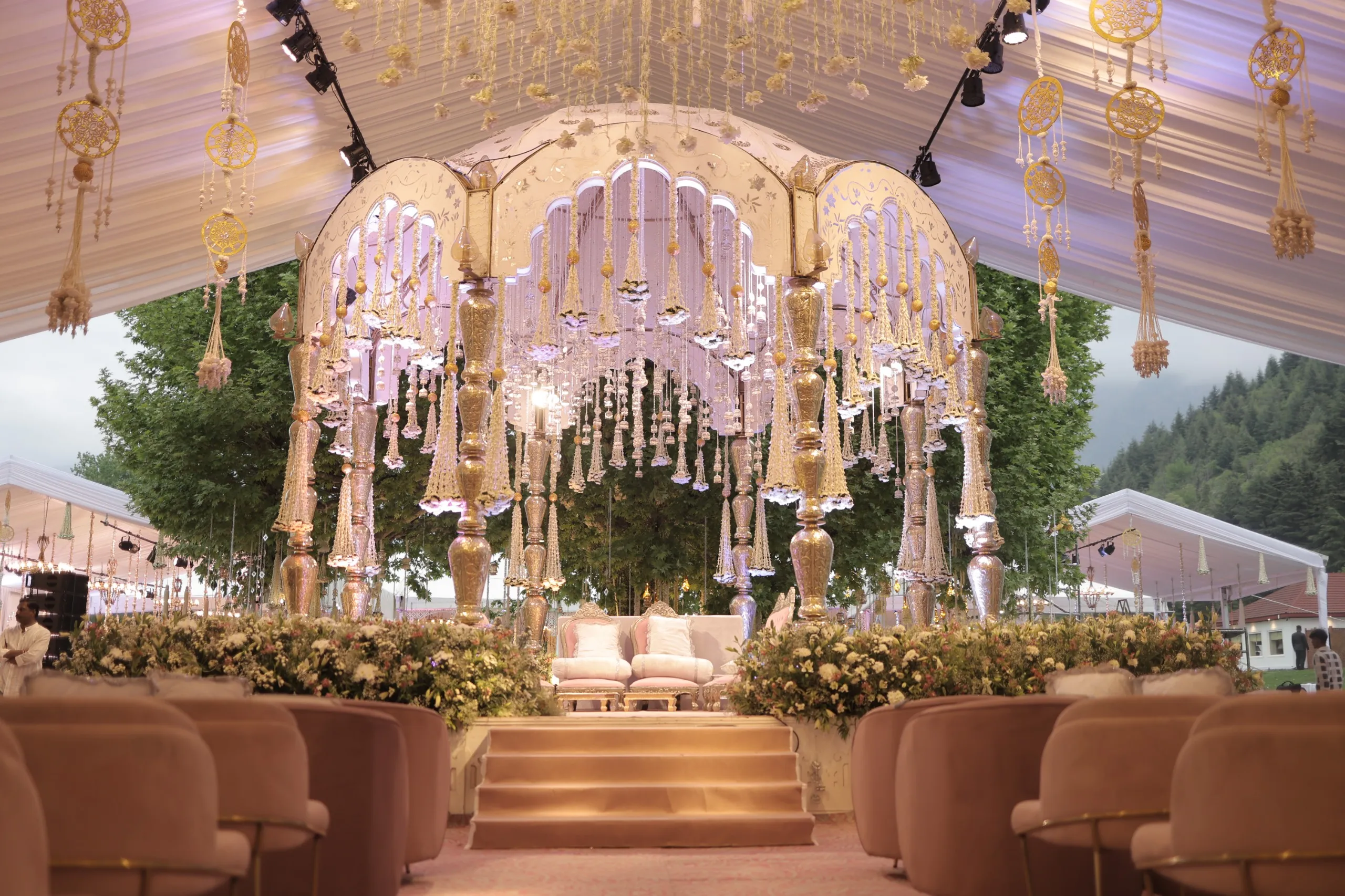
Across Kashmir, marriage ceremonies are undergoing a visible and profound transformation. What were once modest, community-centred events are increasingly becoming carefully curated spectacles — hosted in banquet halls and luxury hotels, dressed in designer aesthetics, recorded through cinematic lenses, and broadcast on social media feeds. The wedding, once intimate, has become aspirational.
This transformation is not merely cosmetic. It reflects deeper changes within Kashmiri society: economic re-orientation, urbanisation, generational aspirations, exposure to global culture, and the rise of digital validation. Weddings have become a mirror — reflecting new social hierarchies, new pressures, and new anxieties.
This feature examines how and why Kashmir’s marriage traditions are changing, what is being gained, what is being lost, and what these evolving ceremonies reveal about the region’s socio-economic reality.
The Age of Simplicity — When Weddings Belonged to the Community
A Collective Affair, Not a Private Show
For generations, Kashmiri weddings were built on collective effort. Families did not plan alone. Neighbours, relatives, and friends were participants long before they were guests. Cooking, cleaning, arranging seating, decorating homes — all were shared responsibilities.
In villages and old city neighbourhoods, the idea of outsourcing wedding work would have seemed unnecessary, even inappropriate. Community participation was not charity; it was cultural obligation. A wedding was not “their event” — it was “our occasion”.
This collective model ensured affordability, inclusion, and emotional support. No family carried the burden alone.
Rituals Rooted in Meaning, Not Display
Traditional Kashmiri wedding rituals were rich in symbolism but restrained in scale. Ceremonies unfolded over defined stages, each with cultural meaning:
-
Mehndi Raat was a women-led gathering of song, laughter, and blessings.
-
Nikah emphasised solemnity, consent, and religious responsibility.
-
Wazwan, the iconic multi-course feast, was not about excess but about craftsmanship, hospitality, and tradition.
The wazwan itself was carefully portioned. It reflected balance — not abundance for display, but enough to honour guests without waste. The emphasis was on taste, not volume.
Gift exchanges were modest. Clothing and jewellery symbolised continuity, not wealth exhibition. The purpose of a wedding was not to impress but to integrate — to welcome a new member into an extended social fabric.
Spiritual Over Material
Perhaps most significantly, weddings were guided by spiritual and ethical values. Simplicity was considered dignified. Excess was discouraged. A simple wedding was not seen as lack; it was seen as virtue.
Older generations still recall a time when families took pride in modest ceremonies. Honour was attached to restraint, not extravagance.
The Rise of the Modern Spectacle
From Courtyards to Banquet Halls
Over the past two decades, the geography of weddings has changed dramatically. Traditional homes and community spaces are being replaced by banquet halls, hotels, and landscaped gardens.
Urban centres such as Srinagar, Budgam, and parts of Anantnag have witnessed a boom in wedding venues. These spaces offer convenience, climate control, and visual grandeur — but they also come at a significant financial cost.
The shift is not merely logistical. It symbolises a move away from community dependence toward commercial solutions.
The Era of Curated Appearances
Wedding attire has undergone one of the most visible transformations. Brides and grooms increasingly opt for designer outfits, customised jewellery, professional styling, and coordinated themes.
While personal expression is not inherently negative, the pressure to meet visual expectations has intensified. Social comparison plays a powerful role. A wedding is no longer judged only by family elders but by online audiences.
Photography, once a functional record, has become a central pillar. Pre-wedding shoots, cinematic videos, drone footage, and edited reels are now standard expectations in many urban weddings.
The ceremony itself is often shaped around the camera.
Wazwan Expands — and Competes
The wazwan remains culturally central, but it now coexists with continental menus, mocktails, dessert counters, and elaborate presentations. Quantity has increased. Variety has multiplied.
This expansion reflects changing tastes but also competitive hosting. The meal has become a measure of generosity, even prosperity.
In this process, the original philosophy of balance risks being overshadowed by excess.
What Is Driving the Change?
Economic Aspirations and Status Display
Economic growth among sections of Kashmiri society has expanded consumption choices. With higher disposable incomes and access to credit, families are willing — and often expected — to spend more on weddings.
Marriage ceremonies have become visible markers of social mobility. Spending is interpreted as success.
Global Exposure and Media Influence
Satellite television, Bollywood, international travel, and digital platforms have reshaped aesthetic preferences. Kashmiri weddings increasingly resemble global wedding templates, with local adaptations.
Social media has intensified this shift. Platforms reward spectacle. Weddings are now content.
Urbanisation and Lifestyle Shifts
Urban living has reduced the feasibility of home-hosted ceremonies. Nuclear families, limited space, and time constraints encourage outsourcing.
At the same time, professional wedding services have aggressively marketed convenience and prestige.
Generational Mindset
Younger couples often seek modern aesthetics, privacy, and individuality. Many negotiate between tradition and contemporary identity — sometimes successfully, sometimes at great cost.
The Hidden Costs — Financial, Social, and Emotional
The Burden of Debt
Behind the glamour lies financial strain. Many families take loans — formal and informal — to meet wedding expectations. Repayment can take years, affecting education, housing, and healthcare decisions.
In rural areas, informal lending remains common, deepening vulnerability.
Inequality and Social Pressure
Extravagance raises social benchmarks. Families with fewer resources face pressure to match standards beyond their means. Simplicity, once respected, is now often misread as inadequacy.
This creates quiet distress.
Gendered Impact
Despite evolving norms, families with daughters continue to bear disproportionate financial pressure. Expectations around jewellery, attire, and scale persist, even when not explicitly labelled as dowry.
Environmental Cost
Large gatherings generate food waste, plastic use, and energy consumption. Environmental considerations remain largely absent from wedding planning conversations.
Balancing Heritage and Choice
The transformation of Kashmiri weddings is not a moral failure nor a cultural betrayal. It is a reflection of social change.
The challenge lies in balance.
Can modern aesthetics coexist with cultural restraint? Can celebration return to meaning without rejecting choice? Can society redefine honour away from expenditure?
Community leaders, religious scholars, and youth groups have begun advocating moderation. Conversations are emerging — slowly — about sustainable celebrations.
Weddings Across Kashmir — A Region of Contrasts
While the transformation of marriage traditions is visible across Kashmir, it is not uniform. Geography, class, and access to resources shape how weddings are imagined and executed.
Urban Kashmir: Visibility and Competition
In cities such as Srinagar, Budgam, and parts of Anantnag, weddings have become highly visible social events. Banquet halls are booked months in advance. Professional planners manage lighting, stage design, and guest flow. Instagram-friendly backdrops are no longer optional — they are expected.
Urban weddings are increasingly evaluated through comparison. Who hosted where? What designer was worn? How elaborate was the décor? These questions circulate long after the event, reinforcing a competitive culture.
The urban middle class, in particular, feels squeezed — aspiring upward while fearing social judgment.
Rural Kashmir: Tradition Under Pressure
In rural districts — Kupwara, Bandipora, Shopian, Kulgam — weddings retain more traditional elements, but pressures are rising here too.
Courtyard weddings still occur, community cooking remains common, and rituals are preserved with greater fidelity. However, exposure to urban and digital norms has created new aspirations. Families often stretch their means to replicate city-style elements within village settings.
What was once optional is now perceived as necessary.
A Growing Cultural Divide
The contrast reveals a cultural divide: urban weddings prioritise presentation; rural weddings prioritise participation. Yet both are increasingly influenced by the same aspirational ideals, creating tension between continuity and change.
The Wedding Economy — Following the Money
The Business of Celebration
The modern Kashmiri wedding has generated a robust informal economy. Banquet halls, caterers, decorators, photographers, makeup artists, fashion boutiques, transport providers — all benefit from the expansion of wedding spending.
For many young Kashmiris, the wedding industry has become a rare source of employment in an otherwise constrained economy.
This complicates the narrative. Weddings are not only cultural events; they are economic engines.
The Rise of Wedding Debt
Yet growth comes with cost. Increasingly, weddings are financed through:
-
Personal savings
-
Gold mortgages
-
Cooperative loans
-
Informal lenders
Debt taken for weddings often extends beyond five years. In some cases, families delay education or healthcare expenses to manage repayments.
This debt is rarely discussed publicly, but it shapes household decisions long after the celebration ends.
Social Pressure and Silent Distress
The Fear of Falling Short
Many families admit, privately, that they overspend not out of desire, but fear. Fear of appearing inadequate. Fear of gossip. Fear of social exclusion.
In this environment, simplicity is no longer interpreted as choice — it is often read as limitation.
Emotional Toll on Families
Parents report stress, anxiety, and exhaustion during wedding preparations. Young couples, meanwhile, navigate conflicting expectations — between personal values and family honour.
The wedding, meant to mark a beginning, often becomes emotionally draining.
Gender and Unequal Burdens
Despite changing attitudes, gendered expectations persist. Families with daughters face higher social scrutiny. Jewellery, guest scale, and presentation remain subtly tied to notions of respectability.
While overt dowry may be rejected in principle, its cultural shadows remain.
This imbalance deepens economic vulnerability and reinforces inequality.
Environmental Blind Spots
Large weddings generate significant waste — food, plastic, water, and energy. Yet environmental responsibility rarely enters planning conversations.
As climate awareness grows, some voices have begun calling for eco-conscious celebrations, but adoption remains limited.
Rethinking the Wedding — Voices of Change
Religious and Community Interventions
Religious leaders increasingly advocate modest weddings, emphasising ethical values over display. Some community groups encourage shared ceremonies or limited guest lists.
Youth-led initiatives promote conscious celebration, challenging excess without rejecting joy.
These efforts remain fragmented but significant.
Conclusion: Choosing Meaning Over Measure
Kashmir’s changing marriage traditions are neither wholly negative nor purely celebratory. They reflect a society negotiating identity under pressure — balancing heritage, aspiration, and survival.
The challenge ahead is not to reverse change, but to humanise it.
If weddings once symbolised belonging, they can do so again — not by rejecting modernity, but by redefining success away from spectacle and back toward meaning.
In a land long shaped by resilience, the most powerful celebration may still be the simplest one.


