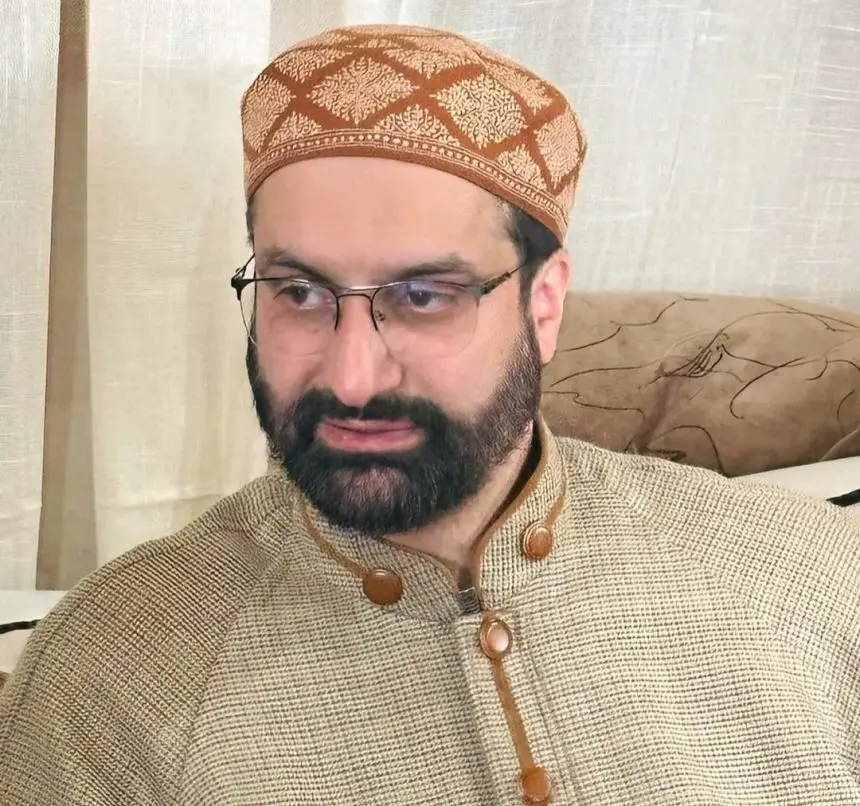
Exodus of Kashmiri Pandits: Mirwaiz Umar Farooq Calls It a Tragedy That Tore Kashmir’s Social Fabric
By: Javid Amin | 21 January 2026
“Kashmir’s soul is wounded, not lost”: Why acknowledgement, memory, and moral courage matter for reconciliation
When Memory Returns to the Center of Kashmir’s Debate
Few subjects in Kashmir’s modern history evoke as much pain, silence, and unresolved emotion as the exodus of Kashmiri Pandits in the early 1990s. For decades, this forced migration—triggered by escalating militancy, targeted killings, and a breakdown of law and order—has remained a deeply polarizing subject, often framed through political binaries rather than human loss.
Against this backdrop, the recent remarks by Mirwaiz Umar Farooq, Kashmir’s chief cleric and a prominent separatist voice, have drawn widespread attention. Calling the exodus of Pandits a “tragedy that tore apart the social fabric built over centuries,” the Mirwaiz articulated a position that goes beyond conventional political rhetoric. His assertion that “Kashmir’s soul is wounded, not lost” carries both moral weight and political sensitivity in a region where narratives are fiercely contested.
Delivered at a remembrance meeting for Bhushan Bazaz, founder of the Jammu and Kashmir Democratic Forum (JKDF), who passed away on January 12, 2026, the speech was not a casual aside. It was a carefully framed intervention in Kashmir’s ongoing struggle with memory, accountability, and coexistence.
This article examines the substance of Mirwaiz’s remarks, cross-verifies them against historical ground realities, and explores their broader implications—social, political, and ethical—for Kashmir’s present and future.
The Exodus of Kashmiri Pandits: A Ground-Verified Historical Context
To understand the significance of Mirwaiz’s statement, it is essential to revisit the events of the early 1990s with factual clarity rather than ideological distortion.
What Happened in the 1990s?
Between 1989 and 1991, Kashmir witnessed an armed insurgency against the Indian state. As militancy intensified, Kashmiri Pandits, a small but historically influential Hindu minority in the Valley, became increasingly vulnerable.
-
Targeted assassinations of prominent Pandit intellectuals, officials, and community leaders created an atmosphere of fear.
-
Threatening slogans and pamphlets appeared in several localities.
-
State institutions failed to provide adequate security or reassurance.
By early 1990, tens of thousands of Pandit families fled the Valley, many overnight, leaving behind homes, temples, and livelihoods accumulated over generations.
Why It Is Widely Recognized as a Tragedy
Independent human rights reports, journalistic accounts, and academic studies converge on key facts:
-
The migration was forced by fear, not voluntary choice.
-
The displacement led to long-term humanitarian consequences, including life in refugee camps, economic decline, and cultural dislocation.
-
The exodus disrupted a centuries-old pluralistic social order in Kashmir.
Mirwaiz’s description of the exodus as a “tragedy” aligns with these established ground realities. It reflects acknowledgment of suffering rather than denial or relativization.
“A Social Fabric Built Over Centuries”: Understanding Kashmir’s Plural Past
One of the most significant aspects of Mirwaiz’s statement is his emphasis on social fabric rather than political blame.
Kashmiriyat and Shared Civilizational Space
Historically, Kashmir was shaped by a composite culture often described as Kashmiriyat—a syncretic ethos blending:
-
Shaivite philosophy
-
Sufi Islam
-
Shared linguistic, artistic, and social traditions
Pandits and Muslims lived as neighbors, sharing festivals, mourning rituals, folklore, and even sacred spaces.
The Pandit exodus did not merely remove a community; it ruptured a civilizational continuity.
By invoking this shared past, Mirwaiz situates the tragedy within a broader cultural loss rather than a narrow political episode.
“Kashmir’s Soul Is Wounded, Not Lost”: A Carefully Chosen Phrase
Words matter profoundly in conflict societies. The Mirwaiz’s assertion that Kashmir’s soul is “wounded, not lost” deserves close attention.
What Does ‘Wounded’ Imply?
-
Acknowledgement of deep, unresolved pain
-
Acceptance that harm has been done—to communities, values, and ethics
-
Recognition that denial will not lead to healing
What Does ‘Not Lost’ Suggest?
-
A belief in the possibility of moral recovery
-
Hope for reconciliation without erasing history
-
Faith in shared humanity beyond political divides
This framing avoids both romanticization and despair. It neither sanitizes the past nor surrenders the future.
Not Defining Kashmir’s Future by the Exodus: Memory Without Paralysis
Mirwaiz’s caution that the exodus should not permanently define Kashmir’s identity is perhaps his most nuanced point—and also the most controversial.
Why This Is Sensitive
For many Pandits, the exodus is not merely history; it is an ongoing trauma marked by:
-
Continued displacement
-
Incomplete justice
-
Uncertain return
Any suggestion of “moving on” can be misinterpreted as minimizing suffering.
What Mirwaiz Appears to Mean
A careful reading suggests he is not advocating forgetting, but rather:
-
Refusing to let trauma become a tool of permanent division
-
Encouraging remembrance that leads to repair, not revenge
-
Warning against narratives that freeze Kashmir in perpetual victimhood
This approach aligns with global post-conflict reconciliation models, where acknowledgment and forward-looking frameworks coexist.
Rebuilding Bridges: Dialogue, Honesty, and Mutual Acknowledgement
Perhaps the most constructive element of Mirwaiz’s remarks is his call for rebuilding trust.
Dialogue as a Moral Imperative
In Kashmir, dialogue has often been reduced to political negotiations. Mirwaiz’s emphasis is broader:
-
Inter-community conversations
-
Honest listening to each other’s pain
-
Recognition that suffering was not one-dimensional
Mutual Acknowledgement of Pain
This is critical. Mirwaiz does not frame suffering as exclusive:
-
Pandits endured displacement and loss
-
Muslims endured violence, disappearances, and militarization
Acknowledging both does not dilute either—it humanizes both.
“Growing Moral Silence”: A Warning Beyond Politics
One of the most striking lines in the Mirwaiz’s speech was his warning about “growing moral silence” in Kashmir.
What Is Moral Silence?
-
Absence of ethical voices during injustice
-
Fear-driven neutrality
-
Selective outrage based on identity
Why It Matters
Conflicts do not persist only because of violence; they persist because silence becomes normalized.
By calling out moral silence, Mirwaiz implicitly challenges:
-
Religious leaders
-
Civil society
-
Political actors
-
Media voices
It is a call for conscience to return to public discourse.
Context Matters: Remembering Bhushan Bazaz and the JKDF
The setting of Mirwaiz’s remarks is not incidental.
Who Was Bhushan Bazaz?
Bhushan Bazaz, founder of the Jammu and Kashmir Democratic Forum, was known for:
-
Advocating dialogue over confrontation
-
Supporting inclusive political discourse
-
Encouraging cross-community engagement
Speaking at his remembrance event adds symbolic weight to Mirwaiz’s words. It signals continuity with a tradition of engagement rather than isolation.
Political Sensitivity: A Balancing Act for a Separatist Leader
Mirwaiz Umar Farooq occupies a complex position in Kashmir’s political landscape.
Why His Words Carry Weight
-
He is a religious authority with moral influence
-
He is associated with separatist politics
-
His statements are scrutinized by all sides
Acknowledging Pandit suffering openly risks criticism from hardliners within his constituency. Yet avoiding such acknowledgment perpetuates distrust.
His remarks reflect a deliberate attempt to recalibrate discourse—without abandoning core political beliefs.
Implications for Pandit-Muslim Relations
Opening Space for Dialogue
Such acknowledgment, rare in separatist discourse, has the potential to:
-
Reduce symbolic alienation
-
Encourage Pandits to engage with Kashmiri civil society
-
Challenge absolutist narratives on both sides
Limitations and Skepticism
However, words alone are insufficient. Pandit groups have historically emphasized:
-
Security guarantees
-
Justice for past crimes
-
Sustainable rehabilitation
Mirwaiz’s remarks may be welcomed cautiously but will be judged by follow-up actions.
Beyond Blame: Why Reconciliation Requires Ethical Leadership
Reconciliation in Kashmir cannot emerge solely from state policy or political agreements. It requires ethical leadership willing to:
-
Acknowledge uncomfortable truths
-
Resist instrumentalizing pain
-
Speak across ideological divides
Mirwaiz’s warning about moral silence highlights the absence of such leadership—and the urgency of reclaiming it.
Kashmir’s Future: Memory, Justice, and Coexistence
The future Mirwaiz gestures toward is not amnesiac. It is rooted in:
-
Honest memory
-
Ethical courage
-
Communal empathy
This does not mean ignoring accountability or justice. Rather, it means refusing to let unresolved history permanently foreclose coexistence.
Conclusion: A Statement That Challenges Silence More Than It Seeks Applause
Mirwaiz Umar Farooq’s description of the Pandit exodus as a tragedy that tore apart Kashmir’s social fabric is significant not because it resolves debates, but because it reopens moral conversation.
By acknowledging historical pain, rejecting permanent division, and calling out moral silence, his remarks challenge all stakeholders—Pandits, Muslims, political leaders, and civil society alike.
Whether this moment leads to meaningful engagement or fades into rhetorical memory depends not on one speech, but on collective willingness to replace silence with sincerity.
Kashmir’s soul, as Mirwaiz suggests, may indeed be wounded. Whether it heals will depend on how courageously its people confront the truths they have long avoided.


