Nearly 100 Houses Damaged as Snowstorm Batters Bandipora; Highways Shut, Avalanche Alerts Issued
By: Javid Amin | 24 January 2026
Powerful Western Disturbance Brings Heavy Snow, Gusty Winds, and Prolonged Disruption Across Kashmir
Bandipora Hit Hard: Nearly 100 Houses and Structures Damaged
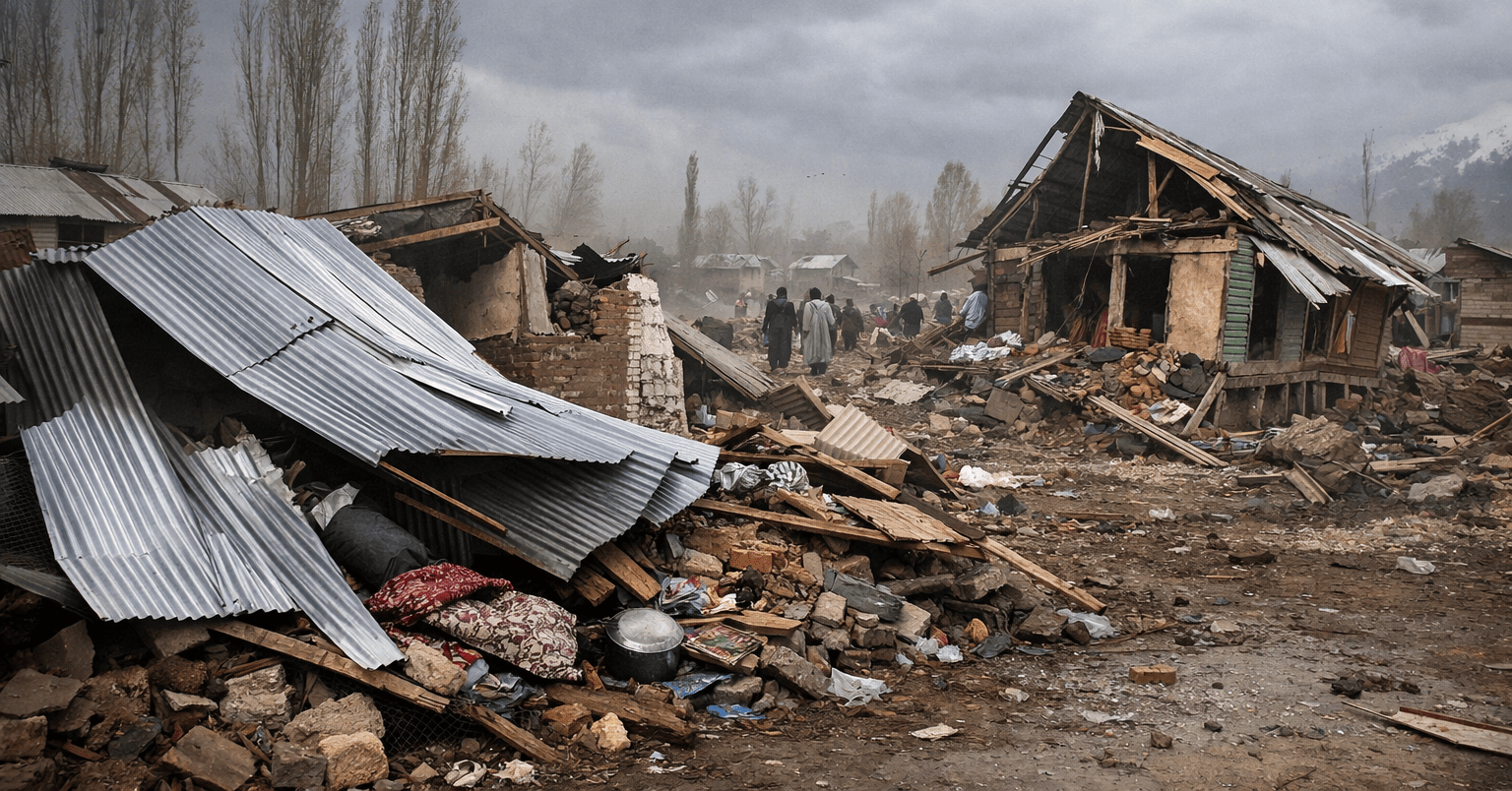
A powerful snowstorm accompanied by gusty winds caused extensive damage in Bandipora district of north Kashmir, where nearly 100 residential and ancillary structures were reported partially damaged, according to preliminary assessments by local authorities.
The worst-affected areas include:
-
Gurez
-
Tulail
-
Abdullan village
-
Parts of Sumbal
Residents reported tin rooftops being blown off, walls collapsing, trees uprooted, and household belongings damaged as the storm intensified from Friday evening (January 23) into the early hours of Saturday (January 24, 2026).
Despite the scale of destruction, no casualties or serious injuries have been reported so far, a fact officials have attributed to timely evacuations and reduced outdoor movement during peak weather activity.
Weather Conditions: Heavy Snow Combined With Strong Winds
Meteorological inputs indicate that the storm was driven by an intense Western Disturbance, bringing a rare and damaging combination of:
-
Heavy snowfall
-
Strong surface winds (40–60 km/h)
-
Rapid temperature and pressure changes
In upper reaches such as Gurez and Tulail, snow accumulation was reported to be several feet deep, while strong winds significantly increased structural stress on homes and public infrastructure.
Officials have also issued avalanche warnings for these high-altitude zones, citing heavy snow load and unstable slopes.
Damage Beyond Bandipora: Valley-Wide Impact
While Bandipora bore the brunt, damage and disruption were reported across several districts:
District-Wise Overview
| District / Area | Impact Reported | Snowfall |
|---|---|---|
| Bandipora (Gurez, Tulail, Abdullan) | ~100 houses/structures damaged | Heavy |
| Kupwara, Shopian, Gulmarg | Dozens of houses damaged | 2–5 feet |
| Srinagar, Budgam, Baramulla | Power outages, fallen trees | Light to moderate |
| Pulwama, Anantnag, Kulgam | Road blocks, power disruption | Moderate |
| Gulmarg | Tourist activity boosted, access restricted | Over 2 feet |
This confirms that the storm was not localized, but part of a Valley-wide weather event.
Transport Disruption: Highway Shut, Rail Suspended
Srinagar–Jammu National Highway (NH-44)
The 270-km Srinagar–Jammu National Highway has remained closed for the third consecutive day, severely impacting supply chains and passenger movement.
-
Closure ongoing since January 23, 2026
-
Heavy snow near Navyug Tunnel
-
Slippery and landslide-prone stretches in Ramban and Kulgam
-
Hundreds of vehicles stranded at multiple locations
Snow clearance operations by the BRO and traffic authorities are underway, but fresh snowfall continues to delay reopening.
Alternative Routes
-
Mughal Road
-
Sinthan Top
-
Srinagar–Sonamarg–Gumri road
All remain closed due to snow accumulation, leaving NH-44 as the only major corridor once conditions improve.
Air and Rail Connectivity: Mixed Picture
Flights
-
All flights from Srinagar Airport were cancelled on Friday
-
Following runway clearance, flights resumed and are operating normally
-
Air travel currently remains the most reliable option for connectivity
Rail Services
-
Banihal–Baramulla rail section suspended
-
Multiple passenger trains cancelled due to snow on tracks
-
Restoration expected only after snowfall subsides
Power Infrastructure Under Severe Stress
Strong winds and snow accumulation have damaged power transmission lines across multiple districts:
-
Widespread outages reported in rural and semi-urban areas
-
Restoration slowed by accessibility issues and weather conditions
-
Winter electricity shortages further compounded
For many households, power cuts have affected heating, water supply, and communication, intensifying hardship amid sub-zero temperatures.
Relief and Response on the Ground
Administrative Action
-
District administrations have deployed damage-assessment teams
-
Officials are monitoring avalanche-prone zones
-
Temporary relief measures are being coordinated for affected families
Security Forces and Civil Support
-
Army, police, and civil authorities have assisted stranded commuters
-
Food, shelter, and basic medical support provided at key points
-
Local volunteers helping families with temporary shelter and debris removal
Context: After a Long Dry Spell, an Abrupt Shock
This storm followed nearly three months of drought-like dry weather in Kashmir. The sudden shift—from prolonged dryness to heavy snowfall and violent winds—has:
-
Strained infrastructure unprepared for abrupt extremes
-
Increased structural vulnerability in rural housing
-
Highlighted the growing unpredictability of Western Disturbances
Experts caution that such rapid swings between dry spells and extreme winter events are becoming more frequent.
Risks Ahead and Official Advisories
Key Risks
-
Avalanches in higher reaches
-
Further roof and wall collapses if winds persist
-
Prolonged power and transport disruption
-
Health risks from cold exposure
Official Advice
-
Avoid travel in upper reaches and on NH-44 until clearance
-
Stay indoors during peak weather activity
-
Secure loose structures and tin roofs
-
Follow district administration and traffic police updates
Key Takeaway
The January 2026 snowstorm has evolved into one of the most disruptive winter events of the season, damaging homes, paralyzing transport, and testing emergency response systems across Kashmir. While the absence of casualties offers relief, the scale of structural and economic damage—especially in places like Bandipora—underscores the urgent need for weather-resilient infrastructure and early-warning preparedness.
For now, air travel remains the safest option, while road and rail connectivity may take several more days to normalize.