When Dreams Meet Reality: Kashmir’s Marriage Crisis in the Shadow of Gold Prices and Joblessness
By: Javid Amin | 31 January 2026
How Soaring Gold Prices, Unemployment, and Extravagant Social Customs Are Reshaping Matrimonial Traditions in Jammu & Kashmir
In the picturesque valleys of Kashmir, where snow-capped mountains frame centuries-old traditions, a silent crisis is unfolding in living rooms and family gatherings. The conversations that once revolved around finding suitable matches and planning festive celebrations now carry an undertone of anxiety, postponement, and financial calculation. Marriage, the cornerstone of Kashmiri society and a cherished life milestone, is increasingly becoming an unattainable dream for thousands of young men and women.
The reasons behind this transformation are complex and interconnected: record-high gold prices that have made traditional dowries financially crippling, widespread unemployment that leaves young people unable to achieve financial stability, and deeply entrenched social customs that demand lavish expenditures families can no longer afford. Together, these factors have created what social scientists are calling Kashmir’s marriage crisis—a phenomenon with far-reaching implications for the region’s demographic future, mental health landscape, and social fabric.
The Glittering Burden: How Gold Became a Marriage Barrier
Gold’s Sacred Place in Kashmiri Weddings
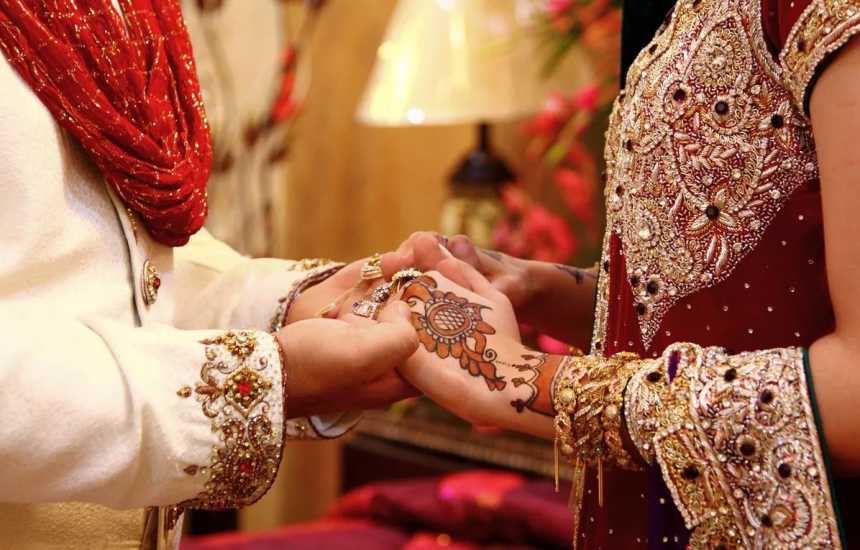
For generations, gold has been more than mere ornamentation in Kashmiri marriages. It represents prestige, security, and family honor. The metal flows through every stage of the matrimonial journey—from engagement ceremonies to the Nikah, and finally when the bride moves to her husband’s home. Gold ornaments owned by the bride are displayed at engagements and weddings, serving as both personal adornment and social statement. Families exchange gold gifts for in-laws on both sides, creating an intricate web of expectations that has become increasingly burdensome.
Traditionally, gold served as a woman’s financial security—her insurance against hard times and her claim to family wealth. However, what began as a practical custom has evolved into a competitive display of affluence, where the quantity and quality of gold determine perceived social worth.
The Price Shock: Current Gold Market Reality
As of January 30, 2026, gold prices in Jammu & Kashmir have reached unprecedented levels. According to current market data, 24-karat gold is priced at approximately ₹1,79,000 per 10 grams, while 22-karat gold—the variety commonly used for jewelry—costs around ₹1,64,100 per 10 grams. For perspective, a single gram of 24-karat gold now costs over ₹16,000.
These prices represent a significant increase from previous years. The Economic Survey 2025-26 indicates that precious metals, particularly gold and silver, are likely to continue their upward trajectory due to sustained demand as safe-haven investments amid global uncertainties. This trend shows no signs of reversal, leaving families trapped between tradition and affordability.
Last season saw a major slump in gold sales across Kashmir, directly reflecting the diminished purchasing power of ordinary families. What was once an achievable expense has become a mountain of financial burden. A typical bridal jewelry set that might have cost ₹5-6 lakhs a decade ago now easily exceeds ₹15-20 lakhs, placing it beyond the reach of middle and lower-income households.
The Social Pressure Cooker
Despite Islamic teachings that discourage extravagance and excessive dowries, social pressure in Kashmir has created a parallel reality. Both the bride’s and groom’s families face scrutiny and judgment based on the gold exchanged. The worthiness of a bride’s family is measured by the gold they can provide, while the groom’s family is similarly evaluated on their gold offerings. This commercialization undermines the very essence of marriage—mutual understanding, compatibility, and companionship.
Families routinely drain lifelong savings or resort to loans to meet these expectations. Some sell ancestral property or agricultural land—productive assets that could generate income—to afford gold for a single ceremony. The psychological toll is immense. Parents feel compelled to sacrifice their financial future to avoid social disgrace, while young couples begin their married lives burdened with debt rather than hope.
The Employment Drought: Kashmir’s Youth in Limbo
By the Numbers: Kashmir’s Joblessness Crisis
While official unemployment figures for Jammu & Kashmir stand at 6.1 percent for the July-September 2025 quarter—already higher than the national average of 5.2 percent—these statistics mask a far more severe reality. The Economic Survey 2025-26 of J&K reveals that nearly 46 percent of educated youth remain unemployed, indicating persistent structural gaps in the economy.
The situation is particularly dire in urban areas, where youth unemployment in the 15-29 age group has reached an alarming 32 percent—almost double the national average. This means nearly one in three young urban Kashmiris seeking work cannot find employment. For women, the crisis is even more acute, with female unemployment in urban areas reported at 20.8 percent, and a combined rural-urban female unemployment rate of 8.7 percent.
Perhaps most revealing is the self-employment statistic: around 58 percent of youth in J&K are classified as ‘self-employed,’ a term that often translates to working as laborers in construction, agriculture, and industries—jobs that offer neither security nor dignity. The Directorate of Employment reported that 3.52 lakh youth were registered as unemployed in the first quarter of 2024, with 1.09 lakh being graduates and postgraduates.
The Government Job Obsession
Kashmir’s heavy dependence on government sector employment has created a significant bottleneck. Young people spend years preparing for competitive examinations, postponing marriage and other life decisions while waiting for secure government positions. The private sector, meanwhile, remains underdeveloped due to security concerns, bureaucratic hurdles, and limited investment climate.
This creates a vicious cycle: families prefer government employees as prospective matches, which means those without such jobs struggle to find partners. Universities continue producing graduates, postgraduates, and doctoral scholars, but the economy fails to absorb them. The resulting brain drain deprives Kashmir of its most productive human capital, as educated youth migrate to other states or abroad seeking opportunities.
Changing Expectations: Women’s Employment Now Mandatory
Traditionally, only men were expected to be employed before marriage. Today, many families prefer women with income as prospective life partners for their sons. This shift reflects economic reality—two incomes are often necessary to maintain even a modest household in Kashmir’s inflated economy. While this represents progress in gender equality, it also doubles the employment barrier, as now both parties must navigate the hostile job market before marriage becomes feasible.
The Show Must Go On: Kashmir’s Culture of Wedding Extravagance
From Simplicity to Spectacle
What was once a simple and dignified affair has transformed into an elaborate production. Traditional Kashmiri weddings now routinely involve lavish Wazwan feasts featuring dozens of dishes, multiple pre-wedding ceremonies, grand engagement parties, and extravagant receptions. Guest lists have ballooned from intimate family gatherings to hundreds of attendees. Every detail—from decorations to photography—has become subject to comparison and competition.
The cost of keeping up with these expectations has outpaced what most families in Kashmir can realistically afford. According to bankers across Srinagar and Anantnag, weddings are the leading reason for personal loan applications. Reserve Bank of India data shows Jammu & Kashmir has experienced a steady rise in household debt over the past five years, with personal loans, credit card use, and gold loans climbing sharply.
In rural areas where banks are less accessible, families turn to informal lenders with devastating consequences. One family in a remote South Kashmir village borrowed ₹5 lakh for their son’s marriage from a local moneylender. By the time the last payment is due, they will have paid more than ₹9 lakh—enough to host the wedding twice over. This isn’t financial irresponsibility; it’s the result of social metrics that have shifted dramatically, where simplicity is mistaken for failure and borrowed extravagance is praised.
The Instagram Effect
Social media has intensified the pressure for ostentatious celebrations. The value of a wedding is now measured in Instagram posts, likes, and shares. Elaborate photo shoots, destination pre-wedding ceremonies, and designer outfits have become expected rather than exceptional. A home is judged by its chandeliers rather than its warmth, and the performance continues even as families cut corners in the kitchen, stall school fees, and ignore medical needs.
The Debt Trap: Long-term Consequences
Families finance wedding extravagance through various means: draining lifelong savings, selling productive assets like agricultural land, taking out formal bank loans, or borrowing from informal moneylenders at usurious rates. The financial recovery from a single wedding can take years—and for many families, it never comes. When a crisis arrives—an illness, a delayed salary, a lost job—there’s nothing left to fall back on.
This is not merely a financial issue; it’s an emotional, social, and cultural crisis. The psychological pressure contributes to rising anxiety, depression, strained family relations, and declining quality of life. Despite increased material consumption, contentment and wellbeing have diminished. Behind closed doors, people whisper their stress while the public performance continues.
The Human Toll: Lives on Hold
Kashmir’s Demographic Anomaly
Jammu & Kashmir now holds the dubious distinction of having the highest average age of marriage in India. The region also records the highest number of unmarried youth—29 percent in the age group of 15 to 29 years. According to publicly available data, nearly 27 percent of women aged 20-49 and 35 percent of men in the same age group remain unmarried, significantly higher than national averages.
Engagements now routinely last for years due to financial strain. Young people find themselves caught in a painful limbo—waiting for secure jobs before looking for a spouse, unable to meet gold and wedding cost expectations, and watching their prime years slip away. Sociologists note this is not merely a demographic shift but a harbinger of broader social transformation. A study titled ‘Perils of Late Marriages in Kashmir Valley’ documents how youth are spending increasing years attempting to secure employment before even considering marriage.
Mental Health Crisis
The psychological toll on Kashmir’s youth is severe and often overlooked. Anxiety, depression, and self-doubt have become common, especially among those unable to afford what society expects of them. The dreams of companionship and family life are increasingly overshadowed by financial anxiety. For women in particular, remaining unmarried beyond culturally accepted ages leads to feelings of inadequacy, isolation, and intense social scrutiny.
Kashmir has become one of the most distressed regions in terms of mental health issues, triggered by a combination of joblessness, family pressure, and societal expectations. The prolonged stress of unemployment and delayed life milestones creates vulnerability to deeper psychological problems. For unmarried individuals, the stigma and social judgment add additional layers of emotional strain.
Medical Consequences: The Infertility Crisis
Doctors across Kashmir report a concerning increase in infertility among newly married couples, largely attributable to marrying later in life combined with prolonged stress and lifestyle factors. What was once rare is now routine in fertility clinics. Women are reporting irregular menstrual cycles, early menopause, and polycystic ovary syndrome in increasing numbers. Men are undergoing fertility testing at unprecedented rates.
The trend has contributed to declining fertility rates, with Jammu & Kashmir recording the lowest Total Fertility Rate in the country at 1.4. Late marriages are narrowing the window for childbearing, creating long-term demographic implications for the region. The infertility issue further complicates marital relationships, with childless couples facing heightened strains and increased likelihood of divorce.
Voices of Change: Reform Movements Gaining Ground
Religious and Community Leadership
Islamic teachings have always emphasized simplicity in marriage. The Quran clearly condemns wastefulness, stating that those who exceed limits are ‘brothers of Satan.’ The Prophet Muhammad (peace be upon him) advocated simple marriages, modest living, and contentment over material excess, reminding believers that true wealth lies in inner satisfaction, not possessions.
Community leaders and religious scholars are increasingly speaking out against the widespread culture of extravagance that contradicts these principles. They’re calling for a return to the simplicity prescribed by faith—modest Mahr (dower), small guest lists, and ceremonies that emphasize spiritual union over material display. Some scholars are issuing guidance specifically addressing the gold burden and excessive wedding costs.
Grassroots Initiatives
A quiet revolution is taking place across Kashmir. Progressive families and social activists are advocating for a fundamental shift in marriage expectations—focusing on education, character, and compatibility rather than material wealth. Several communities have begun challenging archaic norms, encouraging simple weddings with minimal financial burdens.
Social media campaigns and local awareness drives are helping reshape mindsets, promoting marriages that prioritize mutual respect over material possessions. Community-based initiatives such as mass marriage ceremonies have gained popularity, where multiple couples marry simultaneously in simple, cost-effective events. Philanthropists and organizations are establishing funds to support financially disadvantaged families in arranging marriages without debt.
Many families are now opting for modest weddings with fewer guests, minimal decorations, and cost-effective catering. The emphasis is shifting from ostentation to meaningful, intimate celebrations that honor tradition without imposing financial ruin. These pioneers face social pressure and sometimes ridicule, but they’re slowly creating a new normal.
The Minimalist Wedding Movement
Some couples are breaking tradition entirely, choosing to marry in mosques with minimal fanfare. They’re proving that marriage can be a celebration rather than a burden. These minimalist weddings demonstrate that the sanctity and joy of marriage don’t depend on the amount spent or the gold exchanged. Success stories are spreading—couples who married simply and used their saved resources to start businesses, buy homes, or invest in their future together.
The Economic Ripple Effect
Impact on Wedding Industry
Jewelers, caterers, photographers, and wedding planners are experiencing fluctuating demand as families scale back or postpone celebrations. The wedding industry, which employs thousands in Kashmir, faces uncertainty. Traditional businesses built around elaborate ceremonies must adapt to changing realities. Some are diversifying their offerings, creating affordable packages and promoting minimalist options.
However, the reform movement also presents opportunities. Businesses that embrace simplicity and offer cost-effective solutions are finding new markets. The shift could ultimately lead to a more sustainable wedding economy—one that serves families without bankrupting them.
Broader Economic Implications
The marriage crisis reflects and reinforces Kashmir’s broader economic challenges. When families drain savings and sell productive assets for weddings, they lose the capital needed for business investment, education, or home ownership. The debt accumulated for marriages constrains household consumption and limits economic mobility for years.
Delayed marriages also have demographic consequences. Lower fertility rates and an aging population will eventually affect labor force composition and economic growth. The brain drain—educated youth leaving Kashmir for opportunities elsewhere—is partly driven by the inability to achieve financial stability necessary for marriage. This represents a loss of human capital that could otherwise contribute to regional development.
Policy Responses and Government Initiatives
Employment Generation Efforts
The J&K Budget 2025-26 places significant emphasis on private sector growth and entrepreneurship as solutions to the region’s unemployment crisis. The government has introduced incentive schemes to boost internships and create employment opportunities. Various initiatives are underway, including support for startups, skill development programs, and efforts to improve the investment climate.
However, critics argue that while these measures have potential, their success depends on factors such as policy stability, infrastructure development, security, and ease of doing business. Without addressing these foundational issues, employment generation will remain limited. The deep-rooted preference for government jobs versus private sector employment also needs cultural shift.
Social Welfare Programs
The government has implemented various schemes aimed at reducing financial burden on families. These include subsidized loan programs, support for mass marriages, and financial assistance for economically disadvantaged families. However, awareness and accessibility remain challenges. Many eligible families don’t know about available support or face bureaucratic hurdles in accessing it.
Need for Comprehensive Approach
Addressing Kashmir’s marriage crisis requires a multifaceted policy approach. This includes aggressive employment generation, skill development aligned with market needs, entrepreneurship support, financial literacy programs, and cultural campaigns promoting simpler weddings. Mental health support services must be expanded to help youth dealing with the stress of unemployment and delayed life milestones.
Importantly, policy alone cannot solve deeply cultural issues. Government initiatives must work in tandem with community leadership, religious guidance, and grassroots movements to shift social norms around marriage expectations.
Kashmir in National Context
While delayed marriages and economic pressures affect many parts of India, Kashmir’s situation is uniquely severe. The confluence of factors—conflict history, limited industrial development, geographic isolation, extreme weather affecting economic activity, and deeply entrenched customs—creates a perfect storm.
States like Kerala also experience high unemployment among educated youth and delayed marriages, but they benefit from stronger remittance economies, better social safety nets, and more developed private sectors. Kashmir lacks these buffers, making its young people particularly vulnerable.
The wedding extravagance phenomenon is not unique to Kashmir—it’s visible across India and South Asia. However, Kashmir’s relatively lower income levels combined with equally high (or higher) social expectations create an especially painful gap between aspiration and reality.
Looking Ahead: Paths to Resolution
Scenario 1: Status Quo Continuation
If gold prices remain high and joblessness persists without significant intervention, Kashmir will likely see continued rise in marriage age, increasing mental health issues, declining fertility rates, and potential social unrest. The debt trap will deepen for families who continue pursuing extravagant weddings despite lacking resources. This path leads to demographic imbalances and erosion of social cohesion.
Scenario 2: Gradual Cultural Shift
More optimistically, Kashmir may witness a gradual cultural transformation toward reformist weddings. As more families embrace simplicity and young people prioritize companionship over display, social norms could shift. The success of minimalist weddings could inspire others, creating a positive feedback loop. Combined with employment generation initiatives, this could ease the marriage crisis over 5-10 years.
Scenario 3: Comprehensive Reform
The ideal scenario involves coordinated action across multiple fronts: aggressive job creation through public and private investment, financial incentives for simple weddings, community-wide campaigns led by religious and social leaders, legal measures to curb dowry demands, comprehensive mental health support, and education about financial planning and responsible consumption.
This comprehensive approach could transform the marriage landscape within a decade, making timely marriages accessible regardless of economic status and freeing families from crippling debt cycles.
The Role of Technology
Digital platforms could play a constructive role in reshaping marriage norms. Apps and websites promoting simple weddings, connecting families with similar values, and providing financial planning tools could accelerate cultural change. Online communities sharing success stories of minimalist marriages could counteract the Instagram culture of extravagance.
Voices from the Ground: Personal Perspectives
The Waiting Game
Across Kashmir, similar stories repeat. A 32-year-old postgraduate from Srinagar has been preparing for government job examinations for eight years, watching his peers marry and start families while he remains in limbo. A 28-year-old woman with a master’s degree works part-time, earning too little to contribute meaningfully to household expenses, let alone save for marriage. Her parents have postponed searching for a match until she secures stable employment.
Families share their anguish about broken engagements when they couldn’t meet gold expectations. Some speak of spending five years paying off loans taken for a single wedding, cutting expenses on health and education. Others describe the anxiety of watching gold prices climb month after month, knowing each increase pushes their children’s marriages further into the future.
The Reformers
Yet there are also stories of hope. A couple who married with a simple ceremony at their local mosque, spending less than ₹50,000 total, used their savings as down payment on a home. A family that defied convention by forgoing elaborate gold jewelry, instead giving the bride practical household items and educational support. Their bold choice faced initial criticism but ultimately inspired others in their community.
These pioneers describe the freedom of starting married life without debt, the joy of proving that love and commitment matter more than display, and the satisfaction of breaking free from exhausting social expectations. Their experiences offer a blueprint for others seeking alternative paths.
Conclusion: A Crossroads for Kashmir’s Future
Kashmir stands at a critical juncture. The marriage crisis is not merely about delayed weddings or expensive ceremonies—it’s a symptom of deeper economic and social challenges that threaten the region’s future. The confluence of record gold prices, widespread unemployment, and unsustainable social customs has created a situation where a fundamental life milestone is becoming unattainable for many.
The human cost is already visible in rising mental health issues, medical complications from delayed childbearing, families trapped in debt cycles, and young people whose dreams are perpetually deferred. The demographic implications—declining fertility rates, an aging population, brain drain—will shape Kashmir’s trajectory for generations.
Yet this crisis also presents an opportunity for transformative change. The reform movements gaining ground demonstrate that alternatives are possible. Religious teachings that emphasize simplicity offer authoritative guidance for cultural shift. Grassroots initiatives prove that simple weddings can be joyful and meaningful. Government policies addressing employment and financial burden can provide structural support.
The question is whether Kashmir will choose to perpetuate unsustainable traditions or embrace reform. Will families continue sacrificing their financial security for social approval, or will they prioritize their children’s actual wellbeing? Will young people remain trapped in unemployment and delayed life milestones, or will new economic opportunities emerge? Will extravagance continue to be celebrated while families struggle in private, or will simplicity gain social respect?
Kashmir’s culture is rich and beautiful—it doesn’t need the weight of unnecessary extravagance to validate it. Marriage should be a celebration of love, commitment, and partnership, not a competition of displays or a financial burden that haunts families for years. The essence of Kashmiri weddings—the warmth of family, the blessings of community, the spiritual significance—can thrive in simplicity.
Change requires courage. It needs families willing to defy convention, religious leaders willing to speak uncomfortable truths, policymakers willing to prioritize long-term wellbeing over short-term expedience, and young people willing to demand better for themselves. It requires recognizing that financial wisdom is social protection, that simplicity can be a choice rather than compromise, and that true wealth lies in contentment and connection rather than material display.
The path forward is clear, though not easy. It involves comprehensive employment generation, cultural campaigns promoting marriage reform, mental health support, religious leadership emphasizing Islamic principles of moderation, grassroots movements building momentum for change, and individual families making brave choices.
Kashmir has survived and overcome many challenges throughout its history. This marriage crisis, while serious, is not insurmountable. With collective will, principled leadership, and gradual cultural evolution, the region can transform this crisis into an opportunity—creating a future where marriage is accessible to all, where young people can pursue their dreams without crushing financial burden, and where families can celebrate life’s milestones with joy rather than anxiety.
The choice belongs to Kashmir’s people. Every family that chooses simplicity, every young person who values character over wealth, every religious leader who preaches moderation, every policymaker who prioritizes employment—each contributes to the transformation. Change doesn’t always need new laws; sometimes it just takes better choices, one wedding at a time.
As Kashmir enters 2026, the stakes are clear. The region can continue down a path of delayed marriages, mounting debt, and demographic decline, or it can embrace reform that honors tradition while adapting to economic reality. The glitter of gold must not blind Kashmir to the brilliance of its youth, the strength of its families, and the wisdom of its heritage. The time for change is now—not tomorrow, not next year, but today, with each conversation, each decision, each wedding that chooses love over display and partnership over performance.
Sources and Data References
This article is based on verified data from multiple authoritative sources including:
- Periodic Labour Force Survey (PLFS) by Ministry of Statistics and Programme Implementation, Government of India
- Economic Survey 2025-26 of Jammu & Kashmir
- Centre for Monitoring Indian Economy (CMIE) unemployment data
- Reserve Bank of India household debt statistics
- Current gold price data from Multi Commodity Exchange of India and local Kashmir markets (January 2026)
- Directorate of Employment, Jammu & Kashmir registration data
- Ground reports from Greater Kashmir, Kashmir Observer, Kashmir Reader, Rising Kashmir, and Kashmir Convener
- Academic studies including ‘Perils of Late Marriages in Kashmir Valley’
- Medical reports from fertility clinics and health professionals in Kashmir
- Parliamentary data tabled in Rajya Sabha regarding J&K employment statistics
About the Author
Javid Amin
IT Consultant | Freelance Writer | Travel Enthusiast | Entrepreneur
Javid Amin is a dynamic professional with a diverse skill set and a passion for technology, travel, and entrepreneurship. A professional computer engineer by training, he has established himself as a leading IT consultant while maintaining a deep commitment to journalism and creative writing. His unique combination of technical expertise and literary talent allows him to craft engaging, well-researched content across a wide spectrum of topics.
As a born wordsmith, Javid brings analytical rigor and narrative flair to every piece he writes. His freelance writing spans technology trends, socio-economic analysis, cultural commentary, and investigative journalism. He excels at translating complex data and technical concepts into accessible, compelling stories that resonate with diverse audiences.
Beyond his consulting and writing work, Javid is a dedicated travel enthusiast and consultant who shares his love for exploration and his deep knowledge of Kashmir’s hidden gems. His intimate understanding of the region’s geography, culture, and people informs his writing with authenticity and nuance that only a local voice can provide.
Javid is the visionary behind several successful digital ventures, each contributing to the promotion of Kashmir’s beauty, culture, and craftsmanship. As Printer, Publisher, and Editor of Weekly Shohrat – Kashmir (Print Edition), he has built a trusted platform for news and analysis. He also owns and operates the online news portals www.KashmirPost.org and www.KashmirInFocus.com, which serve as vital sources of information and perspective on Kashmir’s evolving landscape.
His career embodies versatility, creativity, and a deep connection to his roots. Whether consulting on IT infrastructure, crafting investigative features, exploring remote destinations, or building digital platforms, Javid remains committed to excellence and authenticity. His work reflects a profound understanding of Kashmir’s challenges and opportunities, combined with a global perspective gained through his technology career and travels.
Through his multifaceted career, Javid Amin continues to bridge the worlds of technology and storytelling, bringing Kashmir’s stories to wider audiences while staying grounded in the realities facing its people. His journalism is characterized by thorough research, balanced perspectives, and a commitment to truth—qualities that shine through in every piece he produces.


