“No Vision, No Planning, No Hope for Results”: Political Storm Over J&K Budget 2026–27
By: Javid Amin | 08 February 2026
A deep dive into the budget presentation, opposition uproar, political narratives, governance challenges, and what the 2026-27 fiscal plan means for everyday people in Jammu & Kashmir
A Budget That Sparked Political Firestorms
On February 6, 2026, Chief Minister Omar Abdullah presented the Jammu & Kashmir Union Territory (UT) Budget for the fiscal year 2026–27 at the Legislative Assembly in Srinagar. Touted by the ruling National Conference (NC) as a “visionary roadmap” for growth and welfare, the budget quickly became the focal point of intense political debate and sharp opposition critique.
In this feature, we unpack not just the budget’s numbers and policy announcements, but also the clash of political narratives, the substantive and rhetorical objections raised by opposition parties — notably the Peoples Democratic Party (PDP), the Bharatiya Janata Party (BJP), and the Peoples Conference (PC) — and the broader socio-economic and governance implications for the people of Jammu & Kashmir.
The Budget at a Glance: What Omar Abdullah Proposed
Before analyzing the political responses, it’s essential to understand the key components and priorities of the 2026–27 J&K Budget as presented by Chief Minister Omar Abdullah.
The government allocated a ₹1.13 lakh crore budget aimed at balancing infrastructure development, social welfare, and disaster-resilient public services. According to official statements and press reports, major focus areas included:
-
Welfare provisions such as free LPG cylinders for families under the Antyodaya Anna Yojana (AAY) and tuition support/education subsidies up to collegiate levels for economically weaker families.
-
Social equity measures including free bus travel for persons with disabilities.
-
Health and safety initiatives such as emergency hospitals and bulletproof ambulances in border-prone areas like Uri and Poonch, responding to geo-political tensions and natural disaster risks.
-
Infrastructure investments, with allocations for modernizing Amarnath Yatra infrastructure, expanding medical college seats, and backing technical and vocational institutes.
-
Industry support and tourism development mechanisms to revive sectors hit by events like the Pahalgam terror attack and flood damages.
Official briefings highlighted the context of recent setbacks in economic activity — from security incidents to natural calamities that battered internal tourism and livelihoods — and framed the budget as a blend of recovery, resilience, and growth initiatives.
This formulation set the stage for contrasting interpretations: the government underscored inclusive growth and people-centric welfare plans, while critics viewed it as inadequate, poorly prioritized, and detached from ground realities.
PDP’s Grounded Rebuke: “No Vision, No Planning, No Hope”
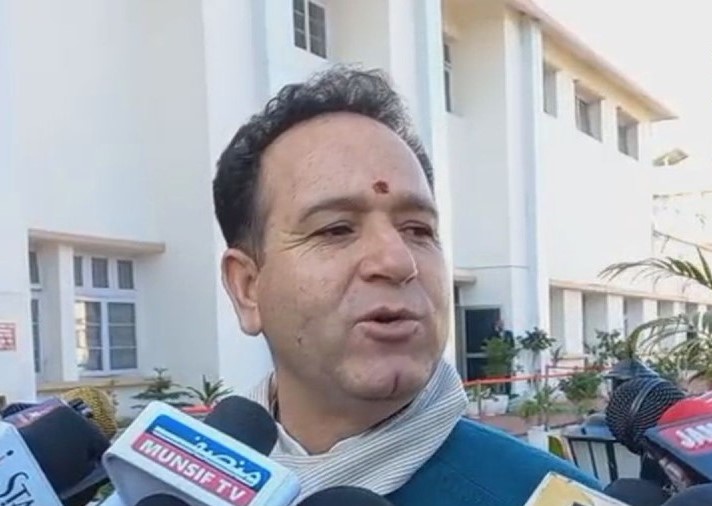
At the sharp end of the political commentary was the Peoples Democratic Party (PDP), traditionally one of J&K’s most influential regional opposition voices. PDP MLA Aga Syed Muntazir Mehdi delivered an unambiguous critique, accusing the NC administration of constructing a budget without strategic foresight or actionable planning, and devoid of meaningful outcomes for ordinary citizens.
In his assembly remarks and subsequent media statements, Mehdi argued that:
-
The budget displayed no tangible vision for medium- to long-term development.
-
It lacked substantive planning frameworks or outcome-oriented targets.
-
There was no credible mechanism to translate proposed allocations into measurable progress on issues such as employment, productivity, or household welfare.
Critically, Mehdi asserted the government’s excessive dependence on Central government funding. He warned that “if central welfare schemes were withdrawn, the UT’s financial and development engines would grind to a halt.” This critique underscored a pervasive concern among some regional leaders: that the UT remains structurally and financially tethered to New Delhi, undermining its autonomy in policy innovation and execution.
This sentiment reflects broader historical tensions in J&K politics, where governance aspirations have consistently grappled with dependency on federal transfers, especially since changes to the region’s status in 2019. While Omar’s administration frames this as strategic reliance, critics characterize it as institutional incapacitation.
BJP’s Countercharge: “NC-Centric and Anti-People”
The Bharatiya Janata Party (BJP), another key opposition force in the UT assembly, also took aim at the budget — though from a different vantage point than the PDP.
BJP leader Sunil Sharma described the budget as “NC-centric” and “anti-people”, asserting that it caters more to party interests than to the broader population’s needs. This criticism comprised several strands:
-
Allocation Priorities: The BJP argued that allocations disproportionately favored constituencies aligned with the ruling party, with insufficient emphasis on pressing public needs like unemployment, daily wage support, and regional equality in development outcomes.
-
Lack of Depth on Core Public Issues: According to BJP legislators, the budget failed to meaningfully address chronic issues such as unemployment, rural poverty, and socio-economic disparities across the Jammu and Kashmir divisions.
-
Disconnect with Ground Realities: While the government highlighted welfare measures for vulnerable groups, BJP critics challenged the practical implementation and accessibility of these promises, questioning their feasibility in under-served districts.
The BJP stance aligned with its broader political narrative of advocating for development-sector reforms and hard infrastructure growth over what it frames as symbolic welfare promises.
Peoples Conference View: “Bureaucrat-Driven and Disconnected”
Adding to the political chorus was Sajad Gani Lone, leader of the Peoples Conference — another significant regional party. Lone’s critique converged with the opposition on the narrative that the budget was disconnected from real public needs.
Lone labeled the budget bureaucrat-driven — suggesting that its formulation prioritized administrative convenience or technical templates rather than substantive public consultation or grassroots input. This criticism dovetailed with broader sentiments among some regional leaders who argue that bureaucratic influence, rather than political leadership rooted in localized understanding, dominates policy decisions.
This theme also reflects political dynamics in the assembly during the budget session, where multiple representatives — including BJP’s Devyani Rana — challenged budgetary allocations for sectors like education and disaster relief, citing reduced or inadequate funding.
Broader Opposition Consensus: “Repackaged Centrally-Sponsored Schemes”
A recurring line of political critique was that the budget largely parroted centrally sponsored schemes — national welfare programs rebranded for local consumption — without significant innovation or localisation.
PDP and Peoples Conference leaders echoed this idea, asserting that many schemes announced as part of the budget were already underway under existing national programs and added little in terms of new funding, localized prioritization, or impact leverage. Critics argue that this approach:
-
Undercuts the regional policy autonomy of the UT.
-
Blurs the fiscal accountability of local governance versus federal funding mechanisms.
-
Limits the government’s ability to tailor welfare schemes to specific demographic and economic needs of Jammu & Kashmir.
Media and Industry Reactions: A Spectrum of Opinions
While political parties dominate the narrative, reactions from independent media commentators and industry voices were more varied, though still often critical. According to press reports, local industry bodies raised concerns over the absence of specific support for existing industrial units and incentives after key schemes expire, which could worsen financial stress for businesses dependent on turnover incentives and subsidies.
Conversely, some business associations welcomed elements of the budget focused on tourism, infrastructure, and social welfare, suggesting potential for inclusive development if implemented effectively.
Budget Session Context: Stormy Assembly Floor and Disruptions
The J&K Budget Session, which began in early February and extended across several sittings, was marked by intense debates on a range of issues beyond fiscal allocations. Legislators from multiple parties raised topics such as:
-
Reservation policy reforms
-
Unemployment and job creation
-
Infrastructure equity between Jammu and Kashmir divisions
-
Restoration of Article 370 and statehood demands
-
National Law University establishment in Jammu
These debates underscored both the political complexity and constituency pressures facing the UT government as it sought to balance governance priorities with electoral accountability.
Economic Realities and Structural Challenges
Political reactions cannot be detached from the economic and structural realities confronting Jammu & Kashmir. The UT continues to grapple with:
1. Fiscal Dependence on the Centre
Government revenue collections in J&K remain a fraction of total budgetary needs. Official data indicates that own tax and non-tax revenues cover only about 25% of the budget, with the rest dependent on central funding and transfers.
2. Sectoral Impact of Security and Natural Disruptions
Repeated events such as the Pahalgam terror attack and devastating floods have significantly affected sectors like tourism, handicrafts, horticulture, and agriculture, leading to job losses and financial distress for families — issues referenced by the Chief Minister in his budget speech.
3. Debt Burden
Historical data shows that the UT carries a significant debt load — previously estimated at over ₹1.25 lakh crore, representing more than half of its Gross State Domestic Product (GSDP). While these figures precede the 2026–27 budget, they underscore ongoing fiscal constraints that government must juggle.
The Political Narrative Beyond the Budget
The budget controversy reflects deeper political currents in J&K. Key themes include:
-
Autonomy and Identity Politics: Continued debate around restoration of Article 370 and statehood remains a potent mobilizing discourse.
-
Regional Equity: Jammu and Kashmir divisions often vie for balanced development priorities — a challenge compounded by historical grievances and resource allocation disputes.
-
Governance Expectations: Opposition leaders leverage budget critiques to highlight unmet electoral promises, governance gaps, and accountability deficits — a common political strategy across democracies.
-
Federal vs. Local Policy Tensions: The interplay between central schemes and UT policymaking highlights ongoing debates over fiscal federalism and autonomous agenda setting.
What This Means for Citizens: Reality Check
For the common people of Jammu & Kashmir, budget debates often translate into expectations around jobs, infrastructure, services, security, and economic opportunity. The political rhetoric — whether about “visionless planning” or “anti-people priorities” — reflects genuine concerns about whether the fiscal blueprint will affect:
-
Youth employment and skills training
-
Education quality and access
-
Healthcare availability
-
Agricultural and horticultural support
-
Disaster resilience and safety infrastructure
-
Connectivity and rural development
The effectiveness of budget implementation — beyond political soundbites — will ultimately determine whether citizens see substantive improvements in their daily lives.
Conclusion: Beyond the Headlines
The Jammu & Kashmir Budget 2026–27, presented by Chief Minister Omar Abdullah, has sparked one of the most charged political debates in recent years — cutting across opposition parties and framing core questions about vision, governance, fiscal autonomy, and public impact.
While the government emphasizes welfare measures, infrastructure plans, and resilience-oriented allocations, critics argue that the blueprint lacks strategic depth and local relevance. The ensuing debates — inside the assembly and on public platforms — reflect wider tensions in contemporary J&K politics: between dependence and autonomy, federal schemes and regional priorities, and political narratives and ground realities.
For citizens and policymakers alike, the challenge now moves beyond the rhetoric of “vision” versus “anti-people” labels, to real implementation outcomes that translate budgetary promises into measurable social and economic progress across Jammu & Kashmir.


