BJP Walks Out of J&K Assembly Over Omar Abdullah’s “Unparliamentary” Remarks; Question Hour Disrupted
By: Javid Amin | 11 February 2026
Massive disruption for the second consecutive day highlights deepening political friction inside the Jammu and Kashmir Assembly
Second Day of Turmoil: BJP Stages Walkout in J&K Assembly
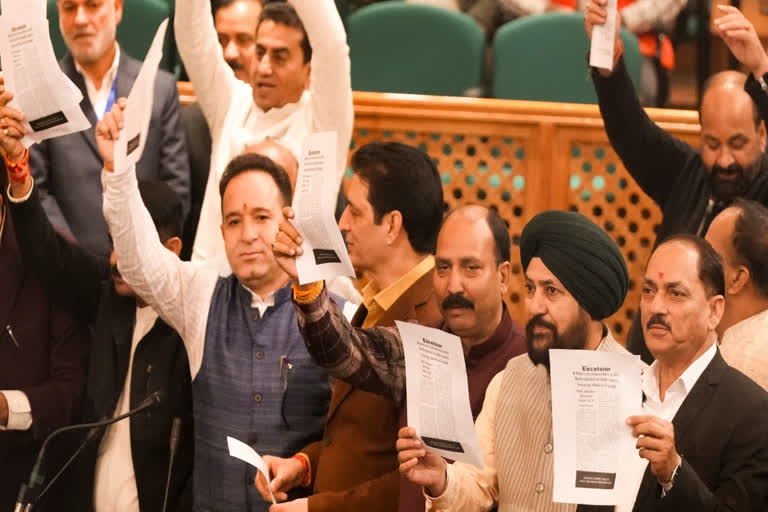
The Jammu and Kashmir Assembly witnessed dramatic scenes once again on Wednesday as members of the Bharatiya Janata Party (BJP) walked out of the House, intensifying political tensions over remarks allegedly made by Chief Minister Omar Abdullah.
The protest came after BJP legislators demanded a formal apology from the Chief Minister for what they described as “unparliamentary” comments directed at their party. As the standoff escalated, proceedings were disrupted for the second consecutive day, underscoring the fragile atmosphere inside the Assembly.
Despite repeated appeals from Speaker Abdul Rahim to restore order and allow the Question Hour to proceed, the BJP stood firm. Eventually, Leader of Opposition Sunil Sharma led his party members out of the House, raising slogans against the government.
The episode reflects more than a procedural disruption—it signals a widening political confrontation within Jammu and Kashmir’s legislative framework.
What Triggered the Walkout?
At the centre of the uproar were remarks allegedly made by Chief Minister Omar Abdullah, which BJP MLAs termed “unparliamentary” and derogatory.
While the precise phrasing of the comments was not formally detailed during the exchange, BJP leaders insisted that the Chief Minister’s language crossed the boundaries of legislative decorum.
Their demand was clear:
-
A public apology from the Chief Minister on the Assembly floor.
Without that, they argued, normal proceedings could not continue.
The protest gained intensity quickly, leading to loud sloganeering and repeated interruptions during the House session.
Speaker Abdul Rahim’s Intervention: Attempt to Salvage Question Hour
Amid the escalating confrontation, Speaker Abdul Rahim attempted to defuse the crisis.
He urged BJP members to:
-
Allow the Question Hour to proceed.
-
Raise the issue when the Chief Minister is present in the House.
-
Maintain decorum and avoid halting legislative business.
The Speaker’s intervention was procedural and measured. Question Hour is a critical component of legislative accountability, allowing members to question the government directly on administrative matters.
However, the BJP did not accept the appeal.
For them, the issue was not procedural—it was about political accountability and dignity.
Counter-Accusations from the Treasury Benches
As tensions rose, the ruling side pushed back.
Sakeena Itoo’s Response
State Health Minister Sakeena Itoo accused BJP members of also using unparliamentary language, particularly in reference to Deputy Chief Minister Surinder Choudhary.
Her response reframed the conflict as mutual rather than unilateral.
The implication was clear:
If decorum was breached, it was not from one side alone.
This marked a shift in the debate—from apology demands to a broader discussion on language standards inside the House.
Surinder Choudhary’s Suggestion: Expunge Words from Both Sides
Deputy Chief Minister Surinder Choudhary proposed a conciliatory solution.
He suggested that:
-
The Chair examine all allegedly unparliamentary remarks.
-
Words used by both sides be reviewed.
-
Those deemed inappropriate be expunged from the official records.
-
Proceedings resume without further disruption.
This approach aimed to:
-
Neutralize the controversy.
-
Avoid selective targeting.
-
Preserve institutional integrity.
Expunging remarks from Assembly records is a standard parliamentary mechanism used when language violates decorum.
However, this compromise did not satisfy the BJP.
Sunil Sharma Rejects Proposal, Leads Walkout
Leader of Opposition Sunil Sharma rejected Choudhary’s suggestion outright.
For Sharma and the BJP, expunging words was insufficient.
They insisted on a direct apology from the Chief Minister.
As the impasse hardened, Sharma led BJP MLAs out of the House.
During the walkout, members chanted slogans including:
-
“Derogatory Sarkar haye haye”
-
“Unparliamentary sarkar haye haye”
-
“Bharat Mata ki Jai”
The slogans transformed a procedural disagreement into a political spectacle—one designed to send a message both inside and outside the Assembly.
Why Question Hour Matters in This Conflict
The disruption of Question Hour is not incidental.
Question Hour serves as:
-
A primary accountability tool.
-
A public forum for policy scrutiny.
-
A mechanism for transparency.
When it stalls, governance discussions stall with it.
The Speaker’s urgency in requesting continuation reflects the institutional importance of this segment.
However, political symbolism often outweighs procedural necessity in high-tension moments.
The Larger Political Context
This episode did not occur in isolation.
The Assembly has recently witnessed intense debates on:
-
Governance issues
-
Policy disagreements
-
Political promises
-
Institutional authority
Against this backdrop, accusations of “unparliamentary” language become politically amplified.
For the BJP, the protest reinforces its role as a confrontational opposition force.
For the ruling side, the emphasis remains on maintaining legislative continuity while countering accusations.
Language and Power in Legislative Politics
The controversy underscores a recurring theme in Indian legislatures:
The political power of language.
In Assembly settings:
-
Words carry institutional weight.
-
Records become historical documents.
-
Tone reflects governance culture.
An allegation of “unparliamentary remarks” is not merely rhetorical—it questions adherence to legislative ethics.
However, counter-allegations complicate the narrative.
When both sides accuse each other of crossing decorum lines, the issue shifts from individual responsibility to collective conduct.
Political Optics: Who Gains from the Walkout?
Walkouts serve strategic purposes.
For the BJP:
-
It signals assertiveness.
-
Demonstrates refusal to tolerate perceived insult.
-
Mobilizes supporters beyond the Assembly floor.
For the ruling party:
-
It may frame the opposition as obstructive.
-
Reinforces a narrative of disruption over debate.
-
Highlights procedural adherence via the Speaker’s appeals.
In modern legislative politics, optics are often as influential as outcomes.
Institutional Stability vs Political Confrontation
The J&K Assembly’s consecutive days of disruption raise concerns about legislative stability.
Repeated uproar can:
-
Delay governance discussions.
-
Affect public perception.
-
Erode faith in institutional processes.
At the same time, opposition protest is a legitimate parliamentary tool.
The challenge lies in balancing dissent with continuity.
The Role of the Speaker: A Delicate Position
Speaker Abdul Rahim’s role in the episode is significant.
He attempted to:
-
De-escalate tensions.
-
Preserve Question Hour.
-
Encourage procedural solutions.
The Speaker’s office must remain neutral, ensuring fairness to both treasury and opposition benches.
In moments of confrontation, the Speaker becomes the custodian of institutional integrity.
Will the CM Respond?
The immediate question remains:
Will Chief Minister Omar Abdullah address the matter directly when present in the House?
If he:
-
Issues a clarification, tensions may ease.
-
Refuses to apologise, the standoff could deepen.
-
Supports expunging remarks mutually, a middle path may emerge.
The trajectory depends largely on political strategy moving forward.
Public Perception: Governance or Gridlock?
For citizens observing the proceedings, the episode may reinforce concerns about:
-
Legislative disruptions.
-
Escalating political hostility.
-
Governance priorities being sidelined.
Alternatively, supporters of either side may view the confrontation as necessary political accountability.
Public sentiment often shapes how such Assembly confrontations are remembered.
Conclusion: A Test for Political Maturity
The BJP walkout over alleged “unparliamentary” remarks by Chief Minister Omar Abdullah marks another chapter in the evolving dynamics of the Jammu and Kashmir Assembly.
At its core, the issue revolves around:
-
Political language
-
Institutional decorum
-
Opposition accountability
-
Government responsiveness
Whether this episode escalates into prolonged confrontation or resolves through procedural compromise will signal the maturity of legislative politics in the Union Territory.
For now, one thing is certain:
The Assembly floor has once again become the central theatre of Jammu and Kashmir’s political contest.


