Trump’s “One Night” Iran Warning Sends Shockwaves Across Global Markets, Diplomacy, and Security
By: Javid Amin | 07 April 2026
A Statement That Shook the World
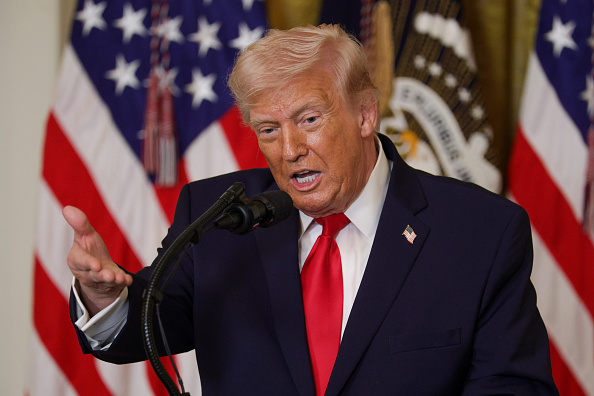
When Donald Trump declared that “the entire country of Iran could be taken out in one night — and that night might be tomorrow night,” the statement did more than grab headlines. It sent immediate tremors across diplomatic corridors, oil markets, and military establishments worldwide.
Such rhetoric, especially from a former U.S. President with enduring political influence, represents not merely a verbal escalation but a signal of shifting strategic posture. In fragile geopolitical environments, language itself can function as a catalyst — triggering reactions, recalibrations, and, in worst cases, conflict spirals.
At a time when tensions involving Iran are already elevated due to military strikes, energy disruptions, and diplomatic breakdowns, this warning has intensified fears of a broader confrontation that could reshape global stability.
Escalation of Rhetoric — From Pressure Tactics to War Signals
The phrase “take out an entire country in one night” is not typical diplomatic language. It represents an extreme articulation of military capability — one that carries implications far beyond conventional deterrence.
What Makes This Statement Significant?
- Scale of Threat
The suggestion of eliminating an entire nation implies overwhelming force — potentially referencing advanced U.S. capabilities such as precision strikes, cyber warfare, or strategic weapons systems. - Temporal Urgency
The addition of “that night might be tomorrow” introduces immediacy, creating uncertainty in global systems that depend on predictability. - Psychological Warfare
Such rhetoric may be intended to pressure Tehran into concessions, but it also risks provoking retaliation or miscalculation.
Strategic Interpretation
From an international relations perspective, this aligns with “coercive diplomacy” — where threats are used to force behavioral change without actual military engagement. However, history shows that coercive diplomacy can easily tip into conflict when:
- Communication channels are weak
- Mutual distrust is high
- Domestic political pressures dominate foreign policy decisions
Diplomatic Fallout — Mediation Efforts Under Strain
Diplomatic actors attempting to stabilize the region now face a significantly more complex environment.
Countries such as:
- Egypt
- Turkey
- Pakistan
have been working behind the scenes to de-escalate tensions. However, hardline rhetoric undermines these efforts in several ways:
Key Diplomatic Impacts
- Erosion of Trust: Iran is less likely to engage in negotiations under existential threats
- Reduced Mediation Space: Neutral actors struggle to maintain credibility
- Polarization: Allies may be forced to take clearer sides
In diplomatic terms, this shifts the situation from negotiation phase → confrontation phase, narrowing the window for peaceful resolution.
Oil Markets on Edge — Energy Security at Risk
Perhaps the most immediate global reaction has been seen in energy markets.
The crisis centers around the Strait of Hormuz — a narrow maritime passage through which nearly 20% of global oil supply flows.
Current Market Signals
- Brent crude has surged beyond $100/barrel
- Shipping insurance premiums are rising sharply
- Tanker traffic is disrupted or rerouted
Why Hormuz Matters
If the Strait remains closed or threatened:
- Oil supply chains face severe disruption
- Prices could spike another 10–15% in days
- Strategic reserves may be tapped globally
Supply Chain Ripple Effect
Higher oil prices directly translate into:
- Increased transportation costs
- Higher food prices
- Manufacturing slowdowns
This creates a classic cost-push inflation cycle — a precursor to stagflation.
Shipping Crisis — Global Trade Under Pressure
The maritime sector is already experiencing stress signals.
Immediate Disruptions
- Tankers avoiding Hormuz
- Rerouting via the Cape of Good Hope
- Transit delays of 10–12 days
Economic Consequences
- Freight costs surge
- Insurance premiums spike
- Supply chain unpredictability increases
This could trigger a broader global trade slowdown, especially if disruptions persist beyond a few weeks.
Regional Security — A Tipping Point in the Middle East
The Middle East is now on high alert.
Key actors include:
- Israel
- Gulf nations
- Iran-backed proxy groups
Current Security Dynamics
- Military strikes inside Iran have already resulted in casualties
- Strategic assets such as gas fields have been targeted
- Retaliatory options remain open
Escalation Scenarios
- Direct Conflict (U.S.–Iran)
- Proxy Warfare Expansion
- Regional War Involving Multiple States
Each scenario carries increasing levels of global risk.
India’s Strategic Vulnerability — Energy, Inflation & Trade
For India, the crisis is not distant — it is deeply consequential.
Energy Dependence
- India imports ~85% of its crude oil
- A large share passes through Hormuz
Immediate Economic Impact
- Rising fuel prices
- Inflation in food and transport
- Pressure on the rupee
Secondary Effects
Sectors already under stress — such as agriculture in regions like Kashmir — face compounded challenges:
- Higher logistics costs
- Reduced export competitiveness
- Climate-related vulnerabilities
Strategic Response Options
India may need to:
- Diversify oil imports (Russia, Africa)
- Increase strategic reserves
- Accelerate renewable energy transition
Geopolitical Risk–Impact Matrix
| Risk Factor | Current Impact | Short-Term Outlook | Long-Term Outlook |
|---|---|---|---|
| Oil Prices | Above $100/barrel | Volatile, upward bias | Sustained high levels |
| Shipping | Hormuz disruption | Delays, cost surge | Trade slowdown |
| Security | Active strikes | Retaliation risk | Regional instability |
| India | Import pressure | Inflation spike | Structural adjustments |
Risks & Trade-offs — A Fragile Global Balance
Global Risks
- Recession triggered by energy shock
- Financial market instability
- Currency volatility
Diplomatic Risks
- Collapse of ceasefire talks
- Reduced international cooperation
- Escalation through miscalculation
India’s Trade-offs
- Short-term energy security vs long-term sustainability
- Cost control vs supply diversification
Key Insights — What Happens Next?
Critical Variables
- Status of the Strait of Hormuz
- Iran’s response posture
- U.S. strategic signaling
- Role of mediators
The Next 48–72 Hours
This window is crucial because:
- Markets are highly reactive
- Military positioning is fluid
- Diplomatic interventions are ongoing
A single misstep could trigger cascading consequences.
Conclusion: A World on Edge
The statement by Donald Trump has transformed an already volatile situation into a global inflection point.
Even if no immediate military action follows, the implications are profound:
- Markets destabilize
- Diplomacy weakens
- Security risks multiply
This moment underscores a fundamental truth of international affairs:
Words, when spoken at the highest levels of power, can be as consequential as actions.
Final Takeaway
The Iran crisis is no longer a regional issue — it is a global economic and security challenge. Oil, trade, diplomacy, and national strategies are all under strain.
The coming days will determine whether the world steps back from the brink — or moves closer to a conflict with far-reaching consequences.