Kashmir Food Safety Crisis | Adulterated Eggs, Rotten Meat, Fake Food & Unsafe Water
By: Javid Amin | 12 December 2025
When Everyday Food Becomes a Public Health Threat
In Kashmir today, buying food has quietly become an act of risk assessment.
Eggs, once considered a safe and affordable protein staple, are now suspected of carrying banned carcinogenic drug residues. Meat—central to Kashmiri cuisine and household nutrition—has been found rotting in cold storage, only days away from being served in restaurants. Biscuits, cheese, sweets, fish, poultry, and even bottled drinking water—items people consume without a second thought—are now under a cloud of suspicion.
This is no longer a series of isolated violations. It is a systemic food safety crisis, unfolding in slow motion, exposed through raids, lab reports, and seizures that reveal what many consumers long feared: the food chain in Kashmir is compromised at multiple levels.
Over the past few months alone, enforcement agencies have seized thousands of kilograms of unsafe food, shut down illegal storage units, and flagged dangerous practices across supply chains. Yet public confidence continues to fall faster than regulatory credibility can recover.
The core question is no longer whether adulteration exists.
It is why it has become so widespread—and why institutions seem unable to prevent it before damage is done.
Adulterated Eggs: When a Breakfast Staple Becomes a Health Hazard
Banned antibiotics detected
The most alarming trigger for the current wave of concern came from reports that eggs sold in Kashmir markets contained residues of nitrofuran and nitroimidazole—antibiotics that are banned for use in food-producing animals due to their carcinogenic and toxic nature.
These substances are linked to:
-
Increased cancer risk
-
DNA damage
-
Liver and kidney toxicity
-
Long-term immune system effects
Eggs are consumed daily by:
-
Children
-
Pregnant women
-
Elderly people
-
Hospital patients
Their contamination represents a disproportionate public health risk, especially in a region with limited preventive healthcare access.
Why eggs matter more than people think
Eggs are not a luxury food in Kashmir. They are:
-
Affordable protein
-
Common in school meals
-
Recommended during illness and recovery
-
Widely consumed during winters
When eggs become unsafe, the nutritional safety net for thousands of households collapses.
Rotten Meat Scandal: Decomposition Hidden in Cold Storage
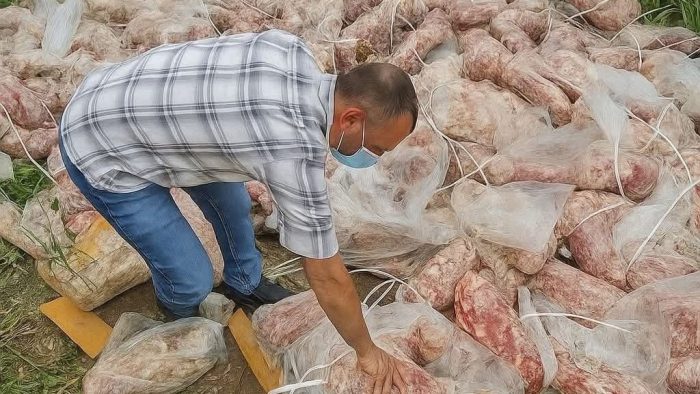
1,200+ kilograms of decomposed meat seized
Food Safety Department raids in Srinagar exposed over 1,200 kilograms of rotten and decomposed meat stored in cold storage facilities. This meat was not discarded waste—it was allegedly intended for sale to hotels, restaurants, and retail markets.
The findings included:
-
Advanced decomposition
-
Foul odor masked by cold storage
-
Improper documentation
-
Violation of hygiene and storage protocols
A deeper failure in oversight
Cold storage facilities exist to preserve food safety, not to conceal decay. The fact that such volumes of decomposed meat could remain undetected points to:
-
Weak inspection schedules
-
Predictable enforcement patterns
-
Lack of real-time monitoring
-
Possible collusion or negligence
For consumers, the revelation was devastating. The idea that restaurant meals may have been prepared using decomposed meat has permanently altered dining behavior for many families.
Stale Fish and Poultry: The Cheap Protein Trap
Low-cost dressed chicken and unfit fish
Enforcement teams also seized:
-
Stale fish sold beyond safe consumption windows
-
Low-cost dressed chicken stored in unhygienic conditions
-
Poultry transported without cold-chain compliance
These products often target lower-income consumers, making the crisis not just a health issue, but a social equity problem.
Why fish and poultry are vulnerable
Fish and poultry spoil rapidly without strict temperature control. In Kashmir:
-
Long transport routes
-
Power cuts affecting refrigeration
-
Poor enforcement in peripheral markets
…create ideal conditions for unsafe food entering circulation.
Repeated seizures suggest the problem is structural, not accidental.
Fake Packaged Foods: Counterfeiting the Consumer’s Trust
Biscuits, cheese, sweets, and expired drinks
One of the most disturbing patterns is the rise of fake and counterfeit packaged foods, including:
-
Counterfeit cheese brands
-
Expired soft drinks relabeled for resale
-
Fake sweets, including imitation rasgullas
-
Substandard biscuits using inferior ingredients
Packaged food carries an assumption of safety. When branding and labeling are faked, consumers lose their last layer of protection.
Food fraud, not just food safety
This is not merely adulteration—it is organized food fraud, involving:
-
Forged packaging
-
Misuse of brand trust
-
Illegal relabeling
-
Sale of expired products
Such activity thrives only when enforcement is sporadic and reactive.
Bottled Water: Even Drinking Water Is No Longer Trusted
Unsafe and mislabeled brands
Perhaps the most unsettling development is the rise of concerns around bottled drinking water:
-
Mislabeled brands
-
Unverified purification claims
-
Non-compliance with safety standards
-
Lack of source transparency
For many households, bottled water was the fallback option when tap water felt unsafe. Its contamination removes the final safety valve in daily consumption.
When people start questioning water, a basic pillar of public health collapses.
Crisis Snapshot: A Pattern Too Large to Ignore
| Category | Recent Issue | Impact |
|---|---|---|
| Eggs | Banned drug residues detected | Severe public health alarm |
| Meat | 1,200+ kg decomposed meat seized | Collapse of consumer trust |
| Fish & Poultry | Stale, unfit products sold | Enforcement credibility questioned |
| Packaged Foods | Fake cheese, rasgullas, expired drinks | Rise in food fraud |
| Bottled Water | Unsafe, mislabeled brands | Threat to daily essentials |
This is not coincidence. It is patterned failure.
Why This Crisis Matters More Than Ever
Long-term health consequences
Adulterated food does not always cause immediate illness. Its real danger lies in:
-
Cumulative toxin exposure
-
Antibiotic resistance
-
Chronic organ damage
-
Increased cancer risk over time
The costs will surface years later—long after accountability has faded.
A governance gap, not a lack of laws
India has strong food safety laws. Kashmir’s problem is implementation, marked by:
-
Insufficient inspectors
-
Delayed lab testing
-
Limited preventive surveillance
-
Weak deterrent penalties
Enforcement is largely reactive, acting only after public outrage or media exposure.
Erosion of consumer trust
Trust, once lost, is hard to rebuild. Families now ask:
-
Is restaurant food safe?
-
Are school meals reliable?
-
Can packaged food be trusted?
-
Is bottled water truly clean?
When doubt becomes routine, social anxiety becomes the hidden cost.
What’s Left for Safe Consumption in Kashmir?
Return to local, trusted sources
Many families are:
-
Buying directly from small farmers
-
Relying on known butchers
-
Avoiding large cold-chain suppliers
This informal trust network is replacing institutional trust.
Homemade alternatives
People are:
-
Baking at home
-
Making paneer locally
-
Avoiding packaged sweets
-
Filtering and boiling water
While safer, this shift is not scalable for urban life.
Community vigilance
Citizen reporting, social media pressure, and local awareness campaigns are increasingly driving enforcement action—highlighting the role of public oversight where institutional oversight is weak.
Systemic Failure, Not Random Adulteration
This crisis is not about a few bad actors. It reflects:
-
Supply chain opacity
-
Weak deterrence
-
Fragmented accountability
-
Under-resourced regulators
-
Lack of real-time surveillance
Each seizure proves enforcement exists—but also that prevention is failing.
Bottom-Line: Can Trust Be Rebuilt Before the Damage Becomes Irreversible?
Kashmir’s food safety crisis is no longer hidden. It is visible in raids, lab reports, seizures—and in the growing fear of consumers who no longer trust what they eat or drink.
This is not merely an adulteration problem.
It is a governance crisis with public health consequences.
Unless enforcement shifts from reaction to prevention, from episodic raids to continuous monitoring, and from secrecy to transparency, the region risks normalizing unsafe food as an accepted risk of daily life.
The real test is not how much unsafe food is seized—but how much unsafe food never reaches the plate.
Kashmir’s institutions still have a chance to restore trust.
The window, however, is narrowing fast.


