Humanitarian and Democratic Concerns Take Centre Stage in New Delhi Representation
By: Javid Amin | 17 December 2025
A Strategic and Humanitarian Appeal to the Centre
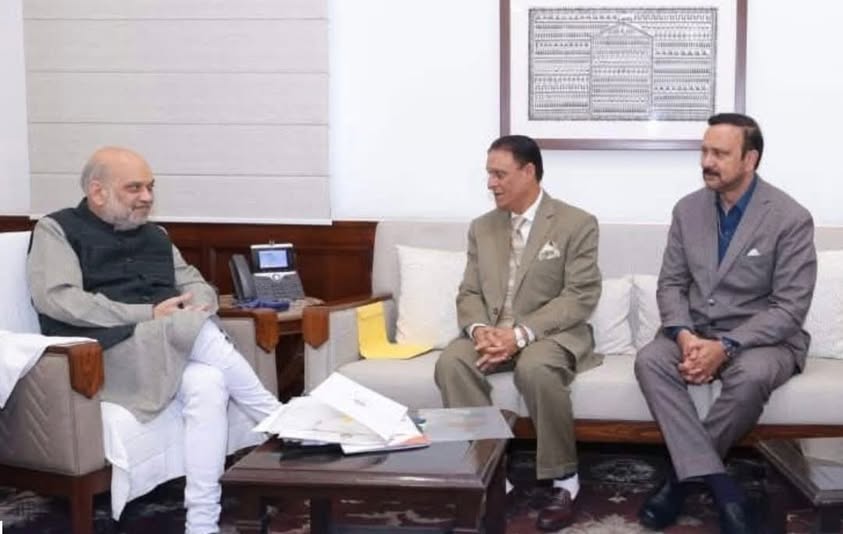
In a significant political development, Members of Parliament from the Jammu & Kashmir National Conference (NC) submitted a detailed memorandum to Union Home Minister Amit Shah in New Delhi this week. The memorandum calls for the immediate restoration of full statehood to Jammu & Kashmir and highlighted the severe challenges faced by families whose relatives are incarcerated in prisons far from the Union Territory.
The NC delegation, comprising Rajya Sabha MPs Chowdry Mohammad Ramzan, Sajjad Ahmad Kitchloo and Gurwinder Singh Oberoi, emphasized both constitutional and humanitarian issues, pushing for clear, concrete and time-bound action from the Centre.
Key Demands Presented to Amit Shah
1. Full Restoration of J&K’s Statehood
A central pillar of the memorandum was the demand that full statehood for Jammu & Kashmir be restored without further delay. Citing assurances previously given by the Prime Minister and the Union Home Minister on the floor of Parliament, the MPs reminded the Centre that the people of J&K have been waiting for the revival of full democratic rights since the region was reorganized as a Union Territory in 2019.
The memorandum referenced the Supreme Court’s December 11, 2023 judgment, in which the Court recorded the Government’s commitment to restore statehood once democratic processes—including elections—were completed. The MPs argued that with successful assembly elections now held and an elected government in place, there is a clear expectation among the people for statehood to be reinstated.
In their plea to the Home Minister, the MPs described the continued delay as causing “democratic, administrative and emotional distress” for the people of the Union Territory and “increasingly felt as a denial of constitutional dignity.”
2. Humanitarian Concerns: Prisoners Lodged Outside J&K
The memorandum also stressed serious humanitarian issues related to the practice of lodging many Kashmiris in prisons outside the Union Territory. According to the MPs, thousands of families—mothers, children, and elderly parents—are experiencing profound hardship because their loved ones are incarcerated far from home.
These hardships include long, exhausting journeys, financial constraints, limited access to legal counsel, and sparse opportunities for family visits. The MPs highlighted that in many cases, detainees remain imprisoned despite no serious charges having been proven, a situation they described as “punishment for poverty rather than guilt.”
The memorandum urged the Union Home Minister to review the policy of sending prisoners from Jammu & Kashmir to distant facilities and to facilitate the release of those against whom no substantial charges exist. For others who do face serious charges, the MPs requested that they be returned to prisons inside the Union Territory, easing legal access and alleviating the emotional strain on families.
3. Notification of Business Rules for Governance Clarity
Although not part of the original user draft, several reports indicate the NC MPs also raised administrative governance issues, specifically urging the Centre to notify the Business Rules governing the administration of Jammu & Kashmir. They noted the absence of these rules has created ambiguity, overlaps in authority, and weakened public accountability—even after the establishment of an elected government.
Snapshot: What the Memo Highlights
| Issue Raised | Details |
|---|---|
| Statehood Restoration | NC demands immediate reinstatement of full J&K statehood. |
| Prisoners Outside UT | Families face hardships due to detainees lodged in distant jails. |
| Humanitarian Concern | Financial, emotional and legal challenges for families. |
| Administrative Governance | Urgent notification of Business Rules requested. |
Why This Memo Matters
1. Democratic Expectations and Constitutional Rights
The restoration of full statehood to Jammu & Kashmir remains one of the most persistent political questions in the region since its reorganization in 2019. While the UT now has an elected government, full statehood carries constitutional significance: it includes greater legislative powers, executive authority and control over key administrative areas. The NC MPs’ memorandum frames this demand not merely as political aspiration, but as a completion of democratic rights promised by the Centre and upheld in judicial observations.
2. Human Impact Beyond Politics
By foregrounding the plight of families separated from their incarcerated relatives, the NC has introduced a deeply human dimension into the political discourse. The issue of prisoners held outside Jammu & Kashmir goes beyond legal debates; it encompasses emotional suffering, financial stress and limited access to justice for detained Kashmiri citizens. These concerns resonate widely in civil society and among rights advocacy groups, amplifying calls for compassionate policy review.
3. Administrative Clarity and Governance
The call for notification of Business Rules underscores an ongoing governance gap in Jammu & Kashmir’s administrative framework. Without clearly defined procedural rules, elected leaders and administrators face hurdles in efficient decision-making and accountability mechanisms. Highlighting this structural challenge puts additional pressure on the Centre to move forward with reforms that strengthen democratic governance in the UT.
Reactions and Broader Political Context
The memorandum was submitted in the context of the NC’s longstanding advocacy for restoration of Jammu & Kashmir’s statehood—a position the party has reiterated consistently, including in working committee resolutions earlier in 2025.
Political commentators note that this appeal comes at a time when promises made on the floor of Parliament and recorded by the Supreme Court are expected to translate into policy action, especially after the successful completion of UT elections and the establishment of an elected government.
While reactions from other political parties and the Centre are awaited, the memorandum adds renewed focus to two deeply resonant issues: constitutional dignity and basic humanitarian justice for citizens of Jammu & Kashmir.
Bottom-Line: A Dual Appeal for Justice and Dignity
The National Conference’s memorandum to Union Home Minister Amit Shah represents a strategic and compassionate appeal that intertwines constitutional demands with human suffering. By pressing for the restoration of full statehood and demanding urgent redress for families of prisoners, the NC has framed an issue that is both political and profoundly personal for many in Jammu & Kashmir.
As these concerns move into the next stage of dialogue with the Centre, the broader implications will unfold not only within political circles, but within communities seeking dignity, justice, and a meaningful restoration of democratic rights.


