Ruhullah Mehdi Says J&K Assembly Failing Public Expectations, Becoming ‘Wrestling Ring’
By: News Desk | 27 September 2026
Srinagar MP questions focus of elected House as statehood debate triggers fresh political confrontation
Srinagar: Srinagar Lok Sabha MP Aga Syed Ruhullah Mehdi has criticised the functioning of the Jammu and Kashmir Legislative Assembly, alleging that the House is falling short of the expectations that accompanied the return of an elected government and is increasingly resembling a “wrestling ring” rather than a forum for resolving public problems.
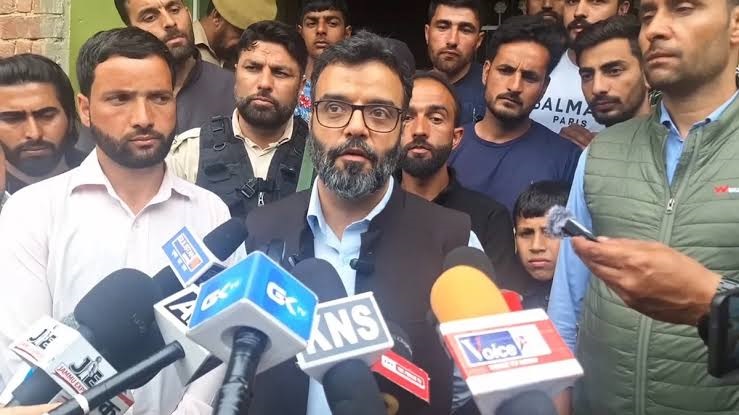
Mehdi made the remarks while speaking to reporters after interacting with young people in Kishtwar. His comments came amid an increasingly confrontational autumn Assembly session, particularly after Chief Minister Omar Abdullah moved a resolution seeking the immediate restoration of full statehood to Jammu and Kashmir on September 25.
The Srinagar MP’s remarks put the spotlight on a question that has been central to the current political debate: whether the restored legislature is devoting enough attention to everyday governance issues while political disputes over statehood, constitutional questions and party positions dominate the public conversation.
Mehdi: People Expected an Assembly Focused on Everyday Problems
According to Mehdi, the Assembly was restored after years of administration under the Lieutenant Governor with the expectation that elected representatives would provide a direct political forum for people’s concerns.
He said voters who participated in the 2024 Assembly elections expected the House to address practical issues affecting their daily lives, including water supply, healthcare, education and employment.
The argument goes beyond one particular controversy. For Mehdi, the purpose of an elected legislature is not simply to provide a venue for political speeches or competing party narratives, but to translate electoral mandates into legislative scrutiny, policy decisions and solutions to local grievances.
His criticism therefore centres on what he sees as a gap between the expectations surrounding the restoration of elected government and the nature of political activity currently receiving the greatest public attention.
“Wrestling ring” was the phrase he used to describe that perceived gap.
‘Political Confrontation and Publicity’ Under Scrutiny
Mehdi alleged that political confrontation and publicity have increasingly overshadowed governance and problem-solving.
He particularly criticised what he described as an emphasis on social-media visibility, saying that making reels had taken precedence over addressing public issues.
The allegation is significant because political communication has changed substantially since the Assembly was restored. Legislative debates are no longer confined to the House or traditional media; speeches, protests and confrontations can quickly become short-form social-media content consumed by large audiences.
Mehdi’s criticism suggests that elected representatives should be judged not only by the visibility of their interventions but also by whether those interventions produce scrutiny, accountability or tangible responses to problems faced by constituents.
That, however, remains his assessment of the House’s performance rather than an independently measurable conclusion about the entire Assembly.
The official legislative portal shows that the ongoing sixth session, scheduled from September 21 to September 30, includes hundreds of questions and formal legislative business. The portal currently lists 90 members and records questions, papers laid and other scheduled proceedings alongside the politically contentious debates.
This provides a more nuanced picture: the Assembly has continued formal legislative work, even as some of its most visible moments have been dominated by political confrontation.
Statehood Resolution Becomes the Latest Flashpoint
Mehdi’s comments came just days after the Assembly witnessed particularly heated scenes over the statehood resolution introduced by Chief Minister Omar Abdullah.
On September 25, Abdullah moved a resolution calling for the “immediate and urgent restoration” of full statehood to Jammu and Kashmir. The resolution also referred to earlier Assembly resolutions from June 26, 2000, and November 6, 2024.
The reference to the 2000 resolution became a major point of contention.
That earlier resolution, passed when Jammu and Kashmir was a state, concerned restoration of greater autonomy. Its inclusion in the 2026 resolution prompted opposition from BJP legislators, who entered the Well of the House and protested against the reference. The dispute escalated into heated exchanges between BJP and National Conference legislators, with reports of physical confrontation during the proceedings.
The House was subsequently adjourned amid the disorder.
It was this episode that provided the immediate backdrop to Mehdi’s description of the Assembly as a “wrestling ring.”
A Legislature Caught Between Governance and Larger Political Questions
The confrontation also illustrates the difficult political environment in which the present Assembly is functioning.
Jammu and Kashmir’s elected institutions operate within a broader political dispute involving statehood, constitutional rights, the post-2019 constitutional framework and the relationship between the Union government and the Union Territory.
For the National Conference government, restoration of statehood remains a major political demand. The BJP has also publicly maintained its position in favour of restoration of statehood, but disputes have emerged over the language, timing and accompanying references in Assembly resolutions.
The September 25 confrontation demonstrated how quickly a discussion about statehood could move into a larger argument over autonomy, the constitutional history of Jammu and Kashmir and the political legacy of the National Conference.
For Mehdi, however, this focus risks pushing immediate public concerns further down the agenda.
Mehdi Questions the ‘Statehood First’ Political Focus
The Srinagar MP also criticised what he described as the dilution of earlier Assembly resolutions relating to autonomy and statehood.
His criticism is closely linked to his growing differences with the National Conference leadership.
Mehdi has been increasingly critical of the party’s approach to Jammu and Kashmir’s constitutional position and has announced that he intends to leave the National Conference and resign from the Lok Sabha on November 3. He has said his decision is rooted in ideological differences and disagreements over the party’s political direction.
In his latest remarks, he questioned the emphasis being placed on statehood without simultaneously pursuing what he considers broader constitutional rights and protections.
He also pointed to an apparent change in political messaging. According to Mehdi, the National Conference had previously argued that an excessive focus on statehood could effectively serve the BJP’s political agenda. He now questioned whether the same argument should apply to those in power who are making statehood the central political demand while, in his view, giving insufficient attention to other constitutional questions.
That criticism reflects the broader disagreement between Mehdi and the NC leadership over what should constitute the party’s principal political agenda.
The Assembly’s Stormy Autumn Session
The September confrontation did not occur in isolation.
The autumn session began amid protests and disruption, with BJP legislators entering the Well and raising objections to the government’s policies and functioning. The ruling side and Congress members, meanwhile, reiterated demands surrounding restoration of statehood.
The subsequent statehood resolution intensified those divisions.
The official Assembly portal indicates that the current session runs from September 21 through September 30. It lists questions, government business and papers laid before the House, demonstrating that legislative proceedings continue alongside the political clashes.
The contrast is important.
On one side is the routine business of a legislature: questions to ministers, scrutiny of government departments, reports and constituency concerns. On the other are highly visible political confrontations that attract substantial public and media attention.
It is this contrast that lies at the heart of Mehdi’s criticism.
Public Expectations Have Expanded Beyond Symbolic Politics
The return of an elected Assembly carries particular significance in Jammu and Kashmir after the period of direct administration that followed the 2018 collapse of the coalition government and the subsequent transition to Union Territory administration.
For voters, the expectations attached to elected government are not limited to constitutional or political questions.
Employment remains a major concern, particularly among young people. Healthcare access varies across districts, while water supply, education, roads and other civic services remain recurring governance issues.
Mehdi raised several of these concerns while speaking after his interaction with youth in Kishtwar.
The challenge for the Assembly, therefore, is not necessarily to choose between political questions and everyday governance. Both fall within the political responsibilities of elected representatives.
The question is whether the House can maintain sufficient space for both.
Why the ‘Wrestling Ring’ Remark Matters
Mehdi’s description is politically charged, but it captures a visible feature of the current session: confrontations inside the House have sometimes overshadowed substantive debate in public attention.
The September 25 statehood proceedings are the clearest recent example. A resolution concerning statehood quickly became a confrontation over the 2000 autonomy resolution, with BJP legislators protesting and the House being disrupted.
For supporters of the government, such confrontations can be viewed as part of a legitimate political disagreement over Jammu and Kashmir’s future.
For critics such as Mehdi, the concern is different: that the visibility of political conflict can overwhelm the quieter but equally important work of legislation, oversight and constituency-level problem-solving.
Neither interpretation changes the underlying institutional reality that the Assembly continues to conduct formal business. But the intensity of the political clashes has become a defining feature of the current session.
Mehdi’s Own Political Position Adds Another Layer
The timing of the criticism is also significant because Mehdi is no longer operating as an uncritical member of the National Conference.
His differences with the party leadership have become increasingly public. He has said that November 3 will mark his formal exit from both the party and the Lok Sabha, while also indicating that he will consult people in Jammu and Kashmir before deciding his next political course.
At his Kishtwar interaction, he said his current outreach was not aimed at immediately forming a new party or joining an existing one. He said a decision on his future would come after November 3.
His criticism of the Assembly must therefore also be read within this evolving political relationship with the NC leadership.
The Bigger Question: What Should the Assembly Deliver?
The dispute ultimately points to a larger question about the role of Jammu and Kashmir’s legislature.
Statehood, constitutional rights and the political relationship with New Delhi are major issues that have shaped the region’s political discourse for decades. At the same time, an elected government is expected to deal with employment, healthcare, education, water, roads, public services and other issues that affect citizens irrespective of their political position.
The official Assembly record indicates that these routine legislative functions continue.
But the latest political confrontations show how easily the House’s attention can be consumed by larger constitutional and partisan disputes.
Mehdi’s “wrestling ring” remark is therefore less about a single noisy sitting and more about his argument over priorities: whether the Assembly can remain a place where political disagreements are debated without allowing those disagreements to overwhelm the business of governance.
As the autumn session moves toward its scheduled September 30 conclusion, the balance between political contestation and legislative problem-solving will remain a central measure of how the restored Assembly is perceived by the public.
For voters who returned elected representatives to the House in 2024, the test is ultimately broader than the slogans heard inside the Assembly. It includes whether questions raised by ordinary citizens receive answers, whether government departments are held accountable, and whether legislative debates translate into action beyond the floor of the House.