Iran–Israel War Day 5 Update: Tehran Strikes, Hezbollah Joins, Oil & Rupee Crash | March 4, 2026
By: Javid Amin | 04 March 2026
Current Status (March 4, 2026)
The Iran–Israel war has entered its fifth day, transforming into a full-scale regional confrontation involving Iran, Israel, the United States, and the Lebanese militant group Hezbollah.
What began as targeted military operations has now expanded into repeated aerial bombardments, cross-border rocket fire, Gulf missile launches, and mounting civilian casualties. Financial markets and energy supplies are reacting sharply, signaling global repercussions.
Military Situation: Escalation on All Fronts
1️⃣ US–Israel Strike Campaign Inside Iran
According to military briefings and regional sources, the U.S. and Israel have conducted at least nine waves of coordinated strikes inside Iran since the conflict began.
Targets reportedly include:
-
Ballistic missile launch facilities
-
Revolutionary Guard-linked warships
-
Air-defense batteries
-
Suspected nuclear-related infrastructure
-
Strategic command and logistics hubs
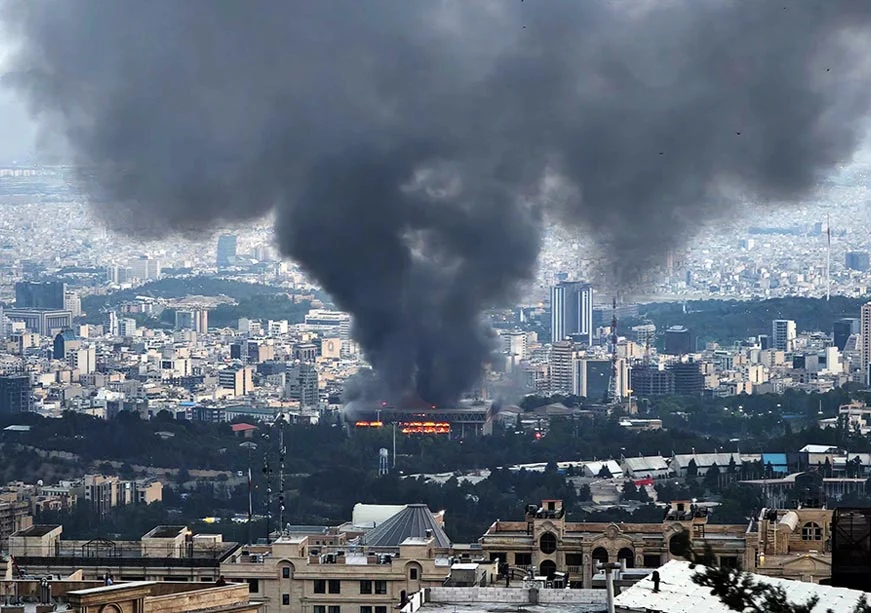
Several districts of Tehran have been struck. Smoke plumes and secondary explosions have been visible in multiple neighborhoods.
One of the most controversial incidents reported is the destruction of a passenger aircraft during Israeli strikes. Details remain contested, but the incident has intensified international concern over civilian safety.
2️⃣ Iranian Retaliation: Missile Barrages Expand
Iran has responded forcefully:
-
Over 40 missiles launched toward U.S. and Israeli targets.
-
Gulf-based American facilities reportedly targeted.
-
Israeli air-defense systems activated repeatedly to intercept incoming fire.
Missile alerts were triggered across northern and central Israel, though interception rates remain high.
3️⃣ Lebanon Front: Hezbollah Joins the War
On March 2, Hezbollah formally entered the conflict, launching projectiles into northern Israel from southern Lebanon.
Israel responded with:
-
Airstrikes in Beirut.
-
Expanded artillery shelling along the border region.
-
Targeted attacks on Hezbollah logistical infrastructure.
This development effectively opens a second major front, increasing pressure on Israeli defense resources and heightening the risk of deeper ground incursions into Lebanon.
Political & Leadership Developments
1️⃣ Iran’s New Supreme Leader
Iranian state media reports that Mojtaba Khamenei, son of the late Ali Khamenei, has been elected as the new Supreme Leader.
If confirmed, this marks:
-
A historic dynastic-style transition within the Islamic Republic.
-
A potential consolidation of power within the clerical establishment.
-
A signal of regime continuity amid wartime pressure.
The succession decision appears designed to project internal stability despite external military assaults.
2️⃣ Israel’s Position
Israeli Prime Minister Benjamin Netanyahu defended the strikes, stating that operations are aimed at “protecting the world” from Iran’s nuclear ambitions.
Israel maintains that its campaign targets:
-
Military infrastructure.
-
Missile capabilities.
-
Nuclear-related facilities deemed threatening to Israeli security.
Officials continue to frame the war as a pre-emptive defensive measure.
Economic Shockwaves
The military escalation is now visibly affecting global markets.
Oil Markets in Turmoil
-
Crude prices are surging amid fears of disruption in the Gulf.
-
Traders are closely monitoring shipping through strategic maritime corridors.
-
Energy-importing nations are bracing for inflation spikes.
Impact on India
The Indian economy is feeling immediate pressure:
-
The rupee reportedly slid to ₹92 per USD, a sharp depreciation.
-
The Sensex fell by approximately 1,200 points, reflecting investor anxiety.
-
Energy import costs are expected to rise significantly if hostilities continue.
India’s exposure to Gulf energy supplies makes prolonged instability a direct macroeconomic risk.
International Reactions
United Nations
The United Nations has called for:
-
Immediate de-escalation.
-
Protection of civilians.
-
Diplomatic dialogue to prevent humanitarian catastrophe.
Officials warn that Lebanon and parts of Iran could face severe humanitarian strain if strikes intensify.
Gulf States
-
Qatar reportedly intercepted an incoming Iranian missile.
-
The United Arab Emirates has denied involvement in the conflict, emphasizing neutrality.
Regional governments remain on high alert, balancing security coordination with efforts to avoid direct entry into the war.
Civilian Toll & Humanitarian Risks
Casualty figures are rising:
-
Six U.S. service members confirmed killed.
-
Iranian and Lebanese civilian casualties increasing.
-
Infrastructure damage reported in multiple urban areas.
Hospitals in Tehran and Beirut are reportedly under strain. Civilian air travel, schooling, and daily commerce are heavily disrupted.
Strategic Assessment: Where the War Stands
As of March 4, 2026:
-
The conflict is multi-front (Iran, Israel, Lebanon, Gulf region).
-
It is multi-actor (Iran, Israel, U.S., Hezbollah).
-
It carries global economic consequences.
-
It presents real risk of further escalation—particularly if nuclear sites or maritime shipping become sustained targets.
Three variables will determine the next phase:
-
Whether the Strait of Hormuz remains open.
-
Whether Hezbollah expands from rocket exchanges to full-scale ground warfare.
-
Whether diplomatic channels gain traction before civilian casualties escalate further.
Final Summary
The Iran–Israel war has escalated beyond bilateral hostilities into a regional confrontation with global consequences. Military strikes continue in Tehran and Lebanon. Hezbollah’s involvement has broadened the battlefield. Economic markets are reacting sharply. Political leadership changes inside Iran suggest regime consolidation under wartime pressure.
The next 48–72 hours may determine whether this remains a contained regional war—or evolves into a prolonged, destabilizing conflict affecting global security and energy supply chains.