US Fighter Jets Shot Down Over Gulf; Iran Says “No Talks”
By: Javid Amin | 02 March 2026
Ground Analysis of the Escalating Iran–Israel–US Confrontation
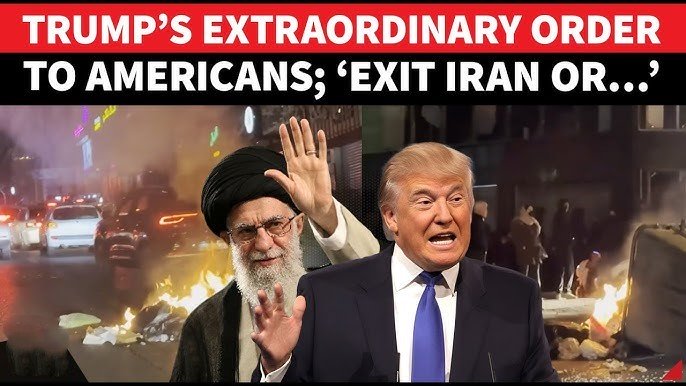
The Middle East has entered its most dangerous phase in decades. Reports of US fighter jets shot down over the Gulf, fires inside diplomatic compounds, and retaliatory missile barrages signal that the conflict between Iran, Israel, and the United States has moved beyond shadow warfare into direct, multi-front confrontation.
What began as a decapitation strike targeting Ayatollah Ali Khamenei has now evolved into a volatile regional war involving Gulf monarchies, proxy militias, and critical global energy routes.
Here is a structured ground-level analysis of what is unfolding — militarily, strategically, and economically.
Core Trigger: The Decapitation Strike
The immediate trigger was a joint US–Israeli strike that reportedly killed Khamenei and targeted high-value Iranian nuclear and security infrastructure.
Strategic Objectives Behind the Strike
From Washington and Tel Aviv’s perspective, the operation appears to have had three goals:
-
Neutralize Iran’s top leadership.
-
Degrade nuclear and missile capabilities.
-
Break the command structure of the Islamic Revolutionary Guard Corps (IRGC).
Israeli Prime Minister Benjamin Netanyahu framed the operation as a defensive necessity against existential threats.
However, in Tehran, the strike has been interpreted as an act of war — not merely retaliation, but regime-targeted aggression.
Military Escalation: From Airstrikes to Air Battles
US & Israeli Operations
Military sources indicate that thousands of targets inside Iran have been struck over multiple waves. These reportedly include:
-
Air defense systems
-
Missile launch sites
-
Revolutionary Guard installations
-
Intelligence and internal security institutions
Israeli aircraft allegedly conducted simultaneous operations over Tehran and also targeted Iranian-linked positions in Lebanon.
The goal: establish air superiority and cripple Iran’s command structure.
Iran’s Counteroffensive: “Operation True Promise 4”
Tehran responded with coordinated missile and drone attacks across the Gulf.
Iranian state media says:
-
US bases in the region were targeted.
-
Strategic oil facilities in Saudi Arabia were hit.
-
Regional airspace remains contested.
Iran has framed this response as defensive retaliation under international law.
More significantly, Iran has publicly declared it will not enter negotiations under fire — signaling this phase may not de-escalate quickly.
US Fighter Jets Shot Down: Escalation Milestone
Reports that US fighter jets were shot down over Gulf waters represent a major escalation threshold.
If verified, this would mark:
-
Direct kinetic engagement between Iranian and US forces.
-
A shift from proxy confrontation to overt state-to-state war.
Such incidents historically increase pressure for further retaliation, raising the stakes dramatically.
Fire at US Embassy Compound in Kuwait
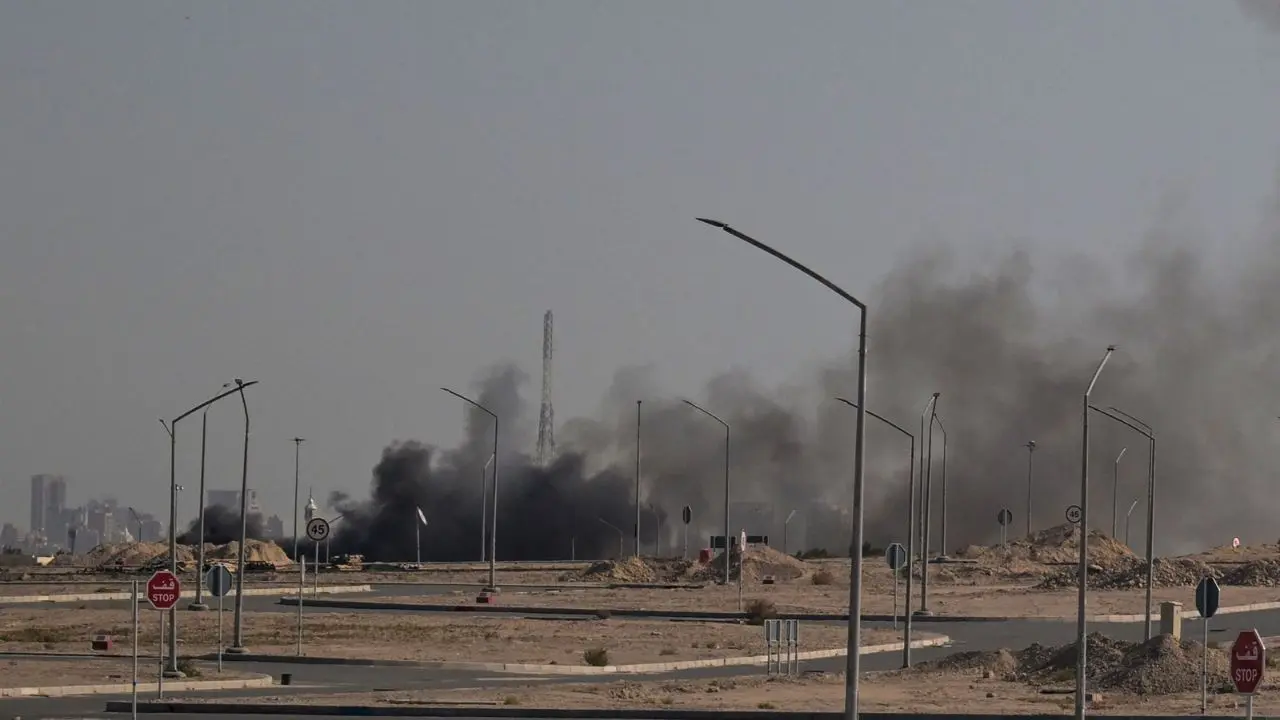
Smoke and fire were reported inside the United States Embassy Kuwait compound following what officials describe as an Iranian-linked attack.
Diplomatic missions are considered sovereign territory under international law. An attack on an embassy significantly escalates legal and political consequences.
Embassies in Riyadh, Doha, and Manama have reportedly heightened security levels.
Regional Reverberations
Gulf States: Caught in the Crossfire
Countries such as:
-
Saudi Arabia
-
Kuwait
-
United Arab Emirates
host US military bases and are therefore exposed to retaliation.
Damage to Saudi Arabia’s Ras Tanura refinery — if confirmed — would have immediate global economic consequences.
These states now face a strategic dilemma:
-
Support the US openly and risk further Iranian strikes.
-
Distance themselves and risk fracturing alliances.
Maritime Flashpoint: Strait of Hormuz
The Strait of Hormuz is the world’s most critical oil chokepoint, with roughly 20% of global petroleum trade passing through it.
Insurance firms are reportedly:
-
Raising premiums sharply.
-
Canceling coverage for vessels in the region.
If Iran attempts to close the strait, even temporarily:
-
Oil prices could spike dramatically.
-
Global inflation pressures would intensify.
-
Shipping disruptions would ripple across Asia and Europe.
This is arguably the most dangerous economic lever Tehran possesses.
The Strategic Picture
US Objective
Washington’s broader objective appears twofold:
-
Neutralize Iran’s military capabilities.
-
Pressure the Iranian regime internally.
Some analysts interpret the strike on Khamenei as signaling regime change ambitions, though US officials have not formally declared such a policy.
Iran’s Strategy: Expand the Battlefield
Iran is activating what it calls the “Axis of Resistance,” which includes:
-
Hezbollah in Lebanon
-
Houthi movement in Yemen
-
Shia militias in Iraq and Syria
The strategy: stretch US and Israeli forces across multiple fronts and increase the cost of sustained warfare.
Missile launches from Lebanon and drone activity in the Red Sea suggest this phase is already underway.
Israel’s Position
Israel insists it does not seek an “endless war,” but military preparations indicate readiness for prolonged engagement.
The northern front with Hezbollah remains particularly volatile. Any large-scale Hezbollah entry into the conflict could trigger full-scale war in Lebanon.
Global Economic Impact
The geopolitical escalation is already affecting markets:
-
Oil prices surged sharply.
-
Gold and silver climbed as safe-haven assets.
-
US and Asian equities retreated.
Interestingly, Israel’s stock market indices reportedly remained resilient, reflecting domestic investor confidence in long-term strategic outcomes.
If Gulf energy exports face sustained disruption, global recession risks increase.
Escalation Ladder: What Comes Next?
The current trajectory presents several potential scenarios:
1. Limited War Containment
Back-channel diplomacy slows escalation, strikes continue but remain geographically contained.
2. Strait of Hormuz Closure
Oil shock triggers global economic crisis.
3. Multi-Front Regional War
Lebanon, Iraq, Yemen, and Syria become full active theaters.
4. Direct US–Iran War
Sustained air battles and possible ground operations.
The downing of US jets and attacks on diplomatic facilities significantly raise the probability of scenario three or four.
Ground Reality Summary
-
Iran and Israel are engaged in sustained direct confrontation.
-
US forces are actively participating in combat operations.
-
Gulf states are vulnerable to retaliatory strikes.
-
Maritime trade routes face disruption.
-
Proxy groups are mobilizing.
The conflict has crossed psychological red lines that previously restrained escalation.
Conclusion: A War Redefining the Middle East
The strike that killed Ayatollah Khamenei has fundamentally altered the region’s balance of power.
What began as a targeted military action has triggered:
-
Direct state-to-state engagement.
-
Proxy activation across multiple countries.
-
Severe risks to global energy supply.
With US jets reportedly shot down and embassies attacked, this confrontation now stands at its most dangerous inflection point in decades.
Unless rapid diplomatic intervention occurs, the Middle East may be entering a prolonged and transformative war — one that will reshape alliances, redraw strategic calculations, and profoundly impact global markets.