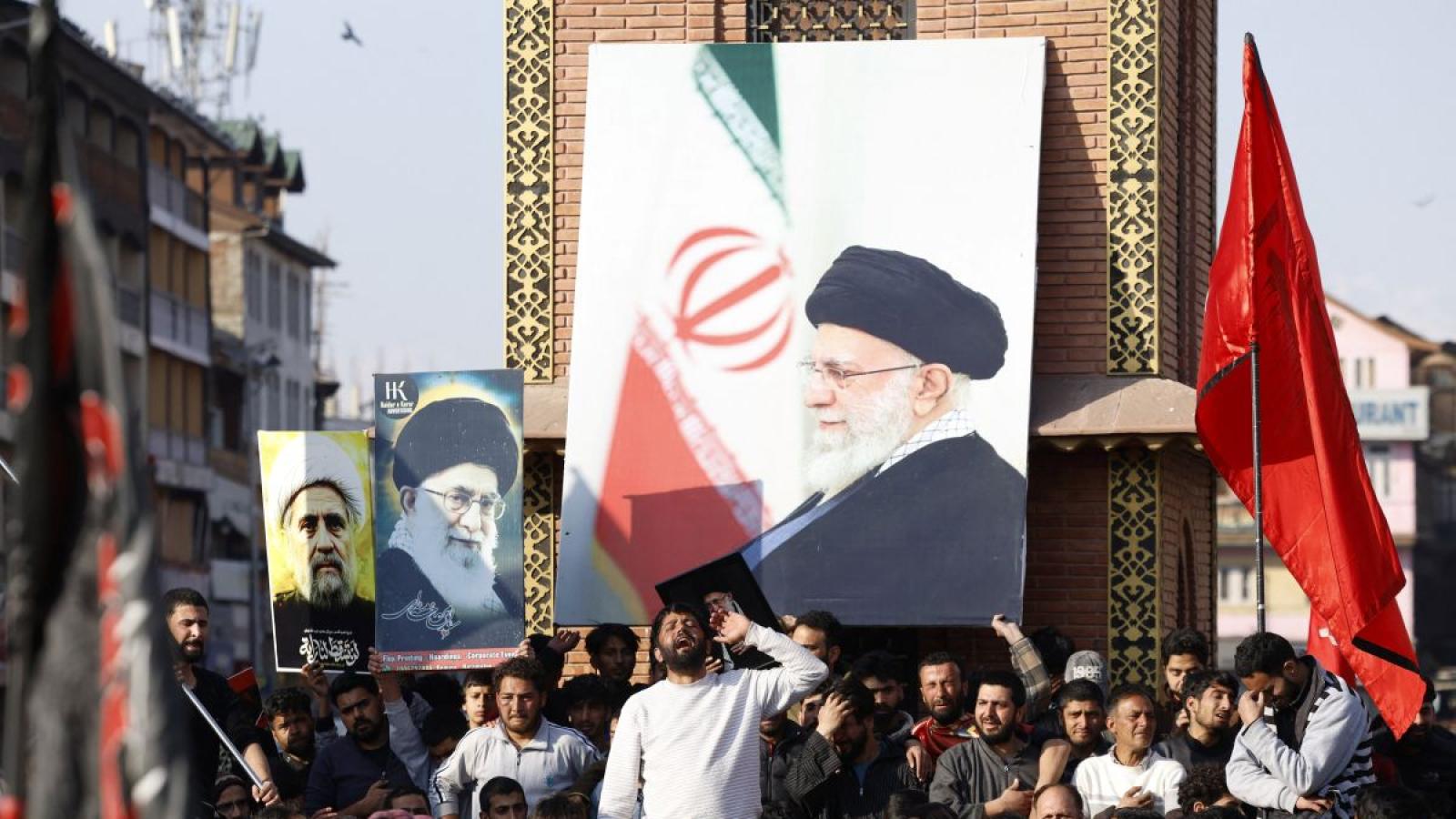
Khamenei Death Protests in India: From Kashmir to Karnataka, How India Reacted to the Iran Crisis
By: Javid Amin | 01 March 2026
A Shockwave Across Continents
When unverified reports surfaced alleging that Iran’s Supreme Leader, Ayatollah Ali Khamenei, had been killed in a joint strike by the United States and Israel, the reaction was immediate and emotional — not just in Iran, but thousands of kilometers away in India.
From the tense streets of Srinagar to the historic lanes of Old Lucknow, from protest gatherings in Ludhiana to silent mourning in Karnataka villages, the news ignited a wave of demonstrations. While authorities across states imposed preventive measures, religious leaders urged calm even as they condemned the alleged strike.
This is the story of how a geopolitical flashpoint in West Asia reverberated across India’s social and political landscape.
Ground Zero: Kashmir Under Restrictions
Lal Chowk Turns into a Flashpoint
In Srinagar’s iconic Lal Chowk, small groups of demonstrators gathered soon after news of the alleged strike spread through social media channels.
Chants condemning the United States and Israel echoed briefly before police moved to disperse crowds. Similar scenes were reported in Budgam, Bandipora, Anantnag, and Pulwama.
The Union Territory administration responded swiftly:
-
Section 144 restrictions in sensitive zones
-
Increased paramilitary deployment
-
Closure of schools and colleges for two days
Jammu & Kashmir’s Education Minister announced precautionary closures to “ensure student safety.”
Why Kashmir Reacted Strongly
Kashmir has historically displayed political sensitivity toward developments in the Muslim world, particularly events involving Palestine, Iraq, Afghanistan, and Iran. The region’s Shia pockets, especially in Budgam and parts of Srinagar, have strong theological and cultural ties with Iran’s religious institutions.
Even so, protests remained largely controlled. No major violence was officially reported.
Lucknow: Mourning at Chota Imambara
If Kashmir was emotionally charged, Lucknow was spiritually solemn.
At the historic Chota Imambara in Old Lucknow, hundreds gathered in black attire. Clerics addressed mourners, calling the alleged killing an “attack on sovereignty and faith.”
The All India Shia Personal Law Board declared three days of symbolic national mourning.
Speakers emphasized:
-
Condemnation of the alleged US-Israel strike
-
Appeals for peace within India
-
Solidarity prayers for Iran
Security forces maintained a watchful presence but avoided confrontation.
Delhi: Tightened Security in Sensitive Zones
In the national capital, police presence was heightened in areas like Jor Bagh and around diplomatic zones.
While small gatherings were reported, Delhi did not witness large-scale mobilization. Intelligence inputs reportedly advised caution but did not indicate widespread unrest.
The government avoided public escalation, maintaining strategic ambiguity — a reflection of India’s delicate diplomatic balancing between:
-
Iran (energy and Chabahar Port interests)
-
Israel (defense cooperation)
-
United States (strategic partnership)
Punjab: Symbolic Anger in Ludhiana
In Ludhiana, protesters burned an effigy of Israeli Prime Minister Benjamin Netanyahu.
The demonstration was loud but brief. Police intervened quickly to prevent escalation.
Punjab’s protests were smaller in scale compared to Kashmir or Lucknow, yet symbolically significant in expressing solidarity with Iran.
Karnataka: Silence as Protest
In contrast to northern India’s rallies, several Shia-majority villages in Karnataka observed silence.
No marches.
No effigies.
No slogans.
Instead:
-
Black flags outside homes
-
Closed community halls
-
Prayer gatherings inside mosques
This quiet mourning reflected cultural differences in protest expression between north and south India.
Other States: Hyderabad, Bhopal, Bihar
Hyderabad and Bhopal saw organized marches led by Shia organizations. Demonstrators emphasized solidarity but avoided inflammatory rhetoric.
In Bihar and parts of Madhya Pradesh, sporadic protests occurred without major law-and-order incidents.
Government Response: Containment Over Confrontation
Across India, authorities followed a consistent strategy:
-
Preventive restrictions
-
Temporary school closures (Kashmir)
-
Visible but restrained policing
-
Appeals for calm
Unlike Pakistan — where protests reportedly turned violent in Karachi — India’s unrest remained largely controlled.
International Reaction: A Divided World
United States
Then-US President Donald Trump reportedly called the strike “a great day for the world,” while warning Iran against retaliation.
Small protests were reported near the White House.
European Union
Ursula von der Leyen urged restraint, suggesting the development could reshape Iran’s political future.
Russia
President Vladimir Putin condemned the strike as a violation of international law.
Pakistan
Prime Minister Shehbaz Sharif criticized the targeting of a head of state. Violent protests near the US consulate in Karachi reportedly left casualties.
Turkey
President Recep Tayyip Erdoğan warned of destabilization but called for diplomatic restraint.
India vs Pakistan vs Turkey: A Comparison
| Country | Scale | Tone | Casualties |
|---|---|---|---|
| India | Regional | Mixed | None reported |
| Pakistan | Intense | Violent | Reported deaths |
| Turkey | Major cities | Peaceful | None |
India’s approach emphasized administrative control and religious appeals for calm — a reflection of its internal security doctrine.
What This Means for India’s Foreign Policy
India maintains:
-
Energy links with Iran
-
Defense ties with Israel
-
Strategic partnership with the US
An escalated Iran-Israel-US conflict places New Delhi in a diplomatic tightrope situation.
Short-Term Consequences
-
Heightened security in sensitive Indian districts
-
Potential oil price volatility
-
Diplomatic caution from New Delhi
Medium-Term Risks
-
Sectarian polarization if protests escalate
-
Strained US-Pakistan relations
-
Increased proxy conflicts in West Asia
Long-Term Implications
If verified, such an event would:
-
Reshape Iran’s leadership structure
-
Deepen West-East geopolitical divides
-
Test international law norms regarding targeted strikes
Best-Case Scenario
-
Symbolic retaliation
-
Diplomatic mediation
-
Controlled protests globally
Worst-Case Scenario
-
Regional war
-
Strait of Hormuz disruption
-
Global energy crisis
-
Proxy escalation
Most Likely Scenario
-
Limited retaliation
-
Diplomatic stalemate
-
Controlled but recurring protests
The Larger Picture
Whether factual or speculative, the reaction pattern tells us something profound:
India’s social fabric is deeply connected to global religious and geopolitical currents.
From Lal Chowk to Chota Imambara, the emotional geography of protest reflects not just foreign policy — but identity, memory, and faith.
Yet the restrained state response also shows a matured administrative instinct: containment without overreaction.
Conclusion: A Global Inflection Point
The alleged death of Ayatollah Ali Khamenei — if confirmed — would not merely be a Middle Eastern development.
It would mark:
-
A geopolitical rupture
-
A religious moment of global mobilization
-
A diplomatic stress test for India
For now, India watches carefully — balancing solidarity, stability, and strategic interest.
And from Kashmir to Karnataka, the message is clear: events in Tehran do not stay in Tehran.
They echo across continents.


