U.S. Blockade of Iranian Ports Disrupts Strait of Hormuz: Oil Prices Surge, Global Crisis Deepens
By: Javid Amin | 13 April 2026
A dramatic escalation in tensions between the United States and Iran has triggered one of the most serious global energy crises in recent years. The U.S. Navy’s blockade of Iranian ports—paired with a partial closure of the strategically vital Strait of Hormuz—is now actively disrupting global oil flows, shaking markets, and raising fears of a wider regional conflict.
With oil prices soaring past $150 per barrel and diplomatic efforts hanging in the balance, the situation represents a defining geopolitical moment with immediate global consequences.
Military Escalation: Blockade in Force, Tensions Boiling Over
The blockade, confirmed by United States Central Command, targets vessels entering or exiting Iranian ports. However, it stops short of a full maritime shutdown—allowing limited transit for ships not linked to Iran.
Former U.S. President Donald Trump has issued a stark warning: any Iranian naval attempt to challenge the blockade will face direct military retaliation.
Tehran has responded sharply, labeling the move as “piracy” and warning that if its maritime access is choked, no Gulf port will remain secure. This raises the specter of retaliatory actions across key energy hubs in the Gulf region.
Strategic Reality
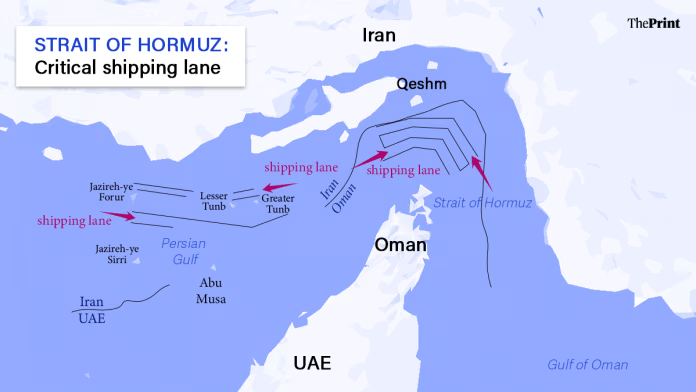
- The Strait typically handles nearly 20% of global oil trade
- Current restrictions have reportedly cut throughput by almost half
- U.S. naval deployment in the Gulf has significantly expanded
The situation remains highly volatile, with even minor miscalculations capable of triggering open conflict.
Oil Shock & Economic Fallout: A Global Ripple Effect
The economic consequences have been immediate and severe.
Oil Markets in Turmoil
- Brent crude prices have surged above $150/barrel
- Shipping insurance costs have spiked
- Tanker traffic through the strait has slowed dramatically
The Strait of Hormuz is not just an oil artery—it is a lifeline for global commerce. Disruptions are cascading across industries.
Supply Chain Disruptions
- Fertilizer shipments from the Gulf delayed
- Food commodities like wheat and rice seeing price increases
- Rerouting via longer routes (e.g., Red Sea) raising logistics costs
South Asia Feels the Heat
Countries like India, Pakistan, and Bangladesh—heavily dependent on Gulf energy imports—are facing:
- Rising fuel import bills
- Pressure on fiscal deficits
- Inflation in food and transport sectors
For developing economies, this shock risks prolonged inflationary cycles and slowed growth.
Diplomacy in Motion: Pakistan Steps In as Mediator
Amid escalating tensions, Pakistan has emerged as a key diplomatic intermediary, proposing a second round of talks between Washington and Tehran in Islamabad.
Key Diplomatic Challenges
- Iran’s refusal to curb its nuclear ambitions
- U.S. insistence on strategic containment
- Shrinking window before ceasefire arrangements collapse
While Islamabad’s mediation offers a narrow path to de-escalation, deep mistrust between the two sides continues to hinder progress.
Domestic Pressure in Iran: Protests Signal Internal Strain
Inside Iran, the crisis is no longer just geopolitical—it’s personal.
Thousands have taken to the streets in Tehran, protesting rising food and fuel prices. The blockade has intensified economic hardship, adding pressure on the Iranian leadership.
Ground Sentiment
- Rising inflation affecting basic goods
- Public frustration over economic isolation
- Growing calls for government response
Domestic unrest could further complicate Tehran’s strategic decisions.
Regional Security Risks: A Wider Conflict Looms
The Gulf region is on edge. Iran’s warning that Gulf ports may become targets has heightened fears across neighboring states.
Potential Flashpoints
- Proxy militia escalation in Iraq, Syria, and Yemen
- Attacks on shipping lanes or oil infrastructure
- Expansion of conflict beyond bilateral confrontation
The crisis risks evolving into a multi-theatre regional conflict, drawing in multiple actors.
Humanitarian Fallout: The Silent Crisis
Beyond geopolitics, the blockade is triggering a humanitarian ripple effect.
Impact Zones
- West Asia: Inflation driving unrest
- South Asia: Food and transport costs surging
- Global South: Vulnerable populations hit hardest
Low-income households are disproportionately affected, with rising costs of essentials threatening livelihoods.
Strategic Outlook: What Lies Ahead
Best-Case Scenario
- Successful mediation led by Pakistan
- Limited de-escalation and easing of maritime restrictions
Worst-Case Scenario
- Full closure of the Strait of Hormuz
- Oil prices exceeding $180–200/barrel
- Global recessionary pressures intensify
Mitigation Strategies
- Strategic oil reserve releases by major economies
- Diversification of supply (Russia, Africa)
- Increased regional diplomacy
Conclusion: A Crisis with Global Stakes
The U.S. blockade of Iranian ports is no longer a localized conflict—it is a global economic and security crisis unfolding in real time.
With energy markets destabilized, supply chains disrupted, and geopolitical tensions rising, the coming days will be critical. Whether diplomacy prevails or escalation continues will determine not just the future of U.S.-Iran relations, but the trajectory of the global economy itself.