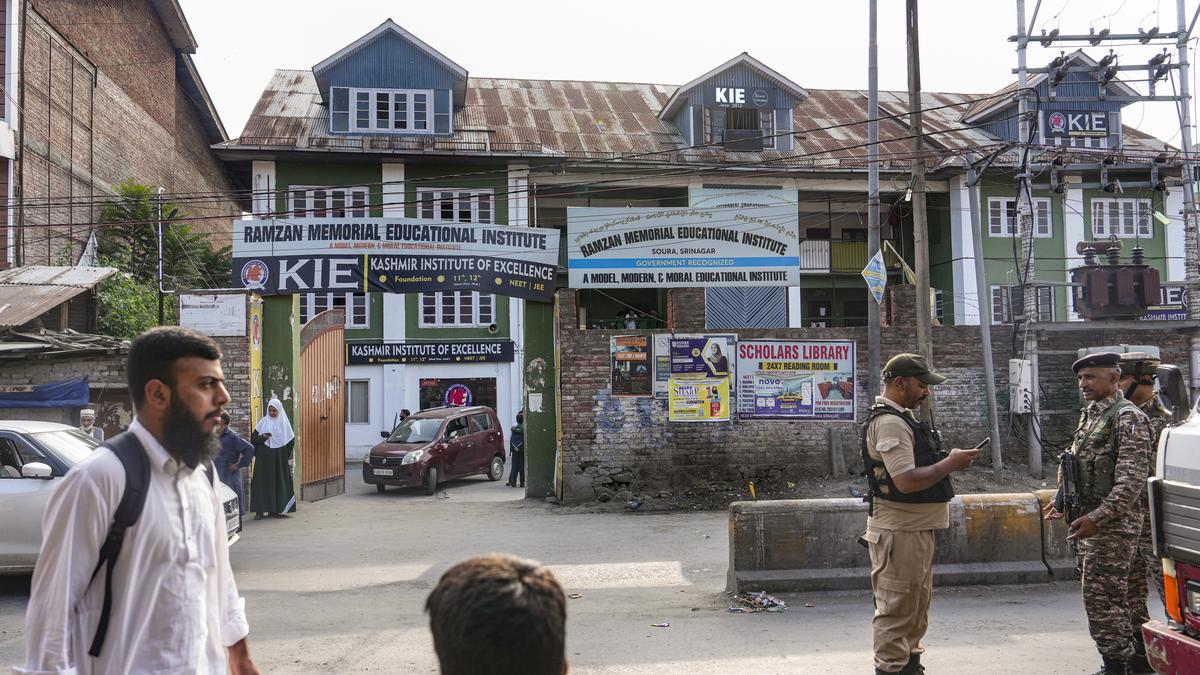
273 Schools, One Big Shift: Inside J&K’s Quiet Education Transformation
By: Javid Amin | 18 April 2026
In one of the most significant education policy moves in recent years, the administration in Jammu and Kashmir has taken over 273 schools allegedly affiliated with Jamaat-e-Islami (JeI) and the Falah-e-Aam Trust (FAT) over the past eight months.
The action follows directives linked to the Ministry of Home Affairs, which had earlier banned JeI under the Unlawful Activities (Prevention) Act (UAPA), citing security concerns.
While the move is rooted in policy and security frameworks, its real impact is unfolding in classrooms—affecting thousands of students, teachers, and families across Kashmir.
Background: Why Were These Schools Taken Over?
The takeover is part of a broader state effort to regulate institutions linked to organizations deemed unlawful.
Key Trigger
- Ban on Jamaat-e-Islami under UAPA
- Allegations that associated institutions were promoting separatist narratives
Role of FAT Schools
The Falah-e-Aam Trust operated a wide network of private schools, many of which:
- Functioned in rural and semi-urban مناطق (areas)
- Offered affordable education
- Maintained independent administrative structures
Authorities maintain that institutional oversight was necessary to ensure compliance with national education and security standards.
Ground Reality: Where Are These Schools Located?
Though no official consolidated list has been released, district-level administrative inputs and ground reporting indicate clusters across the Kashmir Valley.
High-Concentration Districts
- Pulwama & Shopian
- Baramulla (including Sopore belt)
- Anantnag & Kulgam
Urban Presence
- Srinagar (Soura, Downtown, outskirts)
Smaller Clusters
- Budgam
- Kupwara
Local officials, including Chief Education Officers, are managing the transition district by district, rather than through a centralized public list.
What Has Changed Inside Schools?
1. Administrative Control
All affected institutions are now under direct government supervision, with:
- New management committees
- Oversight by district प्रशासन (administration)
- Integration with Jammu and Kashmir Board of School Education
2. Curriculum Alignment
- Shift to JKBOSE-approved syllabus
- Gradual alignment with the National Education Policy (NEP)
- Standardized textbooks and teaching methods
3. Infrastructure Push
Early reports suggest:
- Plans for digital classrooms
- Library and lab upgrades
- Integration into broader education reform initiatives
Teachers & Staff: Continuity with Oversight
One of the most sensitive aspects of the transition has been staff management.
What’s Happening on Ground
- Majority of teachers retained to avoid disruption
- Background screening underway
- Training programs introduced for standardization
Challenges
- Adjustment to new administrative culture
- Increased compliance requirements
- Uncertainty among contractual staff
Students First: Continuity, But With Change
For students, the priority has been minimal disruption.
Positive Developments
- Classes continuing without major breaks
- Access to government schemes and scholarships
- Inclusion in state-level academic programs
Concerns from Parents
- Sudden change in school identity
- Fear of administrative delays
- Questions about long-term quality and consistency
Ground feedback shows a mixed but stabilizing response, with most families prioritizing continuity of education.
Policy vs Perception: The Larger Debate
Government’s Position
- Ensuring uniform education standards
- Preventing ideological influence in classrooms
- Strengthening public education infrastructure
Public Response
- Some welcome increased oversight and standardization
- Others express concern about loss of institutional identity
This reflects a broader tension between policy enforcement and community sentiment.
What Lies Ahead: Future of These 273 Schools
Likely Developments
- Full integration into government school system
- Merging of smaller institutions for efficiency
- Expansion of infrastructure and digital education
Long-Term Vision
Authorities aim to:
- Build trust through transparency
- Improve quality through standardized systems
- Ensure equal access to education across regions
Why No Official List Has Been Released
The absence of a public list is deliberate.
Reasons
- Security concerns and risk of stigmatization
- Ongoing verification of institutions
- Avoiding panic among parents and students
Instead, communication is being handled through:
- School-level notices
- District प्रशासन channels
Conclusion: A Structural Shift with Human Impact
The takeover of 273 JeI/FAT-linked schools marks a defining moment in Jammu & Kashmir’s education landscape.
Beyond policy, it is a story of:
- Students adapting to change
- Teachers navigating new systems
- Communities recalibrating trust
If implemented effectively, this transition could lead to more standardized, inclusive, and accountable education.
But its long-term success will depend on one critical factor:
how well policy translates into real improvement inside classrooms.