One Year After Pahalgam: Grief Lingers, Kashmir Still Caught in the Crossfire
By: Javid Amin | 22 April 2026
A Valley in Mourning, A Region in Transition
One year after the devastating April 22, 2025 terror attack in Pahalgam, the scars remain visible—both in memory and in everyday life. The attack, which claimed 26 lives including 25 tourists and a local pony handler, shook the very foundation of Kashmir’s tourism-driven economy.
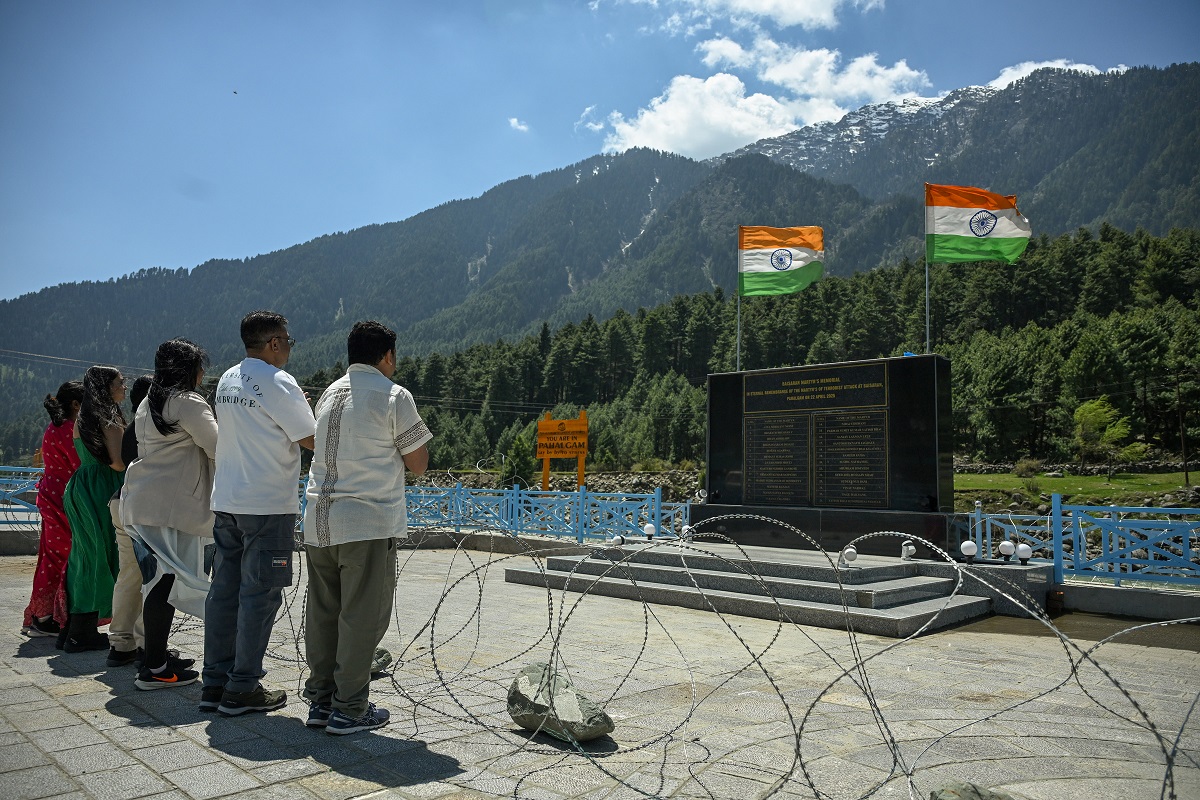
Today, along the banks of the Lidder river, a black marble memorial stands quietly—a solemn reminder of lives lost and a region still navigating grief, resilience, and uncertainty.
Yet, beyond the symbolism, Kashmir finds itself at a critical crossroads: balancing remembrance with revival, and security with the need for normalcy.
Anniversary Observances: Remembrance Amid Tight Security
A Memorial That Speaks Without Words
The newly unveiled black marble monument in Pahalgam bears the names of all 26 victims. Positioned strategically near the Lidder river, it has become both a place of mourning and a statement of defiance against violence.
Families of the victims, local residents, civil society groups, and political leaders gathered in significant numbers—marking a rare and powerful public expression against terrorism in Kashmir’s recent history.
Security Blanket Across Tourist Hubs
Security arrangements were unprecedented. Tourist destinations such as Gulmarg, Tangmarg, and Doodhpatri witnessed intensified surveillance, checkpoints, and round-the-clock patrols.
While authorities framed this as essential reassurance, the heavy presence also underscored a new reality: tourism in Kashmir is now inseparable from security optics.
Military and Political Messaging: Zero Tolerance, Strategic Signaling
India’s Assertive Posture
The Indian Army reiterated a strong message: “India does not forget. Justice will be served.” This aligns with the broader doctrine demonstrated after the attack—swift, targeted retaliation under operations such as Operation Sindoor.
This approach reflects a calibrated shift in India’s counter-terror strategy: precise, high-impact responses designed to deter without triggering full-scale escalation.
Political Unity and Messaging
Prime Minister Narendra Modi paid tribute to the victims, reaffirming that India “will never bow to terror.” Meanwhile, the Jammu & Kashmir Assembly passed a unanimous resolution condemning the attack and pledging to uphold communal harmony.
The political messaging has been consistent—projecting unity, resilience, and an uncompromising stance on national security.
Economic Shock: Tourism Takes the Hit
Immediate Fallout
The attack triggered a near-collapse of tourism in Pahalgam. Over 40 tourist destinations, including Baisaran and Chandanwari, were temporarily shut down.
Hotels emptied overnight. Transport services stalled. Thousands dependent on tourism—from pony handlers to taxi drivers—faced immediate income loss.
Gradual, Uneven Recovery
A year later, the situation shows cautious improvement. Domestic tourists, particularly from northern and northeastern states, have started returning. However, foreign tourist inflow remains negligible—a critical gap for high-value tourism.
Hospitality businesses are reopening, but the recovery is uneven and fragile.
Also Read | Kashmir Tulip Festival 2026: India’s Most Colorful Spring Escape You Can Experience for Just ₹20,500
Tourism Revival: Discounts, Deals, and Desperation
The Price War Strategy
Hotels in Pahalgam and Gulmarg are offering steep discounts, bundled packages, and flexible bookings to attract visitors.
While effective in boosting occupancy, this strategy raises serious concerns about long-term sustainability.
Changing Tourist Psychology
Tourists today arrive with a different mindset—less carefree, more cautious. Security checks, patrols, and visible armed presence provide reassurance, but also serve as constant reminders of risk.
Local residents welcome the return of visitors, yet remain visibly wary. The memory of the attack is still fresh, shaping both behavior and expectations.
Pre vs Post: A Structural Shift in Tourism
Visitor Trends:
Pre-2025, Kashmir witnessed peak inflows with bustling tourist circuits. Today, visitor numbers are modest and largely domestic.
Occupancy Rates:
Earlier averaging 70–90% during peak seasons, hotel occupancy now hovers between 40–60%, heavily reliant on last-minute bookings.
Pricing Model:
A shift from premium pricing to aggressive discounting reflects an industry in survival mode.
Security Experience:
What was once subtle is now overt—security is a visible, defining feature of the tourism experience.
Also Read | Kashmir Spring 2026 Sale: Tulip Festival, Honeymoon & Family Packages from ₹30,000 | JKL Travels
Ground Reality: A Fragile Equilibrium
Grief That Hasn’t Faded
For families of the victims, closure remains elusive. The memorial is not just symbolic—it is a daily reminder of vulnerability in what was once marketed as a carefree destination.
Militarized Tourism Management
Kashmir’s tourism model has fundamentally changed. High-alert protocols during peak seasons and anniversaries are now standard. This “security-first tourism” approach may ensure safety, but risks altering the region’s core appeal.
Confidence Deficit
Tourism thrives on perception. Despite improved security, the fear of recurrence continues to influence traveler decisions. One adverse incident could undo months of recovery.
Risks Ahead: The Herd Mentality Trap
A critical concern emerging from the recovery phase is herd-driven pricing.
When all stakeholders—hoteliers, transporters, tour operators—simultaneously slash prices, the market risks a race to the bottom. This pattern has historically led to financial stress and business closures in Kashmir’s tourism ecosystem.
Key Risks:
- Unsustainable discounting eroding margins
- Overcapacity without demand planning
- Dependence on domestic tourists alone
- Lack of differentiated experiences
Also Read | Experience Blossom Season in Ladakh – A Hidden Alternative to Japan’s Cherry Blossoms
The Way Forward: From Survival to Strategy
1. Differentiation Over Discounts
Kashmir must move beyond price wars. Eco-tourism, boutique stays, and cultural immersion experiences can create higher-value tourism segments.
2. Balanced Security Narrative
Security must reassure—not intimidate. A more subtle, tech-driven approach could help maintain safety without overwhelming visitors.
3. Demand-Led Growth
Future expansion in hotels and services must align with realistic demand forecasts, avoiding past cycles of overinvestment.
4. Rebuilding Global Confidence
Reviving international tourism will require sustained peace signals, strong branding, and consistent visitor experiences.
Conclusion: Between Memory and Momentum
One year after the tragedy in Pahalgam, Kashmir stands in a delicate balance.
There is resilience—visible in returning tourists, reopening hotels, and a determined local population. But there is also vulnerability—rooted in grief, geopolitical tensions, and economic fragility.
The memorial by the Lidder river captures this duality perfectly: a tribute to loss, and a symbol of endurance.
Kashmir’s future now depends on whether it can move beyond reactive recovery toward strategic, sustainable growth—without forgetting the lessons written in stone.