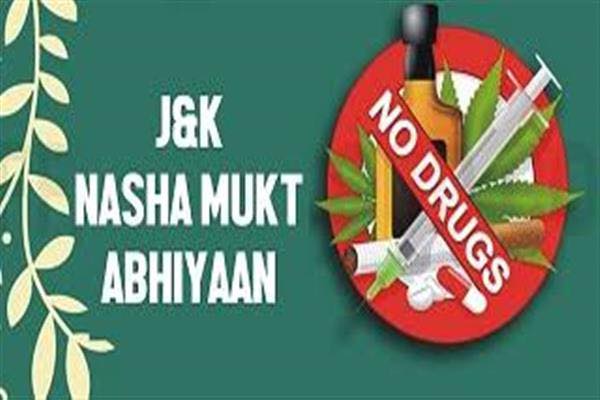
Nasha Mukt Kashmir 2026: Alcohol Policy Contradiction, Drug Crisis & Public Health Reality
By: Javid Amin | 03 May 2026
A Movement Rising Across Kashmir
Across Jammu & Kashmir, a powerful social campaign is unfolding. Streets echo with slogans, community halls host symposiums, and institutions—from schools to mosques—are actively participating in the “Nasha Mukt Kashmir Abhiyan.”
Teachers, students, religious leaders, sportspersons, and professionals have come together with a shared purpose: to protect society from the growing threat of substance abuse.
The mobilization is not symbolic—it reflects a genuine ground reality. Kashmir is grappling with a serious drug crisis, particularly among youth. Awareness campaigns, enforcement drives, and community engagement are all part of this urgent response.
But as the campaign crosses its early milestones, a deeper, more uncomfortable question is beginning to surface:
Is the fight against “nasha” consistent in its definition—and in its policy response?
What Is “Nasha”? A Definition That Changes the Debate
According to the World Health Organization:
“Substance intoxication is a transient condition following the administration of a psychoactive substance, resulting in disturbances of consciousness, cognition, perception, judgment, affect, or behavior.”
This definition expands the conversation. It places multiple substances under the same scientific umbrella:
- Alcohol
- Opioids (including heroin)
- Cannabis
- Sedatives
- Stimulants
The implication is clear: “nasha” is not limited to illegal drugs—it includes widely accepted substances like alcohol.
The Policy Contradiction at the Core
Here lies the central tension.
While campaigns strongly condemn drugs like heroin or synthetic substances, alcohol continues to be legally produced, sold, and socially accepted.
This creates a dual reality:
- Illegal drugs: Criminalized, stigmatized, aggressively targeted
- Alcohol: Licensed, taxed, normalized
From a public health perspective, this raises a critical concern:
Can a campaign against “nasha” succeed if its definition is selectively applied?
Alcohol: The Overlooked Dimension of Addiction
Globally, alcohol is among the leading contributors to:
- Chronic diseases
- Road accidents
- Domestic violence
- Mental health disorders
Despite this, it remains embedded in economic and social systems.
In policy terms, alcohol represents a regulated risk, not an eliminated one. Governments manage it through:
- Licensing systems
- Taxation (excise revenue)
- Age restrictions
But this regulatory acceptance often contrasts sharply with the messaging of total abstinence in anti-drug campaigns.
Ground Reality in Kashmir: A Complex Crisis
Kashmir’s substance abuse problem is not theoretical—it is deeply rooted and evolving:
- Rising opioid and heroin use among youth
- Increasing cases of dependency and relapse
- Pressure on de-addiction centers and mental health services
At the same time:
- Awareness campaigns are expanding
- Enforcement actions are intensifying
- Communities are becoming more vocal
This creates a multi-layered response—but not always a unified one.
Awareness vs Reality: The Messaging Gap
Campaigns like “Nasha Mukt Kashmir” are effective in:
- Building awareness
- Reducing stigma around seeking help
- Mobilizing communities
However, inconsistencies in messaging can dilute impact:
- Youth receive mixed signals about what constitutes “harmful substance use”
- Legal vs illegal distinctions blur scientific understanding
- Moral narratives sometimes override health-based approaches
Why Policy Consistency Matters
Public health campaigns depend on credibility and clarity.
When definitions and policies diverge:
- Trust weakens
- Compliance drops
- Long-term behavioral change becomes difficult
A consistent framework is not just ideal—it is essential.
The Way Forward: From Campaign to System
To transform “Nasha Mukt Kashmir” into a sustainable movement, a broader strategy is required:
1. Policy Coherence
Align legal frameworks with scientific definitions of substance use.
Acknowledge that all psychoactive substances carry risks—differing in degree, not in principle.
2. Strengthen Rehabilitation Systems
- Expand de-addiction centers
- Integrate mental health services
- Focus on long-term recovery and relapse prevention
3. Community-Centric Prevention
- School and college-based interventions
- Youth engagement programs
- Family counseling and support systems
4. Responsible Regulation of Alcohol
- Stronger awareness about its health risks
- Strict enforcement of age and safety laws
- Transparent communication about its societal impact
5. Honest Public Dialogue
Move beyond slogans to:
- Evidence-based discussions
- Open acknowledgment of policy trade-offs
- Inclusive community participation
The Bigger Question: What Does “Nasha Mukt” Truly Mean?
A completely “nasha-free” society may be aspirational. But a harm-reduced, health-focused society is achievable.
The challenge is not just eliminating substances—it is:
- Reducing dependency
- Supporting recovery
- Building resilience
Conclusion: From Awareness to Integrity
“Nasha Mukt Kashmir” is a powerful movement with strong intent and visible momentum. It reflects a society ready to confront a serious crisis.
But for it to succeed, it must evolve:
- From awareness to accountability
- From slogans to systems
- From selective focus to comprehensive policy
Only when definitions, policies, and ground actions align can the vision of a healthier, addiction-free Kashmir become a reality.
