Netanyahu Rejects JD Vance’s ‘Only Ally’ Remark, Says India Has Been a ‘Tremendous’ Supporter of Israel
By: Javid Amin | 05 July 2026
Netanyahu Pushes Back Against JD Vance, Highlights India’s Growing Importance
Israeli Prime Minister Benjamin Netanyahu has publicly challenged U.S. Vice President JD Vance’s assertion that the United States remains Israel’s only powerful international ally, instead pointing to India as one of Israel’s strongest and most dependable partners.
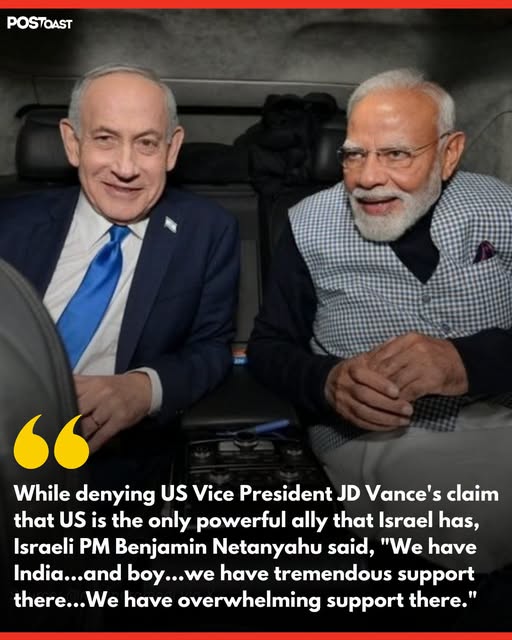
Speaking during an interview with Fox News, Netanyahu responded to Vance’s recent remarks by saying Israel has “some other friends,” specifically naming India and emphasizing the country’s large public support for Israel. Referring to India’s population of more than 1.4 billion people, Netanyahu remarked that Israel enjoys “tremendous support” there and even cited the overwhelming backing he sees on social media platforms such as Facebook.
The comments come at a politically sensitive time, as reports point to growing policy differences between Washington and Jerusalem over the U.S.-brokered Iran peace framework and Israel’s military posture in the region. While Netanyahu rejected the idea that Israel depends solely on Washington, he stopped short of suggesting a breakdown in ties with the United States. Instead, he stressed that Israel values multiple strategic partnerships while maintaining a close relationship with America.
What Prompted Netanyahu’s Response?
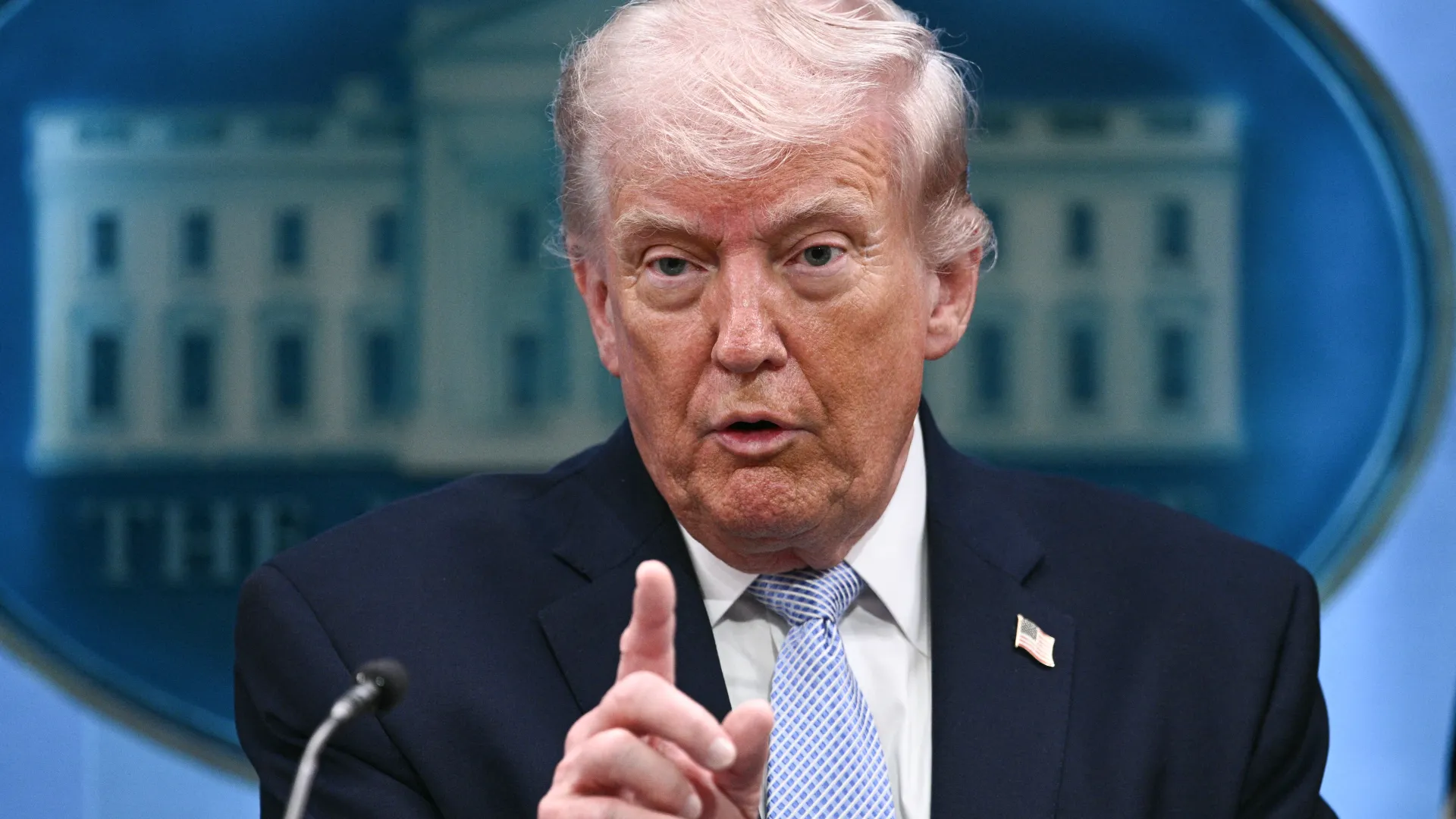
The exchange follows comments made by Vice President JD Vance, who defended the Trump administration’s diplomatic approach toward Iran and warned Israeli leaders against undermining Washington’s efforts.
Vance argued that the United States remained Israel’s “only powerful ally” and urged Israeli officials to recognize the importance of American military, diplomatic and financial support. His remarks reflected frustration within sections of the U.S. administration over criticism from Israeli political leaders regarding the Iran agreement negotiated by Washington.
Netanyahu, while acknowledging that he enjoys a good working relationship with Vance, said disagreement on this issue was natural.
“We have some other friends, like a small country called India… it has 1.4 billion people, and boy, do we have tremendous support there.”
The Israeli leader also dismissed suggestions that differences over policy amount to a personal rift, reiterating that he continues to value relations with both President Donald Trump and Vice President Vance.
Why India Featured So Prominently
Netanyahu’s decision to single out India was not accidental.
Over the past decade, India-Israel relations have evolved into one of the fastest-growing strategic partnerships in Asia. Cooperation now extends well beyond defence, encompassing intelligence sharing, cybersecurity, agriculture, water management, innovation, semiconductors, artificial intelligence and advanced manufacturing.
Personal diplomacy has also played a major role. Netanyahu and Prime Minister Narendra Modi have cultivated a close relationship through multiple bilateral visits and frequent engagement, symbolising a significant expansion of ties between New Delhi and Jerusalem.
By highlighting India, Netanyahu appeared to underscore that Israel’s diplomatic outreach has diversified in recent years and is not confined to its traditional Western allies.
A Message Beyond India
Analysts believe Netanyahu’s remarks were aimed at two audiences.
Internationally, they projected the message that Israel continues to enjoy support from influential partners despite disagreements with Washington over specific policy issues.
Domestically, the comments reinforced Netanyahu’s long-standing argument that his government has successfully broadened Israel’s diplomatic relationships across Asia, the Middle East and beyond.
At the same time, experts caution against interpreting the remarks as a sign that India could replace the United States in Israel’s strategic calculus. The U.S. remains Israel’s principal security partner, largest military supporter and closest defence ally. Netanyahu’s statement instead appears intended to highlight that Israel’s global partnerships have expanded rather than to diminish the central importance of Washington.
Why Netanyahu’s Praise for India Matters: A Strategic Partnership Years in the Making
Benjamin Netanyahu’s remarks were more than a diplomatic compliment. By publicly highlighting India as one of Israel’s strongest supporters, the Israeli Prime Minister sent a carefully crafted geopolitical message at a time when the Middle East is undergoing significant strategic shifts.
Although the United States remains Israel’s most important military and diplomatic partner, Netanyahu’s reference to India underscores how Israel has expanded its global partnerships over the past decade. It also reflects New Delhi’s growing influence as a major global power whose foreign policy increasingly carries weight in regional and international affairs.
For many analysts, the statement signals that Israel is keen to strengthen relationships with countries beyond its traditional Western allies, particularly at a time when differences with Washington have surfaced over regional security and diplomacy.
India-Israel Relations: From Quiet Cooperation to Strategic Partnership
India and Israel established full diplomatic relations in 1992. Since then, bilateral ties have transformed from limited engagement into a comprehensive strategic partnership spanning defence, technology, agriculture, innovation, cybersecurity, water management and trade.
The relationship gained significant momentum after Prime Minister Narendra Modi became the first Indian Prime Minister to visit Israel in 2017. The visit marked a historic shift in India’s Middle East policy, demonstrating New Delhi’s willingness to engage Israel openly while continuing to maintain ties with Arab nations and supporting a two-state solution in the Israel-Palestine conflict.
Netanyahu’s reciprocal visit to India in 2018 further strengthened political trust between the two leaders. Since then, both governments have expanded cooperation in sectors ranging from defence manufacturing and artificial intelligence to renewable energy and start-up innovation.
Today, India is among Israel’s largest defence partners, while Israeli companies play an important role in India’s modernization efforts in agriculture, irrigation, homeland security and advanced technologies.
Defence Cooperation Remains the Cornerstone
One of the strongest pillars of the India-Israel relationship is defence.
Israel has been one of India’s leading suppliers of advanced military equipment, including air defence systems, drones, surveillance technologies, precision-guided munitions and electronic warfare capabilities.
The two countries also cooperate in intelligence sharing, counter-terrorism and joint research in defence technologies.
This strategic partnership has deepened over the years, particularly as both countries face evolving security challenges in their respective regions.
Netanyahu’s public acknowledgment of India’s support therefore carries significance beyond diplomacy—it reinforces the strategic trust that has developed between the two nations.
Public Support and Netanyahu’s Social Media Reference
During his remarks, Netanyahu went beyond official diplomacy by referring to the strong support he receives from Indian citizens on social media platforms such as Facebook.
While social media engagement should not be viewed as a measure of government policy, it does illustrate the visibility Israel enjoys among sections of the Indian public, especially during periods of heightened regional conflict.
India’s official position, however, remains more nuanced. New Delhi has consistently called for dialogue, restraint and peaceful resolution of conflicts while maintaining relations with both Israel and Arab countries.
This balanced diplomatic approach allows India to preserve strategic partnerships across the Middle East without aligning exclusively with any single bloc.
Are US-Israel Relations Under Strain?
Netanyahu’s remarks have also drawn attention because they come amid reports of policy differences between Israel and the Trump administration over Iran.
Recent media reports suggest that Washington has prioritised diplomatic engagement and efforts to reduce tensions with Tehran, while some Israeli leaders have expressed concern that concessions could strengthen Iran’s regional influence.
Vice President JD Vance’s comments defending the administration’s approach highlighted these differences, but officials from both countries have repeatedly stated that the U.S.-Israel alliance remains strong despite disagreements over specific policy issues.
Political analysts note that strategic allies often differ on tactics without fundamentally altering their long-term partnership. Similar disagreements have occurred in previous administrations over settlements, military operations and negotiations with regional actors.
For this reason, Netanyahu’s reference to India should be seen as an affirmation of Israel’s expanding diplomatic network rather than evidence of a weakening alliance with Washington.
What Does This Mean for India?
For India, Netanyahu’s comments represent recognition of New Delhi’s growing international stature.
Over the past decade, India has emerged as an increasingly influential voice in global diplomacy, maintaining productive relationships with the United States, Israel, Gulf nations, Russia and Europe while advocating strategic autonomy in foreign policy.
This ability to engage multiple partners simultaneously has become one of the defining features of India’s international approach.
By publicly acknowledging India’s support, Netanyahu highlighted New Delhi’s importance not only as a bilateral partner but also as a country whose diplomatic positions are closely watched in global affairs.
Geopolitical Implications
The broader significance of Netanyahu’s remarks extends beyond India and Israel.
As the geopolitical landscape evolves, countries are increasingly seeking diversified partnerships to navigate complex security, economic and diplomatic challenges.
For Israel, strengthening ties with emerging powers such as India provides additional diplomatic flexibility and reinforces its engagement with the Indo-Pacific region.
For India, maintaining strong relations with Israel while preserving partnerships with Arab states and Iran requires a careful balancing act. New Delhi’s foreign policy has consistently aimed to avoid taking sides in regional rivalries, instead emphasizing dialogue, stability and respect for international law.
This balanced approach is likely to remain central to India’s engagement with the Middle East in the years ahead.
Conclusion
Benjamin Netanyahu’s decision to publicly praise India while responding to JD Vance’s remarks reflects more than a moment of political rhetoric.
It highlights the evolution of India-Israel relations into a mature strategic partnership, underscores India’s growing influence in international affairs and demonstrates Israel’s efforts to broaden its diplomatic outreach beyond traditional alliances.
At the same time, the episode should not be interpreted as a shift away from the United States. The U.S. continues to be Israel’s closest security partner, and both governments have emphasized that their alliance remains robust despite occasional policy disagreements.
Instead, Netanyahu’s comments illustrate a broader reality of modern geopolitics: nations increasingly rely on multiple strategic partnerships to advance their interests in an increasingly interconnected and unpredictable world.