Heavy Rain in Jammu Triggers Waterlogging, Flood Fears and Traffic Disruptions
By: News Desk | 11 Aug 2026
Heavy rain in Jammu has once again exposed the region’s vulnerability to intense monsoon weather, with waterlogging, swollen streams, transport disruptions and the risk of flash floods emerging across parts of the Jammu division.
The latest spell comes as the Meteorological Department maintains a wet-weather outlook for Jammu and Kashmir, including a warning for heavy rain in Jammu around August 11.
For residents, however, the issue is bigger than one spell of bad weather. Every intense downpour raises the same questions: Can the city’s drainage network cope? Are low-lying settlements adequately protected? And is development keeping pace with the changing risks posed by extreme rainfall?
Heavy Rain in Jammu Brings City Life to a Standstill
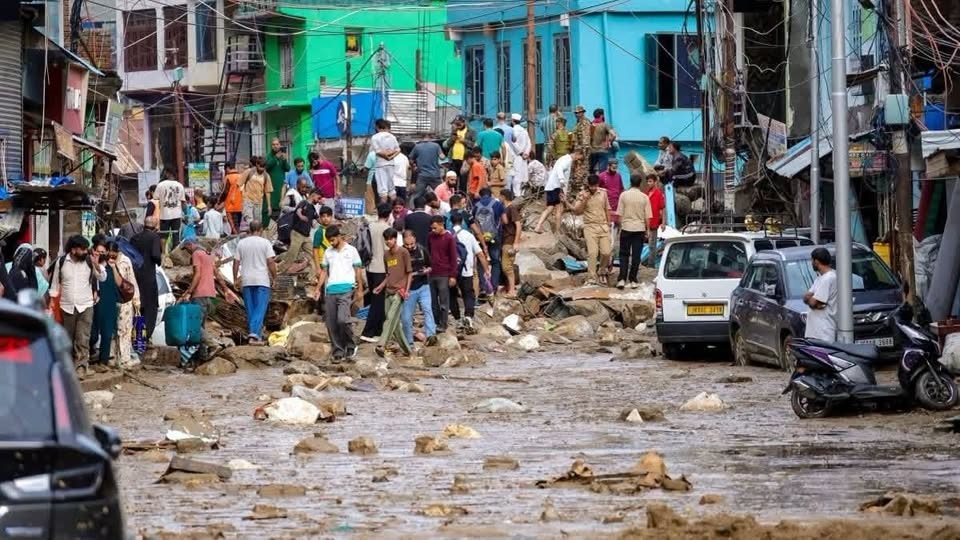
Parts of Jammu city experienced significant disruption as rainwater accumulated on roads and in low-lying areas.
Busy urban stretches can become particularly vulnerable when intense rainfall overwhelms storm-water drains faster than water can be carried away. Traffic slows, vehicles are forced through standing water and pedestrians face difficulty crossing flooded stretches.
Areas such as Residency Road and the Jewel Chowk belt are frequently associated with congestion and drainage-related urban stress. However, the specific claim that these locations were fully submerged during the latest August 2026 spell could not be independently confirmed from the latest reliable reports reviewed for this article. The broader picture of heavy-rain disruption is nevertheless well documented.
This distinction matters because accurate reporting should separate verified developments from locally circulating claims.
Why Waterlogging Happens So Quickly
Urban flooding is not simply a question of how much rain falls.
It also depends on:
- The intensity of rainfall over a short period
- The capacity of storm-water drains
- Blockages caused by silt, plastic and construction debris
- Encroachment or narrowing of natural drainage channels
- The amount of paved and built-up land
- The condition of roadside drains and culverts
- The ability of water to naturally infiltrate the soil
As cities expand, more land is covered by roads, concrete and buildings. Rain that would once have seeped into the ground is rapidly converted into surface runoff.
That can turn a heavy shower into a flash-flood problem within a short period.
Rajouri, Poonch and Other Districts Face Higher Flood Risk
The danger becomes more serious outside the city.
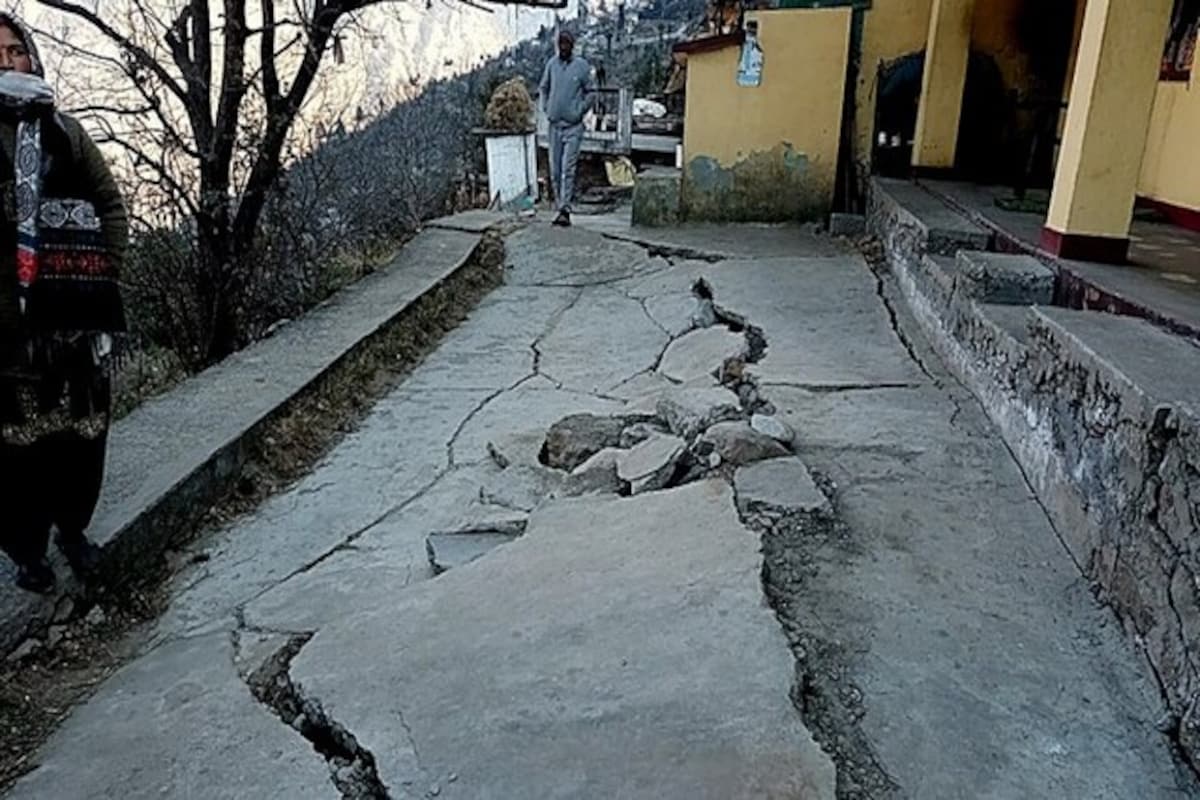
The hilly districts of Rajouri and Poonch are particularly vulnerable to flash floods and landslides because steep terrain can accelerate runoff and destabilise slopes. Recent heavy-rain episodes in July 2026 demonstrated the scale of that vulnerability, with flash floods and landslides causing deaths, damaging homes and infrastructure, and disrupting roads and power networks.
Kathua and other parts of the Jammu division can also experience sudden rises in water levels when intense rainfall feeds streams, seasonal channels and drainage networks.
This is why a weather warning for heavy rain is not merely a forecast of inconvenience. In mountainous terrain, intense rainfall can rapidly change conditions on the ground.
Swollen Nallahs Are an Early Warning Sign
Small streams and nallahs may appear harmless during dry weather. During intense rainfall, however, they can transform into fast-moving channels carrying enormous quantities of water, mud, rocks and debris.
Residents living close to such waterways face particular risks.
Authorities routinely advise people not to cross swollen streams or approach riverbanks during heavy rainfall. This is especially important because water levels can rise suddenly upstream, sometimes before residents downstream see obvious signs of danger.
Jammu-Srinagar Highway Remains a Major Weather Vulnerability
The Jammu-Srinagar National Highway (NH-44) is among the most important transport arteries in the region, but its mountainous alignment also makes it highly susceptible to landslides, falling rocks and road blockages during prolonged or intense rainfall.
Recent episodes in July 2026 saw NH-44 remain closed for multiple days after landslides and shooting stones disrupted traffic. Reports said hundreds of vehicles were stranded while restoration work was hampered by continuing rain.
This provides important context for the current weather situation.
Even when a particular rain spell does not produce a major highway closure, the underlying vulnerability remains. A slope weakened by prolonged rainfall can fail suddenly, while debris can block a carriageway with little warning.
For travellers, the safest approach during heavy rain is to check official traffic advisories before starting a journey rather than relying solely on normal route conditions.
Rain Also Tests Jammu’s Power Infrastructure
Heavy rainfall accompanied by strong winds can damage electrical infrastructure, including distribution lines, poles and transformers.
Power interruptions are particularly disruptive during prolonged wet weather because residents may simultaneously face waterlogging, traffic problems and communication difficulties.
Reports and local accounts have also highlighted continuing frustration over weather-related power disruptions in Jammu. Such complaints underline the importance of strengthening distribution infrastructure and improving rapid restoration mechanisms.
For the public, a reliable emergency response is therefore just as important as preventing outages in the first place.
How Authorities and Communities Respond
During periods of heavy rainfall, municipal and disaster-management agencies typically focus on several immediate priorities:
- Clearing blocked drains and culverts
- Pumping water out of inundated areas
- Monitoring rivers, streams and vulnerable nallahs
- Restricting movement in dangerous locations
- Responding to landslides and road blockages
- Moving vulnerable residents to safer locations when necessary
- Coordinating police, SDRF and civil administration teams
Jammu Municipal Corporation has already been intensifying monsoon preparedness, including drain and nallah desilting. Officials have also reviewed ongoing drainage infrastructure projects in areas including JalloChak, Digiana and Greater Kailash.
The administration has separately been overseeing major flood-restoration works across Jammu city, with officials stressing the need for adequate drainage arrangements and protection of ongoing infrastructure projects during the monsoon.
These measures indicate that the drainage problem is recognised at the administrative level. The bigger challenge is ensuring that projects are completed, properly maintained and designed for the rainfall conditions the city is increasingly experiencing.
School Closures: When Weather Becomes a Safety Issue
School closures during severe weather are generally a precautionary measure rather than an indication that every locality is flooded.
Recent experience shows why authorities sometimes take this decision. During the major August 2025 rain emergency, schools across the Jammu division were closed as flash floods, landslides and waterlogging disrupted transport and created safety risks.
For students, the greatest risk can occur during the journey to and from school.
A road that appears passable in the morning can become hazardous within hours if a drain overflows, a stream rises or a landslide blocks a hillside route.
August Is Naturally a Wet Month for Jammu
Heavy rain in Jammu during August is not unusual.
Long-term India Meteorological Department climatological data show that Jammu receives an average of about 353 mm of rainfall in August, with nearly 12 rainy days on average. July is even wetter, averaging about 417 mm.
The historical record also shows that extreme rainfall is possible. Jammu’s August record for 24-hour rainfall stands at 228.6 mm, recorded in 1926.
That historical context is important.
The problem is not that Jammu receives monsoon rain. The problem arises when intense rainfall interacts with expanding urban areas, altered drainage channels, impermeable surfaces and vulnerable slopes.
Jammu’s Bigger Problem Is Urban Flood Management
The recurring waterlogging should not be treated only as a monsoon inconvenience.
It is increasingly an urban-planning and climate-resilience issue.
A recent 2026 academic assessment of flood vulnerability in the Jammu City Region identified the Tawi River and altered river-flow dynamics as important components of the city’s flood risk. The study noted that encroachment and changes to the river’s course can affect flow behaviour and increase vulnerability during high-discharge events.
That means simply widening roads or constructing isolated drains may not solve the problem.
A resilient drainage strategy needs to consider the entire watershed.
What Jammu Needs Beyond Emergency Pumping
Experts and urban planners increasingly emphasise a combination of grey and green infrastructure.
That could include:
- Regular desilting of major drains before and during the monsoon.
- Restoration of natural drainage channels instead of allowing them to disappear beneath construction.
- Rainwater harvesting to reduce surface runoff and improve groundwater recharge.
- Permeable surfaces in suitable public spaces and parking areas.
- Floodplain protection along vulnerable rivers and streams.
- Better storm-water mapping to identify neighbourhoods where runoff concentrates.
- Real-time rainfall and water-level monitoring in high-risk locations.
- Slope stabilisation along landslide-prone road corridors.
- Strict control of construction near natural drainage channels.
- Climate-resilient road and drainage design based on extreme rainfall rather than average rainfall alone.
The objective should be to prevent water from becoming an emergency in the first place.
Why Sustainable Drainage Matters
Traditional urban drainage attempts to move rainwater away as quickly as possible.
That approach has limitations.
If every road, building and paved surface sends water into the same drainage network at the same time, the system can quickly exceed its capacity.
A more sustainable approach attempts to slow, store, absorb and safely release rainwater.
Green spaces, rain gardens, recharge areas, wetlands and permeable surfaces can help reduce runoff. Properly designed urban water systems can also provide benefits beyond flood protection, including groundwater recharge and improved environmental quality.
For Jammu, such measures are particularly relevant because the city sits within a landscape where the interaction between hills, streams, urban development and the Tawi river system creates complex flood dynamics.
What Residents Should Do During Heavy Rain
During periods of intense rainfall, residents in vulnerable areas should take simple precautions:
- Avoid crossing swollen streams and nallahs.
- Do not drive through rapidly moving floodwater.
- Stay away from unstable slopes and landslide zones.
- Avoid parking vehicles near drains and waterways.
- Follow official traffic and weather advisories.
- Keep essential medicines, documents and emergency supplies accessible.
- If water begins entering a home, move vulnerable family members to a safer location.
- Report blocked drains, fallen power lines and dangerous road conditions to the relevant authorities.
The most important rule is simple: never underestimate moving water.
A shallow-looking flooded road can conceal an open drain, damaged pavement or strong undercurrents.
A Warning for Jammu’s Development Model
The latest heavy rain is a reminder that infrastructure cannot be judged only by what it looks like on a dry day.
A city may have wider roads, new buildings, upgraded junctions and ambitious development projects. But if a few hours of intense rainfall repeatedly bring waterlogging, traffic paralysis and emergency pumping, the question of resilience remains unanswered.
Jammu Municipal Corporation and other agencies have undertaken drainage and flood-restoration works, showing that the issue is receiving attention.
The next step is to ensure that flood management becomes part of long-term urban planning rather than an emergency response that begins only after roads are underwater.
The Bigger Environmental Lesson
Heavy rain itself is not the enemy.
For a region like Jammu, monsoon rainfall is essential for rivers, agriculture, forests and groundwater.
The real danger emerges when extreme rainfall meets vulnerable infrastructure and poorly managed landscapes.
Jammu’s recurring waterlogging and the region’s repeated experience of flash floods and landslides point to the need for a different development philosophy—one that treats drainage channels, floodplains, wetlands, forests and slopes as essential infrastructure rather than empty land waiting for construction.
That is the environmental lesson behind the latest rain.
Conclusion: Jammu Needs a Long-Term Flood-Resilience Plan
The latest spell of heavy rain in Jammu should not be viewed as an isolated weather event.
It is another stress test for the city’s drainage network, transport system, power infrastructure and wider disaster-management capacity.
With August traditionally among Jammu’s wettest months, intense rainfall will continue to pose challenges.
The answer cannot be limited to clearing water after roads flood.
Jammu needs better drainage, protected natural waterways, stronger landslide management, climate-sensitive urban planning and infrastructure designed for extreme rainfall.
The monsoon will eventually pass. The infrastructure question will remain.