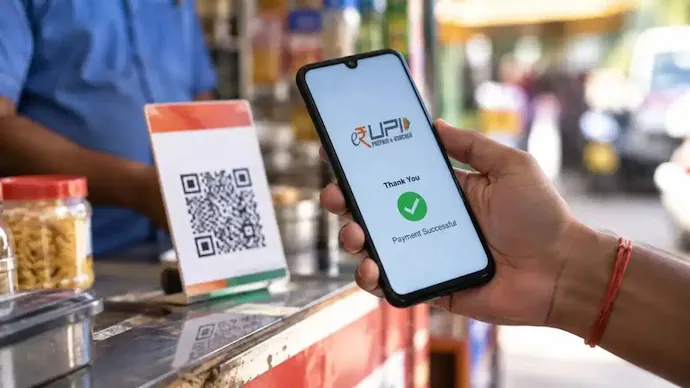
NPCI postpones planned October 15 rollout of Merchant Discount Rate; person-to-person transfers and most everyday UPI payments will remain free
By: Javid Amin | 13 October 2026
New Delhi: The proposed implementation of charges on select high-value Unified Payments Interface (UPI) merchant transactions has been postponed until after Diwali, with the National Payments Corporation of India (NPCI) expected to announce the revised implementation date separately.
The decision comes ahead of the festive shopping season, when millions of consumers use UPI to pay retailers, restaurants, service providers and online merchants. The framework was originally scheduled to take effect on October 15, 2026, but the rollout has been deferred to avoid introducing the change during a period of heightened consumer spending. Reuters reported the postponement on Tuesday.
The proposed measure concerns the Merchant Discount Rate (MDR), a fee associated with accepting digital payments. Under the announced framework, the charge will apply to specified person-to-merchant (P2M) UPI transactions above ₹2,000. It is not a blanket fee on all UPI payments.
Which UPI Transactions Will Attract Charges?
Under the framework announced in September, a 0.4 per cent MDR will apply to specified merchant transactions exceeding ₹2,000, subject to a cap of ₹300 for transactions of ₹75,000 and above. The charge is intended for the merchant-payment side of the UPI ecosystem, rather than ordinary transfers between individuals. India Today reported the structure when the framework was announced.
The main categories are:
- Person-to-person transfers: Payments between individuals, including transfers to family members and friends, will continue to be free.
- Merchant payments up to ₹2,000: These will remain free of MDR.
- Specified merchant payments above ₹2,000: These may attract the prescribed MDR, subject to applicable exemptions.
- Eligible small merchants: Merchants covered by the zero-MDR framework for small businesses will remain exempt.
The Finance Ministry said in September that approximately 96 per cent of person-to-merchant UPI transactions would remain unaffected by the new framework. It also clarified that MDR is not a tax collected by the government or NPCI. Instead, it is distributed among participants in the payment ecosystem to support the operation and expansion of digital-payment infrastructure.
Will Customers Have to Pay More?
The government has said the MDR is to be borne by merchants and must not be passed on separately to customers. Ordinary consumers are therefore expected to continue making UPI payments without a transaction fee imposed on them under this framework.
The distinction is important because the introduction of a merchant-side fee does not automatically mean that a customer sending ₹5,000 through a UPI application will be charged an additional amount. The applicable MDR concerns the merchant’s payment-acceptance arrangement, not a general fee on the person making the payment.
The Finance Ministry has also emphasised that person-to-person transfers will remain free regardless of the amount transferred, while payments to merchants up to ₹2,000 and transactions covered by the small-merchant exemption will continue under the zero-MDR framework.
The practical impact will depend on how the revised framework is implemented by banks, payment aggregators and merchants, and how effectively the rule against passing the charge to consumers is enforced.
Why Has the Rollout Been Delayed?
The immediate reason for postponement is the festive season. Diwali falls on November 8 this year, and the period leading up to the festival typically brings increased spending on clothing, electronics, household goods, jewellery, gifts and travel.
Introducing a new payment-acceptance fee in the middle of this busy period could have created uncertainty for retailers and payment service providers. The postponement gives businesses and payment companies additional time to prepare for the change while avoiding an immediate transition during peak festive shopping.
The proposed MDR framework had also prompted concerns among retailers and financial-sector participants about the timing and possible consequences of changing the economics of a payment system that consumers have long associated with free transactions. Reuters reported that the original October 15 implementation date had been deferred, with a new date still to be announced.
The postponement does not, by itself, cancel the policy. Unless the authorities announce a withdrawal or further revision, the reported position is that implementation will take place after Diwali.
Why Introduce an MDR on UPI?
UPI has become a central part of India’s retail-payment system, allowing customers to transfer money instantly through participating banks and payment applications. Its widespread use has also created continuing costs for payment infrastructure, transaction processing, fraud prevention, security and system expansion.
The government has presented the MDR framework as a way to support the long-term sustainability of the digital-payment ecosystem while protecting individual users and small merchants from additional charges.
The policy attempts to balance two objectives: maintaining UPI as an accessible payment method for ordinary transactions and establishing a revenue mechanism for selected higher-value merchant payments.
However, the effectiveness of that balance will depend on the exemptions, the cost borne by eligible merchants and whether consumers remain protected from separate surcharges. The Finance Ministry’s position is that the vast majority of merchant transactions will remain unaffected.
What Merchants and Consumers Should Know
For consumers, the immediate message is that there is no need to change everyday UPI habits simply because the rollout has been postponed. Person-to-person transfers and eligible low-value merchant payments remain free under the announced framework.
Merchants, particularly those accepting higher-value UPI payments, should watch for the revised implementation date and operational guidance from their acquiring banks and payment providers. Businesses should confirm whether they qualify for an exemption and how the MDR will be calculated and settled under the final implementation arrangements.
Consumers should also be cautious about claims that all UPI payments will attract a fee after Diwali. That is not what the announced framework provides. Any merchant separately demanding an additional customer payment on the grounds of MDR should be assessed against the applicable rules and official guidance.
A Delay, Not the End of the Debate
The decision to defer the rollout moves the immediate transition beyond the festive shopping period, but leaves important implementation questions open. The revised date, the readiness of payment providers and compliance with the prohibition on passing MDR costs to customers will determine how the policy works in practice.
For now, UPI users can continue making eligible everyday payments without a general transaction charge. The proposed MDR remains limited to specified merchant transactions, and the new implementation schedule is awaited.
The next milestone will be NPCI’s announcement of the effective date and any accompanying operational clarification. Until then, the postponement offers merchants and payment providers more time to prepare, while keeping the existing free-payment protections in place for individuals and most ordinary transactions.


