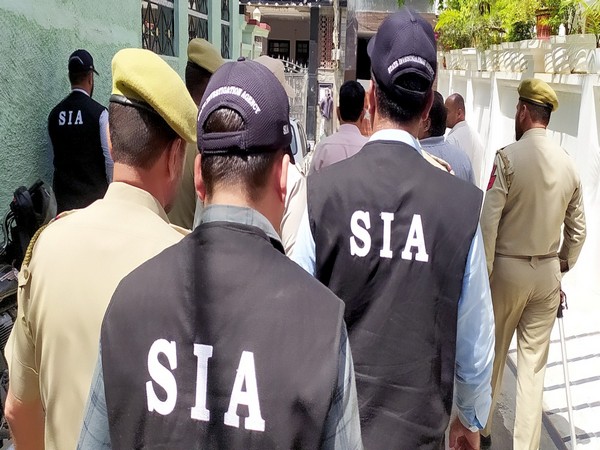
SIA Reopens 1990 Kashmiri Pandit Killing Case, Conducts 9 Raids Across J&K
By: News Desk | 12 Aug 2026
Srinagar: More than three decades after the killing of Kashmiri Pandit writer and social worker Sarwanand Koul “Premi” and his son Virender Koul, Jammu and Kashmir’s State Investigation Agency (SIA) has carried out fresh searches at nine locations across the Union Territory, reopening a painful chapter of the Valley’s militancy-era violence.
The searches, conducted on August 12, are part of the renewed investigation into the 1990 double murder in which Premi and his son were abducted and killed in south Kashmir. The operation covered six locations in Rajouri district, two in Jammu district and one in Baramulla district, according to reports citing officials.
The development comes only weeks after the SIA filed a 737-page chargesheet in the 1990 killing of Kashmiri Pandit nurse Sarla Bhat, naming former JKLF commander Yasin Malik and four others as accused. Together, the two developments point to a renewed effort to pursue some of the long-pending militancy-era cases involving Kashmiri Pandit victims.
For families who have waited decades for answers, the latest raids are more than another police operation. They represent a renewed attempt to reconstruct what happened, identify those allegedly responsible and bring old cases back into the judicial process.
The 1990 Double Murder at the Centre of the Investigation
The latest SIA action is focused on the killing of Sarwanand Koul Premi and his son Virender Koul in 1990.
Premi was a writer, poet and social worker who lived in Soaf Shali in the Kokernag area of present-day Anantnag district. He and his son were killed during the early phase of the armed insurgency in Kashmir.
Contemporary and later accounts place the killings in May 1990, when militancy and targeted violence had created an atmosphere of extreme fear across the Valley. Recent reporting identifies the victims as Sarwanand Koul Premi and his 27-year-old son Virender.
Their deaths occurred during one of the darkest periods of modern Kashmir’s history, when militant violence against civilians and the subsequent mass displacement of Kashmiri Pandits profoundly altered the social fabric of the Valley.
Nine Locations Searched Across Jammu & Kashmir
The latest operation was not restricted to the location of the original crime.
According to reports, SIA teams searched nine premises across three districts:
- Six locations in Rajouri
- Two locations in Jammu
- One location in Baramulla
The searches were linked to individuals associated with a slain terrorist identified in reports as Sher Khan of Rajouri. Investigators are attempting to gather material that could help establish the circumstances surrounding Premi and his son’s abduction and killing.
The geographic spread of the searches is significant.
A case originating in south Kashmir has now led investigators to locations in Jammu, Rajouri and Baramulla, illustrating the difficulty of investigating crimes committed during a period when militant networks operated across different parts of the region.
Why Are Investigators Returning to a 36-Year-Old Case?
At first glance, reopening a case after more than three decades may appear extraordinarily difficult.
Witnesses may have died or moved away. Physical evidence may have disappeared. Memories may have faded. Suspects may have been killed during subsequent counter-insurgency operations or may have remained unidentified.
Yet old investigations can sometimes be strengthened by evidence that was unavailable, overlooked or difficult to act upon when the original case was investigated.
Modern forensic methods, digital evidence, documentary records, intelligence inputs and fresh witness examination can potentially add new pieces to an old investigation.
The SIA’s current approach appears to be aimed at precisely this kind of evidence gathering.
The objective is not simply to revisit history but to determine whether a decades-old case can still be developed into a legally sustainable prosecution.
From an Old FIR to a New Investigation
The central challenge in historical criminal cases is turning a long-standing allegation into admissible evidence.
Investigators need to establish a chain connecting:
the victims → the circumstances of the crime → the perpetrators → supporting evidence → individual criminal responsibility.
That process becomes considerably harder when more than 30 years have passed.
The latest searches therefore matter because searches can potentially locate documents, records, electronic material or other evidence that helps investigators fill gaps in the original investigation.
However, the mere recovery of material does not automatically establish guilt. Any evidence seized during the searches would have to be examined, authenticated and tested through the legal process.
A Broader SIA Push Into Unresolved 1990s Cases
The Premi case does not exist in isolation.
In June 2026, the SIA filed a 737-page chargesheet in the 1990 abduction and killing of Kashmiri Pandit nurse Sarla Bhat.
The chargesheet named Yasin Malik and four other accused in connection with the case. Investigators relied on a combination of witness statements, documentary material, forensic and ballistic reports, medical evidence and electronic material.
The Sarla Bhat investigation was transferred to the SIA in March 2024, after which the agency reopened the case.
The chargesheet represented an important legal development because it moved a case dating back to 1990 into a renewed prosecution process.
The fresh searches in the Premi double-murder case now suggest that the investigation of other unresolved crimes from the same period is also continuing.
Sarla Bhat Case Changed the Conversation
The Sarla Bhat case provides important context for understanding the latest SIA operation.
Bhat, a 27-year-old Kashmiri Pandit nurse working at SKIMS in Srinagar, was abducted and killed in April 1990.
In June this year, the SIA filed its detailed chargesheet, naming five accused, including Yasin Malik. The agency’s investigation alleged that the crime was connected to a broader JKLF campaign targeting Kashmiri Pandits.
The legal development demonstrated that cases once considered extremely difficult to pursue could still be investigated decades later.
For victims’ families, that has an important psychological dimension: the passage of time does not necessarily mean that a case has been forgotten.
The Human Cost Behind the Case Files
The legal terminology—FIRs, searches, evidence, accused and chargesheets—can sometimes obscure the human reality behind these cases.
For families of victims, a murder from 1990 is not simply an old police file.
It is a missing family member, an unanswered question and a life interrupted.
For the Kashmiri Pandit community, the violence of the early 1990s was accompanied by a mass displacement from the Valley. Families left homes, property, neighbourhoods and community networks as the security environment deteriorated.
The displacement created a social rupture whose consequences continue to be felt decades later.
That is why cases involving Kashmiri Pandit victims carry significance beyond the individual criminal proceedings.
They are also connected to the larger question of whether victims of militancy-era violence can obtain acknowledgement, accountability and closure.
The Exodus and the Violence of the Early 1990s
The late 1980s and early 1990s marked a major turning point in Kashmir.
As militancy expanded, targeted killings, threats and violence contributed to an atmosphere of fear among Kashmiri Pandits and other civilians.
Large numbers of Kashmiri Pandit families subsequently left the Valley and settled primarily in Jammu, Delhi and other parts of India. Recent reporting on the Premi case again places his killing within this broader period of violence and displacement.
It is important, however, to distinguish between the historical context and the legal findings in individual cases.
Every murder case must ultimately be established through evidence relating to the specific crime and specific accused.
The SIA’s task is therefore both historical and legal: reconstruct the events while meeting the evidentiary requirements of a criminal investigation.
Why Fresh Raids Matter
Search operations are one of the investigative tools available to agencies dealing with serious criminal and terror-related cases.
In a decades-old investigation, their importance can be even greater because investigators may be attempting to locate material that can connect individuals to events that occurred long ago.
The current searches could potentially help investigators establish:
- Who was involved in the abduction and killings
- Whether the suspects were connected to a larger militant network
- How the victims were targeted
- What happened between their abduction and deaths
- Whether surviving associates can be identified
- Whether documentary or digital material can corroborate witness accounts
The answers, however, will depend on what investigators recover and how that material stands up to legal scrutiny.
A Critical Distinction: Search Is Not Proof
The renewed investigation should not be confused with a finding of guilt.
A person whose premises are searched is not automatically an accused, and an accused person is presumed innocent until proven guilty in accordance with law.
Similarly, any material seized during a search must be evaluated by investigators and, where relevant, presented before a court.
This distinction is especially important when reporting cases involving people who may have relatives or associations with former militants.
The objective of investigative journalism should be to establish what authorities have alleged or found—not to turn suspicion into a verdict.
What Happens Next?
The next stage will depend on the evidence gathered during the searches.
Evidence Examination
Investigators will examine documents, electronic material and any other items recovered during the searches.
Witness Tracing
Given the age of the case, identifying surviving witnesses and recording their statements could be important.
Establishing Individual Roles
If investigators identify suspects, they will need to establish each person’s specific role rather than relying solely on association.
Possible Arrests or Further Searches
Depending on the evidence, the agency could conduct additional searches or take further legal action.
Court Proceedings
Any eventual charges would have to be tested through the judicial process.
The objective of a successful investigation is therefore not simply to name suspects but to build a case capable of surviving legal scrutiny.
Why Justice After Three Decades Still Matters
There is a common assumption that justice delayed inevitably becomes justice denied.
But long-pending cases can still matter enormously to victims’ families.
A criminal investigation can provide answers even when a conviction may be difficult.
Knowing who was allegedly responsible, understanding how a crime occurred and establishing an official record can have significance for families that have spent decades living with uncertainty.
The recent Sarla Bhat chargesheet demonstrates that the legal system can revisit cases from the early years of militancy.
The Premi investigation now adds another important case to that process.
The Wider Community Question
For Kashmiri Pandits, the reopening of old cases is likely to be viewed through the larger experience of displacement and loss.
But justice for victims should also be framed as a matter of institutional accountability rather than communal politics.
The victims of militancy-era violence were individuals with families, professions and aspirations.
A credible investigation into their killings can therefore serve two purposes:
- Justice for individual victims and their families
- Strengthening the principle that serious crimes cannot simply disappear with the passage of time
That principle matters to every community affected by conflict.
Can the SIA Deliver Convictions?
That remains the central unanswered question.
Reopening a case is an important investigative step, but it is not the same as securing a conviction.
The evidentiary burden remains high, particularly after 36 years.
Some suspects may be dead. Others may be untraceable. Witnesses may be unavailable. Records may be incomplete.
The SIA will therefore have to demonstrate that the evidence gathered now can reliably establish individual criminal responsibility.
The success of the renewed investigation should ultimately be judged not by the number of raids but by the quality of evidence produced and the outcome of the judicial process.
A New Chapter in an Old Search for Answers
The nine searches carried out across Jammu, Rajouri and Baramulla have brought the 1990 killings of Sarwanand Koul Premi and his son Virender back into the public spotlight.
For the families of victims of the violence of the early 1990s, the development carries a powerful message: some cases that remained unresolved for decades are still being pursued.
The June chargesheet in the Sarla Bhat case and the latest searches in the Premi double-murder case indicate a broader pattern of renewed investigative attention to old militancy-era crimes.
But the real test lies ahead.
Can decades-old evidence be converted into legally sustainable cases? Can surviving perpetrators be identified? And can the families of victims finally receive the answers they have waited decades to hear?
Those questions will determine whether the latest SIA action becomes another investigative episode—or a meaningful step towards long-delayed justice.
For now, the raids have reopened not only a criminal investigation, but also a difficult conversation about memory, accountability and the unfinished legacy of Kashmir’s violent 1990s.