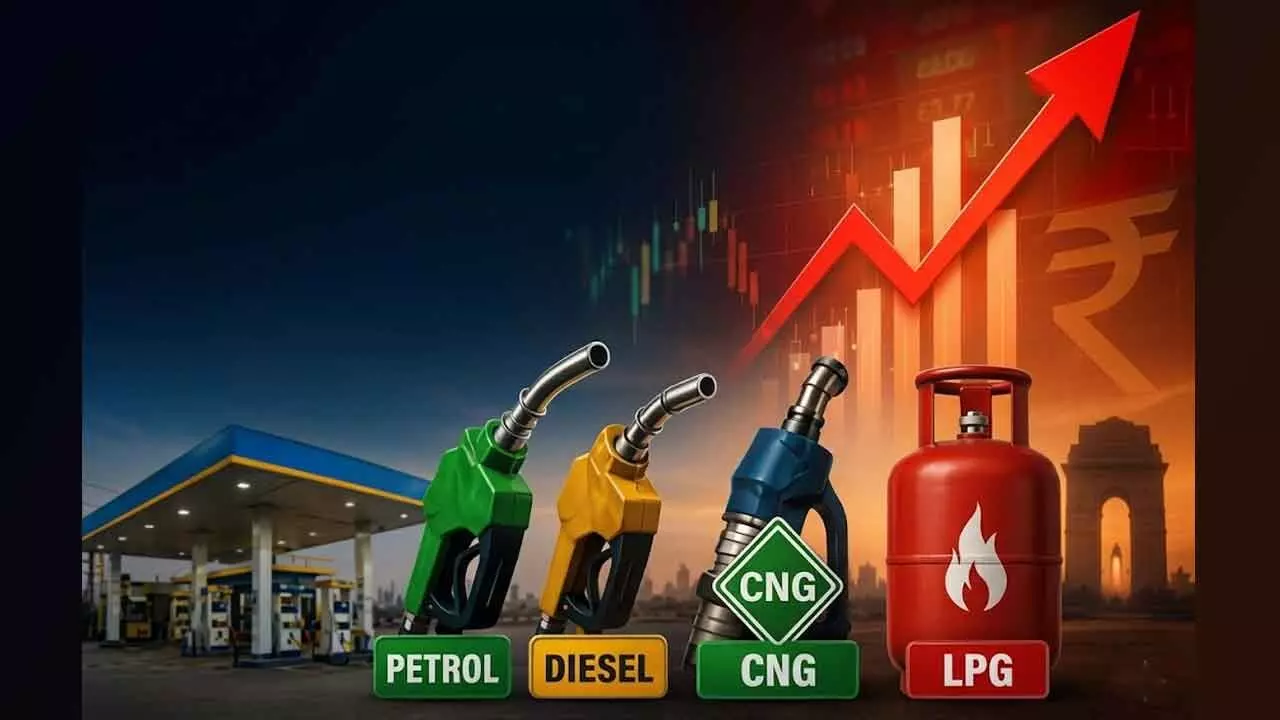
Delhi Hit by Triple Fuel Shock: Petrol, Diesel and CNG Prices Rise Together, Commuters Brace for Costlier Days
By: Javid Amin | 16 May 2026
CNG Price Hike in Delhi 2026: Back-to-Back Increases Deepen Inflation Worries
Delhi residents are facing a fresh wave of inflation after Compressed Natural Gas (CNG) prices were increased again by ₹1 per kg, taking the retail rate to ₹79.57 per kg. The latest revision, implemented on May 17, comes barely 48 hours after a similar ₹1 increase on May 15, intensifying concerns over rising transportation and household costs.
The back-to-back CNG hike comes alongside a sharp rise in petrol and diesel prices across India, creating what many consumers are calling a “triple fuel shock” for the national capital.
As of May 2026, fuel prices in Delhi now stand at:
- Petrol: ₹97.77 per litre
- Diesel: ₹90.67 per litre
- CNG: ₹79.57 per kg
The combined increase is expected to affect millions of daily commuters, transport operators, delivery services, and middle-class households already struggling with high living costs.
Why CNG Prices Are Rising in Delhi
Industry experts say the latest increase is being driven by a combination of international and domestic economic pressures.
1. Rising Global Natural Gas Prices
International natural gas markets remain volatile due to geopolitical tensions, supply-chain disruptions, and fluctuating export demand from major economies.
India imports a significant share of its energy requirements, making domestic CNG pricing sensitive to global gas benchmarks.
With global LNG prices rising again, city gas distributors are gradually passing on the burden to consumers.
2. Rupee Depreciation Increasing Import Costs
The weakening rupee against the US dollar has further increased import expenses for energy companies.
Since energy imports are largely dollar-denominated, even small currency fluctuations significantly impact procurement costs.
Analysts say oil and gas marketing firms are under pressure to maintain margins after absorbing higher import costs for months.
3. Seasonal Urban Demand Spike
Summer demand for urban transportation and commercial mobility has also contributed to increased pressure on fuel supply chains.
Delhi’s:
- Auto-rickshaw fleet
- App-based taxi services
- Delivery vehicles
- School transport systems
depend heavily on CNG, causing demand to remain consistently high.
Delhi Consumers Face Triple Fuel Shock
The simultaneous rise in petrol, diesel, and CNG prices has amplified financial pressure across sectors.
Current Fuel Prices in Delhi (May 2026)
| Fuel Type | Current Price | Increase |
|---|---|---|
| Petrol | ₹97.77/litre | +₹3 |
| Diesel | ₹90.67/litre | +₹3 |
| CNG | ₹79.57/kg | +₹2 in 48 hrs |
The sharp increases are now directly impacting commuting expenses, freight charges, and grocery bills.
How the Fuel Price Hike Will Impact Common People
1. Auto-Rickshaw and Taxi Fares Likely to Increase
Delhi’s public mobility ecosystem relies heavily on CNG-powered vehicles.
Auto-rickshaw unions and cab operators are expected to push for fare revisions as operating costs climb sharply.
App-based cab platforms such as Uber and Ola may also revise dynamic pricing models to offset fuel expenses.
Daily office commuters could soon face:
- Higher auto fares
- Increased surge pricing
- Expensive last-mile connectivity
2. School Transport and Delivery Charges May Rise
Parents may also feel the impact through rising school transportation fees.
Many private school vans and buses in Delhi-NCR operate on CNG, and transport contractors are expected to revise monthly charges if prices remain elevated.
Meanwhile:
- Food delivery apps
- Grocery platforms
- E-commerce companies
may increase delivery fees to compensate for rising fleet expenses.
3. Household Budgets Under Growing Stress
Middle-class households are expected to face noticeable monthly cost increases.
Analysts estimate families could spend:
- ₹300–₹800 extra monthly on fuel and transport
depending on vehicle usage and commuting distance.
The increase comes at a time when households are already coping with:
- Expensive groceries
- Rising utility bills
- School expenses
- Higher healthcare costs
For many urban families, fuel inflation is beginning to affect discretionary spending and savings capacity.
Food Prices and Grocery Bills Could Rise Further
Diesel Freight Costs Affect Entire Supply Chain
India moves nearly 65% of its freight through road transportation, making diesel prices crucial to the overall supply chain economy.
Every increase in diesel rates raises:
- Trucking expenses
- Cold-chain transportation costs
- Agricultural logistics expenses
This directly impacts prices of:
- Vegetables
- Fruits
- Pulses
- Packaged foods
- Dairy products
Milk and Dairy Costs Already Rising
The fuel price increase comes shortly after milk prices were revised upward by major dairy brands.
Companies such as Amul and Mother Dairy have already increased milk prices by around ₹2 per litre in several markets due to higher procurement and transportation costs.
Industry observers warn further fuel inflation could trigger additional revisions in:
- Dairy products
- Ice cream
- Packaged beverages
- Refrigerated food items
FMCG Sector May Reduce Grammage or Raise Prices
Fast-moving consumer goods (FMCG) companies may respond through:
- Smaller package sizes
- Marginal price increases
- Reduced promotional discounts
This strategy, often called “shrinkflation,” allows companies to manage rising input and logistics costs without visibly large price jumps.
Inflation Risks and Economic Ripple Effects
Economists believe the combined fuel hikes could add 0.2%–0.4% pressure on headline inflation over the coming months.
Sectors Expected to Be Impacted
- Transportation
- Agriculture
- Retail logistics
- Manufacturing
- E-commerce
- Hospitality
- Urban mobility services
Higher fuel costs typically spread across the economy because transportation remains central to supply-chain operations.
Public Sentiment: Frustration Growing Among Delhi Residents
The rapid succession of fuel price hikes has triggered widespread frustration among consumers.
Many commuters and middle-class families say the increases are becoming difficult to absorb amid already elevated living costs.
Social media discussions and local reactions indicate growing anxiety over:
- Rising grocery expenses
- Costlier commuting
- Falling disposable income
- Reduced household savings
Several residents described the latest hike as another reminder that inflation continues to affect everyday urban life despite broader economic growth projections.
Why Fuel Prices Matter Beyond Petrol Pumps
Experts note that fuel inflation is rarely limited to transportation alone.
When petrol, diesel, and CNG prices rise together, the effect spreads across:
- Food supply chains
- Public transport systems
- Household consumption
- Business operating costs
The latest increases therefore represent not just higher refuelling expenses, but a broader inflationary challenge for consumers and businesses alike.
Conclusion
Delhi’s latest CNG hike — the second in just 48 hours — has added to mounting pressure from rising petrol and diesel prices, creating a significant cost burden for commuters, transport operators, and households.
With petrol nearing the ₹100 mark, diesel prices climbing steadily, and CNG becoming more expensive, consumers are now facing a broad-based increase in everyday living expenses.
From auto fares and school transport to vegetables, milk, and grocery deliveries, the ripple effects of fuel inflation are expected to deepen in the coming weeks.
For Delhi residents, the latest fuel revisions are not just about energy prices — they are increasingly becoming a reflection of the larger affordability crisis facing urban India.