PDP-BJP Alliance Cost J&K Special Status? NC’s Article 370 and Statehood Charge Explained
By: Javid Amin | 13 June 2026
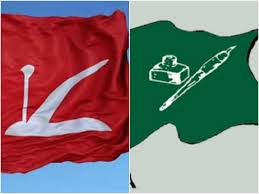
NC Targets PDP Over BJP Alliance, Revives Debate on J&K’s Political Identity
The political battle over Jammu & Kashmir’s constitutional future has intensified, with the National Conference (NC) launching a strong attack on the Peoples Democratic Party (PDP), accusing it of making a “political experiment” that eventually weakened the region’s constitutional protections.
The NC’s latest criticism focuses on the PDP’s decision to form a coalition government with the Bharatiya Janata Party (BJP) in 2015 — an alliance that was once described as politically unexpected because the two parties represented sharply different ideological positions on Jammu & Kashmir.
According to NC leaders, the PDP-BJP partnership created instability in J&K’s political structure and contributed to the circumstances that led to the abrogation of Article 370 in August 2019 and the conversion of the erstwhile state into a Union Territory.
However, the PDP has consistently argued that the alliance was formed with safeguards and assurances regarding J&K’s special constitutional position, and that the responsibility for the 2019 changes rests with the central government’s decision-making.
The PDP-BJP Alliance: A Historic Political Gamble
How the 2015 Coalition Government Was Formed
The 2014 Jammu & Kashmir Assembly elections produced a fractured mandate:
- PDP emerged as the largest party in the Valley.
- BJP made major gains in Jammu.
- Neither party had enough numbers to form a government alone.
After months of negotiations, PDP founder Mufti Mohammad Sayeed formed a coalition government with the BJP in March 2015.
The alliance was built around a document called the “Agenda of Alliance”, which attempted to bridge ideological differences between the two parties. The agreement included commitments on governance, development and maintaining the constitutional status quo on Article 370.
At the time, supporters of the alliance argued that bringing together political forces from Jammu and Kashmir and mainland India could create a new model of cooperation.
Critics, especially the NC, viewed the partnership as a compromise that risked weakening J&K’s political interests.
NC’s Main Charge: “Political Experiment Damaged J&K’s Interests”
The National Conference’s argument is built around the claim that the PDP underestimated the long-term consequences of partnering with the BJP.
According to NC leaders, the alliance:
1. Created Political Instability
The NC argues that the PDP-BJP partnership brought ideological contradictions into the government.
The PDP historically positioned itself around protecting Jammu & Kashmir’s distinct political identity, while the BJP had long advocated changes to Article 370.
The NC says this contradiction made the alliance unsustainable and damaged public trust.
2. Contributed to the End of Article 370
The biggest political charge against PDP is related to Article 370.
On August 5, 2019, the Government of India announced major constitutional changes that effectively ended Jammu & Kashmir’s special status under Article 370 and removed the separate provisions associated with Article 35A.
The region was also reorganised into two Union Territories:
- Jammu & Kashmir
- Ladakh
The NC argues that the PDP-BJP alliance created the political environment that allowed these changes to happen.
The PDP rejects this argument, maintaining that it entered the alliance with assurances that Article 370 would remain protected. Former PDP leader Mehbooba Mufti has repeatedly stated that the party’s position was based on protecting J&K’s constitutional relationship with India.
The Statehood Question: From Full State to Union Territory
Why Statehood Has Become the New Political Battleground
Before 2019, Jammu & Kashmir was a full-fledged state with its own elected legislature and constitutional framework.
After the Jammu and Kashmir Reorganisation Act, 2019, the region became a Union Territory with a legislature, while Ladakh became a separate Union Territory without one.
For many regional political parties, restoration of statehood has become a central demand.
The National Conference has repeatedly raised statehood restoration as a major political issue and has sought to build public momentum around it.
The party argues that statehood is not only about administrative structure but also about political dignity, representation and greater decision-making powers.
“Dignity Compromised”: The Emotional Side of the Political Debate
Jammu & Kashmir politics has always been closely linked with questions of identity, autonomy and representation.
The NC’s latest statement uses the language of “dignity” to connect constitutional changes with public sentiment.
The party’s argument is that the loss of:
- Special constitutional status
- Full statehood
- Greater political autonomy
represented a reduction in J&K’s historical political position.
For the NC, this issue has become central to its broader narrative of defending the region’s political identity.
Political Context: NC vs PDP — The Battle for Kashmir’s Narrative
The criticism is also part of a larger political competition between two major regional parties.
National Conference’s Position
The NC has traditionally projected itself as the party representing:
- J&K’s political autonomy
- Regional identity
- Constitutional safeguards
The party now seeks to present itself as the strongest voice demanding restoration of statehood.
PDP’s Defence
The PDP argues that its alliance with BJP was an attempt to create a political bridge between different regions and communities.
The party maintains that the 2015 coalition was formed under specific assurances and that the responsibility for constitutional changes in 2019 lies with the central government.
Why This Debate Matters Ahead of Future Political Movements
The Article 370 debate has not disappeared from Jammu & Kashmir politics.
Even after the constitutional changes of 2019, regional parties continue to use the issue as a major political theme.
The NC’s strategy appears focused on converting public discussion around statehood and political representation into a larger movement.
Recent political activity, including efforts to raise the statehood issue at the national level, shows that the demand remains a key point in J&K’s political discourse.
Conclusion: A Continuing Battle Over J&K’s Political Future
The NC’s attack on PDP is not only about one alliance formed a decade ago — it reflects a deeper struggle over how Jammu & Kashmir’s political history should be interpreted.
For NC, the PDP-BJP alliance represents a turning point that led to the erosion of J&K’s special position and statehood.
For PDP, the alliance was a political attempt that failed after constitutional commitments were not honoured.
The debate remains one of the defining political questions in Jammu & Kashmir: whether the region’s future will be shaped by the changes introduced after 2019 or by renewed demands for greater political restoration and statehood.


