2 PM Invite, 6 PM Meal: Kashmir’s Wedding Time Problem
By: Javid Amin | 10 Aug 2026
Every Kashmiri has a version of this story — an invitation card that says one time, and a trami that arrives hours later. Here’s what’s actually behind the delay, and whose responsibility it really is.
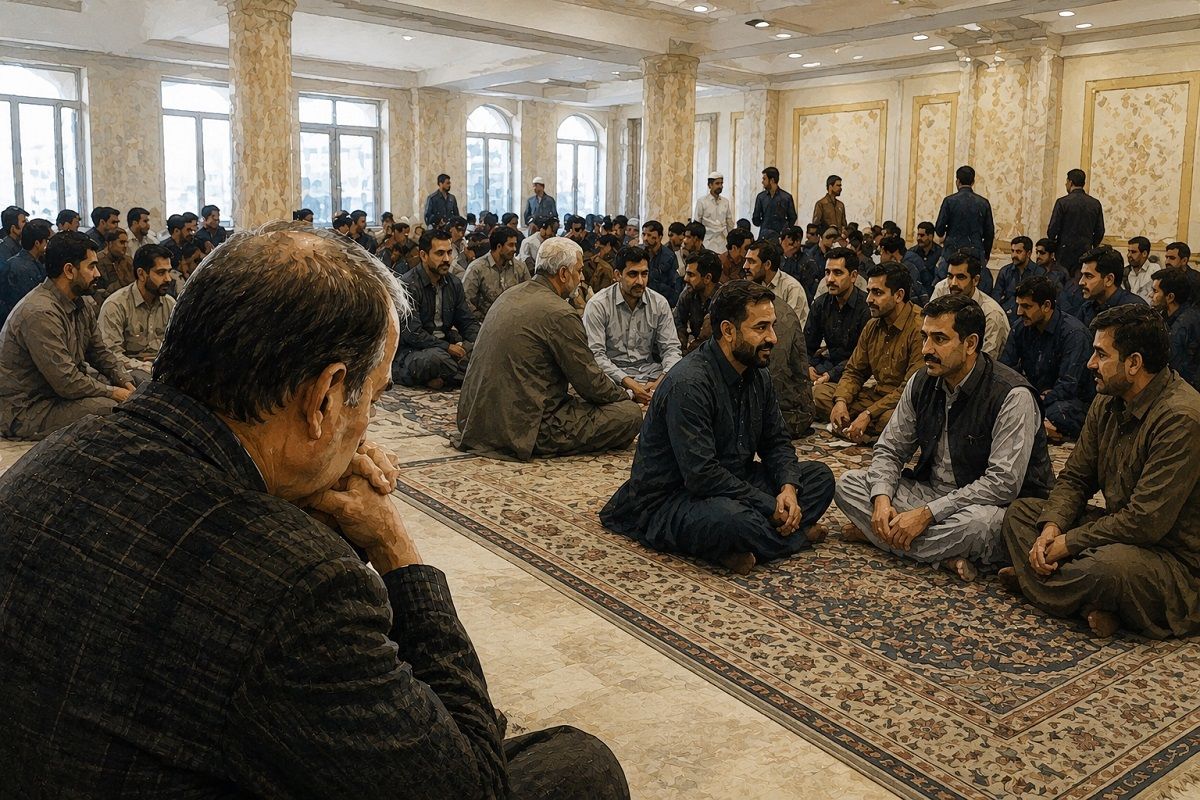
If you’ve ever attended a wedding lunch in the Kashmir Valley, you already know the drill. The card says 2 PM. You dress, you travel, you arrive on time — and then you wait. Sometimes it’s forty minutes. Sometimes it stretches past four in the afternoon, occasionally into evening, before the first trami — the large communal copper plate at the heart of a wazwan feast — finally lands in front of you.
It’s such a familiar experience that it’s become something of a running joke among Kashmiris themselves: nobody actually expects the food at the printed hour. But underneath the joke is a genuine tension between two deeply held values — hospitality and punctuality — and it’s worth understanding why one so often loses to the other.
Why the Clock and the Kitchen Rarely Agree
The gap between invitation time and service time isn’t laziness or disorganisation — it’s largely a function of how a wazwan actually gets made. A full wedding wazwan can run anywhere from a dozen to over two dozen dishes, cooked in enormous degs (vessels) by a waza (master chef) and his team, who traditionally set up a temporary open-air kitchen right at the host’s home. Dishes like rista, tabak maaz, and the ceremonial closing course, gushtaba, are cooked in careful, timed sequence — not thrown together in bulk — because the wazas are essentially running a live, large-scale kitchen for hundreds of guests at once.
Add to that a cascade of scheduling pressure points that are baked into the day itself: the groom’s baraat (procession) arriving later than planned, senior relatives or religious functionaries who must be waited for out of respect, photography and video sessions that eat into the timeline, and — in bigger weddings — guests arriving in staggered batches that force the kitchen to keep re-timing the first serving. Individually, none of these delays is dramatic. Stacked together, a 2 PM card routinely becomes a 4, 5, or 6 PM meal.
It’s worth noting that this isn’t unique to Kashmir — long guest-list Indian weddings across the country are notorious for the gap between “invitation time” and “actual event time.” What makes the Kashmiri version distinct is the scale of the wazwan itself: it is one of the most labour- and time-intensive wedding cuisines in the country, and that complexity is precisely what the region has, in recent years, tried to formally rein in. In 2017, the Jammu and Kashmir government actually placed legal caps on wedding extravagance — limiting guest numbers to 500 from the bride’s side and 400 from the groom’s, and restricting the meal itself to no more than seven main dishes — specifically in response to public complaints about excess, waste, and the disruption it caused. That a government felt compelled to legislate wedding-meal size tells you how deeply the scale-versus-timing problem runs.
The Guest’s Dilemma: Patience Without Dignity
For the person waiting, the discomfort is real even when it’s culturally expected. Sitting through hours of small talk on an empty stomach, watching children grow restless, or trying to leave for another commitment while food still hasn’t arrived — these are ordinary frustrations that most Kashmiris have quietly lived through at some point. Guests are generally expected to absorb the delay gracefully; complaining openly is considered poor form. But there’s a line, and most people recognise it instinctively: waiting is one thing, being made to feel like an afterthought is another. A guest kept waiting for hours with no acknowledgment, no explanation, and no gesture of care isn’t experiencing hospitality — they’re experiencing neglect wearing hospitality’s clothes.
Where the Responsibility Actually Sits
This is where Kashmiri cultural tradition is, in fact, fairly unambiguous. Mehmaan-nawazi — the ethic of hospitality — is treated in Kashmiri society (as in the wider Islamic tradition it draws from) not as a nicety but as a near-sacred obligation of the host. The host chooses the invitation time, the host chooses the scale of the feast, and the host is the one who understands the kitchen’s real timeline. That combination of control and knowledge is exactly why the accountability sits with them, not with the guest.
Practically, that responsibility plays out in a few clear ways:
- Setting a realistic time. A host who knows the wazwan won’t be ready before 4 PM does their guests no favours by printing 2 PM on the card “to be safe.” Honesty on the invitation is itself a form of hospitality.
- Communicating delays as they happen. A brief word from a family member — tea, refreshments, or simply an acknowledgment that “we’re running behind” — changes the entire emotional experience of waiting, even when the wait itself doesn’t shrink.
- Not letting scale outrun logistics. Bigger guest lists and longer menus are a choice, and that choice comes with the responsibility to staff and plan for it.
None of this erases the guest’s own role. Patience is genuinely part of the cultural contract at a Kashmiri wedding, and showing up expecting Swiss-timed service misreads the occasion. But patience is not the same as tolerating neglect. A short delay explained with warmth honours the spirit of mehmaan-nawazi. A four-hour wait with no word from the host, leaving guests to wonder if they’ve been forgotten, breaks it.
The Bottom Line
The 2 PM-to-6 PM gap at a Kashmiri wedding isn’t going away — the wazwan tradition that causes it is one of the things that makes these weddings distinctive in the first place, and few Kashmiris would actually want to trade the feast for punctuality. But tradition and thoughtlessness are not the same thing. The honour of mehmaan-nawazi was always meant to flow toward the guest, not be used as an excuse to keep them waiting in silence. Hosts get the benefit of a beautiful, generous custom; with it comes the plain duty of making sure the people they invited never feel forgotten while they wait for it.
This feature draws on documented accounts of Kashmiri wazwan preparation and wedding customs, and on the Jammu & Kashmir government’s 2017 restrictions on wedding extravagance, reported by the BBC and other regional outlets.