Cricketer Questioned for Palestine Flag on Helmet in Jammu & Kashmir: A Flashpoint at the Intersection of Sports and Politics
By: Javid Amin | 01 January 2025
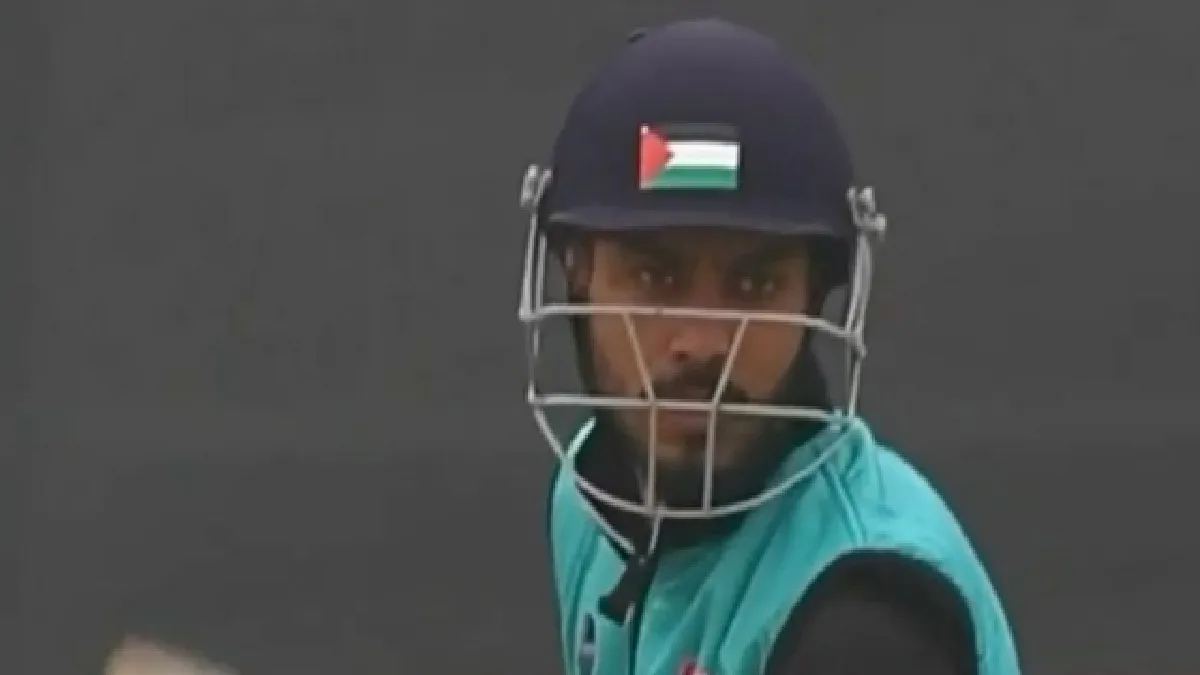
Cricket, long celebrated as a unifying force in Jammu & Kashmir, found itself at the centre of an unexpected controversy after a local cricketer was questioned by police for wearing a helmet bearing the Palestine flag during a domestic match.
The incident occurred during a fixture of the J&K Champions League, a privately organised cricket tournament, and quickly escalated into a broader debate about political expression, sporting discipline, and security sensitivities in one of India’s most closely watched regions.
The player, Furqan Bhat, hailing from South Kashmir, was subsequently summoned by police for questioning, along with the tournament organiser. While no criminal charges have been announced so far, reports suggest that Bhat has been barred from further participation in the tournament pending inquiry, turning what began as a sporting moment into a politically charged episode.
What Happened: The Incident on the Field
The controversy unfolded during a match between JK11 and the Jammu Trailblazers in the J&K Champions League.
The Player
-
Name: Furqan Bhat
-
Origin: South Kashmir
-
Team: JK11
During the match, Bhat was seen wearing a helmet featuring the Palestine flag, a symbol that is internationally recognised and politically sensitive.
Immediate Reaction
The symbol quickly drew attention from:
-
Match officials
-
Local authorities
-
Law enforcement agencies
Given the region’s history and the current geopolitical climate, the gesture was flagged as potentially problematic, prompting police to intervene.
Police Action: Questioning, Not Arrest
Following the match:
-
Furqan Bhat was summoned to Domana police station in Jammu for questioning.
-
The organiser of the J&K Champions League was also called in to clarify the circumstances under which the helmet was allowed.
Importantly:
-
There has been no confirmation of formal charges against the player.
-
The questioning is being described as preliminary inquiry, aimed at understanding intent and responsibility rather than immediate prosecution.
This distinction matters, as it underscores that the response — at least so far — has been administrative and preventive, not punitive in the criminal sense.
Tournament Organisers and the Cricket Association Respond
As the controversy grew, the Jammu & Kashmir Cricket Association (JKCA) issued a clarification distancing itself from the incident.
JKCA’s Position
-
The J&K Champions League is a privately organised tournament.
-
The association has no official role or oversight in its conduct.
-
Any disciplinary or regulatory decisions fall outside JKCA’s jurisdiction.
This clarification was significant in preventing the controversy from spilling over into official cricketing structures in the Union Territory.
Reported Outcome: Ban Pending Inquiry
According to initial reports:
-
Furqan Bhat has been banned from the tournament, at least temporarily.
-
The ban is described as pending further inquiry, not a final disciplinary verdict.
This move appears to be an internal decision by tournament authorities, likely aimed at:
-
Defusing tensions
-
Demonstrating compliance with rules of conduct
-
Preventing further escalation
Why the Incident Matters: Beyond a Cricket Helmet
At first glance, the episode may appear minor — a symbol on sporting gear. But in Jammu & Kashmir, symbolism carries disproportionate weight.
1. Political Sensitivity of International Symbols
The Palestine flag is globally associated with:
-
A long-running international conflict
-
Strong political positions and emotions
In regions like J&K, where geopolitics, identity, and security intersect, such symbols are closely scrutinised by authorities.
2. Sports and Political Neutrality
Across most sporting codes:
-
Athletes are discouraged — and often prohibited — from displaying political messages during competition.
-
The principle is to keep sports neutral, inclusive, and focused on performance.
While international leagues have codified such rules, domestic and private tournaments often operate in grey areas, making enforcement inconsistent.
3. Freedom of Expression vs Rules of Conduct
The incident has sparked debate around:
-
An individual’s right to personal expression
-
The responsibility of players to adhere to event norms
-
The limits of expression in public, televised, or sensitive settings
Supporters argue the act was symbolic and non-violent. Critics counter that sports fields are not platforms for geopolitical messaging, especially in sensitive regions.
Public Reaction: Divided Opinions
Public response has been mixed:
Supportive Voices
-
View the gesture as an expression of solidarity.
-
Argue that questioning a player sends a chilling message to youth.
-
Emphasise freedom of expression in a democratic society.
Critical Voices
-
Stress that sports should remain apolitical.
-
Warn that such acts can provoke tension or misinterpretation.
-
Support disciplinary action to maintain neutrality and order.
The division reflects a broader societal debate — not just in Kashmir, but globally — about where to draw the line between expression and regulation.
Kashmir’s Unique Context: Why Sensitivities Are Higher
In most parts of the world, political symbolism in sports leads to fines or suspensions. In Jammu & Kashmir, it can invite police scrutiny, not merely because of the symbol itself, but due to:
-
The region’s security history
-
Ongoing political tensions
-
The risk of symbolic acts being amplified or misused
Authorities tend to act pre-emptively, prioritising order and risk management over post-facto discipline.
Editorial Perspective: A Delicate Balance
This incident underscores a recurring dilemma in Kashmir:
-
Cricket is meant to unite, offering young people aspiration and normalcy.
-
Political expression is deeply ingrained in public consciousness.
When the two intersect, friction is almost inevitable.
The police response — questioning rather than arrest — suggests an attempt to contain the situation without criminalising it. At the same time, the tournament ban reflects the reality that sporting platforms are governed by rules that prioritise neutrality.
What This Means Going Forward
The controversy is likely to have lasting implications:
-
Tournament organisers may tighten regulations on kits and gear.
-
Players may become more cautious about personal symbolism.
-
Authorities will continue monitoring sports events in sensitive regions.
More broadly, it highlights how even seemingly small acts can become flashpoints in conflict-aware societies.
Conclusion: When a Game Reflects a Larger Reality
The questioning of Furqan Bhat is not just about a helmet or a flag. It is about:
-
The limits of expression
-
The expectations placed on athletes
-
The heightened sensitivities of Jammu & Kashmir
As cricket continues to serve as a bridge between communities, incidents like this serve as reminders that in Kashmir, nothing exists in isolation — not even sport.
Balancing freedom, responsibility, and security remains the central challenge — on the field and beyond it.