Why Is US Ambassador Sergio Gor Visiting Kashmir? The Strategic Background Behind His Maiden Srinagar Trip
By: Javid Amin | 17 Aug 2026
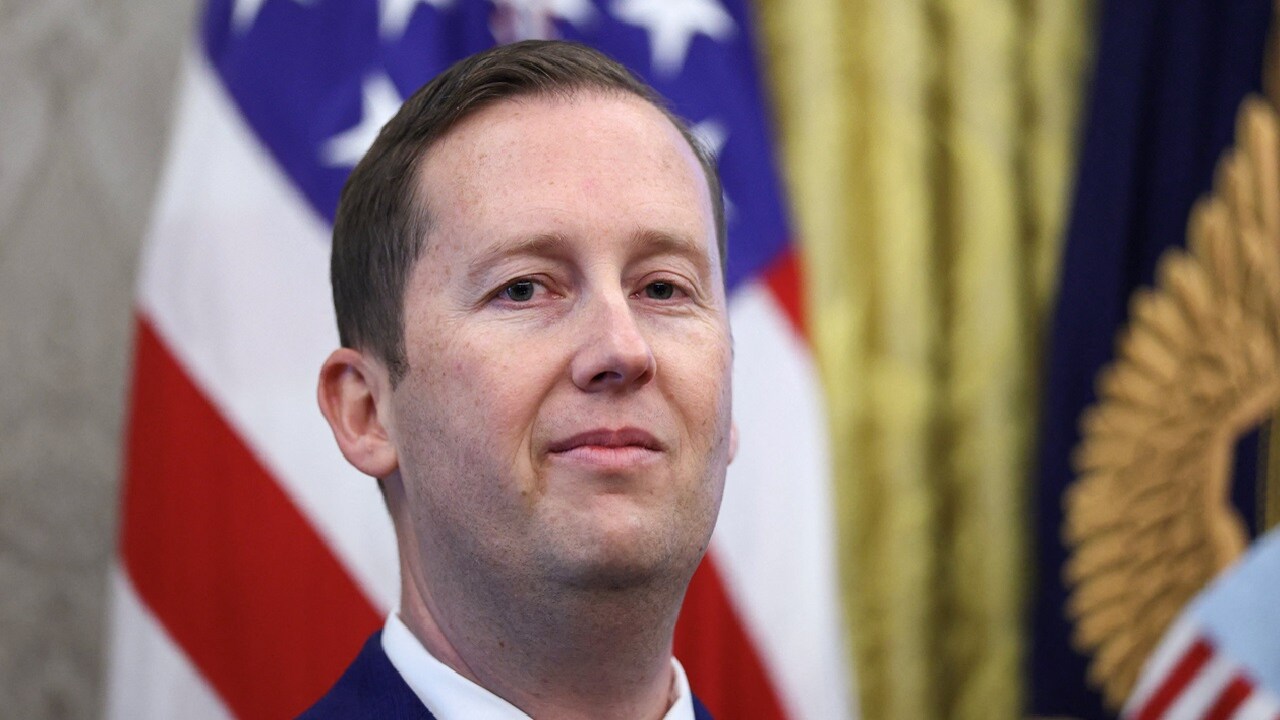
US Ambassador to India Sergio Gor is scheduled to arrive in Kashmir on Wednesday for his first visit to Jammu and Kashmir since taking charge in New Delhi. On paper, the itinerary is straightforward: meetings with Lieutenant Governor Manoj Sinha and Chief Minister Omar Abdullah, followed by an overnight stay in Srinagar. But the timing makes the visit far more significant than a routine diplomatic tour.
Gor is not an ordinary US ambassador operating only from New Delhi.
He is also Washington’s Special Envoy for South and Central Asian Affairs, giving him a wider regional mandate. Since arriving in India, he has repeatedly combined diplomacy with trade, technology, security and state-level political outreach. His previous engagements have included India’s technology ecosystem, state governments, the Indian Army’s Western Command, senior security officials and the broader US-India strategic relationship.
His Kashmir trip therefore needs to be read against several overlapping developments:
- the continuing strategic reset between Washington and New Delhi;
- the security consequences of the 2025 Pahalgam attack and Operation Sindoor;
- the still-sensitive India-Pakistan relationship;
- the growing US focus on India’s technology and critical-minerals potential;
- Washington’s desire to deepen engagement beyond India’s national government;
- and Kashmir’s importance as both a security theatre and an economic destination.
The most interesting question is not simply why Gor is visiting Kashmir. It is why Washington has chosen to make this visit now.
What Is Known About Gor’s Kashmir Visit?
According to reporting from Srinagar, Gor is expected to arrive on Wednesday afternoon for his first visit to the Union Territory since assuming office. He is expected to meet Lieutenant Governor Manoj Sinha and Chief Minister Omar Abdullah and stay overnight at the Taj Hotel in Srinagar.
At the time of writing, there is no publicly announced detailed agenda from the US Embassy establishing that the visit is specifically about Kashmir’s constitutional status, mediation between India and Pakistan or human-rights monitoring.
That distinction is important.
Diplomatic visits often generate speculation well beyond their formal agenda. In Kashmir, where virtually every engagement by a major foreign power is scrutinised through the India-Pakistan lens, even a routine diplomatic visit can acquire geopolitical significance.
The choice to meet both the LG and the elected Chief Minister, however, is noteworthy.
It gives Gor access to two different layers of Jammu and Kashmir’s governance structure:
the Union government’s representative and the elected UT government.
That makes the visit useful for understanding both the security-administrative perspective and the civilian political/economic perspective.
The First Big Reason: Gor Is Not Just an Ambassador
This is perhaps the most overlooked part of the story.
Gor serves as both:
US Ambassador to India
and US Special Envoy for South and Central Asian Affairs.
That second role expands the geographical and strategic scope of his job considerably.
His appointment therefore needs to be understood as part of the Trump administration’s broader effort to manage relations across South Asia and Central Asia while simultaneously strengthening India’s role as a major strategic partner.
When Gor visits Kashmir, he is therefore not merely travelling from the American Embassy in Delhi to another Indian region.
He is travelling to a territory located at the intersection of:
- India-Pakistan tensions;
- China-related strategic concerns;
- terrorism and counter-terrorism;
- South Asian security;
- Afghanistan and Central Asian connectivity;
- Himalayan geopolitics;
- and India’s growing importance to US strategy.
That gives the visit a strategic layer that a conventional state-level diplomatic tour would not necessarily carry.
The Background: Why Gor Was Sent to India in the First Place
Gor arrived at a difficult moment in India-US relations.
When he took charge, Washington and New Delhi were dealing with disagreements over trade, tariffs, India’s energy purchases from Russia and the broader direction of bilateral relations.
Reuters reported in January that trade tensions had become a major source of friction, with US tariffs on Indian goods and disagreements over India’s Russian oil purchases complicating the relationship.
Yet Washington simultaneously regarded India as too strategically important to allow those disagreements to derail the larger partnership.
Gor’s early message was therefore essentially:
disagreements are real, but the strategic relationship is bigger than them.
He described India-US ties as among the most consequential partnerships for the 21st century and pushed for progress on trade, technology and strategic cooperation.
That background matters because his Kashmir visit comes after months of intensive work to rebuild confidence between Washington and New Delhi.
The Second Reason: Washington Has Been Expanding Its Engagement Beyond Delhi
Gor’s diplomatic style has been unusually visible at the state level.
This is not the behaviour of an ambassador who wants to conduct diplomacy exclusively through the Prime Minister’s Office, Ministry of External Affairs and other Union ministries.
He has actively engaged Indian states.
In February, he met Karnataka Chief Minister Siddaramaiah and discussed partnerships, emerging technologies and the presence of hundreds of American companies in the state.
In May, he travelled to Assam for Chief Minister Himanta Biswa Sarma’s swearing-in ceremony and spoke about expanding commercial ties between Assam and the United States.
He has also used state-level platforms during the US “Freedom 250” celebrations to promote economic and strategic ties.
This suggests a broader diplomatic philosophy:
Washington wants relationships with India’s growth centres, not just India’s central government.
And Kashmir fits into that model — although it is obviously much more politically sensitive than Karnataka, Telangana or Assam.
So Is Kashmir Simply Another State-Level Outreach Stop?
No.
This is where the Kashmir visit becomes different.
Kashmir is not merely another Indian region with economic potential.
It is simultaneously:
a border region, a former conflict zone, a tourism economy, a counter-terrorism theatre and the centre of an unresolved India-Pakistan dispute.
That means an American ambassador visiting Srinagar inevitably sends multiple signals.
To New Delhi, it can demonstrate American confidence in engaging the elected and administrative leadership of Jammu and Kashmir.
To the local government, it provides an opportunity to present Kashmir’s development and investment potential directly to a major global power.
To businesses, it can highlight tourism, technology, infrastructure and other economic opportunities.
To Pakistan, however, the visit is likely to be watched through the Kashmir dispute.
And to Washington, the visit provides an opportunity to understand the situation on the ground without necessarily entering the politically explosive territory of mediation.
That last distinction is crucial.
The Pahalgam Attack Changed the Strategic Meaning of Kashmir
Any serious analysis of a US ambassador’s Kashmir visit in 2026 has to begin with April 22, 2025.
The Pahalgam terror attack killed 26 people, mostly tourists, and transformed the security and diplomatic environment surrounding Kashmir.
The attack triggered India’s subsequent military operation against targets in Pakistan and Pakistan-administered territory, known as Operation Sindoor, followed by a major India-Pakistan military escalation.
A year later, Gor publicly remembered the victims and stated that the United States stood with the people of India in their fight against terrorism.
That statement provides important context for his Srinagar trip.
For Washington, Kashmir is not simply a diplomatic dispute.
It is also a counter-terrorism and regional-security issue.
Gor Has Already Been Briefed on India’s Western Front
This is arguably the most revealing piece of background.
In February 2026, Gor travelled to the headquarters of the Indian Army’s Western Command at Chandimandir, accompanied by Admiral Samuel Paparo, then commander of US Indo-Pacific Command.
The delegation was briefed on strategic security dynamics along India’s western front, including the execution of Operation Sindoor and India’s operational preparedness.
That visit matters enormously when interpreting the Kashmir trip.
The Western Command is responsible for an operational area facing Pakistan and includes security responsibilities connected to Jammu and Kashmir.
So Gor has already been exposed to the military dimension of India’s western security architecture.
His Srinagar visit potentially adds the political, administrative and civilian perspective to that understanding.
In other words:
Chandimandir gave Washington a view of the western military front. Srinagar gives Gor a view of Kashmir itself.
That is a much more meaningful connection than simply saying he is travelling around India.
The Third Reason: Counter-Terrorism Is Already a Core Gor Portfolio
Gor’s engagement with India’s security establishment has been consistent.
In June, Union Home Minister Amit Shah met Gor in New Delhi.
According to India’s Ministry of Home Affairs, their discussions focused on strengthening India-US security cooperation, particularly in:
- counter-terrorism;
- counter-narcotics;
- border security;
- law-enforcement cooperation;
- and bringing criminals to justice.
Only days ago, Gor also met National Security Adviser Ajit Doval in New Delhi for discussions on India-US ties and strategic cooperation.
That means his Kashmir trip follows a clear sequence:
Army leadership → Home Ministry → National Security Adviser → Jammu & Kashmir leadership.
It would be premature to claim that these meetings form one secret operation.
There is no public evidence for such a conclusion.
But diplomatically, the sequence is significant.
Gor is building an increasingly detailed picture of India’s security environment.
The Fourth Reason: Washington Wants Kashmir Stable, Not Merely Quiet
There is a difference between stability and the absence of visible violence.
For the United States, a stable Kashmir matters because instability can affect:
- India-Pakistan relations;
- terrorism;
- regional military escalation;
- investment;
- tourism;
- supply chains;
- connectivity;
- and the broader strategic environment around India.
Washington therefore has an interest in a Kashmir that is secure, economically active and politically stable.
That does not necessarily mean Washington wants to involve itself in the constitutional debate over Article 370.
Nor does it mean the United States is preparing to mediate between India and Pakistan.
The more pragmatic interpretation is that Washington wants to understand whether Kashmir is moving toward durable stability.
The Fifth Reason: Kashmir Is an Economic Story Too
The security dimension is only half the picture.
Gor has repeatedly placed economic cooperation at the centre of his India mission.
He has spoken about American expertise in:
- energy;
- advanced manufacturing;
- digital infrastructure;
- semiconductors;
- critical minerals;
- and technology.
In March, he described India’s infrastructure needs and growth potential as areas where American capabilities could create a “win-win” expansion of the strategic economic relationship.
Kashmir naturally fits into several of those conversations.
Tourism
Tourism remains one of Jammu and Kashmir’s most important economic sectors.
The Pahalgam attack severely damaged tourist confidence, prompting authorities to temporarily close dozens of destinations and conduct security reviews.
The administration subsequently reopened additional tourist sites after security assessments.
For Washington, observing Kashmir’s tourism recovery has economic as well as security value.
A return of international confidence would demonstrate that the region is moving from a crisis-oriented narrative toward an investment and tourism narrative.
Handicrafts
Kashmir’s handicraft sector has a natural international-market connection.
Carpets, shawls, papier-mâché, woodwork and other traditional products have strong export potential.
US consumers and businesses represent a significant high-value market for Indian handicrafts and luxury products.
Technology
The technology opportunity is less obvious but potentially important.
Gor has been a strong advocate of deeper US-India technology cooperation.
India’s participation in Pax Silica — the US-led framework focused on resilient supply chains spanning critical minerals, semiconductors and advanced technology — became formal in February.
Kashmir is not a semiconductor manufacturing hub.
But its relevance can arise through:
- digital infrastructure;
- IT-enabled services;
- startups;
- education;
- tourism technology;
- satellite and communications applications;
- renewable energy;
- and emerging technology ecosystems.
So the economic agenda should not be exaggerated into a claim that American companies are about to launch major semiconductor projects in Kashmir.
The realistic opportunity is broader economic engagement.
Hydropower Could Be Another Quietly Important Topic
Jammu and Kashmir possesses substantial hydropower potential.
Energy security is a major pillar of the India-US relationship, and Gor has repeatedly highlighted energy cooperation as part of the broader partnership.
But there is an important caveat.
There is currently no publicly verified evidence that Gor’s Kashmir visit has a specific hydropower investment agenda.
Therefore, an article should describe hydropower as a potential area of economic discussion, not as a confirmed item on his itinerary.
That distinction separates responsible analysis from speculation.
The Sixth Reason: Kashmir Is Also About China’s Shadow
This is another dimension that deserves more attention.
The wider Jammu and Kashmir-Ladakh geography sits close to areas where India and China have experienced prolonged military tensions.
Washington’s strategic interest in India is increasingly connected to the Indo-Pacific and China’s rise.
Gor has been vocal about the importance of the Quad and deeper cooperation among India, the United States, Japan and Australia.
Just days ago, he emphasised the Quad’s continued commitment to deeper Indo-Pacific cooperation.
From Washington’s perspective, India’s Himalayan frontier is therefore part of a much larger strategic map.
Again, this does not mean the Kashmir visit is a China-focused intelligence mission.
But the broader geography cannot be ignored.
The Seventh Reason: The Visit Comes After a Major India-US Strategic Reset
The timing becomes even more interesting when the broader India-US relationship is considered.
The two countries have moved from a period of considerable friction toward renewed strategic engagement.
India joined Pax Silica in February, deepening cooperation over technology and supply-chain security.
The two countries have also continued work on a bilateral trade agreement.
Gor has repeatedly described the negotiations as progressing toward completion.
At the strategic level, Washington and New Delhi continue to cooperate on defence, energy, technology and the Indo-Pacific.
This makes Kashmir part of a larger question:
Can the US deepen its relationship with India while understanding — and carefully navigating — India’s most sensitive territorial and security concerns?
Gor’s visit provides one opportunity to do exactly that.
Why Meet Manoj Sinha?
The meeting with Lieutenant Governor Manoj Sinha has a clear institutional logic.
The LG represents the Union’s constitutional and administrative authority in Jammu and Kashmir.
A conversation with Sinha can therefore provide Washington with perspectives on:
- security;
- administration;
- tourism;
- infrastructure;
- investment;
- development;
- law and order;
- and the post-2019 governance framework.
It also allows Washington to communicate directly with the Union Territory’s top constitutional authority.
For New Delhi, this is diplomatically comfortable.
There is no need for the American ambassador to engage in a separate international dialogue over Kashmir’s status.
He is simply engaging the officially constituted administration.
Why Meet Omar Abdullah?
The meeting with Chief Minister Omar Abdullah is politically more interesting.
Omar represents the elected government of Jammu and Kashmir.
His political party, the National Conference, has been vocal about issues including restoration of statehood.
The Chief Minister has also repeatedly argued that Jammu and Kashmir should regain full statehood.
For Gor, meeting Omar provides access to the elected government’s assessment of:
- governance;
- investment;
- tourism;
- employment;
- political stability;
- youth aspirations;
- and the relationship between the elected government and the Union government.
It also gives Washington a view of Kashmir that cannot be obtained solely through security agencies or the LG’s office.
The dual meeting is therefore significant.
Sinha represents the Union’s administrative-security perspective.
Omar represents the elected government’s political and developmental perspective.
Together, they give Gor a more complete picture.
Could Omar Raise Statehood or Article 370?
It is certainly possible that Omar Abdullah could use the meeting to explain the elected government’s political priorities.
But it would be incorrect to state beforehand that he will raise Article 370 or statehood unless officials confirm it.
The more likely political issue is statehood, because it is a stated priority of the Jammu and Kashmir government.
Article 370 is considerably more sensitive because the constitutional issue has already been adjudicated by India’s Supreme Court, and New Delhi’s position is settled against restoring the pre-2019 arrangement.
If the subject comes up, Gor would be expected to listen rather than pronounce a new American policy.
That is the safest diplomatic posture.
Is Washington Trying to Mediate Kashmir?
There is no evidence at present that this visit represents a new US mediation initiative.
This point deserves emphasis.
The United States has historically said that Kashmir is an issue for India and Pakistan to resolve through dialogue, while Washington has also periodically offered support for dialogue.
But India strongly rejects third-party mediation.
Therefore, an American ambassador travelling to Srinagar is not equivalent to an American mediator entering the Kashmir dispute.
The distinction is critical.
Engagement is not mediation.
A diplomat can visit a sensitive region, meet elected officials, discuss security and economic development and still avoid taking a position on sovereignty.
That is likely to be Washington’s preferred approach.
Why the Overnight Stay Matters
The overnight stay at Srinagar’s Taj Hotel is symbolically important, although it should not be overstated.
A senior American diplomat choosing to stay overnight in Srinagar communicates a basic message:
Washington considers Srinagar sufficiently secure and important for its ambassador to spend the night there.
That has a public-diplomacy component.
Kashmir’s image internationally has long been shaped by conflict and security concerns.
A senior US official staying overnight is therefore likely to attract attention from international observers and the tourism industry.
But it should not be interpreted as an official US declaration that “normalcy has returned.”
One diplomat’s hotel stay cannot establish that.
The symbolism is real; the policy conclusion is more limited.
The Tourism Message Is Particularly Interesting
The timing is also relevant for Kashmir’s tourism sector.
The Pahalgam attack damaged international perceptions of Kashmir as a safe destination.
The administration subsequently reopened tourist locations following security assessments in an effort to rebuild confidence.
A high-profile American ambassador travelling to Srinagar, staying overnight and engaging with local leadership can indirectly reinforce a tourism-recovery narrative.
It says:
Kashmir remains open for diplomatic, commercial and institutional engagement.
That may be particularly valuable at a time when the region is trying to rebuild its international tourism image.
But Pakistan Will Watch the Visit Closely
For Islamabad, Kashmir is not an ordinary Indian administrative issue.
Pakistan continues to describe Jammu and Kashmir as a disputed territory and regularly raises the issue internationally.
A senior American diplomat travelling to Srinagar therefore carries unavoidable political significance.
However, Washington has strong reasons to avoid giving Pakistan the impression that the visit represents a new American Kashmir policy.
The likely message will therefore remain carefully calibrated:
engage India, understand Kashmir, support counter-terrorism and stability — but avoid stepping into the India-Pakistan sovereignty dispute.
That balancing act is essential for Washington.
Why the Visit Is Sensitive for India Too
New Delhi has traditionally been uncomfortable with foreign diplomatic involvement in Kashmir when it appears to challenge India’s sovereignty narrative.
The American ambassador therefore has to navigate a narrow diplomatic corridor.
Too little engagement could make the trip meaningless.
Too much political commentary could create a diplomatic controversy.
The most logical strategy is to focus on:
- security cooperation;
- economic development;
- tourism;
- governance;
- investment;
- people-to-people relations;
- and regional stability.
That allows Washington to engage Kashmir without crossing India’s red lines.
Gor’s Personal Diplomatic Style Also Matters
Gor is a relatively unconventional ambassador.
Unlike the stereotypical career diplomat who tends to operate quietly, he has embraced a highly visible public role.
He has travelled extensively, spoken directly about the India-US relationship and maintained a prominent social-media presence.
His early India messaging emphasised a close relationship between Trump and Modi and described India as an indispensable US partner.
He has also personally pushed technology and economic initiatives such as Pax Silica. India formally joined the initiative in February.
That means his Kashmir trip fits his broader pattern of high-visibility engagement.
The visit is therefore unlikely to be purely ceremonial.
A Possible “Kashmir Reset” — But Not the One Some May Imagine
The phrase “Kashmir reset” should be used cautiously.
Washington is unlikely to announce a new political formula for Kashmir.
The more plausible reset is about how Kashmir is viewed internationally.
For years, the dominant international narrative surrounding Kashmir has revolved around:
- conflict;
- terrorism;
- India-Pakistan confrontation;
- Article 370;
- human rights;
- military deployments.
The Indian government wants a different narrative:
development + investment + tourism + governance + security.
Gor’s visit naturally aligns more easily with the second narrative if his discussions remain focused on economic and security cooperation.
That may be one of the most important political implications of the trip.
The Hidden Strategic Logic: “Know Kashmir Directly”
Diplomacy depends on information.
Washington can obtain information about Kashmir through:
- New Delhi;
- Islamabad;
- intelligence channels;
- diplomatic missions;
- international organisations;
- research institutions;
- media;
- and civil-society contacts.
But visiting Srinagar allows an ambassador to develop a first-hand understanding of the political and economic environment.
For a Special Envoy covering South and Central Asia, that matters.
The visit potentially allows Gor to hear directly from:
the Union administration + elected government + security establishment + business community + civil society.
Even if the formal itinerary is limited, the informational value can be considerable.
What Gor Is Unlikely to Do
There are also several things the ambassador is unlikely to do publicly.
He is unlikely to announce a US position on Article 370.
That would unnecessarily create friction with New Delhi.
He is unlikely to offer US mediation on Kashmir.
India has consistently rejected third-party mediation.
He is unlikely to make a public judgment on the India-Pakistan territorial dispute.
That would undermine Washington’s broader strategic relationship with India.
He is unlikely to turn the visit into an overt human-rights inspection.
There is no evidence that this is the purpose of the trip.
He is unlikely to announce major US investment projects during the first visit.
The more realistic outcome is identifying areas of potential cooperation.
What Could Come Out of the Visit?
The most meaningful outcomes may actually be modest.
1. Greater US-Kashmir commercial engagement
American business delegations could eventually explore tourism, technology, handicrafts and infrastructure.
2. Stronger counter-terrorism cooperation
The visit could improve Washington’s understanding of Kashmir’s current security environment.
3. Greater diplomatic visibility
Srinagar could become a more regular destination for senior US officials.
4. Tourism confidence
The ambassador’s overnight stay could provide a small but visible boost to Kashmir’s international image.
5. Better understanding of local politics
The meeting with Omar Abdullah could give Washington direct insight into the elected government’s priorities.
6. A clearer picture of post-2019 Kashmir
The visit allows Washington to assess how governance, development and politics have evolved since the constitutional changes of 2019.
The Timing With Gor’s Mumbai Engagement Is Also Relevant
The visit comes just before the Indo-American Chamber of Commerce’s National Convention in Mumbai on August 19, whose published agenda includes AI, digital infrastructure, cyber defence, critical minerals, semiconductor supply chains and investment.
This makes the sequencing interesting.
Kashmir → Mumbai → India-US economic engagement.
The Kashmir leg can be understood as a regional political and economic outreach stop within a wider India-focused diplomatic itinerary.
It would therefore be a mistake to isolate Srinagar from Gor’s larger economic mission.
The Larger India-US Strategy Behind the Trip
The United States increasingly sees India through several overlapping lenses.
India as a China-balancing power
India is central to Washington’s Indo-Pacific strategy and the Quad.
India as a technology partner
Pax Silica and semiconductor cooperation are examples.
India as a critical-minerals partner
Washington wants resilient supply chains that are less vulnerable to Chinese dominance.
India as a defence partner
Military cooperation has expanded significantly.
India as a major market
The bilateral trade relationship remains strategically important.
India as a South Asian security anchor
This is where Kashmir becomes particularly relevant.
A stable relationship with India requires Washington to understand India’s security concerns — including the Pakistan border and Jammu and Kashmir.
What the Visit Does Not Mean
For clarity, several interpretations circulating around such a visit should be avoided unless evidence emerges.
It does not automatically mean the US is mediating Kashmir.
It does not mean Washington has changed its position on Article 370.
It does not mean the US recognises Kashmir as an independent international entity.
It does not mean the United States has endorsed every aspect of New Delhi’s Kashmir policy.
It does not prove that major American investment deals are already planned for Kashmir.
These are separate questions.
The evidence currently supports a more measured conclusion.
The Real Story: Washington Is Learning to Deal With a More Powerful India
Perhaps the deepest explanation for the visit lies beyond Kashmir itself.
India’s importance to the United States has grown substantially.
Washington now sees India as a major economic, technological, defence and geopolitical power.
Gor himself has described India as one of the emerging centres of global power that Washington is actively seeking to engage.
That changes the nature of American diplomacy.
The United States cannot understand India solely from New Delhi.
It must understand:
- Bengaluru’s technology economy;
- Hyderabad’s pharmaceuticals and technology;
- Gujarat’s manufacturing;
- Assam’s Northeast connectivity;
- Kerala’s global diaspora;
- Mumbai’s finance;
- and Kashmir’s unique security, tourism and political environment.
Gor’s state-level outreach is therefore part of a larger diplomatic transition.
Washington is learning to engage India as a complex federal political and economic system rather than simply as a national government.
Kashmir is the most sensitive test of that approach.
The Most Important Question Is What Gor Says After the Visit
The real significance of the Srinagar trip may become clearer only after Gor leaves.
Watch for four things.
1. Does he mention security?
If counter-terrorism dominates his public remarks, the visit was primarily strategic.
2. Does he mention investment?
If tourism, technology, infrastructure or business dominate, the economic dimension was stronger.
3. Does he mention political dialogue?
That would make the visit significantly more sensitive.
4. Does he mention India-Pakistan relations?
This will be the most closely watched signal.
If he carefully avoids the territorial dispute and focuses on stability and development, Washington will have successfully maintained India’s preferred diplomatic framework.
If he explicitly discusses Kashmir as a dispute requiring dialogue, the political interpretation will change considerably.
Bottom Line: Why Is Sergio Gor Coming to Kashmir Now?
The strongest evidence points to several motives operating simultaneously, rather than one hidden reason.
First, Gor is conducting an unusually active programme of regional outreach across India.
Second, his special-envoy role makes South Asian security particularly relevant to his diplomatic portfolio.
Third, Kashmir’s security significance has increased sharply since the Pahalgam terror attack and Operation Sindoor.
Fourth, Gor has already engaged India’s military and security leadership, including the Western Command, Amit Shah and Ajit Doval.
Fifth, Washington wants to deepen economic relations with India in technology, critical minerals, energy and resilient supply chains, while Kashmir offers potential opportunities in tourism, handicrafts, infrastructure and digital development.
Sixth, meeting both Manoj Sinha and Omar Abdullah allows Gor to hear from the Union administration and elected local government.
And finally, the overnight Srinagar stay sends a carefully calibrated symbolic message of confidence and engagement without, by itself, constituting a change in US policy on the Kashmir dispute.
The most credible reading, therefore, is not that Washington is suddenly stepping into Kashmir as a mediator.
It is more strategic — and more subtle.
The United States wants a closer relationship with India, and closer relations with India require Washington to understand Kashmir first-hand.
For New Delhi, that is potentially reassuring because the visit can reinforce the security and development narrative.
For Srinagar, it offers an opportunity to put tourism, investment, governance and local aspirations before a powerful international partner.
For Islamabad, it will inevitably raise questions about Washington’s evolving approach to Kashmir.
And for Washington, the trip offers something diplomacy cannot always obtain from New Delhi:
a direct look at one of the most strategically sensitive regions in South Asia.
That is why Sergio Gor’s maiden Kashmir visit matters — not because it necessarily changes the Kashmir dispute, but because it reveals how the United States is positioning itself around the region at a time when India’s strategic importance to Washington is rising, Pakistan remains a security variable, China is an increasingly important factor, and Kashmir itself is trying to move from the shadow of conflict toward economic and political normalisation.