Kashmiri Pandit Arrest in J&K Narco-Terror Probe: What the Case Reveals About Drugs, Terror Financing and a Changing Security Landscape
By: News Desk | 21 Aug 2026
The arrest of 35-year-old Manoj Kumar Bhat alias Pintu in Jammu has added an unexpected and deeply sensitive dimension to a long-running narco-terror investigation in Jammu & Kashmir. The case, according to the State Investigation Agency (SIA), concerns alleged cross-LoC narcotics trafficking and the channelisation of drug proceeds towards terrorist financing. But the significance of the arrest extends beyond the identity of one accused: it raises questions about how terror-financing networks recruit local facilitators, operate across communities and exploit ordinary social and economic networks.
The arrest also needs to be handled carefully. Bhat is an accused in an ongoing investigation, not a convicted terrorist, and the allegations made by investigators remain subject to judicial determination.
The arrest that caught attention beyond the security establishment
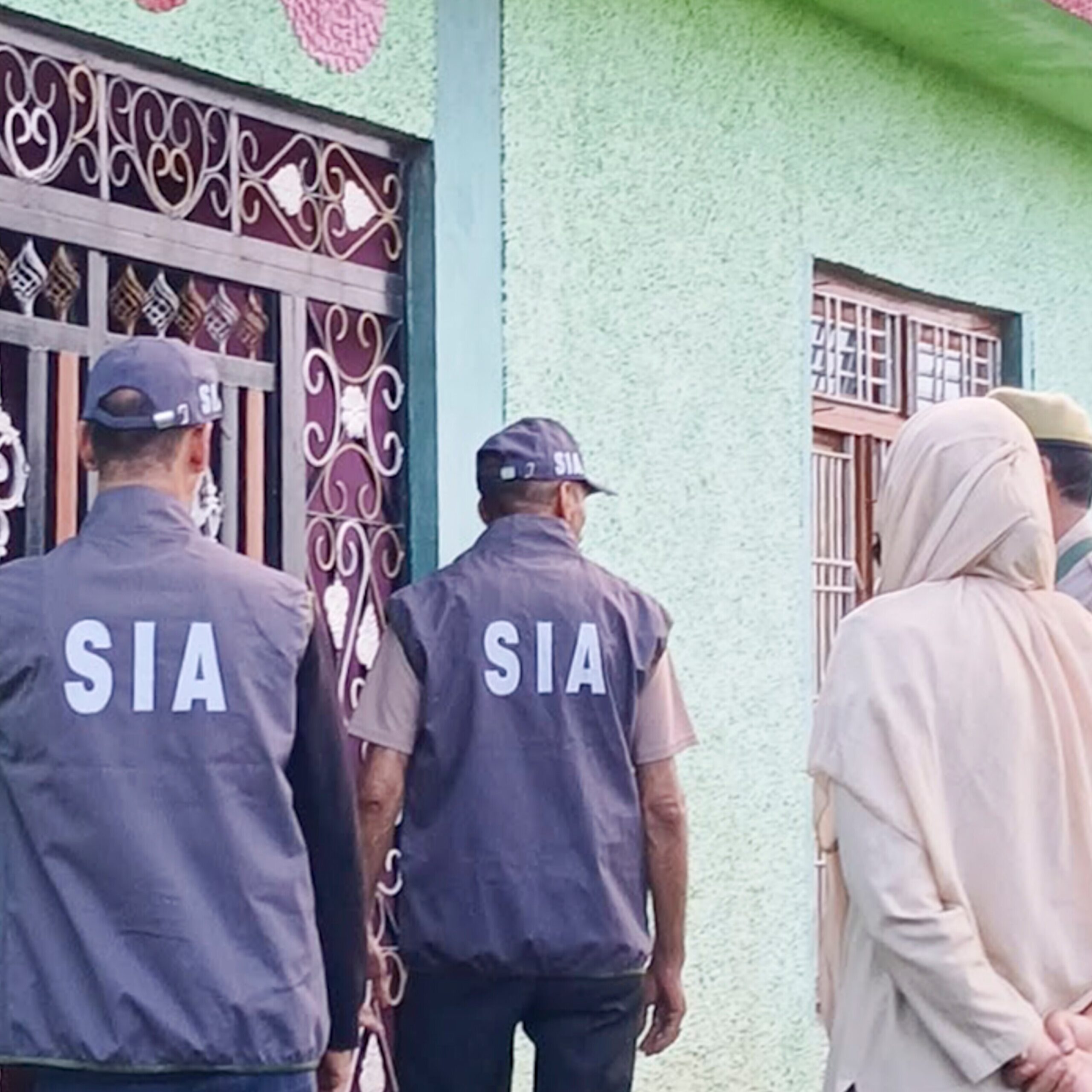
The State Investigation Agency (SIA) Kashmir arrested Manoj Kumar Bhat alias Pintu in Jammu on August 17 after he had allegedly remained absconding for nearly four years.
According to the SIA, Bhat was wanted in FIR No. 13/2022, registered on June 3, 2022, concerning alleged narcotics smuggling from across the Line of Control and the diversion of proceeds from drug sales towards terrorist activities.
What made the arrest particularly sensitive was Bhat’s community background.
The Indian Express, citing officials, identified him as a Kashmiri Pandit whose family had migrated from Rainawari in Srinagar to Jammu. The newspaper reported that SIA described him as the first Kashmiri Pandit arrested in J&K in a case involving an alleged cross-border narco-terror financing network.
That detail has understandably generated shock within parts of the Kashmiri Pandit community.
But it is precisely here that the story requires careful journalism.
One individual’s alleged involvement cannot be converted into a judgment about an entire community. Nor should the community’s history of suffering during the rise of militancy be used to obscure allegations that investigators are entitled to pursue.
The criminal investigation must remain about evidence, money trails, communications, networks and individual responsibility.
What exactly is the SIA alleging?
The SIA’s case describes a network rather than an isolated drug transaction.
According to the agency, narcotics were allegedly brought into Jammu & Kashmir from Pakistan-occupied Jammu and Kashmir (PoK), after which they were collected, distributed and sold through a network operating within J&K.
The proceeds, investigators allege, were subsequently channelled towards activities sustaining the terrorist ecosystem. The agency has linked the wider investigation to Pakistan/PoK-based operatives associated with Hizbul Mujahideen.
The case reportedly began after investigators recovered one kilogram of heroin from Zeeshan Ahmad Sofi and Waseem Ahmad Khan at Nowpora in Sopore.
The subsequent investigation resulted in recovery of:
- 7 kg of poppy straw
- 4 kg of poppy seeds
- 15 grams of heroin from Bhat’s residential premises, according to the SIA
- a motorcycle
- electronic devices
The electronic equipment is undergoing forensic and technical examination, according to the agency.
Several other accused persons have already faced chargesheets in the case, meaning the investigation is considerably broader than Bhat’s arrest alone.
How did investigators reach Bhat?
One of the more revealing aspects of the case is the alleged effort to evade detection.
The Indian Express reported that Bhat had rarely used a mobile phone during his years on the run and allegedly changed numbers whenever he switched his phone on. Investigators reportedly used technical surveillance, movement patterns and human intelligence to track him.
That detail illustrates an important change in contemporary counter-terror investigations.
Security agencies increasingly look beyond traditional intelligence sources. They examine:
mobile-phone patterns + financial transactions + travel movements + digital devices + human intelligence + criminal networks.
A person does not necessarily need to be a gunman or a member of a militant organisation to become relevant to a terror-financing investigation.
The modern financing chain can include people who allegedly transport, store, distribute, sell or move money generated from illegal activities.
That is why investigators increasingly describe narco-terrorism as an ecosystem, rather than simply a drug-trafficking case.
The narco-terror nexus: why drugs matter to militancy
The basic economics of narco-terrorism are relatively straightforward.
Terrorist organisations require money.
Money is needed for recruitment, logistics, communication, transportation, weapons, safe houses and other operational requirements.
Drug trafficking provides an illicit revenue stream that can operate through ordinary criminal markets.
The result is a potentially dangerous convergence:
Cross-border trafficking → local distribution → drug profits → financial channels → terrorist support.
The precise structure varies from case to case. But Indian security agencies have repeatedly investigated alleged connections between narcotics trafficking and terror financing in Jammu & Kashmir.
In the current SIA case, the agency alleges that narcotics were trafficked from PoK and then distributed through a local network, with proceeds subsequently channelled towards sustaining terrorist activities.
This is why the financial investigation can be just as important as the drug seizure.
A kilogram of heroin sitting in a police evidence room is one thing.
Tracing who paid for it, who transported it, who received the money, where the proceeds went and who ultimately benefited can reveal the architecture of the network.
The cross-LoC dimension makes the case more complicated
The alleged route from PoK adds another layer.
Unlike conventional drug trafficking, where criminal networks may operate primarily within one jurisdiction, cross-border narcotics networks create multiple points of vulnerability.
Investigators have to examine:
- the source of the narcotics;
- methods of cross-border movement;
- local handlers;
- distribution networks;
- financial intermediaries;
- communication channels;
- suspected terrorist handlers;
- links between drug proceeds and militant activity.
The SIA has specifically named alleged Pakistan/PoK-based handlers including Imtiyaz Ahmad Kandoo and Manzoor Ahmad Khan in connection with the wider investigation.
The agency has also secured an Interpol Red Corner Notice against Imtiyaz Ahmad Kandoo in a separate terror-related case, according to its statement.
That international dimension demonstrates why these investigations can take years.
Why the Kashmiri Pandit identity has become such a sensitive issue
This is where the case departs from an ordinary narco-terror arrest.
Kashmiri Pandits occupy a unique place in the history of J&K’s militancy.
The community’s displacement from the Valley in the early 1990s remains one of the most politically and emotionally charged chapters of the conflict.
The Indian Express reported that Bhat’s family had migrated from Rainawari in Srinagar to Jammu, and that community members were shocked by the allegations against him.
The symbolism is difficult to ignore.
A community that largely associates Pakistan-sponsored militancy with its displacement now finds one of its members accused of involvement in a network that investigators say is connected to that very ecosystem.
But symbolism should not replace evidence.
Three facts can simultaneously be true:
- Kashmiri Pandits were among the communities severely affected by militancy and displacement.
- An individual belonging to that community can still face criminal allegations and investigation.
- The actions of one accused person cannot fairly be attributed to the community as a whole.
That distinction is essential.
The danger of turning a security case into a communal narrative
There is a temptation in highly polarised environments to treat an arrest according to the accused person’s identity rather than the evidence against them.
That would be a mistake.
Narco-terror networks are fundamentally transactional.
They can seek out people based on:
- access;
- money;
- geography;
- criminal contacts;
- vulnerability;
- personal relationships;
- ideological sympathy;
- coercion or inducement.
A network does not necessarily operate according to the communal identity of every person it encounters.
For investigators, the important question is therefore not:
“Which community did the accused belong to?”
It is:
“What exactly did the accused allegedly do, who did he communicate with, what money changed hands, and can those allegations be proved in court?”
That is also the standard that protects innocent people from being collectively stigmatized.
Is this evidence that militancy is changing?
In an important sense, yes—but with qualifications.
The case reinforces the security establishment’s argument that militancy is no longer confined to armed cadres and conventional overground networks.
Financial facilitators, drug traffickers, digital intermediaries and logistics providers can become part of the wider ecosystem.
Former J&K DGP Kuldeep Khoda recently said terrorism in J&K has declined significantly but has not been eradicated, while pointing to arms smuggling, drone-based activity and narco-terrorism as continuing concerns.
That reflects a broader evolution in counter-terrorism thinking.
The question is no longer simply:
Who is carrying the weapon?
Increasingly, investigators ask:
Who is financing the weapon?
Who is moving the money?
Who is providing logistics?
Who is facilitating communication?
Who is supplying the network without appearing on a battlefield?
Drugs are also a social threat—not just a security threat
There is another dimension that should not get lost in the terrorism narrative.
Narcotics trafficking damages communities irrespective of whether the profits eventually reach militant groups.
Drug availability can contribute to:
- addiction;
- family breakdown;
- youth vulnerability;
- crime;
- debt;
- unemployment-related instability;
- mental-health and social consequences.
That means the narco-terror problem has two connected fronts.
The security front
Prevent drug profits from reaching terrorist networks.
The social front
Prevent narcotics from destroying communities and creating a new generation of vulnerable people.
A purely security-centric response may disrupt a network.
A sustainable response also requires prevention, rehabilitation, financial investigation, community awareness and employment opportunities.
Why financial investigation may hold the key
Drug seizures receive headlines because they are visible.
Money trails are less dramatic—but potentially more important.
Suppose investigators establish that:
- drugs entered through a particular route;
- a local distributor sold them;
- proceeds were deposited or transferred through particular accounts;
- money was subsequently moved through intermediaries;
- a portion ultimately reached a militant handler.
That chain can establish far more than a simple possession case.
It can potentially reveal the architecture of the financing network.
This explains why the SIA says the latest arrest could help investigators trace financial trails, establish additional linkages and identify the complete chain connecting narcotics trafficking with terror financing.
The four-year gap is significant
Bhat’s alleged four-year evasion is another important part of the story.
The FIR dates back to June 2022, while the arrest occurred in August 2026.
That gap raises questions investigators will now have to answer.
Was the accused merely hiding?
Did he maintain contact with other members of the network?
Did the alleged network continue operating?
Did he have access to new sources of narcotics?
Did financial transactions continue?
Did other people assist him?
The arrest may therefore become more valuable as an investigative opportunity than simply as the capture of a wanted suspect.
What investigators may now look for
The next phase could be particularly important.
Authorities are likely to examine:
Digital evidence
Mobile phones, computers and other electronic devices can potentially reveal contacts, locations, transactions and communications.
Financial records
Investigators can examine bank accounts, cash movements, property purchases and other financial activity.
Drug distribution links
The agency will want to establish who supplied, transported, stored and distributed the narcotics.
Cross-border contacts
Any communication with suspected PoK-based handlers could become central to the investigation.
Local facilitators
Investigators may look for additional people who allegedly provided shelter, transportation, communications or financial assistance.
Terror-financing trail
The most consequential question remains whether drug proceeds can actually be connected to terrorist activity.
That last point deserves emphasis.
A suspected drug transaction and a proven terror-financing transaction are not automatically the same thing.
The prosecution will ultimately have to establish the relevant links through admissible evidence.
Accountability without collective blame
The case presents a difficult test for public discourse in Jammu & Kashmir.
There is a legitimate security concern when narcotics are allegedly used to finance terrorism.
There is also a legitimate social concern about the spread of drugs.
And there is an equally important civic principle: criminal responsibility is individual.
If the allegations against Bhat are substantiated, he must face the consequences under law.
If evidence does not establish particular allegations, the judicial process must determine that too.
Neither outcome should become an excuse to stigmatize Kashmiri Pandits—or any other community.
That is particularly important in a region where communal memories remain deeply sensitive.
A security story that is also a social warning
The arrest of Manoj Kumar Bhat may ultimately prove to be one piece of a much larger investigation.
The SIA itself describes the case as an ongoing investigation into a broader network allegedly involving Pakistan/PoK-based Hizbul Mujahideen operatives and local distributors.
If investigators can establish the complete chain—from cross-LoC narcotics movement to local distribution and finally to terrorist financing—the case could offer valuable insight into how contemporary narco-terror networks function in J&K.
But if the investigation stops at arrests and seizures, an important opportunity could be lost.
The bigger objective should be to follow the money, dismantle the network and prevent its replacement by another.
The larger question for Jammu & Kashmir
For years, the Kashmir conflict was primarily discussed through the language of guns, infiltration and encounters.
Today, the security vocabulary is broader.
It includes:
drones.
narcotics.
digital communication.
financial networks.
radicalisation.
local facilitation.
The alleged involvement of a Kashmiri Pandit in a narco-terror investigation does not mean that the community has somehow become part of the militant ecosystem.
It means something more limited—but potentially more revealing:
security networks can cross social boundaries, and investigators have to follow evidence wherever it leads.
That is both the strength and the uncomfortable reality of modern counter-terrorism.
Conclusion: Follow the evidence, not the identity
The arrest of Manoj Kumar Bhat alias Pintu is significant for two separate reasons.
First, the SIA says it has apprehended a long-absconding suspect in a case involving alleged cross-LoC narcotics trafficking and terror financing. The agency’s investigation points to a wider network involving local distributors and Pakistan/PoK-based Hizbul Mujahideen-linked handlers.
Second, Bhat’s reported identity as a Kashmiri Pandit makes the case unusually sensitive because the community’s history is deeply intertwined with the violence and displacement associated with the rise of militancy in the Valley.
But the most responsible conclusion is also the simplest:
The investigation should be judged by evidence, not community identity.
If the alleged network exists, dismantling its financial architecture is more important than the headline surrounding any single arrest. And if the drugs were indeed being used to support terrorism, disrupting that pipeline could strike at one of the less visible—but increasingly important—sources of militant financing in Jammu & Kashmir.
The real story, therefore, may not be that a Kashmiri Pandit was arrested.
The real story is whether investigators can follow the trail from narcotics to money, from money to handlers, and from handlers to the wider terror ecosystem—and prove those links in court.