J&K Leaders Condemn Khamenei’s Assassination as Massive Protests Erupt Across Kashmir and Kargil
By: Javid Amin | 01 March 2026
The reported assassination of Ayatollah Ali Khamenei in a US–Israel strike has sent shockwaves far beyond Iran’s borders. In Jammu and Kashmir and Ladakh, thousands poured onto the streets, mourning the Iranian leader and condemning what local political and religious figures described as a “grave injustice.”
From the sealed squares of Srinagar to the sombre processions of Kargil, the emotional intensity is unmistakable. Authorities have responded with preventive restrictions, heavy deployment, and temporary educational shutdowns to prevent escalation.
This is a detailed ground report on what is unfolding in Kashmir and Ladakh — and how it fits into the wider regional crisis.
A Valley on Edge: Massive Protests Sweep Kashmir
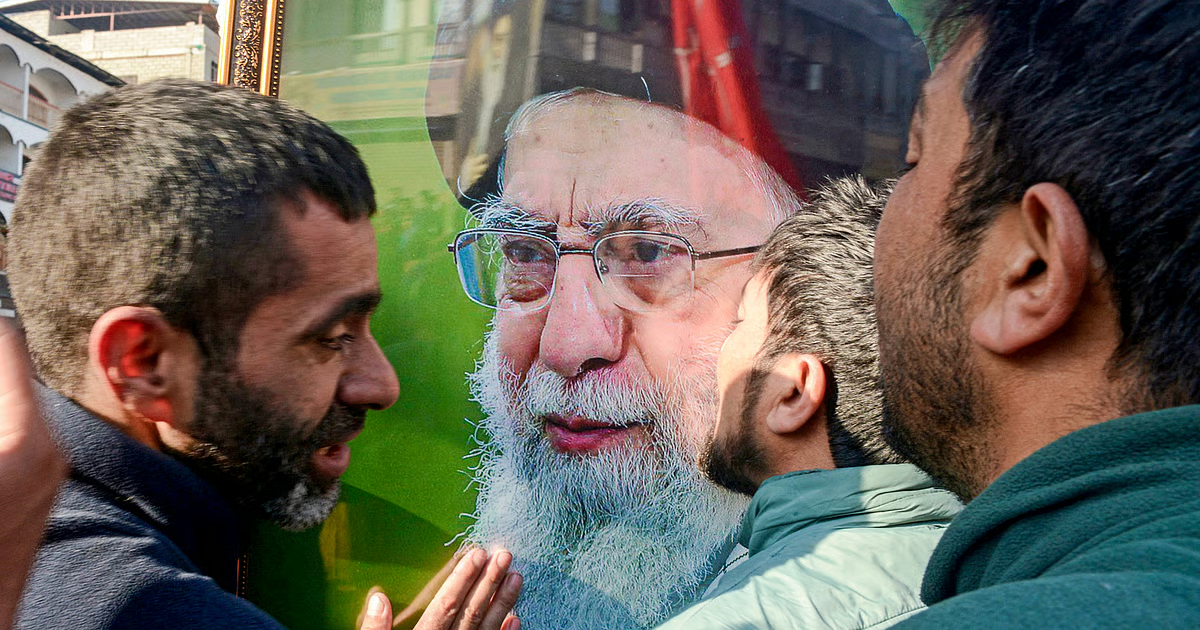
Within hours of confirmation of Khamenei’s death, demonstrations began across the Kashmir Valley. The protests were most visible in Srinagar, but significant gatherings were also reported from Budgam, Anantnag, and Pulwama.
Lal Chowk Sealed Off
At the symbolic heart of Srinagar lies Lal Chowk — historically a flashpoint for political expression in Kashmir. By early morning, security forces had barricaded all entry points to the square. Razor wire, riot-control vehicles, and layered police deployment signaled a clear message: gatherings would not be permitted at this sensitive site.
Eyewitnesses described:
-
Slogans condemning the US–Israel strike
-
Black flags and banners expressing solidarity with Iran
-
Spontaneous prayer gatherings before dispersal
While protests remained largely peaceful, the emotional pitch was high. Many demonstrators carried placards calling the killing an attack on the global Shia community.
Leaders Across J&K Condemn the Strike
Political and religious leaders from multiple parties and organizations in Jammu & Kashmir issued strong statements condemning the assassination.
Several described it as:
-
A violation of international norms
-
A destabilizing act in an already volatile region
-
A blow to the Shia Muslim world
Senior clerics in Srinagar’s religious centers urged restraint but did not hide their anger. Friday sermons and public addresses framed the killing as a moment of collective grief.
Importantly, leaders emphasized maintaining peace within Kashmir while expressing solidarity with Iran — a tone that appears aimed at preventing local unrest from spiraling.
Kargil Observes Seven Days of Mourning
In Kargil, where a majority of the population belongs to the Shia community, the response has been deeply emotional but organized.
Official Mourning Announced
Community leaders and religious bodies in Kargil announced:
-
Seven days of mourning
-
Processions under strict coordination
-
Condolence meetings in mosques and community halls
Black flags were hoisted in several localities. Markets observed partial shutdowns as a mark of respect. Unlike the spontaneous protests seen in parts of Kashmir, Kargil’s response has largely taken the form of structured mourning assemblies.
Residents described Khamenei as a towering religious authority whose death feels “personal” despite the geographical distance.
Security Tightened Across J&K and Ladakh
Authorities moved swiftly to prevent escalation.
Restrictions and Curbs
-
Prohibitory orders imposed in sensitive zones
-
Gatherings restricted in central Srinagar
-
Surveillance increased in vulnerable districts
In addition, schools and colleges across the Kashmir Valley have been ordered shut for two days as a preventive measure. Officials cited public safety and the need to avoid student involvement in protests.
Heavy Deployment
Police and paramilitary units have been stationed at:
-
Major intersections in Srinagar
-
Entry and exit points of district headquarters
-
Religious and political congregation spots
Security officials describe the strategy as “preventive containment,” aimed at avoiding clashes rather than reacting to violence.
Public Sentiment: Grief, Anger, and Identity
The scale of reaction in Kashmir and Kargil cannot be understood purely as political. For many in the region — particularly in Shia-majority pockets — Ayatollah Khamenei represented more than a head of state. He symbolized religious leadership and resistance against Western intervention.
In conversations with residents:
-
Younger protesters expressed outrage over perceived global double standards.
-
Elderly participants described the moment as a historical turning point.
-
Shopkeepers voiced concern about prolonged instability affecting livelihoods.
While emotions are intense, there is also a visible awareness of the consequences of unrest, especially in a region that has experienced decades of conflict.
Regional Context: A Wider South Asian Shockwave
The developments in J&K and Ladakh are part of a broader regional reaction.
Pakistan: Violent Protests in Karachi
In Karachi, demonstrators attempted to storm the United States Consulate Karachi, resulting in deadly clashes. At least 10 people were reported killed during confrontations with security forces.
Pakistan’s protests have been more violent, marked by:
-
Arson attempts
-
Clashes with riot police
-
Emergency restrictions in major cities
Iran: National Mourning and Military Alert
Inside Iran:
-
Forty days of national mourning declared
-
Revolutionary Guard units placed on high alert
-
Reports of retaliatory strikes against US and Israeli-linked assets
Iran’s regional allies — including Hezbollah in Lebanon and Houthi forces in Yemen — have pledged retaliation, increasing fears of proxy escalation.
Comparative Insight: Why J&K Remains Tense but Controlled
Unlike Pakistan’s volatile unrest, the situation in Jammu & Kashmir and Ladakh remains tense but under administrative control.
Three key differences stand out:
-
Preventive Policing: Authorities moved quickly to seal sensitive areas before protests could swell.
-
Political Messaging: Local leaders combined condemnation with appeals for peace.
-
Structured Mourning in Kargil: Organized gatherings reduced the likelihood of spontaneous clashes.
However, officials privately acknowledge that emotions remain high — particularly in Shia-majority regions — and that the situation could shift depending on regional developments.
The Larger Geopolitical Risk
The assassination of Ayatollah Khamenei represents a seismic geopolitical event. Its ripple effects are visible in:
-
Street protests in Kashmir
-
Mourning in Kargil
-
Deadly clashes in Karachi
-
Military alertness across Iran
For India, the immediate priority appears to be ensuring that foreign policy shocks do not destabilize domestic order.
Ground Reality Snapshot
Current Status in J&K and Ladakh:
-
Lal Chowk sealed; heavy barricading continues
-
Schools and colleges closed temporarily
-
Processions ongoing in Kargil under supervision
-
No confirmed large-scale violence reported
-
Security presence highly visible
The coming days will be critical. If regional retaliation escalates, emotions in Kashmir and Ladakh may intensify further. For now, authorities are relying on curbs, communication, and community coordination to maintain calm.
Conclusion: A Moment of Grief, A Test of Stability
The streets of Srinagar and the mountains of Kargil are witnessing a rare convergence of global geopolitics and local identity. The reported killing of Ayatollah Ali Khamenei has stirred deep emotions in Jammu & Kashmir and Ladakh — grief, anger, solidarity — but also caution.
Whether this remains a contained episode of mourning or evolves into a longer period of unrest depends largely on how the broader regional crisis unfolds.
For now, Kashmir stands tense — watchful, grieving, and heavily guarded.