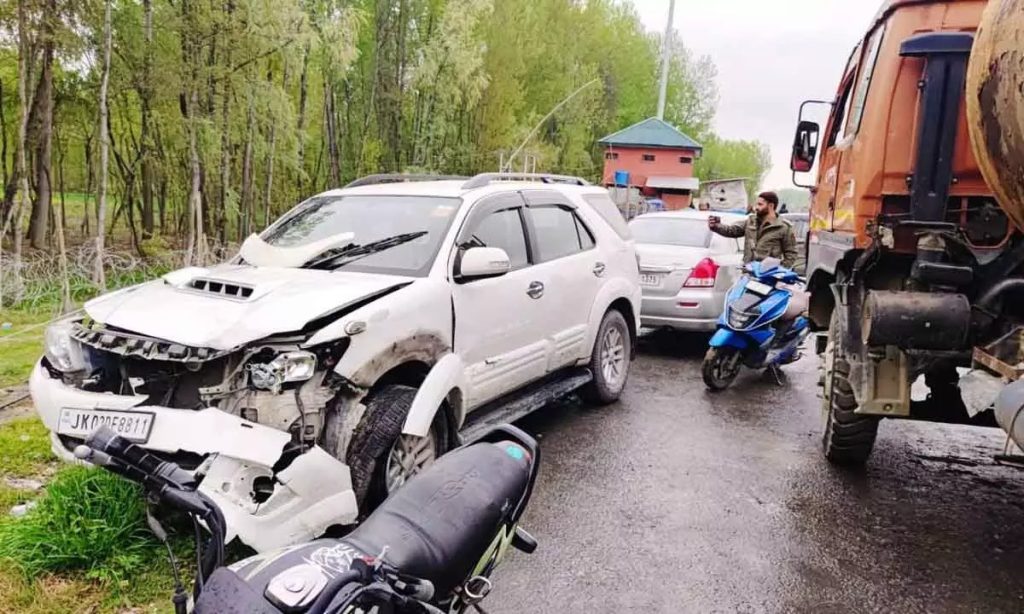
Kashmir Road Accidents Surge in 2026: Over 5,200 Cases Expose Deep Safety Crisis
By: Javid Amin | 27 April 2026
Behind the scenic highways and booming tourism of Jammu & Kashmir lies a growing crisis that rarely dominates headlines for long—road accidents are rising at an alarming pace in 2026, exposing systemic failures in safety, infrastructure, and enforcement.
While official narratives suggest a marginal decline compared to last year, ground-level data, hospital records, and eyewitness accounts paint a far more troubling picture—one of persistent fatalities, recurring high-risk zones, and preventable deaths.
2026 Accident Snapshot: The Numbers Tell a Grim Story
Data compiled from transport authorities and regional reports indicates that over 5,200 accidents have already been recorded across Jammu & Kashmir by mid-April 2026, with Ladakh also witnessing a noticeable uptick.
Breakdown of Key Figures (Jan–April 2026)
- Jammu & Kashmir (UT Total): ~5,287 accidents
- Estimated 700+ fatalities
- Thousands injured
- Slight dip from ~5,726 cases in 2025
- Kashmir Valley:
- Over 2,800 accidents
- Around 350 deaths
- More than 2,000 injuries
- Ladakh (Leh & Kargil):
- 30 reported cases
- 6 deaths, 36 injuries
- Sharp rise compared to previous years
Note: While these figures align with multiple departmental and media estimates, real numbers may be higher or lower due to underreporting and delayed data consolidation.
The Reality Gap: Official Claims vs Ground Truth
Authorities often highlight a “declining trend” in accident statistics. However, this reduction appears largely statistical rather than structural.
- Minor fluctuations year-on-year do not reflect severity or fatality rates
- Many cases go unreported in rural and remote areas
- Hospital admissions suggest higher injury volumes than police data indicates
In essence, the crisis is not shrinking—it is becoming normalized.
Why Are Accidents Rising? A Multi-Layered Breakdown
1. Human Factors: The Leading Cause
Human error continues to dominate accident causation across Kashmir’s roads:
- Overspeeding & reckless overtaking on narrow mountain routes
- Alcohol consumption: In Ladakh, multiple investigations have found a high proportion of drivers under influence
- Underage driving, particularly in rural belts
- Driver fatigue, especially on long routes like the Srinagar–Jammu Highway and Mughal Road
These behaviors, combined with difficult terrain, often turn minor mistakes into fatal incidents.
2. Infrastructure Failures: Roads That Don’t Forgive Errors
Kashmir’s road network, particularly in hilly areas, remains structurally vulnerable:
- Blind curves without warning systems
- Weak or missing guardrails along deep gorges
- Potholes and loose gravel after winter snow clearance
- Poor lighting, especially on rural and semi-urban stretches
Even experienced drivers face high risk in such conditions.
3. Environmental Hazards: Nature as a Constant Threat
The Himalayan geography adds an unpredictable layer of danger:
- Icy roads in winter leading to skidding
- Spring snowmelt, destabilizing slopes
- Landslides and avalanches, such as recent disruptions near Zoji La Pass damaging multiple vehicles
Weather conditions can change rapidly, often without warning systems in place.
4. Systemic Gaps: Where the System Falls Short
Beyond drivers and roads, institutional weaknesses continue to amplify risks:
- Delayed emergency response: Victims often wait critical minutes due to hesitation or lack of coordination
- Limited trauma care: District hospitals struggle with high-impact injuries
- Weak enforcement: Despite thousands of challans issued annually, violations persist
A culture of low accountability continues to undermine safety efforts.
Government Measures: Progress or Partial Fix?
Authorities have introduced several initiatives aimed at improving road safety:
Key Interventions
- Road Accident Victim Fund (RAVF): ₹11.53 crore disbursed for compensation in 2025–26
- Smart traffic systems: Intelligent Traffic Management Systems (ITMS) deployed in Srinagar and Jammu
- Road safety audits: Mandatory for new infrastructure projects
- Awareness campaigns: Over 10,000 programs annually targeting drivers and youth
The Gap
While these measures indicate intent, their impact remains uneven due to:
- Limited rural penetration
- Weak monitoring of implementation
- Lack of behavioral change among drivers
High-Risk Zones: Where Accidents Concentrate
If current patterns hold, fatalities in 2026 are likely to cluster along:
- Srinagar–Jammu Highway
- Mughal Road
- Tourist-heavy routes to
- Gulmarg
- Pahalgam
- Sonamarg
These routes combine heavy traffic, difficult terrain, and seasonal surges, making them accident-prone.
2026 Outlook: A Worsening Trajectory?
If the current pace continues, Jammu & Kashmir could cross 6,000 road accidents by the end of 2026, with fatalities potentially rising in proportion.
The concern is not just the numbers—but the predictability of the causes. Most accidents stem from known, recurring issues that remain insufficiently addressed.
What Needs to Change: Ground-Level Solutions
Experts and field observations suggest a multi-pronged approach:
Immediate Actions
- Strict enforcement against speeding and drunk driving
- Deployment of real-time monitoring and speed cameras
- Emergency response training for locals and first responders
Structural Reforms
- Strengthening road engineering (guardrails, signage, lighting)
- Expanding trauma care facilities in districts
- Introducing AI-based hazard alert systems for weather and terrain
Data-Driven Governance
- Integrating police FIRs, hospital data, and transport records
- Mapping accident hotspots for targeted intervention
- Transparent public dashboards for accountability
Conclusion: A Preventable Crisis Demanding Urgency
Kashmir’s road accident surge in 2026 is not merely a statistic—it is a public safety emergency unfolding in slow motion.
The causes are well known. The solutions are available. What remains missing is consistent execution and collective accountability.
Until then, the Valley’s roads will continue to claim lives—not because accidents are inevitable, but because prevention remains incomplete.