Iran–Israel War: UN & OIC Response Explained — Why Global Bodies Seem Paralyzed | March 2026
By: Javid Amin | 04 March 2026
A Conflict Too Big for Words?
The Iran–Israel war, now in its fifth day of intense hostilities, has shattered assumptions about modern conflict — triggering missile barrages, coalition strikes, cross-border proxy engagements, and a cascading humanitarian crisis. Yet amid the violence, many observers and global citizens ask the same question:
“Where are the United Nations and the Organization of Islamic Cooperation? Why do they seem silent or impotent?”
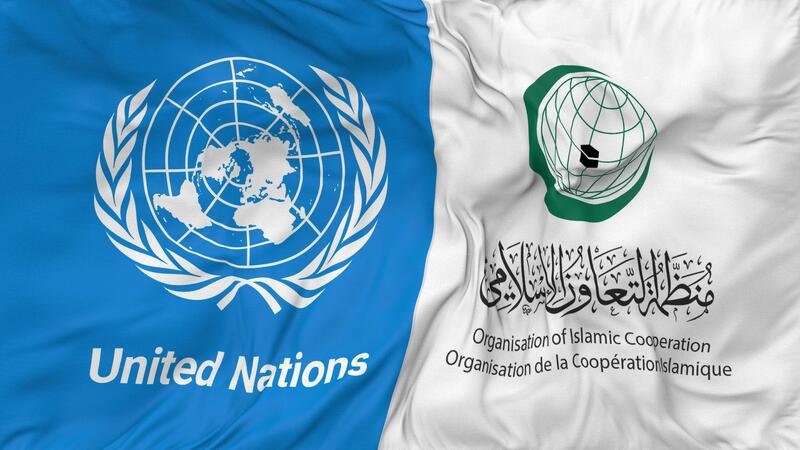
This feature aims to answer that precisely — not with rhetoric or frustration, but with fact-based analysis, real institutional positions, statements, and explanations of why global governance mechanisms look subdued even as war rages. It explores what the UN and OIC have said, what they’re doing, why they’re limited, and what realistic influence they might still exert. The story is essential reading for anyone seeking authoritative insight into global governance amid war.
The United Nations: Vocal Diplomacy, Structural Constraints
01. Public Statements: Urging De-Escalation, Condemning Violence
From day one of the conflict, the United Nations has been active in diplomacy, albeit without the power to force a ceasefire.
-
UN Secretary-General António Guterres publicly condemned military escalation in the Middle East, highlighting the risk of wider regional war and grave consequences for civilian populations. He emphasized that all parties must respect international law and protect civilians.
-
The UN human rights chief described the human toll as shocking, stressing that fear, panic, and anxiety sweeping across the region were avoidable.
These words reflect repeated UN appeals for restraint, negotiation, and humanitarian focus — the core of its conflict-response rhetoric.
02. Security Council Dynamics: Veto Politics at Work
The UN’s Security Council is the only body that can pass binding resolutions affecting peace enforcement, sanctions, peacekeeping, and ceasefire actions. But the council is locked in great-power politics:
-
The United States — a permanent member with veto power — has consistently defended Israel’s actions in council sessions and would likely veto any resolution that condemns or restricts its or Israel’s operations.
-
Russia and China, while critical of Western policy in some contexts, have not championed alternative peace enforcement actions in a way that could gather consensus.
-
Other council members are divided along geopolitical lines, often prioritizing alignment with major powers over collective action.
As a result, no binding ceasefire resolution has emerged — only statements, appeals, and diplomatic urgings. Analysts describe this as a structural paralysis: the council can speak, but it cannot enforce without unanimity among powers with veto authority.
03. General Assembly and Non-Binding Statements
If the Security Council is blocked by vetoes, the General Assembly can convene under the Uniting for Peace mechanism — previously used during the Korean War and other conflicts — to recommend collective measures. However:
-
These recommendations are non-binding.
-
They carry moral and political weight, but no enforcement mechanism.
-
They cannot compel waring parties to disarm, cease fire, or withdraw.
Despite these limitations, such resolutions could express global consensus and increase diplomatic pressure — but only if enough member states rally behind a unified text.
04. Humanitarian Action Amid Conflict
The UN is pushing for humanitarian action even without formal peace enforcement:
-
Agencies like UNICEF, World Food Programme, and UNHCR can coordinate aid deliveries to civilians in conflict zones or neighboring states.
-
Calls for humanitarian corridors and access protections have been reiterated.
These are standard UN tools when peace enforcement is unreachable — but they do not stop bullets or missiles.
05. Why the UN Looks ‘Paralyzed’
The common criticism — that the United Nations appears inactive — stems from two structural realities:
-
Veto Politics:
When one permanent member actively backs one side of a war, the council becomes incapable of decisive action. No ceasefire mandates, sanctions, or peacekeeping deployment can be approved without consensus. -
Limited Enforcement:
The UN has no independent military force. Peacekeepers operate only with host country consent and council authorization, which is currently unattainable.
Thus, while the UN has been vocal in words, it is structurally limited in deeds. Its current output includes condemnatory statements, humanitarian appeals, and ongoing diplomatic advocacy — but not enforceable peace mandates.
Organization of Islamic Cooperation (OIC): Unity in Principle, Division in Practice
01. The OIC’s Official Response
The Organization of Islamic Cooperation, representing 57 Muslim-majority countries, has traditionally condemned military aggression and advocated for Muslim states’ sovereignty and civilian protection.
This time, the OIC has issued calls for:
-
Immediate ceasefire
-
Protection of civilians
-
Respect for territorial integrity
These statements are targeted at world leaders and echo longstanding OIC declarations on Middle East conflicts.
02. Internal Divisions Weaken Impact
However, the OIC’s statements have drawn criticism for being too generalized or lacking forceful condemnation, especially of the joint U.S.–Israeli strikes.
-
Prominent political figures and commentators — including leaders from regions affected by Islamic political movements — have publicly criticized the OIC for silence or weak condemnation of U.S. and Israeli military actions.
The internal landscape of the OIC is fragmented:
Cautious Gulf States
Countries like United Arab Emirates and Saudi Arabia are wary of overtly antagonizing Western allies or destabilizing their own fragile security calculus. Gulf states have their own economic, security, and diplomatic ties with the U.S. and Israel that complicate unified hardline positions.
Iran-Aligned Members
Other members, historically allied or sympathetic to Tehran, push for stronger condemnation — but lack the diplomatic weight to compel a collective OIC stance.
Neutral/Mediation-Oriented States
Nations such as Qatar and Turkey often prefer mediation and cautious language over inflammatory statements in OIC platforms.
This diversity of political positioning results in no unified operational action — only rhetorical calls that are too broad to shift dynamics on the ground.
03. Why the OIC Appears Ineffective
Three factors limit the OIC’s influence:
-
Lack of Enforcement Power:
The OIC cannot impose sanctions, deploy military assets, or enforce peace. -
Member Diversity:
Divergent foreign policy priorities — from strategic partnerships with the U.S. to ideological alignment with Tehran — weaken collective policy. -
No Legal Authority:
Unlike treaties or military alliances, OIC declarations are political statements with no binding obligations.
This leads critics to label the OIC as overly cautious or “mute” — but the reality is institutional limitation rather than deliberate negligence.
Broader Global Reactions: Not Just UN and OIC
While UN and OIC responses are central, global reactions illustrate the global fissures this war has opened:
-
China urged an immediate cessation of military operations to prevent escalation, emphasizing diplomacy.
-
Russia criticized U.S. and Israeli strikes as aggression undermining international law.
-
Several Global South nations — including Turkey, Brazil, Pakistan, and South Africa — have condemned the war’s initiation and called for peaceful resolution.
-
Many Gulf states condemned Iranian missile strikes against their territories as violations of sovereignty.
These reactions show the conflict’s complex global reverberations — from support to sharp criticism of different actors.
Civil Society and Public Opinion: Beyond Diplomatic Hubs
Worldwide protests against the war, including demonstrations in multiple countries, indicate that public sentiment often runs ahead of institutional responses:
-
Anti-war demonstrations have taken place globally, with some resulting in clashes and casualties.
This grassroots activism highlights another truth: institutions move slowly, while popular sentiment moves rapidly — and they do not always align.
Realpolitik vs. Institutional Idealism
01. The UN’s Dilemma
The UN Charter prohibits the use of force against a state’s territorial integrity, yet allows self-defense under Article 51. In this war, both sides claim legal justification:
-
The U.S. and Israel claim pre-emptive defense against nuclear threat.
-
Iran frames its missile barrages as defense of sovereignty.
Because major powers back conflicting narratives, the Security Council finds itself in a diplomatic deadlock that violates neither principle enough to garner united action.
02. The OIC’s Structural Challenge
Unlike NATO or the EU, the OIC has no unified military, economic bloc, or enforcement mechanism. Its influence relies on diplomatic voice, but that voice is fractured.
This explains why, despite moral appeals and occasional strong statements, the OIC cannot dictate strategic outcomes.
What These Bodies Could Do — But Haven’t Yet
If conditions change, both institutions have tools that could shape the conflict’s course:
For the United Nations
-
Invoke Uniting for Peace in the General Assembly for collective recommendations.
-
Deploy humanitarian task forces independent of Security Council decisions.
-
Elevate civilian protection missions via coordinated agency action.
For the OIC
-
Push for unified diplomatic isolation of belligerents.
-
Support regional peace talks hosted by neutral members (Qatar, Turkey).
-
Advocate coordinated economic gestures (e.g., trade resolutions).
However, all these depend on political will and consensus that does not yet exist.
Conclusion: Why the UN and OIC Appear Asleep — But Why They Aren’t
At first glance, global institutions may seem slow or ineffective in the face of rapid violence and rising death tolls. But a deeper look shows:
-
The United Nations is active in diplomacy and humanitarian appeals, but structurally constrained by veto politics.
-
The OIC is issuing statements and urging peace, but internal political divergences limit forceful action.
-
Both bodies play meaningful roles in shaping narrative, documenting rights violations, and coordinating aid — even if they cannot dictate ceasefire or compel military restraint.
In a world where geopolitical power trumps institutional idealism, these institutions are doing what they can — and yet less than millions of observers hope.
The story of this war, and the story of international governance’s response, is not one of silent inaction, but one of powerful constraints, conflicting agendas, and the limits of diplomacy in the face of gunfire and missiles.