Kashmir Protests After Khamenei’s Killing: Omar Abdullah Calls for Release of Detainees, Mehbooba Mufti Slams Crackdown
By: Javid Amin | 07 March 2026
Global geopolitics sparks local unrest as Kashmir’s political leaders demand restraint, dialogue, and protection of civil liberties
Kashmir Reacts to Khamenei’s Killing: A Political, Social, and Geopolitical Storm
When news broke that Iran’s Supreme Leader, Ayatollah Ali Khamenei, had been killed in a joint U.S.–Israeli strike, the ripple effects were felt far beyond the Middle East.
Thousands of kilometres away in the Himalayan region of Jammu and Kashmir, the event sparked grief, anger, and demonstrations across several districts—especially in areas with a strong Shia presence.
The protests quickly turned into a political flashpoint.
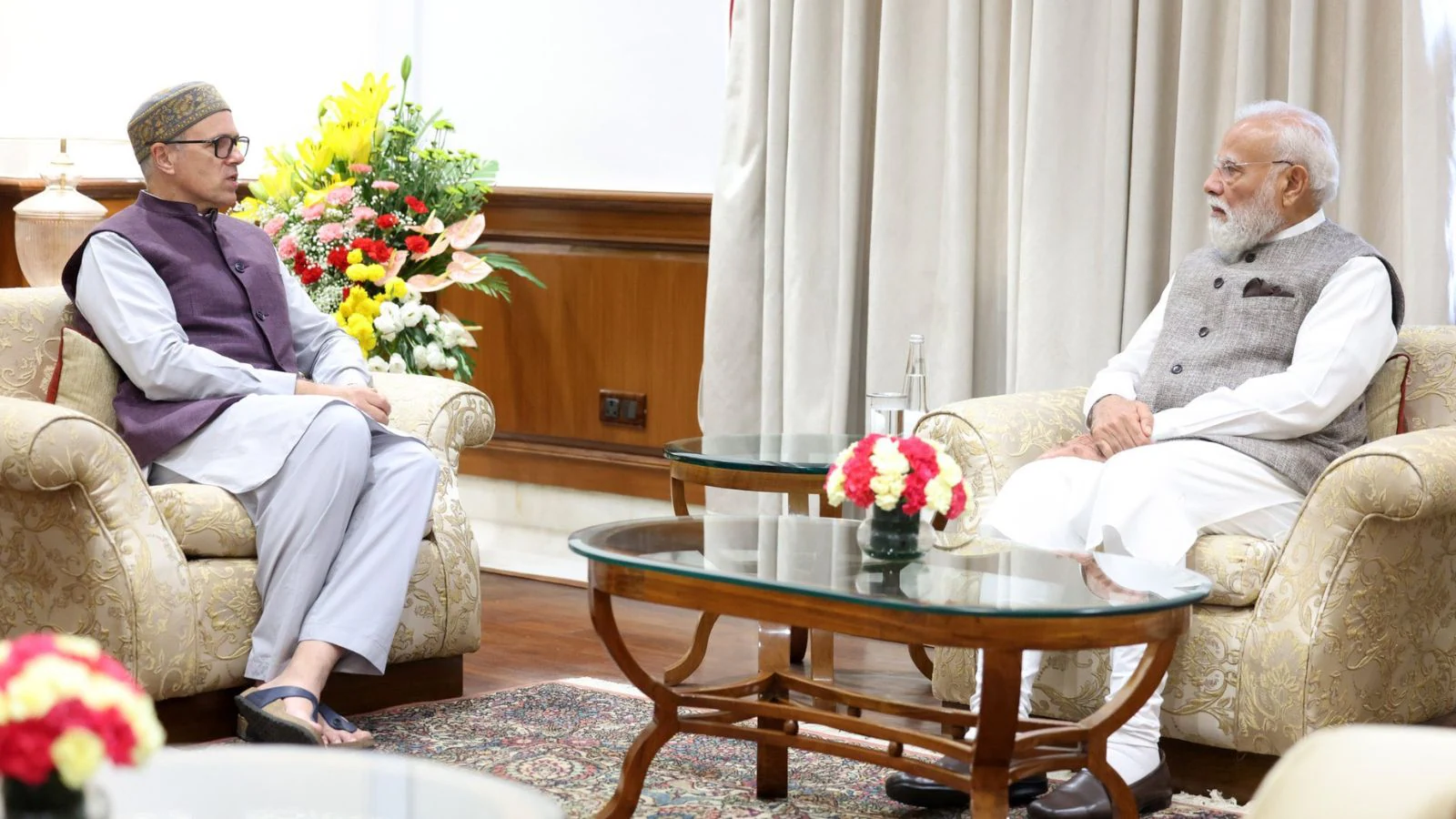
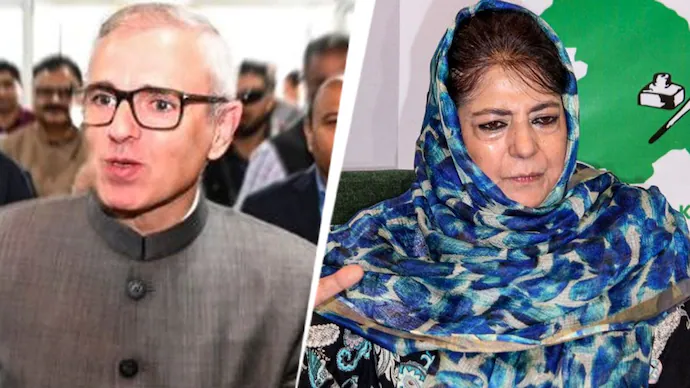
Chief Minister Omar Abdullah urged authorities to show restraint and review police cases against protesters. Meanwhile, opposition leader Mehbooba Mufti strongly criticized what she described as an excessive crackdown on demonstrators.
The episode highlights a complex reality: global geopolitical events often resonate deeply in Kashmir, a region shaped by religious identity, historical grievances, and a sensitive security environment.
This feature examines the protests, political responses, security measures, and broader implications of the crisis.
The Trigger: Khamenei’s Assassination and Its Global Shockwaves
The protests in Kashmir were triggered by reports that Ayatollah Ali Khamenei had been killed in a joint strike attributed to the United States and Israel during escalating tensions in the Middle East.
Khamenei was not only Iran’s highest political and religious authority but also a deeply influential figure in the Shia Muslim world.
For many Shia communities across the globe—including those in Kashmir—his leadership carried spiritual significance.
The news of his assassination sparked mourning gatherings, processions, and protest rallies in several countries.
In Kashmir, the reaction was immediate.
Crowds gathered in Srinagar’s old city areas and other towns, waving black flags, carrying portraits of Khamenei, and chanting slogans condemning the attack. Mourning rituals such as Nauha recitations and chest-beating ceremonies reflected the emotional intensity of the moment.
Authorities responded with heightened security measures, fearing that large gatherings could escalate into unrest.
Kashmir’s Streets: Mourning, Anger, and Mass Demonstrations
Within hours of the news spreading, protests erupted across multiple districts in the Kashmir Valley.
Large demonstrations were reported in Srinagar, Bandipora, Budgam, and several other areas with significant Shia populations.
Thousands of people poured into the streets to express solidarity with Iran and grief over the assassination.
Many protesters described the killing as a major blow to the global Shia community.
Witnesses reported scenes of emotional mourning.
Men and women marched through narrow lanes carrying banners and black flags. Religious chants echoed through neighborhoods as clerics addressed crowds outside mosques and Imambaras.
Some demonstrations turned confrontational when protesters attempted to march toward central city areas such as Lal Chowk.
Police deployed tear gas shells and crowd-control measures to disperse gatherings and prevent escalation.
Authorities later imposed restrictions on public assembly in parts of the Valley to maintain law and order.
Security Clampdown: Restrictions and Detentions
As protests intensified, security agencies moved quickly to contain the situation.
Police detained several demonstrators in various districts, including women who had participated in rallies.
Officials described the arrests as preventive measures aimed at avoiding violence and maintaining peace.
Security forces were deployed across sensitive locations in Srinagar and other towns.
Barricades, concertina wire, and checkpoints appeared at key intersections, particularly around Lal Chowk—the symbolic center of Kashmir’s political life.
Authorities also implemented additional restrictions:
-
Internet speeds were slowed in parts of Kashmir to curb the spread of rumors.
-
Schools and educational institutions were temporarily closed.
-
Large public gatherings were restricted.
The measures reflected the government’s concern that protests could spiral into broader unrest.
Omar Abdullah’s Response: A Call for Calm and Restraint
Chief Minister Omar Abdullah adopted a cautious approach.
While condemning the killing of Khamenei and acknowledging public anger, he appealed for calm across the region.
In public statements and social media posts, Abdullah urged communities to maintain peace and avoid actions that could inflame tensions.
He emphasized that people should be allowed to mourn peacefully.
“We must ensure that those who are grieving are allowed to express their sorrow without violence,” he said, while urging security forces to exercise restraint.
The Chief Minister also raised concerns about potential misuse of force by law enforcement agencies.
His appeal sought to strike a balance between maintaining law and order and respecting citizens’ emotions.
The Push for Releasing Detainees
As reports of arrests began to emerge, Abdullah went further.
He called for a review of police cases registered against protesters.
According to officials and local media reports, the Chief Minister suggested that authorities examine FIRs related to the demonstrations and release those who were detained if their involvement did not pose a serious security threat.
This position was reportedly supported by civil society representatives who participated in consultations with the government.
The suggestion reflected Abdullah’s attempt to prevent the situation from escalating into a prolonged political confrontation.
His message was clear: excessive punishment could deepen alienation among ordinary citizens.
Civil Society’s Role: Calls for Dialogue
Civil society groups in Kashmir have played a crucial role in shaping the debate.
Community leaders, religious scholars, and activists urged the administration to handle the situation sensitively.
Their recommendations to the government reportedly included:
-
Reviewing police cases against protesters
-
Releasing detainees who participated in peaceful demonstrations
-
Allowing mourning gatherings in religious spaces
These proposals highlighted the belief that dialogue and reconciliation are more effective than strict enforcement in emotionally charged situations.
Many community leaders argued that people protesting were motivated by religious grief rather than political rebellion.
Mehbooba Mufti’s Criticism: “Unjust Suppression of Dissent”
Opposition leaders reacted strongly to the arrests.
Among the most vocal critics was Mehbooba Mufti.
The former Chief Minister accused authorities of overreacting to peaceful protests.
She demanded the immediate release of all detained demonstrators, many of whom belonged to the Shia community.
Mufti described the crackdown as excessive and unjust.
According to her, expressing grief over a religious leader’s death should not be treated as a criminal offense.
Her statement framed the issue as a broader question of democratic rights.
Mufti argued that suppressing peaceful dissent would only increase political resentment in the region.
Opposition Voices and Political Fallout
The controversy quickly expanded beyond the two major leaders.
Several other political figures also became involved in the debate.
Among them were:
-
Aga Syed Ruhullah Mehdi
-
Junaid Azim Mattu
Reports suggested that some political activists and leaders faced police action or scrutiny due to their participation in protest events.
This further intensified accusations that the government was trying to suppress political expression.
The issue soon turned into a political contest between ruling authorities and opposition parties.
Why Kashmir Reacts Strongly to Events in Iran
To understand the protests, one must examine Kashmir’s unique socio-religious landscape.
The region has a significant Shia Muslim population, particularly in areas like Budgam, Srinagar, and parts of Jammu.
Historically, the Shia community in Kashmir has maintained strong cultural and religious connections with Iran.
Iranian religious institutions have influenced theological education and religious scholarship in the region.
Many Kashmiri clerics studied in Iranian seminaries such as Qom.
Because of these ties, developments in Iran often evoke strong emotional responses in Kashmir.
The death of a major religious authority like Khamenei therefore resonated deeply within the community.
The Security Dilemma: Civil Liberties vs Law and Order
The crisis also highlights a recurring dilemma in Kashmir’s governance.
Authorities often face the difficult task of balancing civil liberties with security concerns.
On one hand, citizens have the right to protest and express political or religious sentiments.
On the other hand, Kashmir’s volatile history means that large gatherings can sometimes escalate into violence.
Security agencies therefore adopt a cautious approach.
However, critics argue that preventive arrests and restrictions can infringe on fundamental rights.
This tension between liberty and security remains one of the most complex challenges in Kashmir’s political landscape.
The Diplomatic Angle: Protecting Kashmiri Students in Iran
While the protests dominated headlines, the government was also dealing with another urgent issue.
Several students from Jammu and Kashmir are currently studying in Iranian universities.
The escalating conflict in the Middle East raised concerns about their safety.
Chief Minister Omar Abdullah confirmed that his administration was coordinating with the Union Ministry of External Affairs to monitor the situation and assist residents in Iran if needed.
Families in Kashmir anxiously awaited updates from their children studying abroad.
The government’s diplomatic coordination aimed to reassure them that contingency plans were in place.
Media Restrictions and Censorship Concerns
During the protests, reports emerged that authorities had imposed communication restrictions in parts of the region.
Internet speeds were slowed across Kashmir as a precautionary measure.
Officials said the move was necessary to prevent the spread of misinformation.
However, activists criticized the decision.
They argued that restricting digital communication limits transparency and hinders journalists from reporting developments accurately.
Media watchdog groups have long raised concerns about internet shutdowns and communication restrictions in Kashmir.
A Rare Scale of Protests Since 2019
Observers noted that the demonstrations were unusually large.
Some reports suggested that this was among the biggest protest waves in Kashmir since the revocation of Article 370 in August 2019.
The scale of participation surprised many analysts.
Despite strict security measures in recent years, thousands of people were able to mobilize within hours.
This showed how international events can quickly trigger local reactions in politically sensitive regions.
Gradual Return to Normalcy
After several days of tension, the situation began to calm.
Authorities gradually lifted restrictions across Kashmir.
Markets reopened, schools resumed classes, and daily life slowly returned to normal.
Officials said the lifting of restrictions indicated that the situation was under control.
However, the political debate surrounding the arrests continued.
Opposition leaders kept pressing for the release of detainees and a review of police actions.
The Broader Geopolitical Lesson
The Kashmir protests demonstrate how interconnected global politics has become.
A single event in the Middle East can trigger social and political reactions thousands of kilometres away.
For Kashmir, this connection is particularly strong because of religious, cultural, and ideological ties with the wider Muslim world.
It also illustrates the complex challenges facing governments in managing public sentiment during international crises.
What Happens Next?
Several developments are likely in the coming weeks:
1. Review of Detention Cases
Authorities may reassess FIRs and consider releasing protesters who were detained for minor offenses.
2. Political Debate
Opposition parties will likely continue raising civil liberties concerns.
3. Diplomatic Monitoring
The government will keep monitoring the safety of residents in Iran.
4. Community Dialogue
Local religious and civil society leaders may play a key role in preventing further tensions.
Conclusion: A Test for Governance and Democracy
The protests following the killing of Ayatollah Ali Khamenei have placed Kashmir’s leadership at a delicate crossroads.
Chief Minister Omar Abdullah has tried to balance public sentiment with administrative responsibility by advocating restraint and reviewing arrests.
Meanwhile, opposition leader Mehbooba Mufti has framed the issue as a fight for civil liberties and democratic rights.
The episode serves as a reminder that Kashmir’s political environment remains deeply sensitive to global developments.
How authorities handle the aftermath—especially the question of detainees—will influence public trust and political stability in the region.
Ultimately, the challenge lies in finding a path that protects both peace and democratic freedoms.