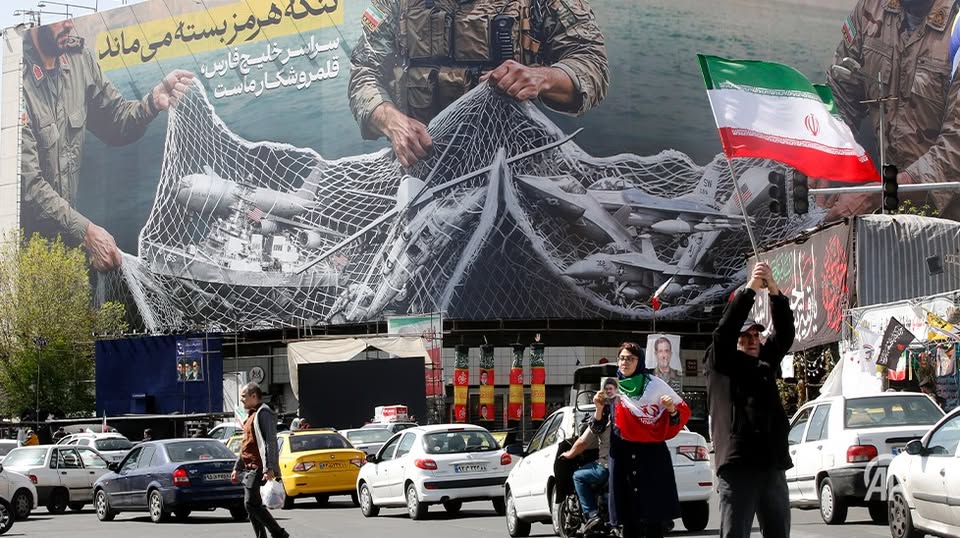
Ground Zero: What Is Actually Happening in the Strait of Hormuz
By: Javid Amin | 19 April 2026
The situation at the Strait of Hormuz has moved from strategic tension to active confrontation.
Iran’s full closure of the strait—enforced by its naval forces—has effectively transformed one of the world’s busiest energy corridors into a high-risk military zone.
This is no longer a theoretical crisis. It is unfolding in real time at sea.
Military Reality on the Ground: A Live Maritime Standoff
De Facto Naval Lockdown
The Islamic Revolutionary Guard Corps Navy has:
- Declared the strait completely closed to all vessels
- Issued warnings that any attempt to cross will be treated as hostile
- Reportedly engaged (fired upon) ships attempting passage
This marks a shift from deterrence to enforcement.
U.S. & Allied Posture
The United States and its allies are:
- Maintaining a heavy naval presence in the Gulf
- Deploying surveillance drones, warships, and Apache helicopters
- Continuing enforcement of the blockade on Iran
However, notably:
The U.S. has not yet launched a full-scale operation to reopen the strait, suggesting cautious escalation control.
What It Looks Like on the Water
Shipping Reality
- Tankers are anchored or rerouting away from the Gulf
- Several vessels remain stranded in the Persian Gulf and Sea of Oman
- Commercial shipping traffic has effectively collapsed
Insurance & Risk Environment
- War-risk insurance premiums have surged dramatically
- Shipping companies are refusing to enter the zone
- Some operators are invoking force majeure clauses
In practical terms:
The strait is not just “closed”—it is operationally unusable.
Immediate Economic Shock: Markets React in Real Time
Oil & Gas
- Prices are expected to surge toward $150–$200 per barrel
- LNG exports from Qatar disrupted, impacting Asia and Europe
- Spot markets entering panic-driven volatility
Supply Chain Breakdown
- Petrochemicals, fertilizers, plastics facing shortages
- Shipping reroutes via Africa adding weeks of delay
- Freight costs rising sharply
Impact on Major Economies: Who Is Feeling It First
India
- Imports ~85% of crude oil; heavily reliant on Gulf
- Immediate pressure on fuel prices and inflation
- Strategic reserves may be activated
China & 🇯🇵 Japan
- Highly dependent on Gulf energy
- Risk of supply rationing if disruption continues
Europe
- Already strained energy systems face additional shocks
- LNG disruption adds to vulnerability
Financial Markets: Early Stress Signals
- Global equities under pressure, especially aviation, logistics, manufacturing
- Oil-importing currencies weakening
- Gold rising as a safe-haven asset
الأسواق (markets) are reacting not just to current disruption—but to fear of prolonged closure.
Escalation Risk: The Most Dangerous Phase Yet
Why This Moment Is Critical
- Iran has crossed from warning to action (firing on vessels)
- The U.S. has not yet responded militarily at scale
- Both sides are still leaving room for diplomacy
Potential Next Steps
- U.S.-led naval operation to reopen Hormuz
- Iranian retaliation targeting regional infrastructure
- Expansion via proxy groups like Hezbollah
This creates a multi-front escalation risk across the Middle East.
Diplomacy vs Battlefield Reality
Despite the escalation:
- Talks between Washington and Tehran are still ongoing
- Iranian officials admit “progress but fundamental gaps remain”
- Global actors are pushing to avoid full-scale war
But Iran’s message is clear:
Negotiations are now backed by battlefield leverage.
What to Watch in the Next 24–72 Hours
Key Indicators
- Any U.S. attempt to escort or reopen shipping lanes
- Further Iranian engagement with vessels
- Emergency meetings at global diplomatic forums
- Oil price movement beyond $150
Risk Level: EXTREME
Even a single miscalculation could trigger:
- Direct U.S.–Iran conflict
- Regional war involving multiple actors
- Severe global economic shock
Ground Truth: A System Under Stress
At “ground zero,” the crisis is defined by three realities:
- Military Control: Iran currently controls access to the strait
- Economic Shock: Global markets are entering instability
- Strategic Uncertainty: No clear path to immediate resolution
Conclusion: A Global Chokepoint Turned Flashpoint
The closure of the Strait of Hormuz is not just a regional issue—it is a global system shock.
Energy flows are disrupted. Trade routes are paralyzed. Military forces are on edge.
And yet, amid the escalation, diplomacy has not collapsed.
The coming hours will determine whether this becomes:
- A controlled crisis with negotiated exit
or - A trigger point for a wider global confrontation


