Omar Abdullah PM Modi Meeting: BJP Says NC Has Climbed Down From Article 370 to Statehood Politics
By: Javid Amin | 13 June 2026
J&K Political Battle Intensifies Over Article 370, Statehood and Omar Abdullah’s Delhi Meeting
A fresh political confrontation has erupted in Jammu & Kashmir after Leader of Opposition in the J&K Legislative Assembly and BJP leader Sunil Sharma accused Chief Minister Omar Abdullah and the National Conference (NC) of changing their political position on Article 370.
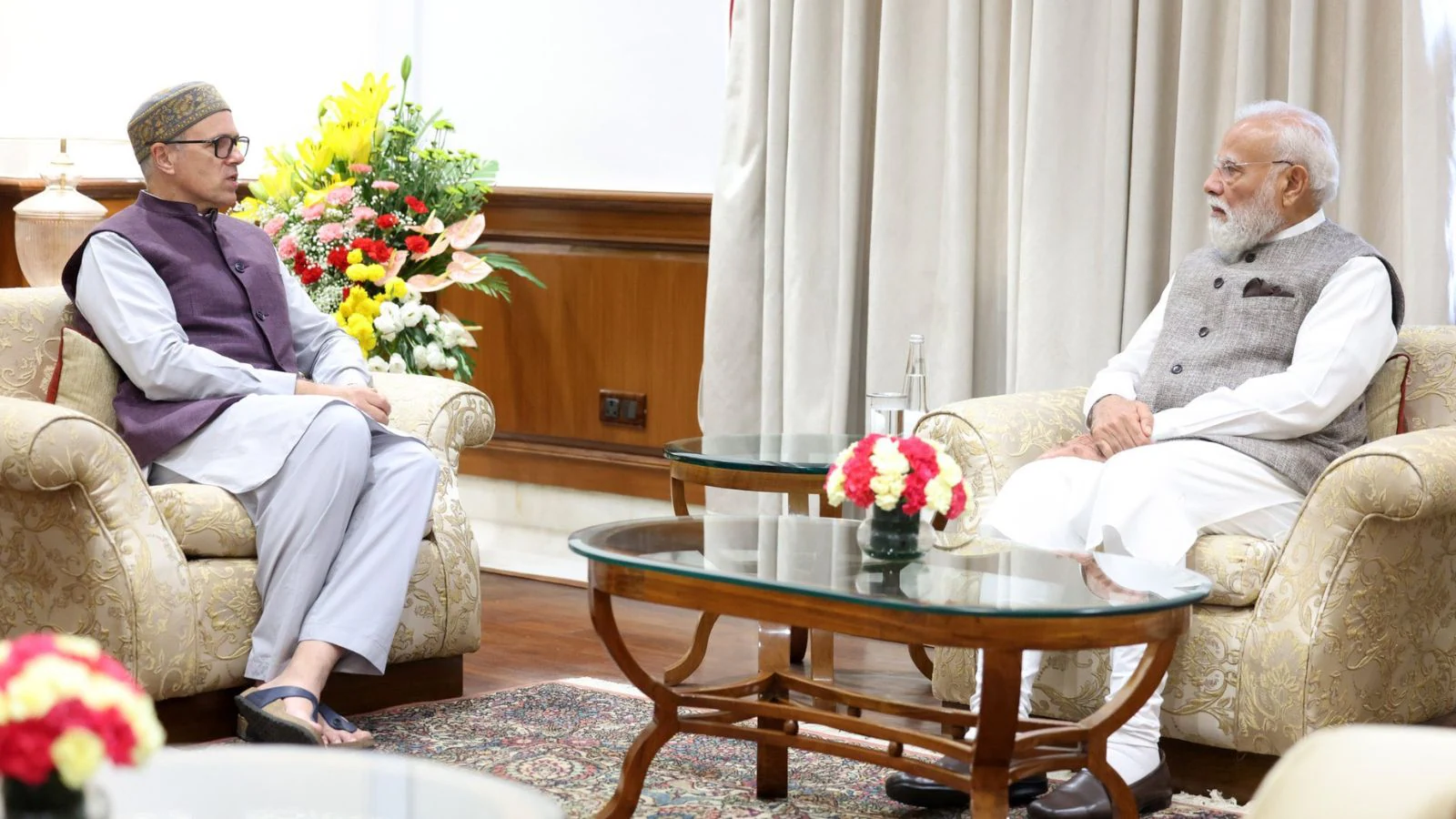
Reacting to Omar Abdullah’s recent meeting with Prime Minister Narendra Modi in New Delhi, Sunil Sharma claimed that the interaction was an “indirect endorsement” of the Centre’s policies, including the abrogation of Article 370 and Article 35A.
The BJP leader also targeted NC president Dr Farooq Abdullah, alleging that the party’s focus has shifted from restoring Article 370 to demanding statehood — describing it as a political “climbdown.”
The remarks have reopened one of the biggest political debates in J&K: whether the post-2019 political reality has shifted regional parties’ priorities from constitutional restoration to administrative and political empowerment through statehood.
What Did Sunil Sharma Say About Omar Abdullah’s PM Meeting?
During a media interaction in Jammu, Sunil Sharma said Omar Abdullah’s meeting with Prime Minister Narendra Modi — where the Chief Minister reportedly raised the demand for restoration of statehood — carried a larger political message.
According to Sharma, meeting the Prime Minister and acknowledging his government’s achievements indirectly accepted the Centre’s approach towards Jammu & Kashmir.
He argued that the policies discussed by the BJP-led government included major decisions such as:
- Abrogation of Article 370
- Removal of Article 35A
- Reorganisation of Jammu & Kashmir into Union Territories
- Security and governance policies
The BJP leader claimed that if the Chief Minister sought statehood from the same government that carried out these constitutional changes, it indicated acceptance of the post-2019 political framework.
BJP’s Argument: NC Has Shifted From Article 370 to Statehood
The BJP’s criticism is based on the argument that the National Conference has changed its political messaging.
For decades, Article 370 remained a central issue in J&K politics. Regional parties, especially the NC, historically defended the special constitutional position of Jammu & Kashmir.
After August 5, 2019, when the Government of India revoked the special status provisions and reorganised the region, the political focus gradually moved towards:
- Restoration of statehood
- Restoration of democratic powers
- Strengthening elected institutions
Sunil Sharma argued that this change shows NC has accepted the new political reality.
He accused the party of maintaining different messages in Delhi and Kashmir — demanding statehood nationally while continuing to refer to Article 370 emotionally among voters in the Valley.
Farooq Abdullah’s Jantar Mantar Protest Row
Another point raised by Sunil Sharma was related to the National Conference’s proposed protest in Delhi over statehood restoration.
The BJP leader referred to earlier statements from NC leaders suggesting that all political parties of J&K could be taken along on the issue.
However, after Dr Farooq Abdullah reportedly indicated that other political parties would not be invited to join the NC’s protest, Sharma questioned the party’s approach.
He linked this development with Omar Abdullah’s meeting with the Prime Minister, arguing that the timing showed NC had narrowed its demand from Article 370 restoration to statehood.
Political Background: Why Article 370 Still Defines J&K Politics
To understand the controversy, it is important to look at Jammu & Kashmir’s political history.
Article 370 provided special constitutional provisions to the former state, limiting Parliament’s powers over certain matters except with the concurrence of the state government.
For regional parties like the National Conference, Article 370 represented:
- Political identity
- Constitutional safeguards
- Greater autonomy
The BJP, however, historically opposed the special status framework and argued that removing Article 370 would bring greater integration and development.
The 2019 decision changed the entire political landscape of the region.
Statehood Restoration: The New Centre of Political Debate
While Article 370 remains a major emotional and political issue, statehood restoration has become the immediate demand of almost all mainstream regional parties.
The argument behind statehood is that a full state structure provides:
- Greater political authority
- Stronger elected representation
- More control over governance decisions
The National Conference has repeatedly raised statehood restoration as a priority.
The BJP leadership has also stated that statehood restoration is part of its commitment, though it has linked the issue with improving security conditions and maintaining stability.
Sunil Sharma’s Other Claim: Fall of NC Government
Apart from the Article 370 debate, Sunil Sharma also predicted that the NC-led government in J&K would not complete its full term.
However, he did not provide a specific timeline.
At the same time, he clarified that the BJP would neither engineer the government’s collapse nor form a government through such a process.
The statement reflects the continuing political rivalry between the BJP and NC after the recent assembly elections and government formation.
BJP Highlights Modi Government’s Record in J&K
The remarks came during the BJP’s programme marking 12 years of Prime Minister Narendra Modi’s leadership.
Sunil Sharma highlighted what he described as major changes in Jammu & Kashmir, including:
- Reduction in terrorism-related activities
- Decline in separatist influence
- Infrastructure development
- Implementation of welfare schemes
He claimed that security improvements after 2019 created a new environment for development.
The BJP continues to present the abrogation of Article 370 as a turning point in J&K’s integration and governance.
The Larger Political Message: A Battle Over Narrative
The latest exchange between BJP and NC is not only about one meeting or one statement — it reflects a larger struggle over political ownership of Jammu & Kashmir’s future.
BJP’s Narrative
The BJP argues:
- Article 370 removal brought equality and development
- Statehood will return at the appropriate time
- Post-2019 changes improved security and governance
NC’s Narrative
The National Conference argues:
- Constitutional changes reduced J&K’s political status
- Statehood restoration is essential
- Democratic empowerment must be strengthened
Both parties are presenting different interpretations of the same political developments.
Conclusion: J&K’s Political Debate Enters a New Phase
The controversy surrounding Omar Abdullah’s meeting with Prime Minister Modi shows that Article 370 remains deeply connected with Jammu & Kashmir’s political identity.
For the BJP, the meeting represents acceptance of a new political order.
For the National Conference, the focus remains on restoring statehood and strengthening democratic representation.
As J&K moves forward, the central political question is no longer only about the past — it is increasingly about what future political structure the people of the region will have.