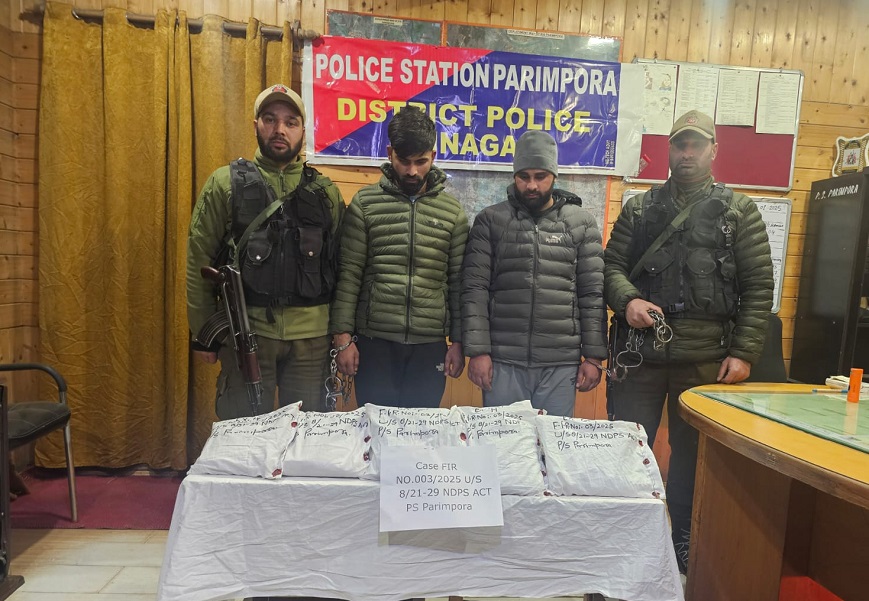
Kashmir Anti-Drug Drive 2026: 296 Arrested, 281 NDPS Cases Filed in 100 Days
By: Javid Amin | 29 April 2026
A Crackdown with Scale: Kashmir’s War on Drugs Intensifies
In a decisive push against narcotics, Kashmir’s law enforcement agencies have carried out an aggressive 100-day anti-drug अभियान, resulting in the arrest of 296 drug peddlers and the registration of 281 cases under the Narcotic Drugs and Psychotropic Substances Act.
The drive, conducted under the broader “zero-tolerance” framework, reflects a sharpened enforcement strategy—but it also raises a deeper question: can policing alone curb a crisis rooted in demand, addiction, and social distress?
Key Highlights of the 100-Day Drive
- Peddlers arrested: 296
- Cases registered: 281 (NDPS Act)
- Illegal cultivation destroyed: 15 kanals
- Awareness programs: 460+
- Chemist shops sealed: Multiple (violations of drug regulations)
- Properties attached: Linked to trafficking networks
Inside the Enforcement Strategy
The campaign operates under the leadership of Manoj Sinha as part of the Nasha Mukt Jammu & Kashmir Abhiyan.
Zero-Tolerance Approach
Authorities have emphasized:
- No leniency toward traffickers
- Swift registration of cases
- Aggressive prosecution to improve conviction rates
Coordinated Crackdown
High-level coordination has been central:
- V. K. Birdi (IGP Kashmir)
- Anshul Garg
- Joint operations involving DIGs, SSPs, and district administrations
Targeted Operations
- Intelligence-led raids
- Identification of supply chains
- Financial tracking of drug networks
This marks a shift from isolated arrests to systematic dismantling of trafficking ecosystems.
Beyond Arrests: Targeting Supply Chains
Illegal Cultivation Destroyed
Authorities cleared 15 kanals of land used for cultivating contraband crops—cutting supply at its source.
Chemist Shops Under Scrutiny
Pharmacies violating prescription norms were sealed, addressing the misuse of pharmaceutical drugs, often a gateway to harder substances like heroin.
Financial Disruption
Assets linked to trafficking were identified and attached—signaling a move toward economic dismantling of drug networks, not just physical arrests.
Awareness Push: Taking the Fight to Society
Alongside enforcement, over 460 awareness programs were conducted across:
- Schools
- Colleges
- Panchayats
- Vulnerable communities
The messaging focused on:
- Dangers of drug abuse
- Early prevention among youth
- Community vigilance
This dual strategy—policing + prevention—acknowledges that the crisis cannot be solved by enforcement alone.
The Persistent Challenges
Despite visible gains, structural challenges remain:
1. High Demand Among Youth
Kashmir’s drug crisis is demand-driven. As long as youth addiction remains high, supply networks will regenerate.
2. Adaptive Trafficking Networks
Drug networks are agile:
- New routes emerge quickly
- Smaller, decentralized supply chains replace dismantled ones
This requires continuous intelligence, not one-time crackdowns.
3. Rehabilitation Gap
Enforcement addresses supply—but addiction is a public health issue.
- De-addiction centers remain overstretched
- Relapse rates are high
- Mental health support is limited
Without intervention here, users risk becoming repeat consumers—or even peddlers.
What Needs to Happen Next
Authorities and experts increasingly agree on a multi-pronged strategy:
1. Expand Rehabilitation Infrastructure
- More de-addiction centers
- Long-term counseling and aftercare
- Community-based recovery programs
2. Strengthen Grassroots Prevention
- School and college interventions
- Early detection of substance use
- Youth engagement programs
3. Follow the Money
- Financial investigations into cartels
- Asset seizures and money trail tracking
- Breaking the economic backbone of trafficking
4. Involve Civil Society
- NGOs and local leaders in awareness campaigns
- Community reporting mechanisms
- Support networks for affected families
A Reality Check: Enforcement vs Recovery
The 100-day drive demonstrates strong state capacity in enforcement. Arrests, seizures, and awareness campaigns indicate a serious commitment.
But the deeper battle lies elsewhere:
- In homes dealing with addiction
- In schools where early exposure begins
- In mental health systems struggling to cope
Conclusion: A Strong Start, But Not the Finish Line
Kashmir’s anti-drug अभियान has delivered measurable enforcement success—296 arrests and 281 cases in just 100 days is no small feat.
Yet, the long-term outcome will depend on whether this momentum evolves into a balanced strategy:
- Enforcement to disrupt supply
- Rehabilitation to reduce demand
- Awareness to prevent future addiction
Without that balance, the cycle risks repeating.
With it, the Valley has a real chance to turn the tide.