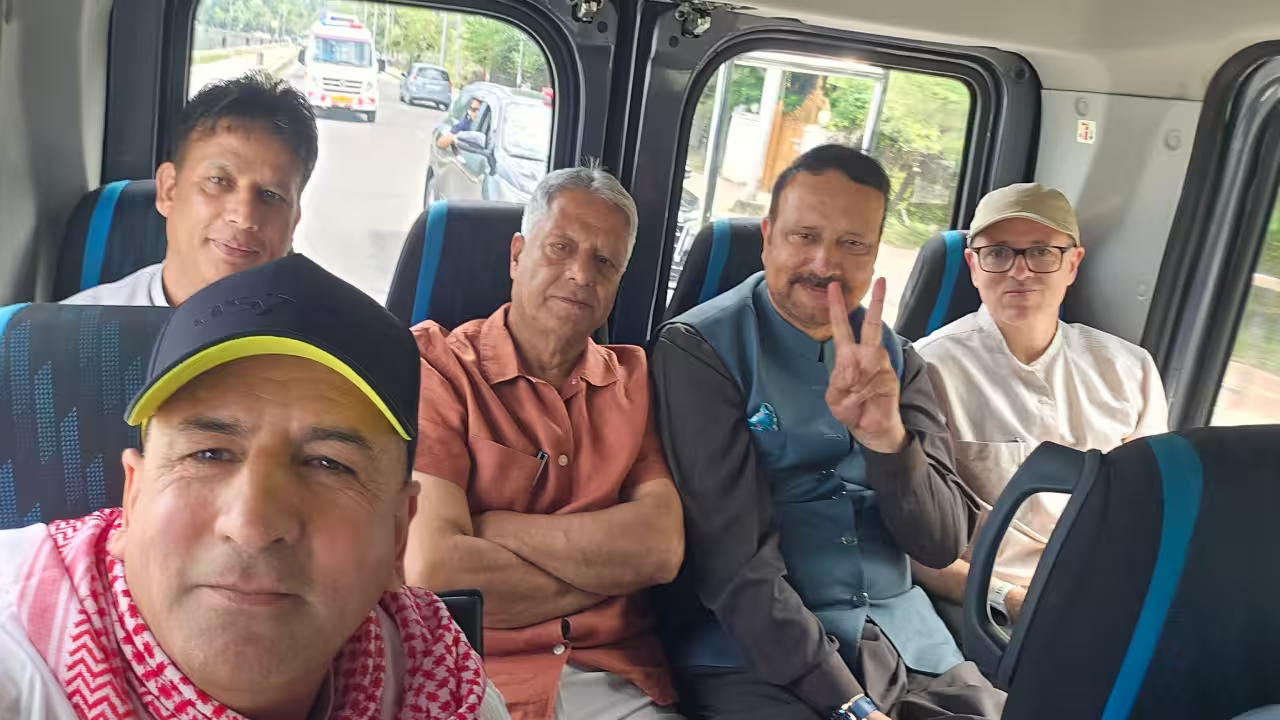
NC Signals Fresh Statehood Push After Dachigam Retreat as Omar Abdullah Turns Focus to Delhi
By: Javid Amin | 03 June 2026
Following Internal Review at Dachigam, Omar Abdullah Looks to Reclaim Political Initiative Through Statehood Campaign
From Dachigam to Delhi: NC Seeks to Shift the Political Conversation
The National Conference’s June 3 retreat at Dachigam National Park may have begun as an internal review of governance, but its political aftershocks suggest the party is now preparing for a more assertive engagement with New Delhi on one of Jammu and Kashmir’s most consequential issues: the restoration of statehood.
While the retreat itself produced no public resolutions or headline-grabbing announcements, emerging signals from the ruling party indicate that the focus is increasingly shifting beyond Srinagar and toward the national capital.
For Chief Minister Omar Abdullah and the National Conference, the challenge is no longer simply managing government affairs. It is also about demonstrating political relevance and leadership on an issue that remains central to public sentiment across Jammu and Kashmir.
Why Statehood Is Returning to the Centre of NC’s Politics
Since the reorganization of Jammu and Kashmir in August 2019, statehood restoration has remained one of the defining political demands of mainstream regional parties.
The issue carries significance beyond administrative arrangements.
For many political leaders and citizens, statehood represents:
- Restoration of democratic authority.
- Greater legislative autonomy.
- Stronger institutional accountability.
- Enhanced decision-making powers.
- Political dignity and constitutional recognition.
The National Conference has consistently maintained that the restoration of statehood should be an essential step in the broader democratic process.
After nearly two years in office, however, the party faces increasing pressure to demonstrate progress on that front.
Dachigam Was About More Than Governance
Although governance dominated official discussions at the retreat, political observers believe the meeting also served as a strategic assessment of the party’s future direction.
Several realities appear to have shaped those discussions.
Growing Public Expectations
The government is increasingly being judged on results rather than promises.
Opposition Attacks
The BJP has intensified criticism of the Omar Abdullah government, portraying it as more focused on optics than governance.
PDP’s Political Initiative
Recent calls by Mehbooba Mufti for a united outreach to New Delhi have placed additional pressure on the NC to demonstrate political leadership.
Internal Expectations
Legislators continue to seek greater clarity on both governance priorities and broader political objectives.
Against this backdrop, statehood offers a unifying issue capable of energizing the party’s political narrative.
Why Delhi Matters Now
The National Conference understands that statehood cannot be achieved through resolutions passed in Srinagar alone.
Any meaningful movement on the issue ultimately requires engagement with the Union Government.
That reality is increasingly shaping the party’s strategy.
Political analysts view the emerging focus on Delhi as an attempt by the NC to:
Reclaim Political Initiative
Recent weeks have seen opposition parties dominate sections of the political conversation.
A renewed statehood campaign allows the NC to regain the agenda.
Unite Diverse Constituencies
Statehood remains one of the few issues capable of attracting broad support across different political and regional constituencies.
Demonstrate Political Relevance
The party must show supporters that it remains actively engaged on constitutional and democratic questions.
Shift the Debate
Moving the conversation toward statehood enables the NC to focus on a long-term political objective rather than remain trapped in day-to-day political controversies.
The Challenge of Projecting Unity
One of the most significant tests facing the National Conference is whether it can present a united front while advancing its statehood campaign.
The Dachigam retreat exposed continuing questions about internal cohesion.
Most notably, the absence of Aga Ruhullah Mehdi became a major talking point.
While there is no evidence of a formal boycott or rebellion, the episode highlighted perceptions of differing views within the broader party ecosystem.
For a statehood campaign to carry maximum political weight, the leadership will need to demonstrate organizational unity and strategic clarity.
Opposition Will Closely Watch Every Move
The NC’s evolving strategy is unlikely to unfold without resistance.
BJP’s Position
The BJP is expected to continue emphasizing governance, development, and administrative performance while questioning the effectiveness of symbolic political campaigns.
PDP’s Position
The PDP may argue that collective political outreach, rather than party-specific initiatives, offers a more effective path forward.
Peoples Conference’s Position
Leaders such as Sajad Gani Lone are likely to continue portraying the NC as disconnected from public concerns.
As a result, the statehood debate will become not only a constitutional issue but also a contest over political leadership.
Can Statehood Become Omar Abdullah’s Defining Political Issue?
For Omar Abdullah, the statehood question increasingly carries personal and political significance.
After nearly twenty months in office, voters are beginning to assess what distinguishes his administration politically.
A visible and sustained campaign on statehood could provide a defining objective around which the government and party can mobilize support.
However, expectations are high.
Simply raising the issue will not be enough.
The public will want evidence of engagement, negotiations, and measurable progress.
What to Expect Next
Several developments are likely in the coming weeks and months:
Increased Engagement in Delhi
Senior NC leaders may intensify meetings and political outreach at the national level.
Sharper Political Messaging
Statehood is likely to become a central theme in speeches, public events, and party communications.
Pressure on the Centre
The party will seek to keep the issue alive in national political discourse.
Renewed Opposition Debate
Rival parties will continue questioning both the strategy and its effectiveness.
Conclusion
The Dachigam retreat marked the end of one phase of political introspection and the beginning of another. While the meeting itself focused on governance review and internal assessment, the emerging direction of the National Conference points toward a renewed emphasis on statehood and engagement with New Delhi.
For Omar Abdullah, the strategy offers an opportunity to reclaim political momentum at a time when opposition criticism, internal expectations, and public scrutiny are all increasing.
Whether this evolving statehood push translates into tangible political gains remains uncertain. What is clear, however, is that the battle for Jammu and Kashmir’s political future is increasingly shifting from the forests of Dachigam to the corridors of Delhi.


