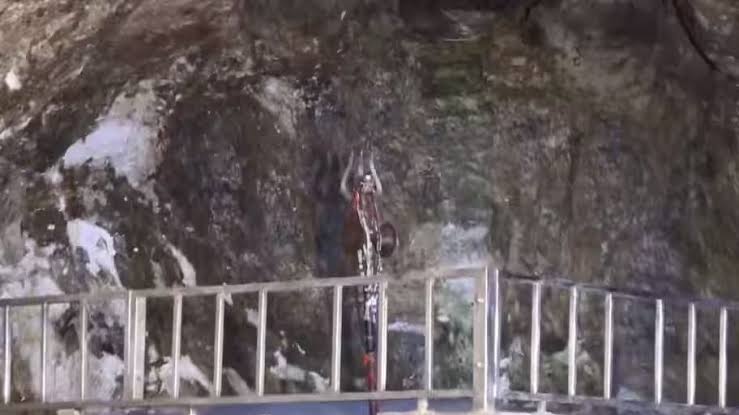
Early Melting of Sacred Ice Lingam Evokes Emotion Across the Hindu Community
By: News Desk | 10 July 2026
The premature melting of the sacred ice lingam inside the Amarnath Cave Shrine in Jammu & Kashmir has deeply moved devotees across India, prompting expressions of sorrow while renewing discussions about the growing environmental challenges facing the fragile Himalayan region.
For millions of Hindus, the naturally formed ice lingam represents Lord Shiva and occupies a central place in one of the country’s most revered annual pilgrimages. Its changing size is a natural phenomenon, but when the formation melts significantly earlier than expected, it often becomes a subject of religious concern as well as scientific interest.
This year’s early melting has once again highlighted the delicate relationship between faith, nature and the changing climate of the Himalayas.
The Spiritual Significance of the Amarnath Ice Lingam
Located at an altitude of nearly 3,900 metres (12,756 feet) in the Himalayas, the Amarnath Cave Shrine attracts hundreds of thousands of pilgrims every year during the annual Amarnath Yatra.
Inside the cave, water dripping from the limestone roof freezes under suitable conditions to form the naturally occurring ice stalagmite, revered as the Shiva Lingam.
According to Hindu tradition, the cave is the place where Lord Shiva is believed to have revealed the secret of immortality (Amar Katha) to Goddess Parvati, making it one of Hinduism’s holiest pilgrimage destinations.
The annual appearance of the ice formation is regarded by devotees as both a spiritual blessing and a symbol of divine presence.
Why Does the Ice Lingam Melt?
The size of the ice lingam changes naturally throughout the pilgrimage season.
Its formation depends on several environmental factors, including:
- Winter snowfall in the surrounding mountains.
- Ambient temperature inside the cave.
- Humidity levels.
- Air circulation within the cave.
- Natural freezing and melting cycles.
As temperatures rise during summer, the ice formation gradually reduces in size. However, unusually warm weather or changing local conditions may accelerate the melting process.
Scientists caution that while long-term warming trends in the Himalayas are well documented, the size of the ice lingam in any particular year is influenced by a combination of natural and climatic factors.
Devotees Express Sadness and Reflection
The early melting has generated emotional reactions among pilgrims visiting the shrine.
Many devotees described the event as a deeply moving experience, expressing concern that the sacred symbol had diminished sooner than expected during the yatra.
Religious leaders have called upon pilgrims to view the event not only with faith but also as a reminder of humanity’s responsibility to protect nature.
For many believers, the incident reinforces the idea that caring for the environment is itself a form of reverence for creation.
Climate Change and the Himalayan Ecosystem
The Himalayas are among the world’s most climate-sensitive mountain regions.
Over recent decades, researchers have documented:
- Rising average temperatures.
- Retreating glaciers.
- Reduced snowfall in many areas.
- More frequent heatwaves.
- Erratic rainfall and extreme weather events.
These changes affect water resources, biodiversity, agriculture and mountain ecosystems throughout the region.
Although scientists avoid attributing the early melting of a single ice formation solely to climate change, they agree that long-term warming places increasing pressure on high-altitude snow and ice systems.
Beyond Faith: Environmental Consequences
The discussion surrounding the Amarnath ice lingam extends beyond religious sentiment.
Environmental experts warn that continued warming in the Himalayas could have far-reaching consequences.
These include:
Glacier Retreat
Accelerated melting threatens the long-term stability of Himalayan glaciers that feed major river systems.
Water Security
Millions of people across northern India depend directly or indirectly on Himalayan snowmelt and glaciers for freshwater.
Fragile Mountain Ecosystems
Changes in snow cover and temperature affect wildlife, alpine vegetation and biodiversity.
Increased Natural Hazards
Warmer temperatures and changing rainfall patterns may contribute to more frequent landslides, flash floods and cloudbursts in mountainous regions.
Balancing Pilgrimage and Conservation
The annual Amarnath Yatra is one of India’s largest religious pilgrimages and plays an important role in the economy of Jammu & Kashmir.
At the same time, experts increasingly emphasise the importance of ensuring that pilgrimage activities remain environmentally sustainable.
Suggested measures include:
- Strengthening solid waste management along pilgrimage routes.
- Reducing single-use plastics.
- Protecting alpine ecosystems from degradation.
- Improving eco-friendly infrastructure.
- Promoting responsible tourism practices among pilgrims.
Such measures can help preserve the fragile Himalayan environment while allowing devotees to continue visiting the sacred shrine.
Growing Calls for Climate Awareness
The early melting of the ice lingam has also prompted broader conversations about environmental responsibility.
Scientists, conservationists and religious organisations increasingly recognise that protecting nature and preserving sacred landscapes are closely connected.
Many believe that greater public awareness, scientific research and sustainable development policies are essential to safeguarding both ecological heritage and places of spiritual importance.
Key Implications
| Aspect | Current Situation | Significance |
|---|---|---|
| Religious Tradition | Early reduction in the size of the ice lingam | Emotional impact on pilgrims and religious communities |
| Himalayan Climate | Rising temperatures and changing weather patterns | Increased pressure on mountain ecosystems |
| Devotee Response | Expressions of concern and reflection | Renewed focus on environmental stewardship |
| Conservation | Need for sustainable pilgrimage management | Balancing faith, tourism and ecological protection |
Faith and Nature Share a Common Future
The Amarnath Cave has symbolised faith, resilience and spiritual devotion for centuries. The annual formation of the sacred ice lingam remains a unique natural phenomenon that continues to inspire millions of pilgrims.
Its early melting this year has reminded many that the Himalayan environment is undergoing significant change. While science continues to study the complex factors influencing snow and ice in the region, the broader message is clear: protecting fragile mountain ecosystems is essential for preserving both natural heritage and places of profound spiritual significance.
For devotees, the Amarnath shrine represents more than a destination—it is a sacred reminder of the enduring bond between faith and nature. Ensuring that this bond survives for future generations will require environmental responsibility alongside spiritual reverence.


