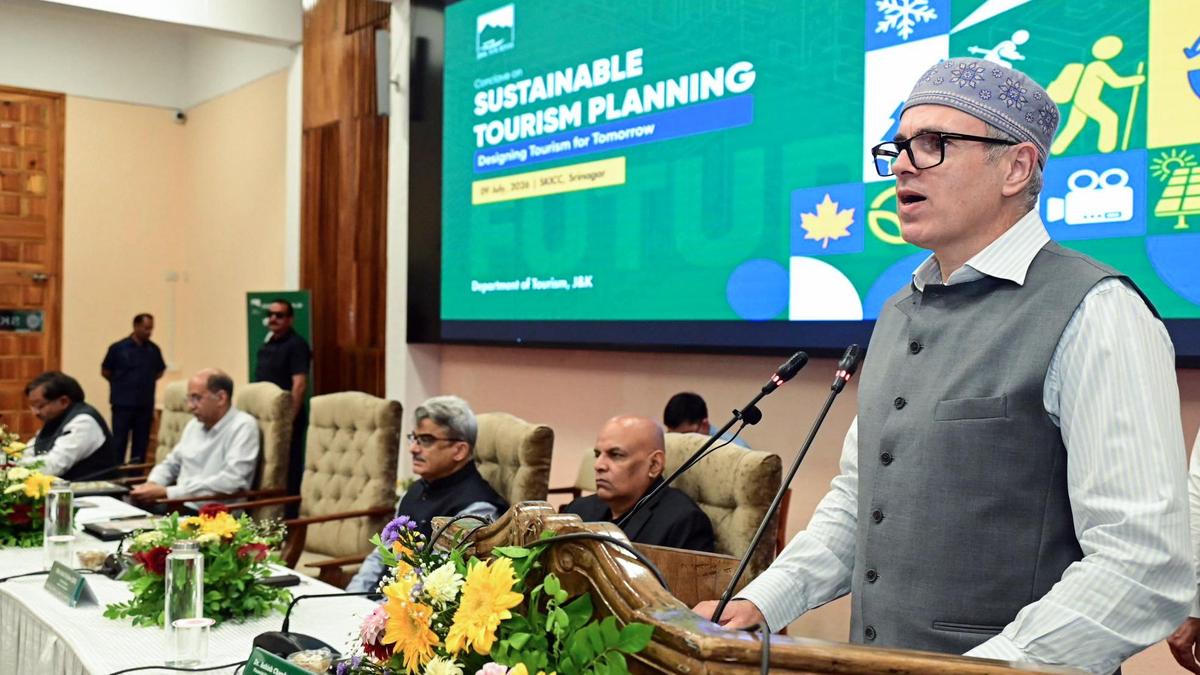
‘Kashmir Is Not Selling Disneyland’: Omar Abdullah Defines a Vision for Authentic Tourism
By: Javid Amin | 10 July 2026
“Kashmir is not selling Disneyland.”
With this remark, Chief Minister Omar Abdullah summed up his government’s vision for the future of tourism in Jammu & Kashmir, emphasizing that the Valley’s greatest attraction is not artificial entertainment but its unparalleled natural beauty, centuries-old culture, and rich heritage.
His statement comes at a time when tourism is witnessing renewed attention as policymakers, investors, and local communities debate how best to expand the sector without compromising the identity that has made Kashmir one of India’s most iconic travel destinations.
Rather than pursuing large-scale entertainment projects that imitate global theme-park models, Abdullah argued that tourism development should strengthen the Valley’s authentic character while improving infrastructure and visitor experiences.
Also Read | The Ladakh No One Instagrams: A Journey Through Its 7 Best-Kept Secrets
Nature Is Kashmir’s Greatest Attraction
From the tranquil waters of Dal Lake and the Mughal gardens of Srinagar to the alpine meadows of Gulmarg, Pahalgam, Gurez, Bangus, and Doodhpathri, Kashmir has long been celebrated for landscapes that attract visitors seeking peace, adventure, and natural beauty.
Unlike destinations built around manufactured attractions, Kashmir offers experiences shaped by nature itself.
Snow-covered mountains, crystal-clear rivers, dense forests, traditional villages, and changing seasons remain the foundation of the region’s tourism identity.
The Chief Minister’s remarks reinforce the idea that these natural assets should remain at the centre of future tourism planning.
A Shift Towards Sustainable Tourism
Abdullah’s comments also underline a broader policy direction that increasingly focuses on sustainable tourism.
The approach seeks to balance visitor growth with environmental conservation by encouraging:
- Eco-friendly tourism projects
- Protection of forests, lakes, and mountain ecosystems
- Responsible waste management
- Community-based tourism
- Preservation of traditional architecture
- Promotion of local handicrafts and cultural experiences
Sustainable tourism has become increasingly important as visitor numbers continue to grow, placing greater pressure on fragile Himalayan ecosystems.
Experts have repeatedly stressed that long-term tourism success depends not only on attracting more visitors but also on protecting the landscapes that draw them in the first place.
Protecting Kashmir’s Cultural Identity
Beyond its scenery, Kashmir’s identity is deeply connected with its traditions, crafts, cuisine, music, and centuries-old heritage.
Visitors often travel to experience:
- Kashmiri hospitality
- Traditional wooden architecture
- Handwoven carpets and shawls
- Papier-mâché and walnut wood craftsmanship
- Local cuisine, including wazwan and traditional breads
- Sufi shrines, temples, monasteries, and historic sites
By emphasizing authenticity, the government’s approach seeks to ensure that tourism development complements rather than replaces these cultural strengths.
For many residents, preserving cultural identity is as important as creating new economic opportunities.
Also Read | Kashmir’s Famous Gardens: The Ultimate 2026 Travel Guide
Infrastructure Without Losing Identity
The Chief Minister’s remarks do not suggest opposition to development.
Instead, they point towards infrastructure that improves the visitor experience while respecting local landscapes and traditions.
Areas where investment remains important include:
- Better roads and transport connectivity
- Improved public amenities
- Clean tourism infrastructure
- Digital visitor services
- Eco-friendly accommodation
- Heritage conservation projects
- Improved waste and water management
Such improvements can enhance tourism without fundamentally changing the character of the Valley.
The Debate: Modern Development vs. Authentic Experiences
The discussion reflects a wider debate taking place across many tourism destinations worldwide.
Should tourism focus on building large commercial attractions, or should it preserve what already makes a destination unique?
Supporters of an authenticity-based model argue that Kashmir’s competitive advantage lies in experiences that cannot be recreated elsewhere.
Walking through a centuries-old village, staying in a traditional homestay, boating on Dal Lake at sunrise, or trekking through untouched Himalayan valleys offers visitors something that artificial entertainment complexes cannot replicate.
At the same time, tourism planners face the challenge of meeting the expectations of modern travellers by improving accessibility, safety, accommodation, and services.
The policy debate therefore centres not on whether development should occur, but on how it should take place.
Economic Opportunities Through Responsible Tourism
Tourism remains one of the most important contributors to Jammu & Kashmir’s economy, supporting thousands of livelihoods.
A sustainable tourism strategy can generate opportunities for:
- Local guides
- Homestay operators
- Hotel owners
- Houseboat operators
- Transport providers
- Handicraft artisans
- Farmers supplying local produce
- Adventure tourism businesses
By encouraging visitors to explore lesser-known destinations and engage with local communities, tourism benefits can be distributed more widely across the region.
This approach can reduce pressure on heavily visited locations while creating new sources of income for rural areas.
Also Read | Hidden Kashmir 2026: Lolab, Gurez, Bangus, Chatpal & Tosa Maidan — 7-Day Offbeat Itinerary, Costs & FAQs
Public Sentiment and Cultural Pride
The Chief Minister’s statement has resonated with many who believe Kashmir’s identity should remain rooted in its landscapes, traditions, and people.
For local communities, tourism is not only an economic activity but also an opportunity to share their history, hospitality, and cultural heritage with visitors from around the world.
Maintaining that balance between welcoming tourists and preserving local identity is likely to remain a central theme of tourism policy in the years ahead.
The Road Ahead for Kashmir Tourism
As Jammu & Kashmir continues to strengthen its tourism sector, policymakers face the task of balancing economic growth with environmental responsibility and cultural preservation.
Future success may depend on:
- Expanding eco-tourism initiatives
- Promoting heritage tourism
- Supporting rural and community-based tourism
- Conserving natural ecosystems
- Encouraging responsible private investment
- Improving visitor infrastructure without altering the Valley’s character
The emphasis is increasingly on creating meaningful travel experiences rather than simply increasing visitor numbers.
A Vision Built on Authenticity
“Kashmir is not selling Disneyland” is more than a memorable phrase—it reflects a broader vision for the future of tourism in the Valley.
The statement highlights the belief that Kashmir’s greatest strength lies in what already exists: majestic mountains, pristine lakes, historic gardens, vibrant traditions, skilled artisans, and the warmth of its people.
As the tourism sector evolves, the challenge will be to welcome more visitors while preserving the authenticity that has made Kashmir one of the world’s most admired mountain destinations.
Also Read | Kashmir Houseboats 2026: History, Dal Lake Vs Nigeen Lake, Packages, Costs & Booking Guide
Quick Snapshot
| Aspect | Details | Potential Impact |
|---|---|---|
| Tourism Vision | Focus on natural beauty, culture, and heritage | Reinforces Kashmir’s unique identity |
| Development Approach | Sustainable and eco-friendly tourism | Supports long-term growth |
| Cultural Focus | Preserve traditions, crafts, and local heritage | Strengthens community participation |
| Infrastructure | Improve facilities without compromising authenticity | Better visitor experience with cultural sensitivity |
| Long-Term Goal | Balance economic development with environmental conservation | More resilient and responsible tourism sector |


