22 Months of NC Government in J&K: What Has Actually Changed — and How Many Election Promises Have Been Delivered?
By: Javid Amin | 23 Aug 2026
There is a simple question increasingly being asked in Jammu and Kashmir:
After nearly two years of National Conference rule, what has actually changed on the ground?
Not what was announced at a press conference.
Not what was promised in an election manifesto.
Not what was allocated in a budget.
What has actually reached the ordinary citizen?
That distinction matters.
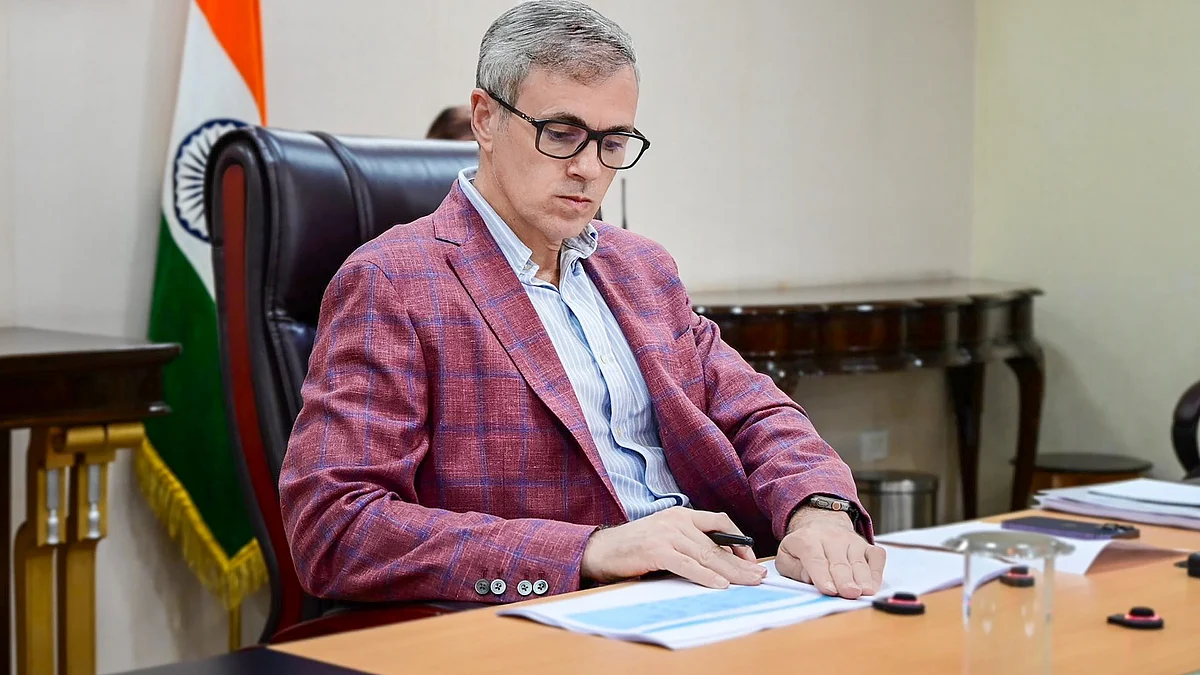
Omar Abdullah took oath as Chief Minister on October 16, 2024, heading the first elected government of Jammu and Kashmir since the 2019 constitutional changes. By August 2026, the government is approaching its second anniversary.
The National Conference did not enter office with a vague manifesto. Its 2024 document, titled “Dignity, Identity and Development,” contained 12 headline guarantees, followed by a long list of additional commitments. The party itself said it was making promises it could deliver.
That makes the manifesto an unusually useful yardstick.
And when that yardstick is applied today, the picture is neither the government’s success story nor the opposition’s total-failure narrative.
It is more complicated.
There are genuine initiatives and measurable schemes.
But there is also a sizeable gap between the rhetoric of 2024 and the delivery visible by August 2026.
And nowhere is that gap more politically damaging than electricity, employment and urban governance.
First, Get the Timeline Right: It Is 22 Months, Not “Years” of the Present Government
The current NC-led government began on October 16, 2024.
So as of August 2026, it has been in office for roughly 22 months.
That is long enough to judge:
- policy direction;
- legislative priorities;
- welfare implementation;
- recruitment mechanisms;
- budget execution;
- urban management;
- administrative reforms;
- and whether manifesto promises have moved from announcements to orders and outcomes.
But it is not long enough to fairly demand completion of every large infrastructure project.
This distinction is important.
A bridge, hospital, university, industrial estate or major urban transport project may take several years.
But a promise to issue a policy, fill vacancies within 180 days, make applications free, increase a pension, provide a subsidy or create a commission can be judged much sooner.
And the NC manifesto itself created some very short deadlines.
For example, it promised a Youth Employment Generation Act within three months and filling government vacancies within 180 days.
Those are not 10-year promises.
They are measurable commitments.
The NC Manifesto Was Bigger Than “200 Units Free Electricity”
Before judging the government, it is necessary to go back to what voters were actually promised.
The NC’s 2024 manifesto contained 12 broad guarantees covering:
- Restoration of political and legal status
- Restoring normalcy
- A comprehensive youth employment package
- Relief from electricity and water crisis
- Social welfare
- Strengthening the PDS
- War Against Drug Abuse
- Agriculture and horticulture
- Health infrastructure
- Tourism, industry and mining
- Education
- Expansion of Jammu and Srinagar cities.
But the detailed promises went much further.
They included:
- one lakh jobs;
- filling government vacancies within 180 days;
- a Youth Employment Generation Act;
- free job applications;
- 200 units of free electricity;
- free drinking water;
- settlement of electricity arrears;
- 12 free LPG cylinders annually for EWS households;
- ₹5,000 monthly assistance to EWS women heads of households;
- ₹3,000 old-age and widow pension;
- 10 kg ration per person;
- free public transport for women;
- free education up to university level;
- a Minority Commission;
- medical insurance of ₹5 lakh for specified serious illnesses;
- village and mohalla clinics;
- tourism industry status;
- new tourist destinations;
- industrial parks;
- modernised schools;
- skill universities;
- urban expansion of Srinagar and Jammu;
- regularisation of several categories of temporary workers;
- protection of land and employment rights;
- and rehabilitation of Kashmiri Pandits.
This is why simply saying “NC has delivered some welfare schemes” does not answer the larger question.
The real test is:
How much of the promised programme has moved from manifesto → government order → budget → implementation → measurable benefit?
The Scorecard: How Many Promises Have Actually Been Fulfilled?
Here is where terminology becomes important.
If “fulfilled” means the exact manifesto promise has been delivered, the score is extremely low.
If “fulfilled” includes partial implementation, policy steps and substitute schemes, the score is considerably higher.
My assessment, based on the manifesto, Assembly records, government budget documents and reporting through August 2026, is:
Fully fulfilled: 0–1 of the 12 headline guarantees
Substantially/partially implemented: roughly 5–7 of 12
Largely pending or dependent on the Centre/long-term implementation: roughly 5–7 of 12
This is not an official government score. It is an editorial audit using the manifesto’s own wording as the benchmark.
And that distinction produces a very different picture from political speeches claiming that “all promises are being implemented.”
01. Article 370 and Statehood: Political Movement, But Not Restoration
Manifesto promise
The NC promised to strive for restoration of Article 370, 35A and statehood, and to work towards implementing the 2000 Autonomy Resolution.
What happened?
The government did move quickly on the political front.
In October 2024, the Cabinet passed a resolution seeking restoration of statehood, and the Lieutenant Governor cleared it. Omar Abdullah subsequently took the issue to New Delhi.
The Assembly later passed a resolution seeking dialogue with the Centre on restoration of special status and constitutional guarantees.
But…
Statehood has not been restored by the J&K government, because the power to restore statehood rests with Parliament/Centre.
Article 370 has also not been restored.
So politically, NC can reasonably claim:
“We initiated the process and fulfilled the promise to take up the issue.”
But it cannot honestly claim:
“We restored Article 370 or statehood.”
Verdict: 🟡 Partial — political action, no substantive restoration
02. One Lakh Jobs: The Biggest Employment Test
This may eventually become the most consequential failure-or-success indicator of the NC government.
The manifesto promised one lakh jobs for youth, a Youth Employment Generation Act within three months and filling government vacancies within 180 days.
Nearly two years later, the government is nowhere near demonstrating delivery of one lakh new jobs.
Instead, in 2026 the government announced plans for recruitment to around 23,000 government posts.
That is significant—but it is not one lakh.
There is also a much broader problem.
J&K’s unemployment rate remained 6.7% in 2024–25, compared with 3.5% nationally, according to data cited by the government from the PLFS.
The Mission YUVA baseline survey reported youth unemployment at 17.4%, compared with 10.2% nationally.
And quarterly PLFS data showed J&K’s unemployment rate at 7.4% in October–December 2025, among the highest rates recorded for states and UTs in that quarter.
To be fair
The government has not done nothing.
Mission YUVA is a substantial intervention.
By January 2026, officials reported more than 1.59 lakh registrations, 44,857 approved proposals and ₹756.28 crore in sanctioned loans. The mission’s longer-term target is 1.37 lakh enterprises and 4.25 lakh jobs.
By March, officials reported 2.20 lakh Mission YUVA app downloads, thousands of credit applications and more than 6,000 sanctioned applicants receiving handholding support.
That is real work.
But there is a crucial difference between:
creating an ecosystem for self-employment
and
creating 100,000 actual jobs.
The latter remains unproven.
Verdict: 🟡 Major programme underway, manifesto target not achieved
03. The “200 Units Free Electricity” Promise: Where the Political Problem Starts
This is perhaps the government’s most uncomfortable contradiction.
The manifesto simply promised:
“Provide 200 units of electricity free.”
But when the government presented its 2025 budget, the scheme was targeted at Antyodaya Anna Yojana (AAY) households, rather than every electricity consumer.
The government linked the initiative to PM Surya Ghar and proposed ₹750 crore over five years.
The Cabinet subsequently approved the scheme for AAY households.
So there was implementation.
But it was narrower than the political impression created during the election campaign.
Then came the latest blow.
The JERC has now approved an average 6.83% electricity tariff increase from September 1, 2026. The utilities had sought 5%, but the regulator approved 6.83%.
There is an important nuance here:
The tariff hike was not directly imposed by the NC government.
It was approved by the independent electricity regulator, JERC.
The government actually committed ₹2,420.78 crore in subsidy support, which JERC factored into its calculation. Without that support, the regulator said the tariff increase needed to close the gap could have been around 40%.
So blaming the NC government for the entire 6.83% hike would be inaccurate.
But politically, the government cannot escape the contradiction between:
“200 units free”
and
“electricity bills are going up.”
For ordinary consumers, the distinction between regulator and government can be lost in the monthly bill.
Verdict: 🔴 Promise narrowed; tariff pressure now rising
04. Free Electricity vs Financial Reality: The Real Story
The deeper story is actually more serious than the slogan.
JERC assessed the combined annual revenue requirement of JPDCL and KPDCL at ₹10,275.72 crore, while revenue at existing tariffs was only ₹7,352.87 crore.
That left a gap of nearly ₹2,923 crore.
Government subsidy support is covering much of that gap.
This exposes the central dilemma:
Option A
Keep electricity artificially cheap → utilities accumulate losses.
Option B
Raise tariffs → consumers complain.
Option C
Government pays the difference → pressure shifts to the budget.
The NC government has effectively chosen a mixture of B + C.
That is economically more defensible than pretending electricity is genuinely free.
But politically it is difficult to sell after an election promise built around free power.
05. Women: Here the Government Has a Genuine Achievement
The government’s record is stronger here.
The manifesto promised free public transport for women.
The government implemented free travel on government-owned buses, including Smart City e-buses and J&K Road Transport Corporation services, from April 2025.
By early 2026, government figures cited in policy analysis indicated that women had made more than 1.66 crore free journeys, with financial implications exceeding ₹47 crore.
That is not merely an announcement.
It is a functioning scheme with measurable utilisation.
Marriage assistance
The manifesto promised an increase from ₹50,000 to ₹75,000.
The 2025 budget provided the enhanced assistance for AAY-category girls.
But another women’s promise remains unresolved
The manifesto promised ₹5,000 per month for EWS women heads of households.
That is not equivalent to the free-bus scheme.
There is no comparable evidence of a universal rollout of that ₹5,000 monthly commitment.
Verdict: 🟢 One of the clearest areas of delivery, but not complete
06. Pension: A Promise Was Made, But the Amount Changed
The manifesto promised old-age and widow pensions of ₹3,000 per month.
The 2025 budget instead increased pensions to:
- ₹1,250 for those below 60;
- ₹1,500 for those aged 60–80;
- ₹2,000 for those above 80.
The scheme covered more than 10 lakh vulnerable beneficiaries.
This is an important example of why political accounting needs precision.
The government can legitimately say:
“We increased pensions.”
But it cannot say:
“We delivered the ₹3,000 pension promised in the manifesto.”
Verdict: 🟡 Implemented, but below manifesto commitment
07. LPG: Another Promise That Changed Shape
The manifesto promised 12 free LPG cylinders annually for EWS households.
The 2026–27 budget instead provided six free cylinders annually for AAY families.
Again, this is not nothing.
It is a welfare benefit.
But it is also clearly not the same promise.
12 → 6
and
EWS → AAY
are both significant changes in scope.
Verdict: 🟡 Partial/substantially modified
08. Free Ration: One of the More Tangible Deliveries
The manifesto promised increasing free rice allocation to 10 kg per person per month and separately talked about 10 kg rice/atta for the general public.
The 2025 budget implemented 10 kg free ration per person for AAY beneficiaries.
Again, the implementation is real.
But the broader manifesto language regarding the general population was not implemented in the same form.
Verdict: 🟢/🟡 AAY commitment delivered; wider promise not fully delivered
09. Health: Announcements Are Coming Faster Than the Final Infrastructure
The manifesto promised:
- a ₹5 lakh medical insurance trust for specified serious illnesses;
- cancer infrastructure;
- village and mohalla clinics;
- dialysis at SDH level;
- diagnostics in district hospitals;
- and a comprehensive health policy.
There has been genuine movement in health infrastructure.
The government has sanctioned trauma hospitals at Uri and in the Rajouri sector, while officials have reported upgrades to diagnostic and treatment infrastructure at government medical colleges.
The 2026 budget also placed substantial emphasis on healthcare, including trauma and emergency facilities.
But that is different from proving delivery of the specific ₹5 lakh medical trust promised in the manifesto.
Verdict: 🟡 Infrastructure activity visible; several signature manifesto promises remain unproven
10. Education: Welfare Measures, But Not Free University Education
The NC manifesto promised:
Free education up to university level.
It also promised:
- six higher education institutions;
- two skill universities;
- a hospitality and tourism university;
- modernised schools;
- smart classrooms;
- qualified teachers;
- and local conduct of major examinations.
The government has introduced education-related welfare measures.
The 2026 budget, for example, provides full fee waiver for eligible AAY students in Classes IX–XII in government schools and government degree colleges.
But that is not free university education for everyone.
Verdict: 🟡 Targeted progress, major manifesto promise still pending
11. Agriculture and Horticulture: A More Positive Story
This is one area where the government has moved beyond pure political rhetoric.
The 2026 budget includes a Restructured Weather Based Crop Insurance Scheme covering apple, saffron, mango and litchi, with a total sum insured of ₹6,595 crore.
There are also measures involving:
- irrigation;
- horticulture;
- cold storage;
- agricultural diversification;
- high-genetic livestock;
- and micro-irrigation.
The manifesto had specifically promised support for horticulture, apple growers, saffron and food preservation infrastructure.
However, some major commitments—such as restricting imported apples, obtaining GST exemptions for horticultural products and creating preservation parks in every district—depend heavily on policy beyond the UT government’s exclusive control.
Verdict: 🟢/🟡 Meaningful policy movement, but not full manifesto delivery
12. Tourism: Money Is Moving, But the Ground Test Is Infrastructure
Tourism was one of the sectors where the NC manifesto promised a structural change.
It pledged:
- industry status;
- new destinations;
- adventure tourism;
- support for houseboats;
- local tourism investment;
- industrial parks;
- and new economic opportunities.
The 2025 budget allocated around ₹390.20 crore in capital expenditure for tourism, an increase over the previous year’s revised allocation.
The government has also been promoting new destinations and expanding tourism infrastructure.
But there is another reality.
Tourism growth cannot be measured simply by the number of visitors.
The real indicators are:
- hotel occupancy;
- length of stay;
- local employment;
- tourist spending;
- winter tourism;
- destination diversification;
- road connectivity;
- waste management;
- and pressure on local infrastructure.
A tourist destination that attracts visitors but cannot manage traffic, waste and water is not necessarily a successful tourism policy.
Srinagar: The City That Keeps Exposing the Governance Gap
This is where the discussion moves from manifesto promises to the everyday experience of citizens.
Srinagar continues to face:
- traffic congestion;
- waterlogging;
- drainage failures;
- waste-management problems;
- encroachments;
- pressure on wetlands;
- unplanned construction;
- and deteriorating public spaces.
A major rainfall episode in July 2026 again submerged roads and localities across the city. Reports highlighted areas including Dalgate, Babademb, Habakadal, Khanyar, Safakadal, Bemina and Soura. Urban experts and residents pointed to ageing drainage infrastructure, rapid urbanisation, encroachment and poor maintenance as contributing factors.
And here comes an important correction to the narrative in the original summary.
It would be too simplistic to say:
“Omar promised an expert inquiry and then blamed everything on nature.”
The actual record is more nuanced.
The government has indeed acknowledged drainage deficiencies and has initiated scrutiny of the Srinagar Smart City project, including an external audit.
The administration has also inspected historic drainage channels such as Kutte Kul, Sonar Kul and Rainawari Kul.
But the public’s frustration remains legitimate:
Why does Srinagar still flood after repeated urban-modernisation projects?
That is the question the government has not convincingly answered.
“Natural Disaster” Is Not a Complete Governance Defence
Rainfall is natural.
Flooding is not always entirely natural.
There is a difference.
A city can receive heavy rain and remain largely functional if it has:
- adequate storm-water drains;
- functioning pumping stations;
- protected water channels;
- preserved wetlands;
- proper road gradients;
- desilted drains;
- flood retention areas;
- and effective urban planning.
The July 2026 flooding showed that the city remains vulnerable.
The government’s own response—inspection of drainage channels and external audit of Smart City works—implicitly recognises that infrastructure and planning matter alongside rainfall.
So the stronger question is not:
“Was the rainfall natural?”
Of course it was.
The stronger question is:
Why does a major urban project repeatedly fail to deliver adequate flood resilience when heavy rainfall occurs?
That is an accountability question, not an anti-government question.
Smart City: ₹1,000 Crore Questions Cannot Be Answered With a Pump
Srinagar’s Smart City project was sold as a transformation of urban life.
Yet recurrent waterlogging, traffic congestion and pedestrian problems continue to expose weaknesses.
The decision by the NC government to seek an external audit is therefore important.
But an audit is not itself an achievement.
The real test will be:
- What did the audit find?
- Who was responsible?
- Were design flaws identified?
- Was money wasted?
- Were drainage requirements ignored?
- Were wetlands or natural channels compromised?
- Were contractors penalised?
- Were officials held responsible?
- What corrective action followed?
Until those questions are answered publicly, the audit remains another process rather than an accountability outcome.
Power, Floods and Jobs Reveal the Same Structural Problem
At first glance, electricity tariffs, unemployment and Srinagar flooding appear unrelated.
They are not.
They all point to the same governance challenge:
Announcements are relatively easy. Sustainable delivery is much harder.
Free electricity requires fiscal capacity.
Jobs require private-sector growth.
Flood management requires long-term urban planning.
Tourism requires infrastructure.
Industry requires reliable power.
And all of them require money.
The 2026 budget itself illustrates the constraint.
J&K’s revised fiscal deficit for 2025–26 was estimated at 4.9% of GSDP, against the original budget target of 3%. For 2026–27, the deficit is targeted at 4.6%.
That doesn’t mean the government is bankrupt.
It means the political promises must be matched with a realistic fiscal strategy.
The Government’s Defence: “We Are Working”
The NC has not accepted the opposition’s failure narrative.
Party leaders have highlighted:
- free travel for women;
- 200 free electricity units for AAY households;
- 10 kg ration for AAY families;
- increased marriage assistance;
- Mission YUVA;
- infrastructure spending;
- and the political resolutions on statehood and special status.
In March 2026, NC leaders described the government’s implementation record as exceptionally fast.
And there is evidence behind some of those claims.
The women’s bus scheme is real.
AAY ration benefits are real.
Mission YUVA has generated substantial financial activity.
Agricultural insurance has expanded.
Health projects have been sanctioned.
The government has also undertaken fiscal and administrative reforms.
Therefore, describing the entire 22-month period as “zero work” would be inaccurate.
But the Opposition’s Criticism Also Has a Strong Point
The opposition has focused on:
- unemployment;
- electricity;
- free ration;
- land rights;
- jobs;
- and slow progress on major political promises.
In May 2026, BJP, PDP, People’s Conference and Awami Ittehad Party leaders separately criticised the government over slow progress on several manifesto commitments, including one lakh jobs, free ration and 200 units of free electricity.
Their political language is naturally partisan.
But some of the underlying questions are legitimate.
For example:
Where are the one lakh jobs?
The government cannot answer that by simply pointing to Mission YUVA registrations.
Where is the ₹5,000 monthly payment to EWS women?
A free-bus scheme does not answer that question.
Where are the 12 free LPG cylinders?
Six cylinders under a narrower AAY scheme is not the same promise.
Where is free education up to university level?
AAY fee waivers do not amount to universal free higher education.
Where is the ₹3,000 pension?
The government increased pensions, but not to the manifesto’s promised level.
These are measurable discrepancies.
The Biggest “U-Turn” May Actually Be a Change in Scope
The phrase “U-turn” is politically attractive, but it should be used carefully.
A genuine U-turn means a policy is announced and later reversed.
Some of the current examples are better described as scope changes.
Electricity
Manifesto: 200 units free
Implementation: AAY-focused scheme
Latest development: 6.83% tariff increase
LPG
Manifesto: 12 free cylinders for EWS
2026 budget: six free cylinders for AAY
Pension
Manifesto: ₹3,000
Implementation: ₹1,250–₹2,000 depending on age
Jobs
Manifesto: one lakh jobs + vacancies within 180 days
Reality: recruitment and entrepreneurship programmes, including 23,000 proposed government recruitments and Mission YUVA
Ration
Manifesto: broader 10 kg commitment
Implementation: 10 kg for AAY beneficiaries
The pattern is therefore not simply:
Promise → cancellation.
It is often:
Promise → narrower eligibility → revised financial design → partial implementation.
That distinction actually makes the political criticism more credible, because it is harder to dismiss as mere rhetoric.
And Then There Is the Question of “Jumla Sarkar”
Calling the government “Jumla Sarkar” is a political judgement, not an established fact.
But it becomes a legitimate editorial question when campaign promises and actual policy outcomes diverge repeatedly.
The more useful question is:
Was the promise financially and administratively realistic when it was made?
If the answer was yes, why was the scope reduced?
If the answer was no, why was the promise made?
And if circumstances changed after the election, why wasn’t the public given a transparent explanation?
That is where democratic accountability begins.
What Has the NC Actually Done? The Other Side of the Ledger
A fair investigation must record achievements too.
Welfare
- Free public transport for women.
- Increased pensions.
- Higher marriage assistance.
- 10 kg ration for AAY families.
- Six free LPG cylinders for AAY families under the 2026 budget.
- Fee waivers for eligible AAY students.
- Support for orphan children.
Employment
- Mission YUVA launched.
- Thousands of proposals sanctioned.
- Entrepreneurship and credit ecosystem expanded.
- Government recruitment plans announced.
Agriculture
- Weather-based crop insurance.
- Irrigation support.
- Horticulture initiatives.
- Agricultural infrastructure measures.
Health
- Trauma hospitals sanctioned.
- Diagnostic infrastructure expanded.
- Emergency healthcare given greater budgetary emphasis.
Transport
- Free women’s travel.
- Plans for 200 additional e-buses.
- Road and flyover planning.
- Increased emphasis on urban mobility.
Governance
- Assembly restored.
- Cabinet and Assembly resolutions on statehood and special status.
- Smart City external audit.
- Disaster-risk assessment mechanisms.
- Administrative digitisation and pension reforms.
So the record is not empty.
The problem is that many of the government’s most politically powerful promises remain incomplete.
What About Disaster Management?
This deserves special attention because J&K is becoming increasingly exposed to extreme weather.
The government constituted a Hazard, Vulnerability and Risk Assessment committee in 2026 covering seismic risk, floods, landslides, glacial lake outburst floods and forest fires. The stated objective includes hazard maps and long-term mitigation planning.
After the Kishtwar tragedy, Omar Abdullah also spoke about deploying experts to identify vulnerable locations across J&K.
And after Rajouri floods, he directed officials to pursue long-term mitigation and warned against construction along vulnerable river areas.
These are positive steps.
But again, the question is implementation.
J&K doesn’t need another committee simply to identify risk.
It needs:
risk map → enforcement → drainage → zoning → relocation where necessary → resilient infrastructure → accountability.
Otherwise the next rainfall will produce another review meeting.
The Real Test: Can the NC Move From Welfare Politics to Economic Transformation?
This is perhaps the biggest question facing the government.
Free buses are popular.
Free ration is popular.
Subsidised power is popular.
Pension increases are necessary.
But none of these, by themselves, creates a self-sustaining economy.
J&K needs:
- private-sector employment;
- industrial investment;
- tourism value addition;
- horticulture processing;
- technology businesses;
- logistics;
- renewable energy;
- export-oriented MSMEs;
- skilled employment;
- and stronger municipal economies.
Mission YUVA is potentially important precisely because it tries to move beyond government recruitment towards entrepreneurship.
But 4.25 lakh projected jobs are still a target, not 4.25 lakh jobs already created.
That distinction should remain sacrosanct in public reporting.
The “Two-Speed” Government
The emerging picture of the NC government is almost a two-speed administration.
On one side:
Fast political announcements
- statehood resolution;
- special-status resolution;
- welfare announcements;
- budget initiatives.
On the other:
Slow structural delivery
- one lakh jobs;
- universal electricity promise;
- urban drainage;
- free university education;
- ₹5,000 women assistance;
- 12 LPG cylinders;
- ₹3,000 pensions;
- regularisation of temporary employees;
- major urban transformation.
This is where public frustration comes from.
People don’t necessarily expect every promise to be completed overnight.
They expect visible movement toward completion.
And they expect the government to tell them honestly when a promise has been modified.
So, Has the NC Government Failed?
No—not in the simplistic sense.
There are measurable achievements.
But has it fulfilled the manifesto that it asked voters to trust?
The answer is also no.
The fairest conclusion is:
The NC government has delivered a number of welfare measures and initiated several important programmes, but its record on the flagship promises that defined its 2024 campaign remains incomplete.
The government can claim progress.
The opposition can claim broken promises.
Both statements contain elements of truth.
The 2026 Power Hike Has Changed the Political Conversation
The latest 6.83% tariff decision may become particularly damaging because electricity is one of those issues people experience personally.
A constitutional resolution is abstract.
A budget allocation is abstract.
A Mission YUVA loan is relevant to its beneficiary.
But a higher electricity bill arrives at the front door.
From September 1, 2026, metered domestic consumers will face revised rates, including ₹2.45 per unit up to 200 units, ₹4.20 between 201 and 400 units and ₹4.60 beyond 400 units, plus fixed charges.
That makes the slogan “200 units free” particularly vulnerable to political attack.
The government can respond that the actual scheme targeted AAY households and that JERC—not the Cabinet—approved the tariff.
Technically, that is correct.
Politically, however, the average consumer sees only one thing:
the bill.
And the Question People Are Now Asking Is Simple
Not:
“Did Omar Abdullah announce enough schemes?”
He did.
Not:
“Did the government pass some welfare measures?”
It did.
The real question is:
Where is the measurable transformation?
Where is the job?
Where is the flood-proof Srinagar?
Where is the reliable power system?
Where is the universal clean drinking water?
Where is the ₹3,000 pension?
Where are the 12 cylinders?
Where is the ₹5,000 monthly assistance for EWS women?
Where is free university education?
Where is the regularisation policy?
Where are the promised urban reforms?
And where is the transparent public dashboard showing promise → budget → expenditure → completion → beneficiaries?
That last one could change the entire debate.
What the Government Should Do Now
If the NC government wants to neutralise the “Jumla Sarkar” criticism, it does not need another political speech.
It needs a public Promise Delivery Dashboard.
Every manifesto commitment should be classified:
🟢 Completed
Order issued + money released + beneficiaries receiving benefit.
🟡 In progress
Clear deadline + budget + measurable progress.
🔵 Dependent on Centre
Statehood, Article 370, hydro projects and other matters outside UT’s unilateral control.
🔴 Not started
No identifiable policy, budget or implementation mechanism.
Imagine a dashboard showing:
| Promise | Status | Evidence |
|---|---|---|
| Statehood | 🔵 Centre-dependent | Cabinet/Assembly resolution |
| 200 units free power | 🟡 Modified | AAY-linked implementation |
| 1 lakh jobs | 🔴/🟡 | Recruitment + Mission YUVA |
| Free women transport | 🟢 | Operational since 2025 |
| ₹3,000 pension | 🟡 | Increase implemented, target not met |
| 12 LPG cylinders | 🟡 | Six-cylinder AAY scheme |
| 10 kg AAY ration | 🟢 | Implemented |
| ₹5,000 EWS women | 🔴 | No equivalent universal rollout established |
| Free university education | 🔴/🟡 | Targeted fee waivers, not universal |
| Tourism industry development | 🟡 | Investment and policy activity |
| Srinagar urban expansion | 🟡 | Projects/audit ongoing |
| Health reforms | 🟡 | Infrastructure initiatives underway |
That would be far more convincing than political claims from either side.
Final Verdict: 22 Months Later, the NC Has a Record — But Not Yet the Transformation It Promised
The National Conference came to power in 2024 on a powerful political message:
Dignity. Identity. Development.
It inherited a Union Territory with enormous structural problems—high unemployment, fiscal pressure, weak urban infrastructure, dependence on central funding, difficult geography and unresolved constitutional questions.
That context matters.
But voters did not elect the NC merely to explain why J&K is difficult to govern.
They elected it to govern.
And after nearly two years, the government’s record is best described as mixed, with meaningful welfare delivery but substantial gaps in flagship manifesto commitments.
The strongest achievements are visible in:
women’s free transport, targeted welfare, AAY ration, Mission YUVA, agriculture insurance, selected health infrastructure and political mobilisation around statehood.
The biggest unfinished promises are:
one lakh jobs, universal free electricity, ₹5,000 EWS women assistance, ₹3,000 pensions, 12 LPG cylinders, universal free higher education, broad regularisation of temporary workers, comprehensive urban reform and several health commitments.
And Srinagar’s recurring flooding has become a particularly powerful symbol of the gap between “Smart City” rhetoric and everyday urban reality.
The government’s response to extreme weather has improved in some respects, including risk assessment and expert studies. But committees and audits will ultimately be judged by what happens before the next cloudburst, not by the number of meetings held afterward.
The same principle applies to employment, power and welfare.
Politics is ultimately not about what was promised.
Governance is about what survives after the promise.
And that is where the Omar Abdullah government now enters its most important phase.
There are still three years left in its five-year mandate.
That is enough time to change the scorecard.
But only if the government stops treating every criticism as political opposition and starts publishing hard numbers:
How many jobs? How many beneficiaries? How much money spent? How many projects completed? How many promises fulfilled? How many modified? How many abandoned?
Because the people of Jammu and Kashmir don’t need another slogan.
They need a balance sheet of delivery.
And by the next election, that balance sheet—not today’s speeches—will be the real manifesto.